
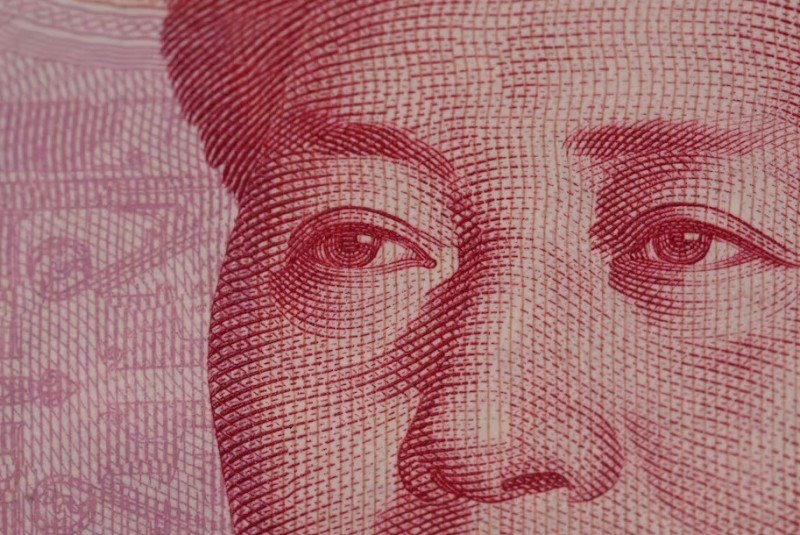
Henry Heller: The rise of China and the decline of the West

Photo by David Dennis/Flickr

Henry Heller

April 19, 2023

The focal point of the world’s economy is shifting to Asia and Eurasia

China’s place on the world stage advances year by year. It is arguably already the world’s largest economy. Its Belt and Road Initiative and its other international links like the BRICS have helped to magnify its economic but also its political and cultural influence worldwide.

More and more countries in the Global South are benefiting from these connections and are looking to China for leadership on the basis of mutual benefit. There is every reason to believe these trends will continue. Moreover, we can see that the focal point of the world’s economy is shifting to Asia and Eurasia.

Originally published at Canadian Dimension on March 27, 2023

At the same time, geopolitically, we are headed for a multipolar world with no country able to impose itself as a hegemon. Notably, the Ukraine-Russia war is accelerating these changes.

All of this is becoming possible because of the growing importance of China. In my eyes, the success of these policies is rooted in its economic system. The re-emergence of China on the world stage has been made possible by the maturation of its distinctive brand of socialism.

As we know, capitalism plays a big role in the Chinese economy and links it with the rest of the world. But in my view, this has to be understood in terms of the overall dominance of the Chinese state over the economy and the direction of its development by the Chinese Communist Party.

I am sure that there are ongoing political and other problems with this mode of development. It is a work in progress. But up to now and looking ahead, I think we are looking at a model which is brilliantly successful and notably is outpacing the West. Moreover, there is reason to believe that its success will become more apparent in future years as China becomes still more important on the global stage.

For China, this achievement is an enormous vindication. One can only imagine the meaning of these developments for the Chinese people, especially in light of the 1949 revolution, which liberated China from more than a century of humiliation at the hands of imperialism and brought about the modernization of the country.

The immense Belt and Road Initiative, which is expected to cost more than $1 trillion, represents nothing less than a historic reversal of a Western current which began with the entry of the Portuguese Vasco de Gama into the Indian Ocean over 500 years ago.

Rather than emphasizing this astonishing turn of events, I want to focus on the hostile reaction of the West to the re-emergence of China and Eurasia on the world stage. This refusal is itself a fact of utmost political and historical significance, fraught with danger as it is.

Led by the United States, the reaction of the West is one of denial and rejection. The West so far has been unable or unwilling to accept these momentous transformations presently underway. Since the Obama administration, we have seen this hostility reflected in terms of a rising crescendo of sanctions, military threats and media attacks against China’s supposed human rights record and interference in the political life of other states designed somehow to bring China back to heel under the West.

The centre of this campaign has been the reassertion of the idea of Taiwanese separatism – a pure relic of the Cold War. Taiwan is once more seen as the keystone of the American military containment of China.

Indeed, the posture of the United States conforms to the whole history of modern imperialism.

We know how bitterly the imperialist countries fought with one another for hegemonic control of the world. But in turn, these powers, England, France but also Germany and Japan, had to bow to American primacy by 1945. But American hegemony should be seen as the heir to the legacy of overall Western domination of the world, which began as early as the eighteenth century.

Intrinsic to this domination is a mindset which presumes the dominance of the West or even the white race over the rest of the world as intrinsic to the ‘rules-based’ and natural order of the world. Faced with the threat of China, the West denounces the lack of democracy in China while refusing to acknowledge that its own representative democracy has transformed itself into an oligarchy and a kind of liberal totalitarianism.

The ruling class in the United States and the other Western states are infected with these ideas. The reason for this is that it accords with the material interests of these classes. Faced with the emergence of China and the growing current towards multipolarity, their reaction has been a crude attempt to somehow intimidate China into accepting continued Western dominance.

The primary weapons they have for doing so are military, financial and media.

As a result, we are seeing a global conflict initiated by the West against the rise of Eurasia, the focal points being the South China Sea but also Ukraine. Russia has seen itself as the source of endless riches and as the backdoor to China.

In a certain sense, this conflict reflects a continuation of the imperialist struggles of the past. But the West’s hostility is not simply based on the threat of China as a new world power. It is China’s socialism which, above all, is seen as a menace.

The power of the ruling class in the West rests on the private accumulation of wealth through the exploitation of people and resources. The idea of a state which ultimately bases itself on the predominance of workers and the primacy of use values over exchange values is anathema.

That China is that kind of state and that it is performing at a higher level than world capitalism is terrifying to them.

Given these circumstances, China and the peoples of the world are faced with a complex and difficult situation.

The politics of the West is characterized by a sense of desperation and bravado strikingly reminiscent of the fascists during the Second World War. The logic of the so-called political realism it is pursuing is exposed as a deeply irrational form of Neitzschean will to power.

The potential for war even more destructive than that last great world conflict is indeed real.

On the other hand, it should be emphasized that the peoples of the Global South are resisting attempts to continue to subordinate themselves to Western imperialism.

They realize that the conflict between the exploitive West and the rest of the world is a struggle over their own future.

Moreover, while they have been quiescent up to now, the working class in the West has yet to be heard from.

For how long will it put up with the deterioration in its economic circumstances, ecological irresponsibility and reckless pro-war policies pursued by the ruling classes? Furthermore, there is every sign that the capitalist system that this class controls is weakening or has entered a state of permanent crisis. The growing recklessness of their imperialism is a sign of this.

China with its strong state and party has the possibility of rationally responding and adjusting to this situation which is not true of the West. Time is on the side of China and the Global South.

It is impossible to say how far the crackpot realists in the West are prepared to go in defending their system. Hopefully they will bow to the force of circumstances which are not in their favour. But short of all-out war, we are looking at the emergence of new world system in which China has provided a key model of independent development for other states.

Originally published at Canadian Dimension on March 27, 2023

About the author

Henry Heller is a Professor of History at the University of Manitoba. He is the author of The Birth of Capitalism: A 21st Century Perspective (Pluto Press, 2011), The Cold War and the New Imperialism: A Global History, 1945-2005 (Monthly Review Press, 2006) and The Bourgeois Revolution in France (Berghahn Books, 2006).

Please help TFF remain truly independent by contributing if you benefited from this article

[paypal-donation]

No data was found

Share

Leave a Reply

Your email address will not be published. Required fields are marked *

Related Posts

America’s Strategic Assault on Art, Academia, and the Imagination That Sustains Peace The United States once stood as a beacon of cultural audacity—a place where dissent could be beautiful, and beauty and innovation could challenge the present order of things. Its museums, universities, and artists helped inspire a worldwide imagination rooted in creative freedom and innovation. But today, under the Trump regime’s second term, those dynamic qualities are being systematically dismantled. Just read this. As Trump goes after the arts, many museums remain silent | CNN As CNN reports, the administration has launched an aggressive campaign to “eradicate improper ideology” from federally funded museums. Exhibitions involving race, gender, and identity are being censored or cancelled. Amy Sherald’s reimagining of the Statue of Liberty as a Black, trans woman was pulled from the Smithsonian after curators objected to its symbolism. Sherald warned that “history shows us what happens when governments demand loyalty...
Contrary to what we stated when publishing this Call, the UN General Assembly (GA) opened on September 9, 2025, in New York, not in Geneva, as we initially wrote. However, due to the host role-violating US ban on visas to Palestinians, the Special GA Segment on Palestine will be held in the UN Geneva from September 22. And it builds up to something historic. Anyhow, here is what we believe you must advocate or do to help stop the Israeli genocide. It’s called people’s power or citizens’ diplomacy. SHARE! The first of three appeals from TFF. The second is here, and the third here. Across the world, people are witnessing the systematic destruction of Palestinian lives, homes, and communities. The scale and intensity of Israel’s military operations — especially in Gaza — have led leading legal bodies, including the International Court of Justice, to warn of a plausible genocide. The...
Editorial for Transcend Media Service, TMS, and published in an edited Q & A version by the China Social Science Network-China Social Science News. See also this follow-up, “Condemn all UN member states: They spend 100 times more on militarism than on the entire UN system.” The UN has been extremely important over the last 80 years in terms of, for instance, global dialogue, multi-dimensional development, international law, peace-keeping, normativity, violence condemnation, and ethics. It has been the place to hold member states accountable. The UN Charter is the most Gandhian document ever signed by the world’s governments. If the great majority of member states lived up to their obligations in accordance with the UN Charter and including the resolutions they have signed up to, the world would be a much more peaceful, just, democratic, and lawful place. Regrettably, there are several reasons why the world is not in accordance with those fine Charter norms and provisions:a) The majority...

Recent Articles

Jan Øberg behandler i artiklen en lang række faktorer, som ligger til grund for den måde vores samfund er organiseret på – og derfor også for konflikter. Artiklen introducerer således sammenhængen mellem familien, foreninger, regeringer, NGO’ er, nation, stat, nationalstat og alliancer for på denne måde bedre at kunne forstå konflikter og i sidste ende blive klogere mht. at løse disse. Øberg, der er fortaler for global bevidsthed, hvilket skal ses i lyset af den øgede globalisering, skelner mellem kulturkamp og kulturdialog. Endelig behandles begrebet magt og magtesløshed: giver magt ret til at udøve magt – fordi man mener at have ret? Litteraturliste og arbejdsspørgsmål efter artiklen. Ordene vi bruger om verden I satellitperspektiv kan man godt tale om den menneskelige familie eller menneskeheden. Udtrykket understreger, at der eksisterer – eller burde eksistere – et fællesskab fordi vi alle er mennesker og sammen bebor denne klode og ingen anden. Og...
Kapitel 2: Forskellige sider af Europa og USA…fortsat 2.5 Militære relationer I forbifarten har vi allerede sagt nogle ting om USA’s militære situation. Kig lige en gang til på afsnit 2.3. Nu skal vi uddybe det militære forhold mellem USA og EU. Der er en række ligheder mellem visse europæiske landes og USA’s militær. Næsten alle er med på en eller anden måde i NATO, direkte som medlem – selv Island, der ikke har et forsvar – eller indirekte i Partnerskab for Fred. USA og Canada er med i OSCE (på dansk OSSE), Organisationen for Sikkerhed og Samarbejde i Europa, der tæller over 50 lande. USA samt England og Frankrig er kernevåbenstater og de har styrker til intervention langt borte fra hjemlandet, om end USA’s er tifold større. Alle har også en omfattende våbeneksport og bruger den som et middel til at tjene penge og få loyale venner på, det...
Background Christian Harleman and Jan Oberg conducted a fact-finding mission to Burundi between November 26 and December 6, 2003. (See websites about the country here). The first TFF mission took place in March 1999. Unfortunately, since then it has not been practically possible to implement the co-operation with Burundi’s Ministry of Education and Burundian NGOs that was planned at the time. The 2003 mission had three purposes. First, to do fact-finding in general about the situation and, in particular, the progress under the Arusha Peace Process. Second, to explore the possibilities for co-operation between the government and relevant NGOs on the one hand and TFF on the other, in order to develop and deepen the existing competence in fields such as conflict-understanding, reconciliation and peace-building. Finally, third, to find out whether it would be possible, in co-operation with the Swedish Rescue Services Agency (Statens Räddningsverk), to establish a health care unit that...

TFF on Substack

Discover more from TFF Transnational Foundation & Jan Oberg.

Most Popular

Jan Øberg behandler i artiklen en lang række faktorer, som ligger til grund for den måde vores samfund er organiseret på – og derfor også for konflikter. Artiklen introducerer således sammenhængen mellem familien, foreninger, regeringer, NGO’ er, nation, stat, nationalstat og alliancer for på denne måde bedre at kunne forstå konflikter og i sidste ende blive klogere mht. at løse disse. Øberg, der er fortaler for global bevidsthed, hvilket skal ses i lyset af den øgede globalisering, skelner mellem kulturkamp og kulturdialog. Endelig behandles begrebet magt og magtesløshed: giver magt ret til at udøve magt – fordi man mener at have ret? Litteraturliste og arbejdsspørgsmål efter artiklen. Ordene vi bruger om verden I satellitperspektiv kan man godt tale om den menneskelige familie eller menneskeheden. Udtrykket understreger, at der eksisterer – eller burde eksistere – et fællesskab fordi vi alle er mennesker og sammen bebor denne klode og ingen anden. Og...
Kapitel 2: Forskellige sider af Europa og USA…fortsat 2.5 Militære relationer I forbifarten har vi allerede sagt nogle ting om USA’s militære situation. Kig lige en gang til på afsnit 2.3. Nu skal vi uddybe det militære forhold mellem USA og EU. Der er en række ligheder mellem visse europæiske landes og USA’s militær. Næsten alle er med på en eller anden måde i NATO, direkte som medlem – selv Island, der ikke har et forsvar – eller indirekte i Partnerskab for Fred. USA og Canada er med i OSCE (på dansk OSSE), Organisationen for Sikkerhed og Samarbejde i Europa, der tæller over 50 lande. USA samt England og Frankrig er kernevåbenstater og de har styrker til intervention langt borte fra hjemlandet, om end USA’s er tifold større. Alle har også en omfattende våbeneksport og bruger den som et middel til at tjene penge og få loyale venner på, det...
Background Christian Harleman and Jan Oberg conducted a fact-finding mission to Burundi between November 26 and December 6, 2003. (See websites about the country here). The first TFF mission took place in March 1999. Unfortunately, since then it has not been practically possible to implement the co-operation with Burundi’s Ministry of Education and Burundian NGOs that was planned at the time. The 2003 mission had three purposes. First, to do fact-finding in general about the situation and, in particular, the progress under the Arusha Peace Process. Second, to explore the possibilities for co-operation between the government and relevant NGOs on the one hand and TFF on the other, in order to develop and deepen the existing competence in fields such as conflict-understanding, reconciliation and peace-building. Finally, third, to find out whether it would be possible, in co-operation with the Swedish Rescue Services Agency (Statens Räddningsverk), to establish a health care unit that...
Read More
Imagen-thumbnail-The-Transnational-1
Jan Øberg behandler i artiklen en lang række faktorer, som ligger til grund for den måde vores samfund er organiseret på – og derfor også for konflikter. Artiklen introducerer således sammenhængen mellem familien, foreninger, regeringer, NGO’ er, nation, stat, nationalstat og alliancer for på denne måde bedre at kunne forstå konflikter og i sidste ende blive klogere mht. at løse disse. Øberg, der er fortaler for global bevidsthed, hvilket skal ses i lyset af den øgede globalisering, skelner mellem kulturkamp og kulturdialog. Endelig behandles begrebet magt og magtesløshed: giver magt ret til at udøve magt – fordi man mener at have ret? Litteraturliste og arbejdsspørgsmål efter artiklen. Ordene vi bruger om verden I satellitperspektiv kan man godt tale om den menneskelige familie eller menneskeheden. Udtrykket understreger, at der eksisterer – eller burde eksistere – et fællesskab fordi vi alle er mennesker og sammen bebor denne klode og ingen anden. Og...
Imagen-thumbnail-The-Transnational-1
Kapitel 2: Forskellige sider af Europa og USA…fortsat 2.5 Militære relationer I forbifarten har vi allerede sagt nogle ting om USA’s militære situation. Kig lige en gang til på afsnit 2.3. Nu skal vi uddybe det militære forhold mellem USA og EU. Der er en række ligheder mellem visse europæiske landes og USA’s militær. Næsten alle er med på en eller anden måde i NATO, direkte som medlem – selv Island, der ikke har et forsvar – eller indirekte i Partnerskab for Fred. USA og Canada er med i OSCE (på dansk OSSE), Organisationen for Sikkerhed og Samarbejde i Europa, der tæller over 50 lande. USA samt England og Frankrig er kernevåbenstater og de har styrker til intervention langt borte fra hjemlandet, om end USA’s er tifold større. Alle har også en omfattende våbeneksport og bruger den som et middel til at tjene penge og få loyale venner på, det...
Imagen-thumbnail-The-Transnational-1
Background Christian Harleman and Jan Oberg conducted a fact-finding mission to Burundi between November 26 and December 6, 2003. (See websites about the country here). The first TFF mission took place in March 1999. Unfortunately, since then it has not been practically possible to implement the co-operation with Burundi’s Ministry of Education and Burundian NGOs that was planned at the time. The 2003 mission had three purposes. First, to do fact-finding in general about the situation and, in particular, the progress under the Arusha Peace Process. Second, to explore the possibilities for co-operation between the government and relevant NGOs on the one hand and TFF on the other, in order to develop and deepen the existing competence in fields such as conflict-understanding, reconciliation and peace-building. Finally, third, to find out whether it would be possible, in co-operation with the Swedish Rescue Services Agency (Statens Räddningsverk), to establish a health care unit that...
Imagen-thumbnail-The-Transnational-1
Former UN Under-Secretary-General with special responsibility for peacekeeping operations TFF associate August 20, 2003 YRINGHAM, Mass.- Ralph Bunche was born in Detroit 100 years ago today (August 7, 2003). His passionate determination to get results did not extend to seeking credit for them, so his work is better remembered than he is. Of all his many accomplishments – civil rights pioneer, Nobel Peace Prize laureate, chief drafter of two chapters of the United Nations charter, negotiator of the armistices that ended the first Arab-Israeli war – Bunche said he was proudest of developing what came to be known as peacekeeping. Setting up the United Nations Truce Supervision Organization in Palestine in 1948, Bunche formulated the principles that have governed peacekeeping operations ever since. In the 1956 Suez crisis, working with Secretary General Dag Hammarskjold and Lester Pearson of Canada, he organized the first peacekeeping force, the United Nations Emergency Force...
– nästan 11 månader Till Sofia nästan 11 månader # 1  Till Sofias huvudsida Till alla Privata Foto-Serier
Till Sofias huvudsida

