UN’s Most Powerful Political Body Remains Paralyzed Battling a New Cold War

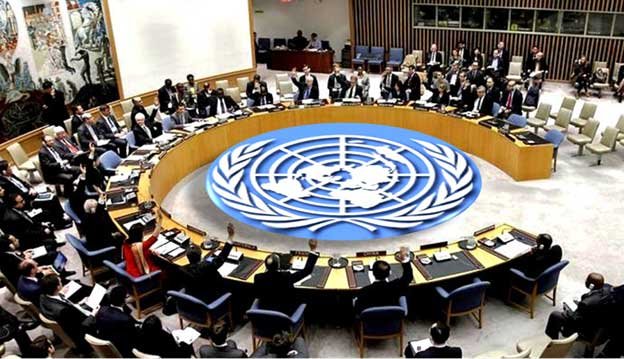
Photo credit: The United Nations

The UN Security Council is now the battleground
for a new Cold War between the US and China

Thalif Deen

April 23, 2021

UNITED NATIONS, Apr 14 2021 (IPS) – A new Cold War – this time, between the US and China —is threatening to paralyze the UN’s most powerful body, even as military conflicts and civil wars are sweeping across the world, mostly in Africa, the Middle East and Latin America.

The growing criticism against the Security Council is directed largely at its collective failures to resolve ongoing conflicts and political crises in several hot spots, including Syria, Yemen, Afghanistan, Iraq, Myanmar, Somalia, South Sudan, Ukraine and Libya — and its longstanding failure over Palestine.

The sharp divisions between China and Russia, on one side, and the Western powers on the other, are expected to continue, triggering the question: Has the Security Council outlived its usefulness or has it lost its political credibility?

The five big powers are increasingly throwing their protective arms around their allies, despite growing charges of war crimes, genocide and human rights violations against these countries.

Last week, Yasmine Ahmed, UK Director at Human Rights Watch, called on Britain “to step up as penholder on Myanmar and start negotiating a Security Council draft resolution on an arms embargo and targeted sanctions against the military”. See also this.

Over 580 people, including children, have been killed since the February 1 coup: “it is time for the Security Council to do more than issue statements and begin working towards substantive action,“ she warned.

But in most of these conflicts, including Myanmar, arms embargoes are very unlikely because the major arms suppliers to the warring parties are the five permanent members of the Security Council, namely the US, UK, France, Russia and China.

US President Joe Biden has described the growing new confrontation as a battle between democracies and autocracies.

In a recent analytical piece, the New York Times said China’s most striking alignment is with Russia, with both countries drawing closer after Russia’s annexation of Crimea in 2014. The two countries have also announced they will jointly build a research station on the moon, setting the stage to compete with US space programmes.

“The threat of a US-led coalition challenging China’s authoritarian policies has only bolstered Beijing’s ambition to be a global leader of nations that oppose Washington and its allies,” the Times said.

Ian Williams, President of the New York-based Foreign Press Association and author of ‘UNtold: The Real Story of the United Nations in Peace and War’, told IPS that in the early years, with a secure majority in the General Assembly (GA), the US could pretend virtue and eschew using the veto. The embattled Soviets resorted it over and over.

“But as with so much UN and international law, the Israeli exception had the US making up for lost time. Now the Russians have been catching up with vetoes for Serbia and Syria”.

China, he pointed out, avoided using the veto unless Taiwan or Tibet was mentioned. In the old days there was a hint of an ideological element — Third World and Socialism versus Imperialism.

“But now it is entirely transactional, veto holders looking after their clients and allies, so no one should entertain illusions about China and Russia acting in a progressive and constructive way. But the US is no position to point fingers about Syria while it protects Saudi Arabia and Israel”.

“We can hope that the majority of members will grow indignant enough to try to effect indignation. But sadly, historical experience suggests many governments have almost unlimited tolerance for mass murder in far-away countries of which they know little,” he noted, including Darfur, the Balkans, Rwanda and now Myanmar.

The breakthrough would be the US saying, end the Occupation and then inviting others to join in a reaffirmation of the Charter.

“But since I don’t really believe in the tooth fairy, I would have to settle for a coalition of the conscious-stricken in the GA united for peace – and international law and order”, said Williams, a senior analyst who has written for newspapers and magazines around the world, including the Australian, The Independent, New York Observer, The Financial Times and The Guardian.

Asked about the killings in Myanmar, and the lack of action in the UNSC, Secretary-General Antonio Guterres told reporters on March 29: “We need more unity in international community. We need more commitment in the international community to put pressure in order to make sure that the situation is reversed. I’m very worried. I see, with a lot of concern, the fact that, apparently, many of these trends look irreversible, but hope is the last thing we can give up on.”

Vijay Prashad, Executive Director, Tricontinental: Institute for Social Research, who has written extensively on international politics, told IPS the United Nations is an essential institution, a process, in many ways, rather than a fully-finished institution.

The agencies of the UN – including WHO, UNICEF, UNHCR, he said, provide vital service to the world’s peoples; “and we need to make these institutions more robust, and we need to ensure that they drive a public agenda that advances the UN Charter’s main goals (namely to maintain peace, to end hunger and illiteracy, to provide the basis for a rich life, in sum).”

The Security Council is a victim of the political battles in the world, he argued.

“There is no way to build a better framework to handle the major power differentials”., said Prashad, author of 30 books, including most recently ‘Washington Bullets’ (LeftWord, Monthly Review),

“It would be far better to empower the UN General Assembly, which is more democratic, but since the 1970s we have seen how the US – in particular – undermined the UNGA to take decision making almost exclusively to the UNSC”.

Ever since the fall of the USSR, he said, the UN Secretary-General has become subservient to the US government (“we saw this shockingly with the treatment of former Secretary-General Boutros Boutros-Ghali”).

The new ‘Group of Friends to Defend the UN Charter’, which includes China and Russia, is a positive development, said Prashad.

US Ambassador Linda Thomas-Greenfield told reporters on March 31: “And then in terms of working with my counterparts in the Security Council, I know that there are areas – and this is a discussion that I’ve had – with both my Russian and Chinese colleagues – we know that there are red lines”.

“There are areas where we have serious concerns, and we’ve been open and we’ve been frank about those concerns. In China, what is happening with the Uyghurs, for example. With Russia, in Syria, and there are many others. We know what the red lines are”, she added.

“We tried to bridge those gaps, but we also try to find those areas where we have common ground. We’ve been able to find common ground on Burma (Myanmar). With the Chinese, we’re working on climate change in, I think, a very positive way. We’re not in the exact same place, but it’s an area where we can have conversations with each other.”

“So as the top U.S. diplomat in New York, it is my responsibility to find common ground so that we can achieve common goals, but not to give either country a pass when they are breaking human rights values or pushing in directions that we find unacceptable,” she declared.

Meanwhile, harking back to a bygone era, during the height of the Cold War between the United States and the Soviet Union in the 1960s, the United Nations was the ideological battle ground where the Americans and the Soviets pummeled each other– either on the floor of the General Assembly hall or at the horse-shoe table of the UN Security Council.

Perhaps one of the most memorable war of words took place in October 1962 when the politically-feisty US Ambassador Adlai Stevenson (1961-65), a two-time Democratic US presidential candidate, challenged Soviet envoy Valerian Zorin over allegations that the USSR, perhaps under cover of darkness, had moved nuclear missiles into Cuba—and within annihilating distance of the United States.

Speaking at a tense Security Council meeting, Stevenson admonished Zorin: “I remind you that you didn’t deny the existence of these weapons. Instead, we heard that they had suddenly become defensive weapons. But today — again, if I heard you correctly — you now say they don’t exist, or that we haven’t proved they exist, with another fine flood of rhetorical scorn.”

“All right sir”, said Stevenson, “let me ask you one simple question. Do you, Ambassador Zorin, deny that the USSR has placed and is placing medium and intermediate range missiles and sites in Cuba?” “Yes or No? Don’t wait for the translation: Yes or No?”, Stevenson insisted with a tone of implied arrogance.

Speaking in Russian through a UN translator (who faithfully translated the US envoy’s sentiments into English), Zorin shot back: “I am not in an American courtroom, sir, and therefore I do not wish to answer a question that is put to me in the fashion in which a prosecutor does. In due course, sir, you will have your reply. Do not worry.”

Not to be outwitted, Stevenson howled back: “You are in the court of world opinion right now, and you can answer yes or no. You have denied that they exist. I want to know if …I’ve understood you correctly.”

When Zorin said he will provide the answer in “due course”, Stevenson famously declared: “I am prepared to wait for my answer until hell freezes over.”

Originally published by IPS News Agency

About the author

Thalif Deen, Senior Editor & Director, UN Bureau, Inter Press Service (IPS) News agency has been covering the United Nations since the late 1970s. Thalif Deen is the author of a newly-released book on the United Nations titled “No Comment – and Don’t Quote Me on That.” 

Please help TFF remain truly independent by contributing if you benefited from this article

[paypal-donation]
Share

Leave a Reply

Your email address will not be published. Required fields are marked *

Related Posts

And why the world, especially the EU, must now declare itself independent of the United States. UN’s 80th anniversary This year, the United Nations celebrates the 80th anniversary of its founding. The UN was formed after the scourge of the Second World War, in which 70 to 85 million people were killed and many countries were destroyed. That war came on the heels of the First World War, which also killed between 15 and 22 million people. After the Second World War, especially after the use of nuclear weapons by the United States, which marked a turning point in the history of warfare that could result in the end of civilisation as we know it, humanity decided to move away from the era of empires and big power politics and usher in a new era of peace, freedom and cooperation. These were the principles enshrined in the UN Charter. The United States...
Drones over Nordic airports. No damage. No trace. No answers. Most assume Russia—but what if that’s not so? Why is there so much we are not told? This article explores the strategic ambiguity behind recent drone incursions and asks: Who else might benefit from sending drones into NATO airspace? From Ukraine’s surprising drone supremacy to Russia’s possible signalling, the silence itself may be the loudest message. These are the kinds of questions decent, intelligent investigative journalists and commentators could easily research. Why don’t they? Did you, dear reader, know or think of this? That the most powerful weapon in today’s conflicts might be the one that leaves no trace – and no answers. Just enough fear to justify the next move? Recently, drones have repeatedly appeared over Nordic airports and near some military facilities. They cause no damage – for which reason the designation “hybrid attack” is misleading but serves a purpose. These...
America’s Strategic Assault on Art, Academia, and the Imagination That Sustains Peace The United States once stood as a beacon of cultural audacity—a place where dissent could be beautiful, and beauty and innovation could challenge the present order of things. Its museums, universities, and artists helped inspire a worldwide imagination rooted in creative freedom and innovation. But today, under the Trump regime’s second term, those dynamic qualities are being systematically dismantled. Just read this. As Trump goes after the arts, many museums remain silent | CNN As CNN reports, the administration has launched an aggressive campaign to “eradicate improper ideology” from federally funded museums. Exhibitions involving race, gender, and identity are being censored or cancelled. Amy Sherald’s reimagining of the Statue of Liberty as a Black, trans woman was pulled from the Smithsonian after curators objected to its symbolism. Sherald warned that “history shows us what happens when governments demand loyalty...

Recent Articles

PressInfo # 141, December 21, 2001It’s time to prepare reconciliation between Albanians and Serbs PressInfo # 140, December 14, 2001Ibrahim Rugova’s decade-long leadership in Kosovo/a PressInfo # 139, 11. december, 2001En god nyhet: Jugoslaviens Sannings- och försoningskommission PressInfo # 139, 11. december, 2001Gode nyheder: Jugoslaviens Sandheds- og Forsoningskommission PressInfo # 139, December 11, 2001Good news: Yugoslavia’s Truth and Reconciliation Commission PressInfo # 138, November 8, 2001TFF co-founder PhD with thesis about young people with roots in other cultures PressInfo # 138, November 8, 2001TFF:s medstiftare doktor på avhandling om unga med ursprung i andra kulturer PressInfo # 137, October 17, 2001A new Marshall Plan: Advancing human security and controlling terrorism PressInfo # 136, October 15, 2001The UN and Annan really deserve it PressInfo # 135, October 10, 2001Preventing a terrorist mushroom cloud PressInfo # 134, 17 oktober, 2001Sverige og 11. september PressInfo # 134, October 9, 2001Sweden and September 11...
Peace is promoted by constructive proposals and dialogue Four preceding PressInfos have expressed concern over — and criticised — the ongoing, militarisation of the EU. Some will say: but there are no alternatives. We believe that there are always alternatives, that democracies are characterised by alternatives and choice, and that openly discussed alternatives will improve the quality and legitimacy of society’s decision–making. In addition, it is an intellectual and moral challenge to not only criticise but also be constructive. If we only tell people that we think they are wrong, they are not likely to listen. However, if we say: what are your views on this set of ideas and steps? — we may sometimes engage them in dialogue and sow a seed. Most people in power circles live their daily lives in in a time frame and a social space where certain ideas, viewpoints and concepts are just not...
Photos © TFF 2000 Read PressInfo 90 “Lift the Sanctions and Bring More Aid to Yugoslavia” See Pictures from Belgrade © TFF 2000 Please reprint, copy, archive, quote or re-post this item, but please retain the source.

TFF on Substack

Discover more from TFF Transnational Foundation & Jan Oberg.

Most Popular

PressInfo # 141, December 21, 2001It’s time to prepare reconciliation between Albanians and Serbs PressInfo # 140, December 14, 2001Ibrahim Rugova’s decade-long leadership in Kosovo/a PressInfo # 139, 11. december, 2001En god nyhet: Jugoslaviens Sannings- och försoningskommission PressInfo # 139, 11. december, 2001Gode nyheder: Jugoslaviens Sandheds- og Forsoningskommission PressInfo # 139, December 11, 2001Good news: Yugoslavia’s Truth and Reconciliation Commission PressInfo # 138, November 8, 2001TFF co-founder PhD with thesis about young people with roots in other cultures PressInfo # 138, November 8, 2001TFF:s medstiftare doktor på avhandling om unga med ursprung i andra kulturer PressInfo # 137, October 17, 2001A new Marshall Plan: Advancing human security and controlling terrorism PressInfo # 136, October 15, 2001The UN and Annan really deserve it PressInfo # 135, October 10, 2001Preventing a terrorist mushroom cloud PressInfo # 134, 17 oktober, 2001Sverige og 11. september PressInfo # 134, October 9, 2001Sweden and September 11...
Peace is promoted by constructive proposals and dialogue Four preceding PressInfos have expressed concern over — and criticised — the ongoing, militarisation of the EU. Some will say: but there are no alternatives. We believe that there are always alternatives, that democracies are characterised by alternatives and choice, and that openly discussed alternatives will improve the quality and legitimacy of society’s decision–making. In addition, it is an intellectual and moral challenge to not only criticise but also be constructive. If we only tell people that we think they are wrong, they are not likely to listen. However, if we say: what are your views on this set of ideas and steps? — we may sometimes engage them in dialogue and sow a seed. Most people in power circles live their daily lives in in a time frame and a social space where certain ideas, viewpoints and concepts are just not...
Photos © TFF 2000 Read PressInfo 90 “Lift the Sanctions and Bring More Aid to Yugoslavia” See Pictures from Belgrade © TFF 2000 Please reprint, copy, archive, quote or re-post this item, but please retain the source.
Read More
Imagen-thumbnail-The-Transnational-1
PressInfo # 141, December 21, 2001It’s time to prepare reconciliation between Albanians and Serbs PressInfo # 140, December 14, 2001Ibrahim Rugova’s decade-long leadership in Kosovo/a PressInfo # 139, 11. december, 2001En god nyhet: Jugoslaviens Sannings- och försoningskommission PressInfo # 139, 11. december, 2001Gode nyheder: Jugoslaviens Sandheds- og Forsoningskommission PressInfo # 139, December 11, 2001Good news: Yugoslavia’s Truth and Reconciliation Commission PressInfo # 138, November 8, 2001TFF co-founder PhD with thesis about young people with roots in other cultures PressInfo # 138, November 8, 2001TFF:s medstiftare doktor på avhandling om unga med ursprung i andra kulturer PressInfo # 137, October 17, 2001A new Marshall Plan: Advancing human security and controlling terrorism PressInfo # 136, October 15, 2001The UN and Annan really deserve it PressInfo # 135, October 10, 2001Preventing a terrorist mushroom cloud PressInfo # 134, 17 oktober, 2001Sverige og 11. september PressInfo # 134, October 9, 2001Sweden and September 11...
Imagen-thumbnail-The-Transnational-1
Peace is promoted by constructive proposals and dialogue Four preceding PressInfos have expressed concern over — and criticised — the ongoing, militarisation of the EU. Some will say: but there are no alternatives. We believe that there are always alternatives, that democracies are characterised by alternatives and choice, and that openly discussed alternatives will improve the quality and legitimacy of society’s decision–making. In addition, it is an intellectual and moral challenge to not only criticise but also be constructive. If we only tell people that we think they are wrong, they are not likely to listen. However, if we say: what are your views on this set of ideas and steps? — we may sometimes engage them in dialogue and sow a seed. Most people in power circles live their daily lives in in a time frame and a social space where certain ideas, viewpoints and concepts are just not...
Imagen-thumbnail-The-Transnational-1
Photos © TFF 2000 Read PressInfo 90 “Lift the Sanctions and Bring More Aid to Yugoslavia” See Pictures from Belgrade © TFF 2000 Please reprint, copy, archive, quote or re-post this item, but please retain the source.
Imagen-thumbnail-The-Transnational-1
Av FRANK SØHOLM GREVIL 16 augusti 2004  Vi er nu nået til tredje akt i det absurde teaterstykke, der i analogi med de store skueprocesser i Moskva 1936-38 er blevet døbt ‘Grevil-sagen’. Første akt bestod i min anonyme fremlæggelse af egenhændigt nedklassificerede rapporter i Berlingske Tidende i februar og marts. Andet akt udgjordes af min fremtræden med navn og billede i Information i april samt den efterfølgende mediestorm, som uden min direkte medvirken kostede en forsvarsminister taburetten samt en sigtelse for brud på tavshedspligten. Tredje akt bliver en retssag, hvor jeg står tiltalt for at have overtrådt straffelovens bestemmelser om uberettiget videregivelse eller udnyttelse af fortrolige oplysninger. Statsanklageren har ovenikøbet valgt at påberåbe sig særligt skærpende omstændigheder. Da jeg aldrig har modtaget betaling for at stille rapporterne til rådighed eller lade mig interviewe, må det skærpende bestå i, at “videregivelsen eller udnyttelsen er sket under sådanne omstændigheder, at det påfører...
Imagen-thumbnail-The-Transnational-1
Af Svenska Irakkommittén mot de Ekonomiska Sanktionerna (SIES) 13 september 2002 FN:s ekonomiska sanktioner mot Irak har nu pågått i tolv år och drabbat det irakiska folket med svåra lidanden. Enligt FN:s egna siffror har mer än 1,5 miljoner människor, varav ca 600 000 barn, dött som en direkt följd av sanktionerna. Dessutom har ett lågintensivt bombkrig mot landet pågått under dessa år. Av all denna förödelse- orsakad huvudsakligen av amerikansk och brittisk politik- har Saddam Husseins brutala och diktatoriska regim snarast stärkts än försvagats. Nu förbereder USA under president Bushs ledning ett storskaligt bombkrig mot Irak som kommer att innebära ett ännu större lidande för civilbefolkningen. Ett sådant krig kommer dessutom att ytterligare undergräva freden och säkerheten i världen. Att upprätta en demokratisk regim i Irak är det irakiska folkets angelägenhet och får enligt folkrätten inte ske med krigshandlingar utifrån. Folkrätten och FN:s stadgar måste respekteras. Vi vädjar till...