
How the Coronavirus changed our lives

Read the author’s first article here

On January 18, after attending a meeting in Hangzhou, I planned to return to my home in Beijing. At that time, the Spring Festival in China was approaching. Although I had started buying tickets one week in advance, I still did not get a high-speed train ticket from Hangzhou to Beijing so I had to go from Hangzhou to Shanghai and wait for several hours before changing to a later train to return to Beijing.

There are high-speed trains between Beijing and Hangzhou and Shanghai every five to ten minutes. Even so, it can’t meet people’s travel needs during the Spring Festival. High-speed railway stations and airports in all major cities were overcrowded and at security checkpoints, people lined up in long queues.
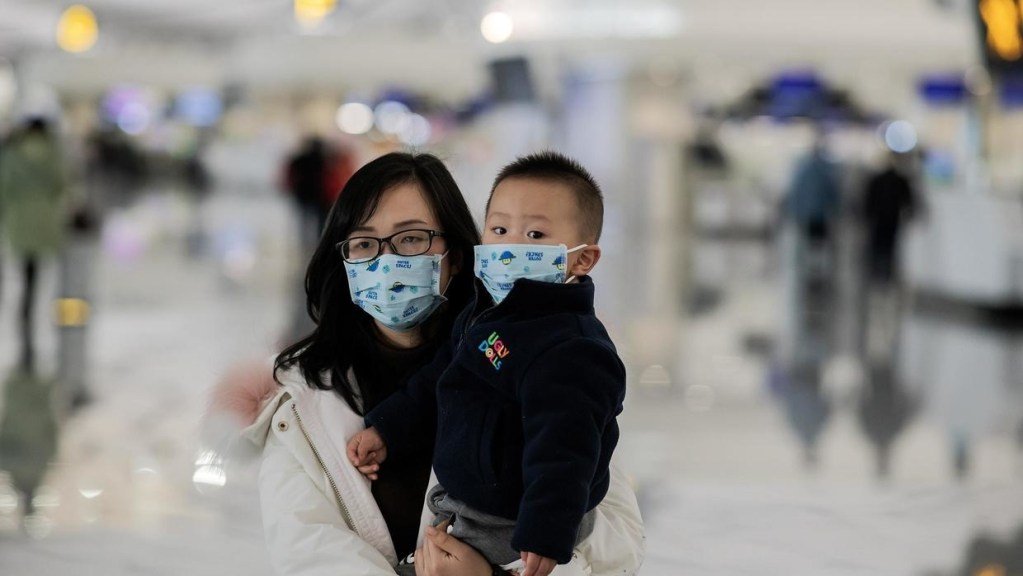
China’s transportation sector is doing its best to ensure the world’s largest population’s mobility and transport needs. Everyone was looking forward to the long holiday in the New Year and the reunion with their families.

There and then, nobody knew that after four days all this would change completely. Like no one expected that the whole world would change fundamentally in a couple of months.

The whole country was beaming with joy and peace.

The TV news stations were constantly showing people’s happy programs in preparation for the New Year holiday. A flash of news that reported a few cases of new pneumonia in Wuhan wouldn’t have attracted much attention.

So, people continue their preparations for the New Year.

Suddenly, however, a group of experts who have visited Wuhan appears on the TV program my family and I usually see and they suggest that people should not go to Wuhan if they could avoid it and that people in Wuhan should not go out at all.

Things are now getting quite serious and reports follow with rapidly increasing numbers of patients.

On January 23, the government suddenly announced the closure of Wuhan, a megacity with a population of 11 million. The next day, it was announced that all public transportation in the city would be stopped, private cars would be banned, and everyone would stay at home.

On January 24, on Chinese New Year’s Eve, medical staff in some provinces outside Hubei were suddenly notified that they must stop their routine work, pack their luggage within an hour and assemble for their travel to Wuhan. It’s now a huge medical rescue operation.

At this point, everyone is shrouded in anxiety.

At 8 pm, the most important TV program of the year, the New Year’s Gala, is performed as usual and broadcast live across the country. My family still sit around the TV and watch the New Year performances and celebrations. But we feel increasingly uneasy.

We keep updating news apps on our mobile phones to understand better the situation. A few hours later, the first medical teams from other provinces arrive in Wuhan.

Next, we learn that other parts of the country are also beginning to experience new cases of the virus; restrictions on travel are getting stricter.

My family originally planned to go to Hunan province which is 1300 kilometres away from Beijing to visit my parents during the new year.

But we finally recognise that the situation is such that we must cancel that trip. The next thing that happens is that the government calls on all the country’s citizens to live in isolation for two weeks. And if and when they have to go out to buy daily necessities, they must wear masks.

Over the next few days, the reports tell of ever-increasing numbers of new cases. The death rate was also soaring. The feeling of fear and anxiety is now manifest, going up and down with the reports we hear and see.

It all goes very fast…

At the same time, the country is moving quickly. One medical team after the other gathers in Wuhan from all over the country. Within ten days, two hospitals have sprung up and dozens of temporary hospitals are being built.
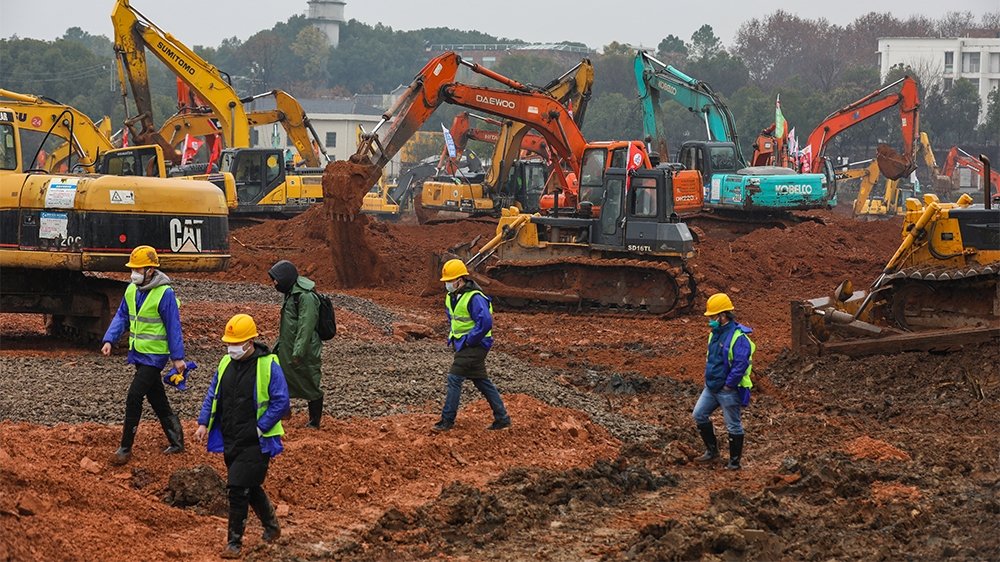
Seeing all this, our anxiety begins to ease and our confidence increases. I pull out a book on ancient Chinese philosophy from the shelf, intending to force myself to calm down, read it and turn my thoughts on something else but this catastrophe. I had tried to get into this book several times before but every time I had given up because it was too difficult for me. Was this the right good opportunity?

The week-long New Year holiday passed quickly, and the government decided to extend the holiday nationwide and postpone the opening date of all the schools.

My children cheered when they heard the news, but I had to think about how to deal with this unexpected situation.

Everyone is now looking for creative new solutions. How do you operate when you and your family is suddenly isolated physically in your home without any prior planning?

The demand for online office work and online education suddenly explodes and – predictably – some websites as well as many companies collapse.

The situation gradually improves after a week or two. We are learning to live with this as the new normal. My elder daughter faces her college entrance examination in her final year of high school. Her school had quickly begun to organize online teaching. Teachers and children tried their best to adapt to the new way of teaching and learning.

On social media, the learning of new skills has become popular, and people’s ability to adapt to new situations is beyond imagination – so impressive.

Eventually, the good news was that there were fewer and fewer new cases in Wuhan; more and more people were cured and discharged from hospitals. Temporary hospitals were gradually emptied and closed one by one.

Epidemic prevention and control measures are still being strictly implemented, masks are worn in public places, and special personnel deployed at all open buildings are equipped to check the body temperature of people entering.
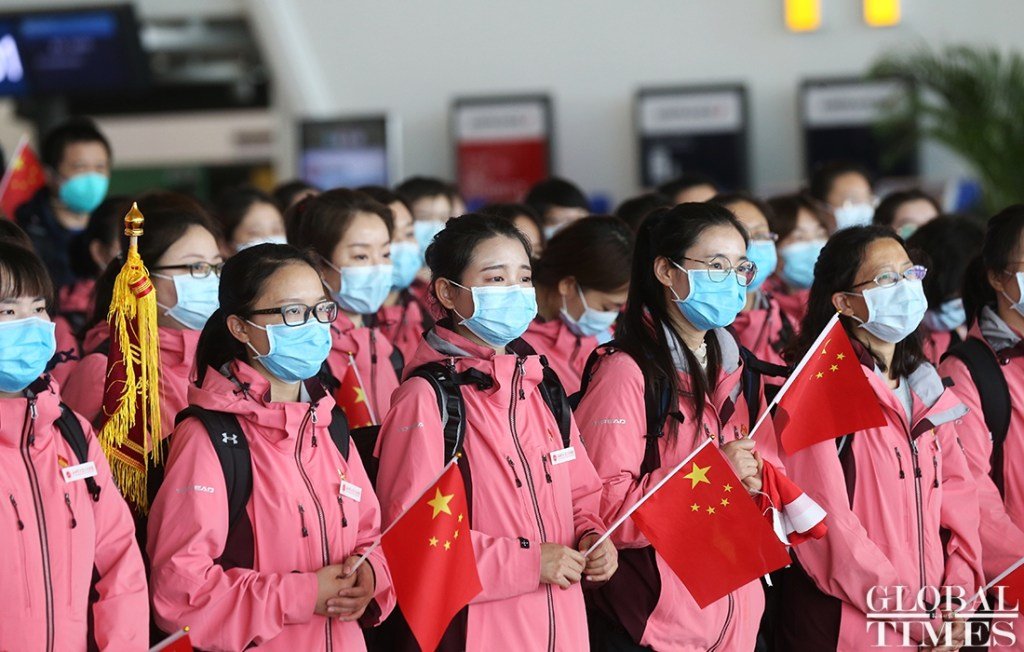
142 medical workers dispatched from Xinjiang returned home while 158 other medics from Xinjiang are currently in Wuhan and awaiting departure. They have treated 528 COVID-19 patients since Jan 28, of whom 321 have recovered.

It is predicted and expected that this will be our new ‘normal’ life for quite some time to come.

The epidemic situation in China is now basically over but – sadly, indeed – the virus has begun to spread to many other parts of the world. The number of infected and diseased are growing.

A heavy haze is now covering our global village. I believe it is just the beginning of a great change, and no one knows exactly what the world will look like during and after COVID-19.

The word “crisis” in Chinese includes the words “crisis” and “opportunity”, which means that out of a crisis new opportunities can also emerge.

We must hope that we shall all learn something constructive from the Corona pandemic and that a new and better world will emerge after it.

If you found this enlightening, please…

[paypal-donation]

Share

Leave a Reply

Your email address will not be published. Required fields are marked *

Related Posts

Officially, the drones were not identified. By simply thinking critically – which journalists and selected experts no longer do – there may be a good reason for that. And this article will never be mentioned in Denmark… Drones over Denmark. No damage. No trace. No answers. Yet the headlines scream “Russian threat,” and Prime Minister Mette Frederiksen speaks with a certainty that defies logic: “We don’t know they were Russian—but we know Russia is the biggest threat to Europe.” It could be nobody else – unless you make an interest analysis which I did two days ago. This is not security policy. It’s theatre. And the audience is being played. Let’s rewind. These drones—unphotographed, untracked, unclaimed—appear and vanish like ghosts. Airports shut down. Panic spreads. Military budgets swell. And the narrative hardens: Russia is behind it. But what if that’s not just wrong but deliberately misleading? Here’s a hypothesis for...
And why the world, especially the EU, must now declare itself independent of the United States. UN’s 80th anniversary This year, the United Nations celebrates the 80th anniversary of its founding. The UN was formed after the scourge of the Second World War, in which 70 to 85 million people were killed and many countries were destroyed. That war came on the heels of the First World War, which also killed between 15 and 22 million people. After the Second World War, especially after the use of nuclear weapons by the United States, which marked a turning point in the history of warfare that could result in the end of civilisation as we know it, humanity decided to move away from the era of empires and big power politics and usher in a new era of peace, freedom and cooperation. These were the principles enshrined in the UN Charter. The United States...
Drones over Nordic airports. No damage. No trace. No answers. Most assume Russia—but what if that’s not so? Why is there so much we are not told? This article explores the strategic ambiguity behind recent drone incursions and asks: Who else might benefit from sending drones into NATO airspace? From Ukraine’s surprising drone supremacy to Russia’s possible signalling, the silence itself may be the loudest message. These are the kinds of questions decent, intelligent investigative journalists and commentators could easily research. Why don’t they? Did you, dear reader, know or think of this? That the most powerful weapon in today’s conflicts might be the one that leaves no trace – and no answers. Just enough fear to justify the next move? Recently, drones have repeatedly appeared over Nordic airports and near some military facilities. They cause no damage – for which reason the designation “hybrid attack” is misleading but serves a purpose. These...

Recent Articles

PressInfo # 141, December 21, 2001It’s time to prepare reconciliation between Albanians and Serbs PressInfo # 140, December 14, 2001Ibrahim Rugova’s decade-long leadership in Kosovo/a PressInfo # 139, 11. december, 2001En god nyhet: Jugoslaviens Sannings- och försoningskommission PressInfo # 139, 11. december, 2001Gode nyheder: Jugoslaviens Sandheds- og Forsoningskommission PressInfo # 139, December 11, 2001Good news: Yugoslavia’s Truth and Reconciliation Commission PressInfo # 138, November 8, 2001TFF co-founder PhD with thesis about young people with roots in other cultures PressInfo # 138, November 8, 2001TFF:s medstiftare doktor på avhandling om unga med ursprung i andra kulturer PressInfo # 137, October 17, 2001A new Marshall Plan: Advancing human security and controlling terrorism PressInfo # 136, October 15, 2001The UN and Annan really deserve it PressInfo # 135, October 10, 2001Preventing a terrorist mushroom cloud PressInfo # 134, 17 oktober, 2001Sverige og 11. september PressInfo # 134, October 9, 2001Sweden and September 11...
Peace is promoted by constructive proposals and dialogue Four preceding PressInfos have expressed concern over — and criticised — the ongoing, militarisation of the EU. Some will say: but there are no alternatives. We believe that there are always alternatives, that democracies are characterised by alternatives and choice, and that openly discussed alternatives will improve the quality and legitimacy of society’s decision–making. In addition, it is an intellectual and moral challenge to not only criticise but also be constructive. If we only tell people that we think they are wrong, they are not likely to listen. However, if we say: what are your views on this set of ideas and steps? — we may sometimes engage them in dialogue and sow a seed. Most people in power circles live their daily lives in in a time frame and a social space where certain ideas, viewpoints and concepts are just not...
Photos © TFF 2000 Read PressInfo 90 “Lift the Sanctions and Bring More Aid to Yugoslavia” See Pictures from Belgrade © TFF 2000 Please reprint, copy, archive, quote or re-post this item, but please retain the source.

TFF on Substack

Discover more from TFF Transnational Foundation & Jan Oberg.

Most Popular

PressInfo # 141, December 21, 2001It’s time to prepare reconciliation between Albanians and Serbs PressInfo # 140, December 14, 2001Ibrahim Rugova’s decade-long leadership in Kosovo/a PressInfo # 139, 11. december, 2001En god nyhet: Jugoslaviens Sannings- och försoningskommission PressInfo # 139, 11. december, 2001Gode nyheder: Jugoslaviens Sandheds- og Forsoningskommission PressInfo # 139, December 11, 2001Good news: Yugoslavia’s Truth and Reconciliation Commission PressInfo # 138, November 8, 2001TFF co-founder PhD with thesis about young people with roots in other cultures PressInfo # 138, November 8, 2001TFF:s medstiftare doktor på avhandling om unga med ursprung i andra kulturer PressInfo # 137, October 17, 2001A new Marshall Plan: Advancing human security and controlling terrorism PressInfo # 136, October 15, 2001The UN and Annan really deserve it PressInfo # 135, October 10, 2001Preventing a terrorist mushroom cloud PressInfo # 134, 17 oktober, 2001Sverige og 11. september PressInfo # 134, October 9, 2001Sweden and September 11...
Peace is promoted by constructive proposals and dialogue Four preceding PressInfos have expressed concern over — and criticised — the ongoing, militarisation of the EU. Some will say: but there are no alternatives. We believe that there are always alternatives, that democracies are characterised by alternatives and choice, and that openly discussed alternatives will improve the quality and legitimacy of society’s decision–making. In addition, it is an intellectual and moral challenge to not only criticise but also be constructive. If we only tell people that we think they are wrong, they are not likely to listen. However, if we say: what are your views on this set of ideas and steps? — we may sometimes engage them in dialogue and sow a seed. Most people in power circles live their daily lives in in a time frame and a social space where certain ideas, viewpoints and concepts are just not...
Photos © TFF 2000 Read PressInfo 90 “Lift the Sanctions and Bring More Aid to Yugoslavia” See Pictures from Belgrade © TFF 2000 Please reprint, copy, archive, quote or re-post this item, but please retain the source.
Read More
Imagen-thumbnail-The-Transnational-1
PressInfo # 141, December 21, 2001It’s time to prepare reconciliation between Albanians and Serbs PressInfo # 140, December 14, 2001Ibrahim Rugova’s decade-long leadership in Kosovo/a PressInfo # 139, 11. december, 2001En god nyhet: Jugoslaviens Sannings- och försoningskommission PressInfo # 139, 11. december, 2001Gode nyheder: Jugoslaviens Sandheds- og Forsoningskommission PressInfo # 139, December 11, 2001Good news: Yugoslavia’s Truth and Reconciliation Commission PressInfo # 138, November 8, 2001TFF co-founder PhD with thesis about young people with roots in other cultures PressInfo # 138, November 8, 2001TFF:s medstiftare doktor på avhandling om unga med ursprung i andra kulturer PressInfo # 137, October 17, 2001A new Marshall Plan: Advancing human security and controlling terrorism PressInfo # 136, October 15, 2001The UN and Annan really deserve it PressInfo # 135, October 10, 2001Preventing a terrorist mushroom cloud PressInfo # 134, 17 oktober, 2001Sverige og 11. september PressInfo # 134, October 9, 2001Sweden and September 11...
Imagen-thumbnail-The-Transnational-1
Peace is promoted by constructive proposals and dialogue Four preceding PressInfos have expressed concern over — and criticised — the ongoing, militarisation of the EU. Some will say: but there are no alternatives. We believe that there are always alternatives, that democracies are characterised by alternatives and choice, and that openly discussed alternatives will improve the quality and legitimacy of society’s decision–making. In addition, it is an intellectual and moral challenge to not only criticise but also be constructive. If we only tell people that we think they are wrong, they are not likely to listen. However, if we say: what are your views on this set of ideas and steps? — we may sometimes engage them in dialogue and sow a seed. Most people in power circles live their daily lives in in a time frame and a social space where certain ideas, viewpoints and concepts are just not...
Imagen-thumbnail-The-Transnational-1
Photos © TFF 2000 Read PressInfo 90 “Lift the Sanctions and Bring More Aid to Yugoslavia” See Pictures from Belgrade © TFF 2000 Please reprint, copy, archive, quote or re-post this item, but please retain the source.
Imagen-thumbnail-The-Transnational-1
Av FRANK SØHOLM GREVIL 16 augusti 2004  Vi er nu nået til tredje akt i det absurde teaterstykke, der i analogi med de store skueprocesser i Moskva 1936-38 er blevet døbt ‘Grevil-sagen’. Første akt bestod i min anonyme fremlæggelse af egenhændigt nedklassificerede rapporter i Berlingske Tidende i februar og marts. Andet akt udgjordes af min fremtræden med navn og billede i Information i april samt den efterfølgende mediestorm, som uden min direkte medvirken kostede en forsvarsminister taburetten samt en sigtelse for brud på tavshedspligten. Tredje akt bliver en retssag, hvor jeg står tiltalt for at have overtrådt straffelovens bestemmelser om uberettiget videregivelse eller udnyttelse af fortrolige oplysninger. Statsanklageren har ovenikøbet valgt at påberåbe sig særligt skærpende omstændigheder. Da jeg aldrig har modtaget betaling for at stille rapporterne til rådighed eller lade mig interviewe, må det skærpende bestå i, at “videregivelsen eller udnyttelsen er sket under sådanne omstændigheder, at det påfører...
Imagen-thumbnail-The-Transnational-1
Af Svenska Irakkommittén mot de Ekonomiska Sanktionerna (SIES) 13 september 2002 FN:s ekonomiska sanktioner mot Irak har nu pågått i tolv år och drabbat det irakiska folket med svåra lidanden. Enligt FN:s egna siffror har mer än 1,5 miljoner människor, varav ca 600 000 barn, dött som en direkt följd av sanktionerna. Dessutom har ett lågintensivt bombkrig mot landet pågått under dessa år. Av all denna förödelse- orsakad huvudsakligen av amerikansk och brittisk politik- har Saddam Husseins brutala och diktatoriska regim snarast stärkts än försvagats. Nu förbereder USA under president Bushs ledning ett storskaligt bombkrig mot Irak som kommer att innebära ett ännu större lidande för civilbefolkningen. Ett sådant krig kommer dessutom att ytterligare undergräva freden och säkerheten i världen. Att upprätta en demokratisk regim i Irak är det irakiska folkets angelägenhet och får enligt folkrätten inte ske med krigshandlingar utifrån. Folkrätten och FN:s stadgar måste respekteras. Vi vädjar till...


