
Required Reading on Palestine

Andrew Ross’s Stone Men: The Palestinians Who Built Israel, Verso, 2019.

On May 10th Andrew Ross came to University of California, Santa Barbara for a discussion of his extraordinary book, Stone Men, offering the audience a lively presentation enlivened by a Powerpoint array of informative pictures. I took part in a conversation with Andrew that was held prior to giving the small, yet intense, audience an opportunity to participate with questions.

Andrew expressed the most startling aspect of Stone Men in these words:“..it would be no exaggeration to say that the ‘stone men’ of Palestine have built every state in the region except their own.” (3)

Originally published on May 13th, 2019 on Richard Falk’s blog here

His very readable text mainly adopts a somewhat narrower focus, concentrating its efforts on the particular role of Palestinian workers and the rich stone quarries of Palestine in the physical evolution of the Israeli state, not only establishing its architectural identity, but also shaping relations between Arab and Jewish workers and labor unions.

Furthermore, he analyses the contradictions that emerged between the market drive for profits by the Israeli private sector and the Zionist willingness to sacrifice profits and construction quality to achieve racial purity, which meant maximal Jewishness.

Reading Andrew’s book was for me quite a humbling encounter. Despite having immersed myself in the literature and politics of the Palestinian struggle for the past two decades, I was almost totally unaware of how revealingly relevant to the underlying struggle was this story of the physical building of urban Israel.

This focus provides a parallel and persuasive confirmation of my contention that the ‘original sin’ of Zionism is to establish a Jewish state in a non-Jewish society. It is the original sin because it leads from the earliest Zionist conceptions more than a century ago of a Jewish homeland to the ethnic cleansing of the Nakba, the resistance of the Palestinian people, their repression, the dependence on apartheid methods and structures to control resistance and establish Israeli security.

Andrew’s explorations of the way that this reality is concretely expressed in the building of Israel with Palestinian stones (the most valuable resource of the country aside from water) and Palestinian labor skilled over generations in the craft of stone masonry is not only a grim tale of exploitation and domination characteristic of settler colonialism, but in this case more than most colonial ventures, explicates the Zionist effort to displace the indigenous identity of the country with their own imported brand of coercive displacement or ethnic cleansing and biblical entitlement. 

In other words, just as Palestinian stone and water no longer belong to the Palestinian people neither does even the history nor identity of the place.

This interaction of displacement and resistance was accentuated and made especially severe due to four linked characteristics: first, Zionism was swimming against the anti-colonial tide of twentieth century history by their project to impose a democratic Jewish state on a non-Jewish societal reality; secondly, such political background also stimulated and sustained Palestinian resistance as an ongoing battleground of anti-colonialism, reinforced by the global legitimacy of its nationalist aspirations.

Thirdly, such legitimate resistance, especially in the face of Israeli apartheid and crimes against humanity, has given rise to a global solidarity movement; and fourthly, this entire dynamic is deformed by the continued geopolitical reinforcement of the Zionist Project, especially by the United States, carried to a surrealistic extreme by the Trump presidency.

I especially appreciated Andrew’s avoidance of the tendency of American liberals to treat the two sides in a language of false symmetry. Obama was a master of such rhetoric, characteristically declaring that both sides share blame for the failure to find a peaceful solution and that real peace will depend on painful concessions by both sides.

This kind of languages falsifies and deliberately ignores the essential a-symmetry of the relationship between Israeli Jews and Palestinians, which as indicated, is an apartheid state premised on inequality and the subjugation of the Palestinian people as a whole.

It follows from this that the fundamental first step toward a sustainable peace must come from Israel, which in this instance would require the renunciation of apartheid and the dismantling of its structures.

Only on the basis of the existential equality of the two peoples does a sustainable peace based on diplomacy and negotiations become a plausible possibility. This is what happened in South Africa, and incidentally, in a manner that was unexpected by both the experts and the citizenry of the country.

I was also impressed by the refreshing transparency of Andrew’s scholarly profile, a quality that is in short supply in the academic literature. Such transparency assumes the properties of what I would label as ‘partisan objectivity.’ This contrasts with standard academic writing that hides the author’s point of view behind a veil of detached rhetoric.

Andrew makes clear his solidarity with the Palestinian struggle for peace-with-justice as dependent upon the establishment of a democratic secular state, which is a controversial observational standpoint. Such a standpoint implicitly means the end of the Zionist insistence on the identity of post-mandate of Palestine as a Jewish state, which according to the Basic Law enacted by the Knesset in 2018 reserves the right of self-determination exclusively for the Jewish people.

This enactment not only reinforces the contention that Israel is guilty of the international crime of apartheid, and as well pushes the logic of Palestinian displacement (Nakba) a step closer to its outer limit.

In presenting this narrative of how Israel was built over the decades, Andrew presents a range of Palestinian and Israeli voices that give an objective account of perceptions and experience with the author largely limiting his role to recording, listening,  and describing. but this author is also a knowing and feeling subject, and this reality is acknowledged, not suppressed. I regard this as a significant achievement, and a model for the rest of us to follow.

Among the most moving aspects of the book is the exposure of the deep personal and interpersonal conflicts faced by virtually all Palestinians. To earn a living many Palestinians work in the settlements or obtain work permits to take construction jobs across the green line.

Such individuals feel fortunate to have these opportunities to earn a living wage, yet this good fortune creates severe tensions within self, family, and community. To survive materially, Palestinian males must often be complicit in Israeli expansionism and apartheid policies.

Such a situation confronts individuals with a terrible dilemma of choosing between complicity and criminality, either giving priority to day to day imperatives of survival or to direct participation in the resistance.

Several Palestinian interviewees relate their own experience of throwing stones as a youngster only to later becoming a  worker at an Israeli settlement so as to fulfil responsibilities as a family provider. This is never an easy path for a Palestinian, given the humiliation and acute insecurities that inevitably arise.  Some Palestinians, interviewed in the book, convey their adjustment to the realities of the occupation as in constant flux, being compliant for the sake of paid work, and being oppositional when opportunities arise.

It is against this background that I recommend Stone Men so highly. Not only is the argument, the abundant photos, and the evidence gathered impressive and interesting, but the methodology is an exemplary instance of ethnographic studies, relying on copious empirical observation and numerous interviews with Palestinians and Israelis to explain the realities in their own voices.

Ross has a gift for quotation that further conveys his underlying, irrefutable message. In this sense the book practices what it preaches – empowerment of people, the inalienable entitlement of a rooted presence in national space, the fabric of injustice as described by those most victimized, and the anti-colonial mentality that can be repressed but not extinguished.

My final assessment: No matter how much you think you know about Palestine, you do not know enough until you have read this book.

Editorial note
To the original article has been added subheadings, italicization and photos by Severine Renard, all to enhance readability. No change of content.
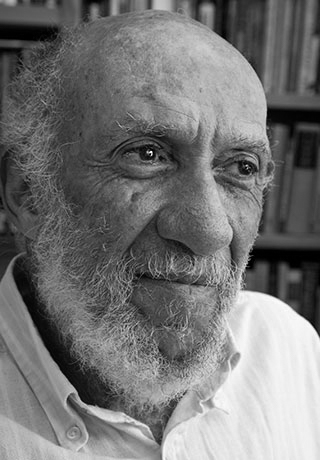

Professor Falk became an adviser to TFF when it was established in 1985.

Share

Leave a Reply

Your email address will not be published. Required fields are marked *

Related Posts

A slightly modified version of a text published on Sept. 1, 2025 in TMS. On August 25 Thomas Friedman, always a weathervane for political and economic establishment thinking in the West, wrote a notable column in the NY Times that was pragmatic in tone, misleading in substance, and regressive in intention. Yet it reflects a growing ambivalence toward Israel’s prolonged genocide even among longtime supporters of Israel that now highlights starvation, famine, and a gross distortion of the delivery of humanitarian aid under emergency conditions. But expressed dangerously without hiding the hope that Israel could even now restore its legitimacy without being held accountable for crimes in Gaza and despite all, still expecting to be rewarded by excluding Hamas from any further governance role in Gaza and continuing to move toward the annexation of the West Bank by formal action or through further settlement expansion. It is notable that the headline of...
Professor emeritus, TFF Associate Oxford (Special to Informed Comment; Feature) The dam has burst. Netanyahu and his far-right regime have gone too far. Public pressure on politicians in Europe and many other countries has become irresistible, forcing them to change course. Most countries, 147 of the UN’s 193 members, have formally recognized a Palestinian state, and last week, France pledged to do so at the UN meeting in September. Fourteen nations, including Canada, New Zealand and Australia, join France in a push to recognize a Palestinian state. The British Prime Minister Keir Starmer, one of Israel’s staunchest allies who even refused to condemn the Israeli blockade of food, water, medicine and fuel to the Palestinians after the terrible events of 7th October, has buckled under the pressure of public opinion. More than 255 MPs of all parties signed a letter addressed to the prime minister in which they urged him to...

Recent Articles

PressInfo # 141, December 21, 2001It’s time to prepare reconciliation between Albanians and Serbs PressInfo # 140, December 14, 2001Ibrahim Rugova’s decade-long leadership in Kosovo/a PressInfo # 139, 11. december, 2001En god nyhet: Jugoslaviens Sannings- och försoningskommission PressInfo # 139, 11. december, 2001Gode nyheder: Jugoslaviens Sandheds- og Forsoningskommission PressInfo # 139, December 11, 2001Good news: Yugoslavia’s Truth and Reconciliation Commission PressInfo # 138, November 8, 2001TFF co-founder PhD with thesis about young people with roots in other cultures PressInfo # 138, November 8, 2001TFF:s medstiftare doktor på avhandling om unga med ursprung i andra kulturer PressInfo # 137, October 17, 2001A new Marshall Plan: Advancing human security and controlling terrorism PressInfo # 136, October 15, 2001The UN and Annan really deserve it PressInfo # 135, October 10, 2001Preventing a terrorist mushroom cloud PressInfo # 134, 17 oktober, 2001Sverige og 11. september PressInfo # 134, October 9, 2001Sweden and September 11...
Peace is promoted by constructive proposals and dialogue Four preceding PressInfos have expressed concern over — and criticised — the ongoing, militarisation of the EU. Some will say: but there are no alternatives. We believe that there are always alternatives, that democracies are characterised by alternatives and choice, and that openly discussed alternatives will improve the quality and legitimacy of society’s decision–making. In addition, it is an intellectual and moral challenge to not only criticise but also be constructive. If we only tell people that we think they are wrong, they are not likely to listen. However, if we say: what are your views on this set of ideas and steps? — we may sometimes engage them in dialogue and sow a seed. Most people in power circles live their daily lives in in a time frame and a social space where certain ideas, viewpoints and concepts are just not...
Photos © TFF 2000 Read PressInfo 90 “Lift the Sanctions and Bring More Aid to Yugoslavia” See Pictures from Belgrade © TFF 2000 Please reprint, copy, archive, quote or re-post this item, but please retain the source.

TFF on Substack

Discover more from TFF Transnational Foundation & Jan Oberg.

Most Popular

PressInfo # 141, December 21, 2001It’s time to prepare reconciliation between Albanians and Serbs PressInfo # 140, December 14, 2001Ibrahim Rugova’s decade-long leadership in Kosovo/a PressInfo # 139, 11. december, 2001En god nyhet: Jugoslaviens Sannings- och försoningskommission PressInfo # 139, 11. december, 2001Gode nyheder: Jugoslaviens Sandheds- og Forsoningskommission PressInfo # 139, December 11, 2001Good news: Yugoslavia’s Truth and Reconciliation Commission PressInfo # 138, November 8, 2001TFF co-founder PhD with thesis about young people with roots in other cultures PressInfo # 138, November 8, 2001TFF:s medstiftare doktor på avhandling om unga med ursprung i andra kulturer PressInfo # 137, October 17, 2001A new Marshall Plan: Advancing human security and controlling terrorism PressInfo # 136, October 15, 2001The UN and Annan really deserve it PressInfo # 135, October 10, 2001Preventing a terrorist mushroom cloud PressInfo # 134, 17 oktober, 2001Sverige og 11. september PressInfo # 134, October 9, 2001Sweden and September 11...
Peace is promoted by constructive proposals and dialogue Four preceding PressInfos have expressed concern over — and criticised — the ongoing, militarisation of the EU. Some will say: but there are no alternatives. We believe that there are always alternatives, that democracies are characterised by alternatives and choice, and that openly discussed alternatives will improve the quality and legitimacy of society’s decision–making. In addition, it is an intellectual and moral challenge to not only criticise but also be constructive. If we only tell people that we think they are wrong, they are not likely to listen. However, if we say: what are your views on this set of ideas and steps? — we may sometimes engage them in dialogue and sow a seed. Most people in power circles live their daily lives in in a time frame and a social space where certain ideas, viewpoints and concepts are just not...
Photos © TFF 2000 Read PressInfo 90 “Lift the Sanctions and Bring More Aid to Yugoslavia” See Pictures from Belgrade © TFF 2000 Please reprint, copy, archive, quote or re-post this item, but please retain the source.
Read More
Imagen-thumbnail-The-Transnational-1
PressInfo # 141, December 21, 2001It’s time to prepare reconciliation between Albanians and Serbs PressInfo # 140, December 14, 2001Ibrahim Rugova’s decade-long leadership in Kosovo/a PressInfo # 139, 11. december, 2001En god nyhet: Jugoslaviens Sannings- och försoningskommission PressInfo # 139, 11. december, 2001Gode nyheder: Jugoslaviens Sandheds- og Forsoningskommission PressInfo # 139, December 11, 2001Good news: Yugoslavia’s Truth and Reconciliation Commission PressInfo # 138, November 8, 2001TFF co-founder PhD with thesis about young people with roots in other cultures PressInfo # 138, November 8, 2001TFF:s medstiftare doktor på avhandling om unga med ursprung i andra kulturer PressInfo # 137, October 17, 2001A new Marshall Plan: Advancing human security and controlling terrorism PressInfo # 136, October 15, 2001The UN and Annan really deserve it PressInfo # 135, October 10, 2001Preventing a terrorist mushroom cloud PressInfo # 134, 17 oktober, 2001Sverige og 11. september PressInfo # 134, October 9, 2001Sweden and September 11...
Imagen-thumbnail-The-Transnational-1
Peace is promoted by constructive proposals and dialogue Four preceding PressInfos have expressed concern over — and criticised — the ongoing, militarisation of the EU. Some will say: but there are no alternatives. We believe that there are always alternatives, that democracies are characterised by alternatives and choice, and that openly discussed alternatives will improve the quality and legitimacy of society’s decision–making. In addition, it is an intellectual and moral challenge to not only criticise but also be constructive. If we only tell people that we think they are wrong, they are not likely to listen. However, if we say: what are your views on this set of ideas and steps? — we may sometimes engage them in dialogue and sow a seed. Most people in power circles live their daily lives in in a time frame and a social space where certain ideas, viewpoints and concepts are just not...
Imagen-thumbnail-The-Transnational-1
Photos © TFF 2000 Read PressInfo 90 “Lift the Sanctions and Bring More Aid to Yugoslavia” See Pictures from Belgrade © TFF 2000 Please reprint, copy, archive, quote or re-post this item, but please retain the source.
Imagen-thumbnail-The-Transnational-1
Av FRANK SØHOLM GREVIL 16 augusti 2004  Vi er nu nået til tredje akt i det absurde teaterstykke, der i analogi med de store skueprocesser i Moskva 1936-38 er blevet døbt ‘Grevil-sagen’. Første akt bestod i min anonyme fremlæggelse af egenhændigt nedklassificerede rapporter i Berlingske Tidende i februar og marts. Andet akt udgjordes af min fremtræden med navn og billede i Information i april samt den efterfølgende mediestorm, som uden min direkte medvirken kostede en forsvarsminister taburetten samt en sigtelse for brud på tavshedspligten. Tredje akt bliver en retssag, hvor jeg står tiltalt for at have overtrådt straffelovens bestemmelser om uberettiget videregivelse eller udnyttelse af fortrolige oplysninger. Statsanklageren har ovenikøbet valgt at påberåbe sig særligt skærpende omstændigheder. Da jeg aldrig har modtaget betaling for at stille rapporterne til rådighed eller lade mig interviewe, må det skærpende bestå i, at “videregivelsen eller udnyttelsen er sket under sådanne omstændigheder, at det påfører...
Imagen-thumbnail-The-Transnational-1
Af Svenska Irakkommittén mot de Ekonomiska Sanktionerna (SIES) 13 september 2002 FN:s ekonomiska sanktioner mot Irak har nu pågått i tolv år och drabbat det irakiska folket med svåra lidanden. Enligt FN:s egna siffror har mer än 1,5 miljoner människor, varav ca 600 000 barn, dött som en direkt följd av sanktionerna. Dessutom har ett lågintensivt bombkrig mot landet pågått under dessa år. Av all denna förödelse- orsakad huvudsakligen av amerikansk och brittisk politik- har Saddam Husseins brutala och diktatoriska regim snarast stärkts än försvagats. Nu förbereder USA under president Bushs ledning ett storskaligt bombkrig mot Irak som kommer att innebära ett ännu större lidande för civilbefolkningen. Ett sådant krig kommer dessutom att ytterligare undergräva freden och säkerheten i världen. Att upprätta en demokratisk regim i Irak är det irakiska folkets angelägenhet och får enligt folkrätten inte ske med krigshandlingar utifrån. Folkrätten och FN:s stadgar måste respekteras. Vi vädjar till...

