November 2024

Showing 1-10 of 4016 stories

Sort by
Categories

Year

Author / Contributor

Region

WechatIMG754
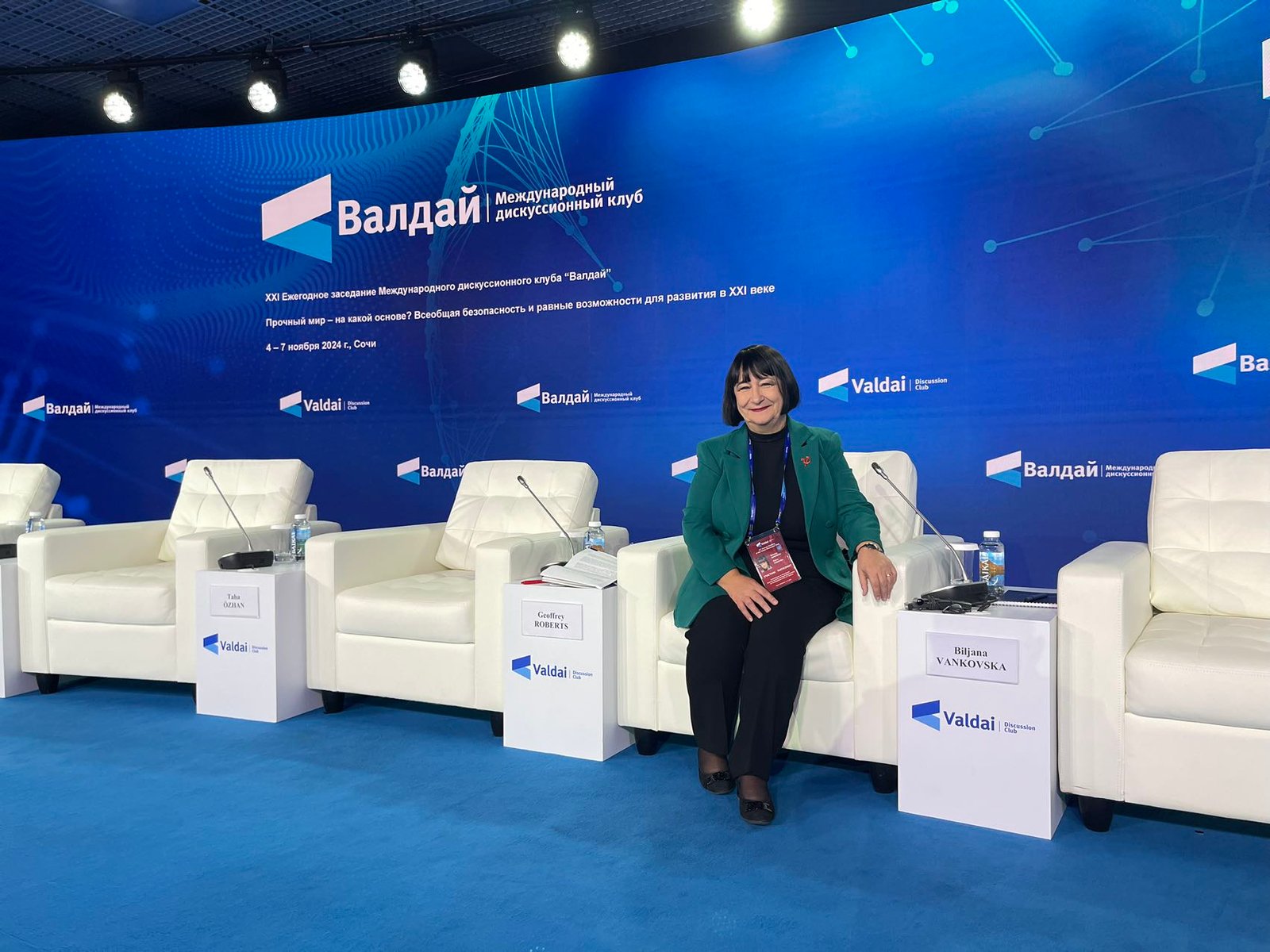
A report from the Valdai Discussion Club event in November 2024 Professor and director of the Global Changes Centre in Skopje, Macedonia and TFF Board member The intelligence services have probably noted this meticulously, but let me publicly share my experience of attending, for the first time, the annual conference of the renowned Valdai Discussion Club in Russia. For 20 years now, it has convened near Sochi, nestled among the stunning mountain peaks of the Russian Caucasus. Personally, this year stands out for many reasons. My first visits to China, and now to Russia, are undoubtedly among the most significant. Due to the format of the conference, I can’t describe Russia to you in the same way I recounted my experience in China. Over four days, around 130 participants (professors, analysts, strategists, diplomats, former generals, journalists—mostly from foreign countries, with fewer from Russia) representing over 50 nations engaged in discussions...

Eclecticism_90cm_300dpi_1200_100dpi
This is a chapter in a TFF anthology in the making – “If You Want To Understand China.” Introduction ”Should the West see China as a threat or as an opportunity, a friend or an enemy? Are we heading for a third world war? Does the seemingly inexorable rise of China spell the doom of many values in which we have long believed? Might some form of communism prevail after all? Are China’s motives sinister? Is it trying to subvert us? Is it plotting mischief? Given the very bad press China has been getting in Western media, one might certainly think so. But the word ‘sinister’ has an interesting derivation. Its original meaning has nothing to do with wily orientalism. It means simply left-handed. Most of us are right-handed, using our dominant left-brain hemispheres which are wired to the right side of our bodies. But a few of us are...
YiningAvenueWoman_1200-copy
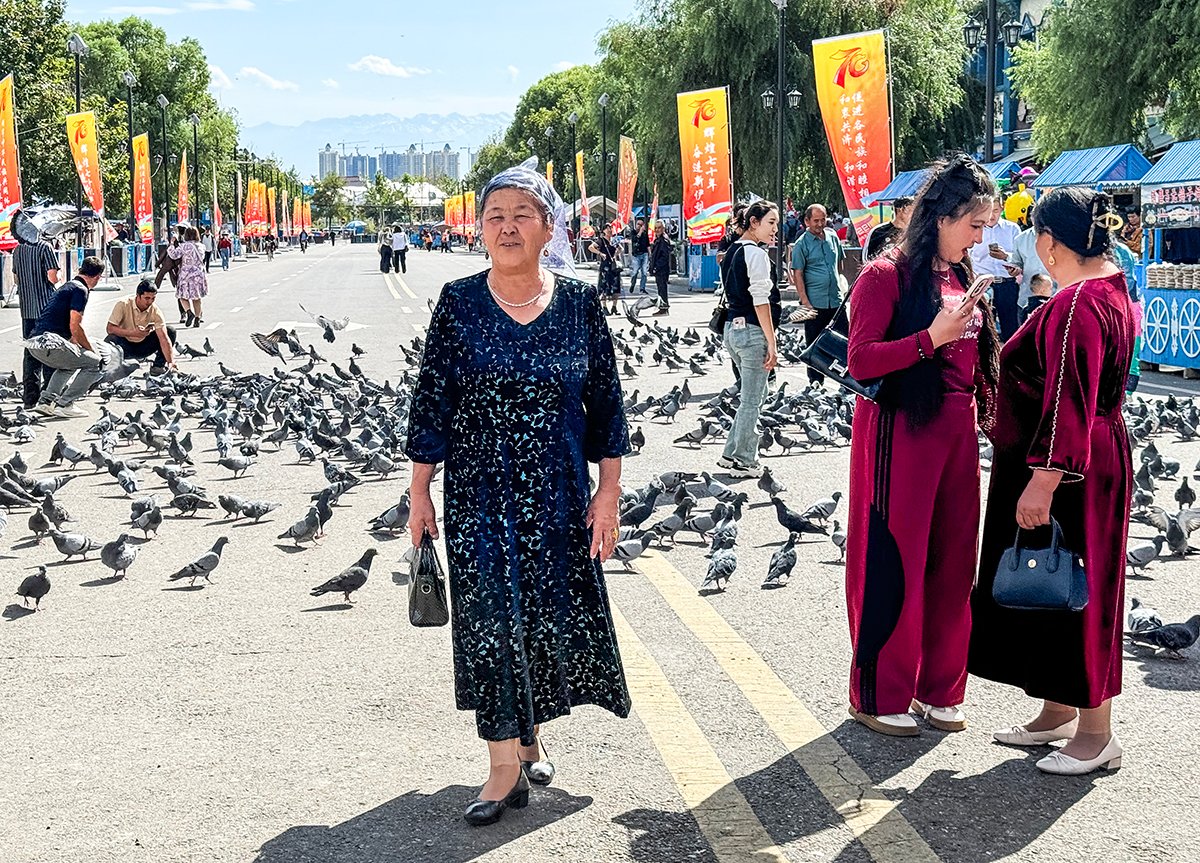
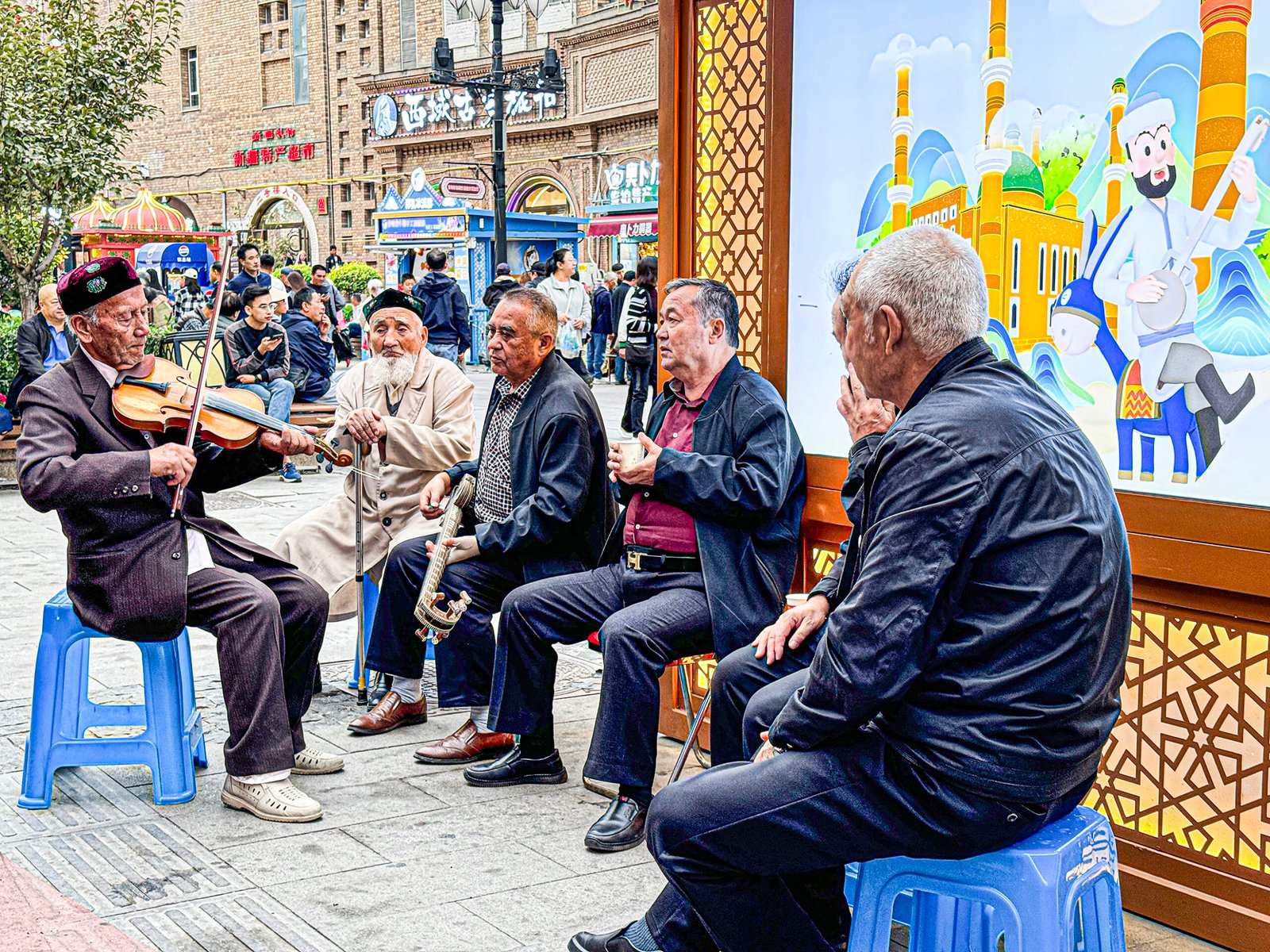
Why it is essential to travel and see for yourself and then build networks and promote dialogues in the world’s likely most serious conflict. PART II PART I I recommend you read Part I before reading this second part. A dynamic melting pot You may ask where Xinjiang’s immense cultural diversity comes from. While I have not studied its history, I have learned that it has always been one big meeting place, dating back to the first Silk Roads, where people travelled, traded, explored, and migrated. Crisscrossing also borders with eight neighbours so that over time, it became a melting pot. There is a lot of diversity; each national group or ethnicity seems to have preserved vital elements of its own culture, language, aesthetics, way of living, dancing, etc. and also become part of the unity called Xinjiang and China. A woman I met told me that each nationality’s way of dancing could be...
YiningAvenueWoman_1200-copy
For the last time, I am stating my views on the West’s genocide accusation and why I refuse to let the US/NATO/EU Cold War policy set the agenda and discourse about China in general and Xinjiang in particular. PART I Part II A daring prediction I shall be surprised if, in about 10-15 years, Xinjiang – the North-Western province of China, its largest province three times larger than France – has not become a world-leading cultural and economic hub in humanity’s multipolar/nodal future world. It exhibits a tremendous cultural variety that seems to be moving towards unity in an amazing diversity. It has a vast natural resource potential. It interacts with eight very important neighbouring countries. It’s the crossroads of past, present and future. Xinjiang is the sine qua non of the new Silk Roads, also called the Belt and Road Initiative (BRI), which involves over 140 countries worldwide and...
Rapport-Top_small
I. Introduction The initiative for the “Nordic Delegation to China, September 7-15, 2024” was taken from the Norwegian side. Journalist and former editor Arild Vollan wanted to investigate claims in the media about an ongoing genocide against the Uyghurs in the autonomous region of Xinjiang in western China. Vollan selected an independent, cross-disciplinary and cross-political delegation group consisting of people who have worked with China and who wanted to get personal impressions of the conditions described in the previous section. The delegation consisted of: The delegation itself developed the project’s mandate. Following an excursion to Xinjiang province, the delegation’s mandate was to clarify whether observations made during the trip substantiated claims in the media that there is an ongoing genocide in Xinjiang today. Arild Vollan prepared the excursion program in dialogue with Thore Vestby, who has previously visited the province. The logistics were set up in dialogue with the Chinese Embassy in...
Valdai
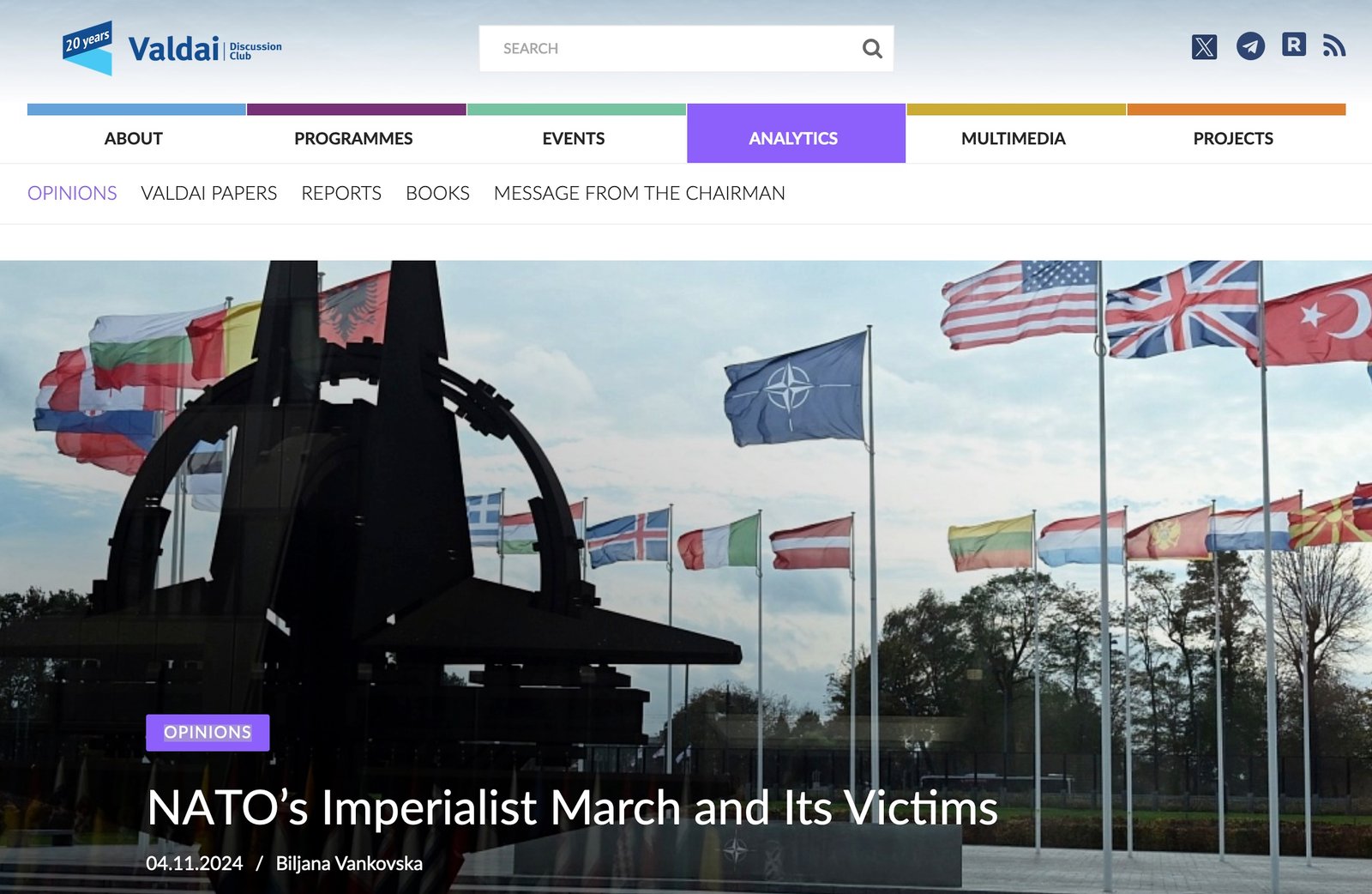
Here is the paper as published by the prestigious Valdai Discussion Club
THForum
It has great potentials and needs global citizens’ – your – support. Amid global conflicts escalating, why has the United Nations, tasked with maintaining peace, seemingly failed to fulfill its role? Why is a ceasefire agreement in Gaza proving elusive, and why does a ceasefire between Russia and Ukraine remain distant? Professor Jan Oberg delves into the underlying reasons why achieving world peace is such a challenging endeavour. This video was produced by The China Academy in Shanghai, more about it here. You may also see it on YouTube and read the interesting comments on it.
IMG_2300_smaller
This video was produced by the China Academy in Shanghai and uploaded by Global Times. The original version and comments under it are here. Please also check TFF’s analysis of the accusations made by US/Western media and think tanks concerning Xinjiang here.
IMG_4462
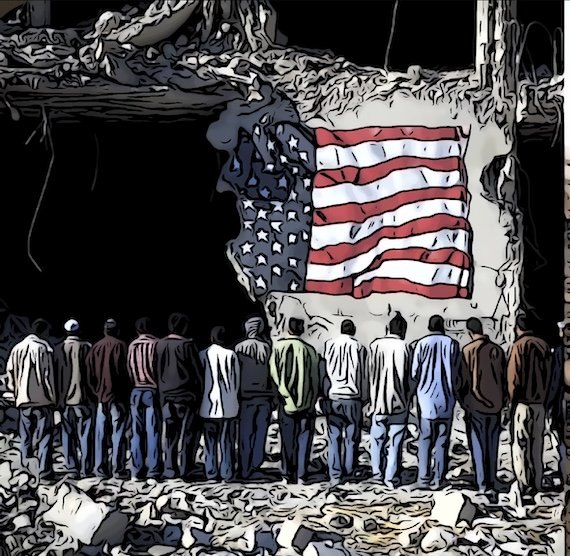
“No Extermination without Representation,” Digital, Midjourney / Clip2Comic, 2024 TFF Associate & former Board member On November 5, the American people go to the polls in one of the most consequential elections for the United States and the world. Normally, outsiders should not interfere in other countries’ elections, although the United States has a habit of interfering in other countries’ elections, often overtly and sometimes with the use of coups, plots, subversion, etc. However, as the Americans chanted “no taxation without representation” when they were fighting for their independence and tried to shake off the yoke of a foreign power over their lives, it is now appropriate for the people of the world to say “no extermination without representation.” If the rest of the world cannot have representation in US elections, at least we are entitled to express a view about it, especially when it affects the well-being or even...
a226e378-ed4b-4aaa-a9c3-c26dd6be7eb3
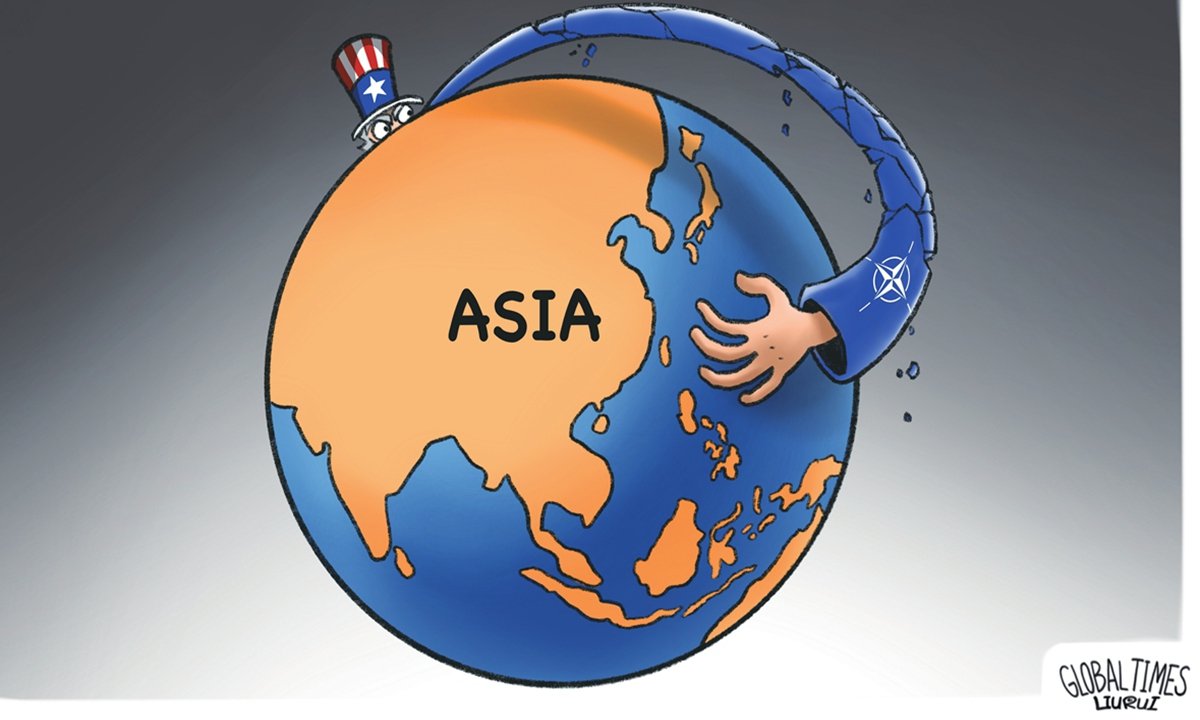
South Korea, Japan, Australia, and New Zealand sent their defence ministers to a NATO meeting in October 2024. While their heads of state and others have attended before, this was the first time these countries’ defence ministers joined. 
 This more military-operative attendance signals that NATO is serious about its expansion into this region. From a politico-psychological angle, it also shows that expansion for the sake of expansion has become the raison d’etre of the once-defensive alliance. NATO has been searching for such a reason to exist ever since the Soviet Union and the Warsaw Pact dissolved about 35 years ago, and, by all logic, it ought to have been closed down, too. The expansion happens in violation of NATO’s Treaty of 1949. That Treaty is a copy of the UN Charter, refers disputes to the UN and states (Art 5) that members of the alliance are obliged to support...