July 2021

Showing 1-10 of 4016 stories

Sort by
Categories

Year

Author / Contributor

Region

695-header-base
William H. Overhalt July 20, 2021 President Biden’s foreign policy team says China is the priority, but the team lacks China expertise. Other than trade experience at the Office of the United States Trade Representative, Biden’s Cabinet has no China expertise. Secretary of State Antony Blinken has worked on issues involving Europe, Canada and the Middle East. Defense Secretary Lloyd Austin has a distinguished career as a general in Iraq and as leader of U.S. forces in the Middle East. National security adviser Jake Sullivan’s biography highlights work on Libya, Syria, Iran and Myanmar.  Originally posted by The Hill on July 7th, 2021 Biden’s lead candidate for ambassador to Beijing continues the pattern. Nicholas Burns has served in the Middle East and Europe. An Indiaphile and Sinophobe, he lacks China experience and disdains China experts with more complex views.  I’m a lifelong Democrat who criticized George W. Bush’s foreign policies. But Bush had outstanding success...
5e1588b4a310cf3e97afb830
By Xinhua writers Tao Fangwei and Gu Yu July 20, 2021 — Despite the Xinjiang cotton boycott instigated by some Western politicians under the pretext of “forced labor,” the region’s cotton and textile industry has shown resilience by further tapping markets and winning over more customers with its superior quality. — In the first four months of this year, China’s export volume of cotton textiles and garments hit 19.7 billion U.S. dollars, up 44 percent year on year. — “China’s cotton has contributed a lot to the global cotton industry and we deserve fair treatment and due respect,” said Gao Fang, director of the China Cotton Association. Originally posted on CCTV’s English website on July 9th, 2021 URUMQI, July 8 (Xinhua) — In a textile plant in the city of Shihezi, northwest China’s Xinjiang Uygur Autonomous Region, machines with 100,000 spindles rumbled to spin cotton into yarn. “We are producing...
Soldier-in-the-Vietnam-War
I would like to announce the publication of a book which discusses the reasons why the institution of war continues to threaten human civilization and the biosphere, and the steps that might be taken to rid the world of war. The book may be downloaded and circulated free of charge from the following link: A new freely downloadable book Albert Einstein’s letter to Sigmund Freud “Why War?” – the title of this book, was also the title of a famous letter written to Sigmund Freud by Albert Einstein. In 1931, the International Institute for Intellectual Cooperation invited Albert Einstein to enter correspondence with a prominent person of his own choosing on a subject of importance to society. The Institute planned to publish a collection of such dialogues. Einstein accepted at once, and decided to write to Sigmund Freud to ask his opinion about how humanity could free itself from the curse...
China_Briefing_The_US_China_Tr
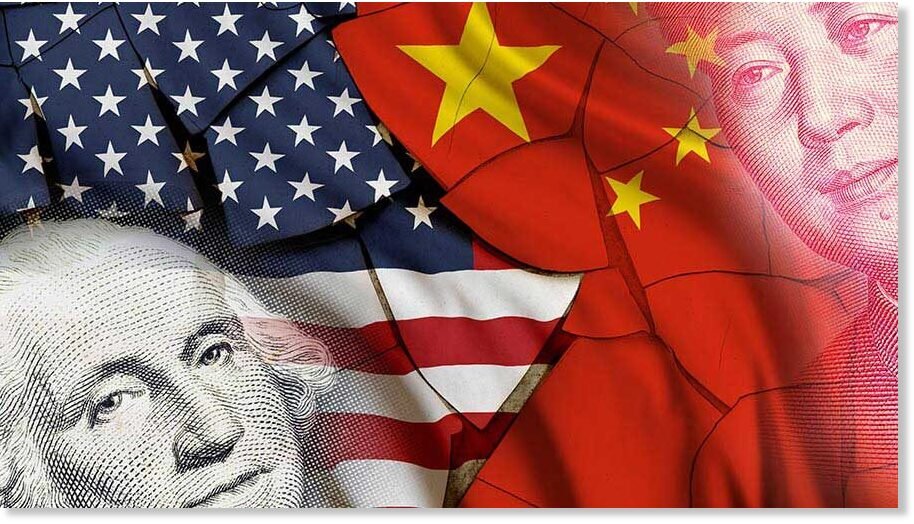
Andrew Bacevich July 1, 2021 Has a new Cold War, this one pitting the United States against the People’s Republic of China, commenced? Rhetoric coming out of Washington, amplified by hawkish media commentary, appears to take a Second Cold War as a given, something perhaps even to be welcomed. Originally posted by Los Angeles Times on April 18th, 2021 If Cold War II looms, how will it compare with its predecessor? Does the term “Cold War” aptly describe the contest now being joined? Or might the revival of the term itself represent a potentially fatal misstep? The first Cold War, dating from 1947, centered on geopolitical competition with an overlay of ideology. The so-called free world, led by the United States, stood in opposition to the Soviet-led Communist bloc. Whatever the passing allure of Marxism-Leninism, that competition was never a contest between equals. Although the outcome may not have been...

Beijing-has-continually-sought-to-defuse-the-tensions-and-avert-the-new-Cold-War-that-many-are-predicting
Quincy Institute July 1st, 2021 WASHINGTON — In response to the Senate Foreign Relations Committee’s recent vote to advance the Strategic Competition Act of 2021 (SCA), and reports that it will receive a Senate floor vote this week, 66 organizations said: Originally posted on the Quincy Institute’s website on May 17, 2021 here “We, the undersigned organizations that represent millions of people across the United States, are deeply concerned about the growing Cold War mentality driving the U.S. approach to China. Although our organizations may have different mandates or ideological persuasions, we know that the new Cold War with China currently being pushed in Washington does not serve the millions of people demanding change across this country nor the billions of people affected by U.S. foreign policy abroad, and will instead lead to further insecurity and division.  Worryingly, both political parties are increasingly latching onto a dangerously short-sighted worldview that presents China as the...
MLK
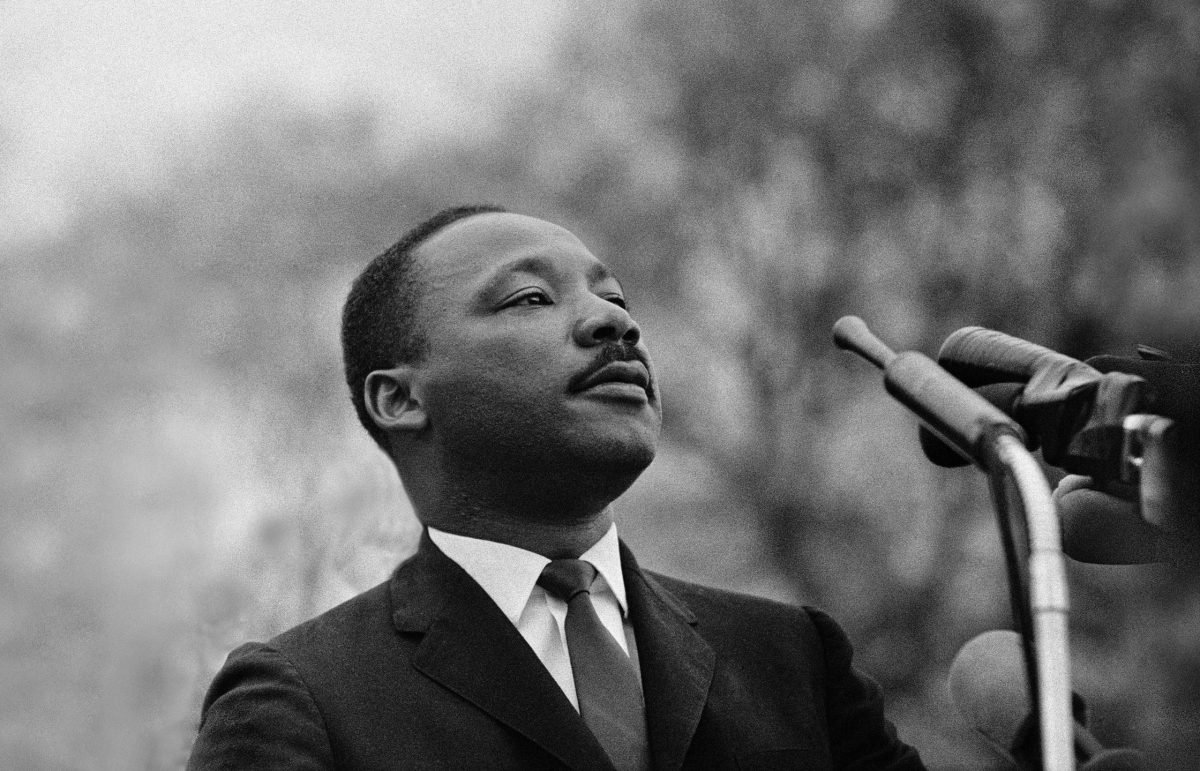
Photo: Martin Luther King. [bswise / CC BY-NC-ND 2.0] Jeff Cohen and Norman Solomon June 29, 2021 The MLK tributes are sure to pour on the anniversary of the civil rights hero’s death, but don’t expect them to acknowledge his anti-militarist ideals. The anniversary of his assassination always brings a flood of tributes to Martin Luther King Jr., and this Sunday will surely be no exception. But those tributes — including from countless organizations calling themselves progressive — are routinely evasive about the anti-militarist ideals that King passionately expressed during the final year of his life. You could call it evasion by omission. The standard liberal canon waxes fondly nostalgic about King’s “I have a dream” speech in 1963 and his efforts against racial segregation. But in memory lane, the Dr. King who lived his last year is persona non grata. Originally published April 21. 2021 at scheerpost.com The pattern is positively Orwellian....
pankajmishwa
Photo: Pankaj Mishra By Radmila Nakarada and Jelena Vidojević June 29, 2021 This conversation with the Indian-born essayist, novelist and historian Pankaj Mishra, took place before the US elections. Q: In your major writings you deal with the Western model of modernisation and in the suffering involved in its evolution, expansion and emulation. You have emerged as a prominent critic of the empire and its links to liberal ideas. Reviewers often depict you as the voice of the marginalised and excluded, humiliated, the victims. How would you define yourself today?  A: I think I was fortunate to write for mainstream publications in the United States and Britain from the late 1990s onwards, when the illusions of Americanising the world were at their strongest. Britain and America were being held as models for the rest of the world to imitate and no attention was being paid to their long past of slavery and...