November 2020

Showing 1-10 of 4016 stories

Sort by
Categories

Year

Author / Contributor

Region

US-EU-China
TFF Associate Not a day goes by without China appearing in Western news or social media. Almost exclusively with negative reports of human rights violations in Xinjiang or the security law in Hong Kong, government propaganda, or serious concerns that China and its communism will take over the world. Many reports and opinions from Western think tanks and researchers have been published this year about what is happening in China and how China should be approached or dealt with. The contents range from high vigilance to direct attacks in which China is labeled as a serious threat to the future of the “free world”. These pieces are widely reported in the media and often taken over by politicians for their China policy in a considerable number of Western governments. Alternative reports with different sounds or perspectives are snowed under or beaten down. As a result, the perception of China in...
AleppoTank2020_1180-72dpi
Against the Institution of War – announcing the publication of the book, The Ecological Impact of Militarism As we start the 21st century and the new millennium, our scientific and technological civilization seems to be entering a period of crisis. Today, for the first time in history, science has given to humans the possibility of a life of comfort, free from hunger and cold, and free from the constant threat of infectious disease. At the same time, science has given us the power to destroy civilization through thermonuclear war, as well as the power to make our planet uninhabitable through pollution and overpopulation. The question of which of these alternatives we choose is a matter of life or death to ourselves and our children. The crisis of civilization, which we face today, has been produced by the rapidity with which science and technology have developed. Our institutions and ideas adjust...
herbert-marcuse
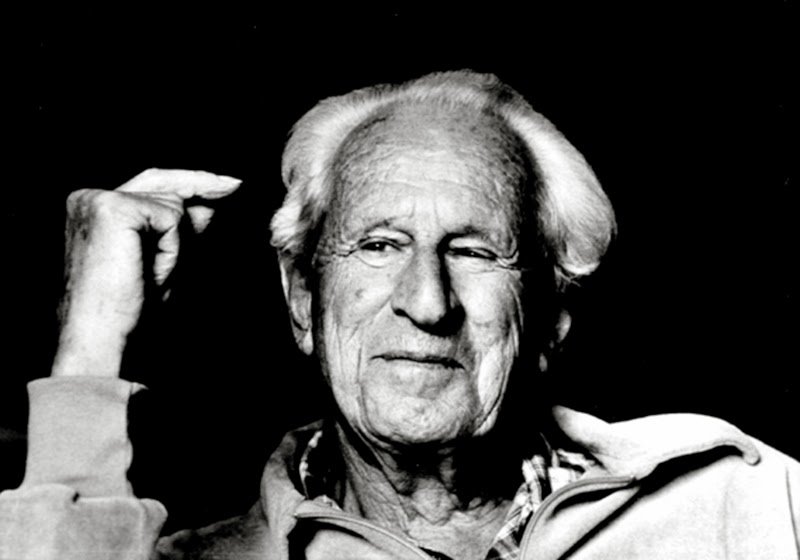
Fifty years later, One-Dimensional Man looks more prescient than its author could have imagined. Ronald Aronson November 23, 2020 When Herbert Marcuse’s One-Dimensional Man appeared fifty years ago, it was a revelation. To many of us who were becoming the New Left, Marcuse reflected and explained our own feeling of suffocation, our alienation from an increasingly totalitarian universe that trumpeted its freedom at every moment. We had grown up in it, we had encountered it in Allen Ginsberg’s Howl; but until One-Dimensional Man, we could scarcely understand, let alone describe, it. A student of Marcuse’s, I wrote at the time in Radical America that the book was “a major step in our breaking out of that closing universe. By naming it, by helping us to get conscious of it, by conveying its overwhelming power, [Marcuse] helped us to define ourselves in opposition to it—total opposition.” Originally published af Boston Review He spoke to a deep sense of...

qing_map3
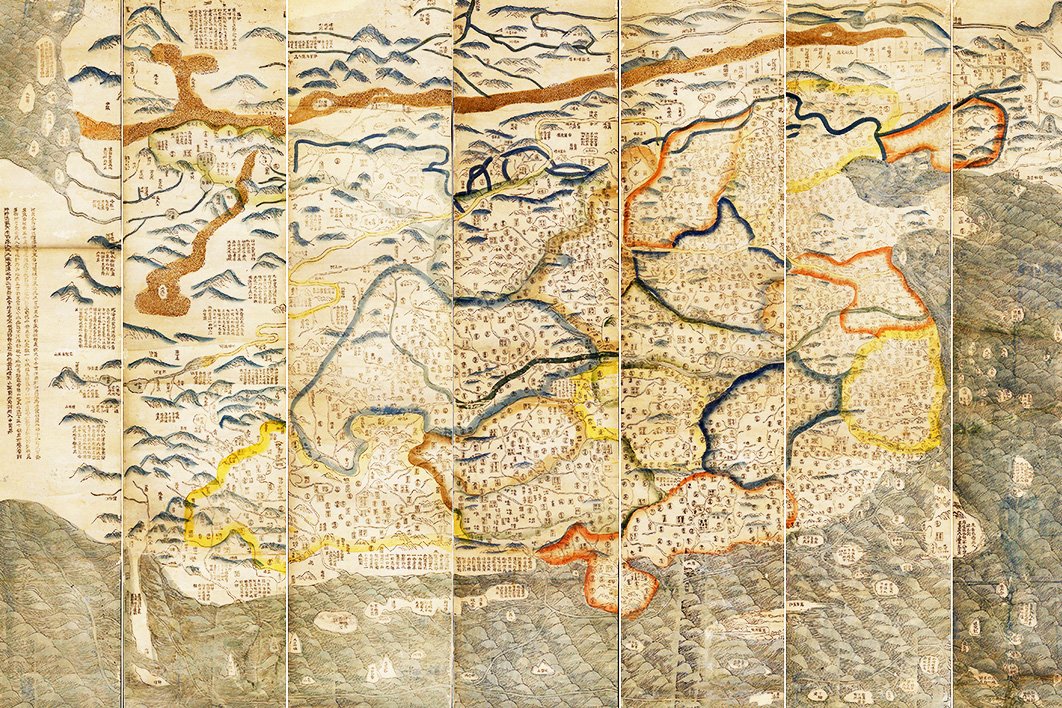
Photo: Creating a nation: a nineteenth-century copy of a 1767 map titled “Da Qing wan nian yi tong tian xia quan tu” (The great Qing Dynasty’s complete map of all under heaven). Science Photo Library/Alamy. By Kerry Brown November 24, 2020 In the desire to change China do we risk rewriting its history? Review of the book “The Invention of China” by Bill Hayton  Bill Hayton is a journalist and historian whose career has included periods working in Asia. His decades of producing news and reportage have given him a sharp sense of what makes good stories, and a clear, uncluttered style with which to write them. That experience stood him in good stead in his previous book, The South China Sea: The Struggle for Power in Asia, which had the great merit of taking a hugely complicated subject and, using vivid characterisation, personal testimony and clear thinking, making it comprehensible. It...
innovation
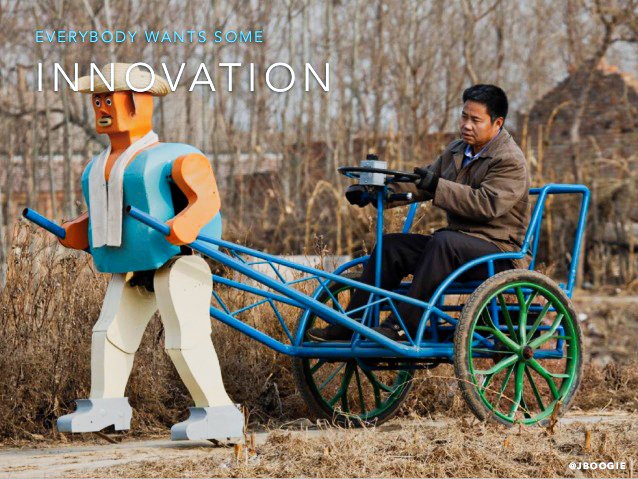
Caleb Watney Resident fellow at the R Street Institute November 24, 2020 Universities are in trouble and the influx of brainpower from overseas is shrinking. The long-term consequences could be disastrous. Earlier this month, Immigration and Customs Enforcement announced that international students attending universities that switch to online-only courses in the fall would be required to leave the United States. By threatening student visas, the Trump administration, which has been pushing to reopen businesses and schools despite the continuing pandemic, was widely seen as pressuring colleges to resume in-person classes. If implemented, the visa policy could have driven away thousands of brilliant minds—the brainpower that, for decades, has proved essential to entrepreneurship and technological innovation in the United States. Originally published by The Atlantic, July 19, 2020 In the end, immigration officials backed down amid legal challenges, but some damage was already done: The administration had added to the uncertainty...
Screenshot
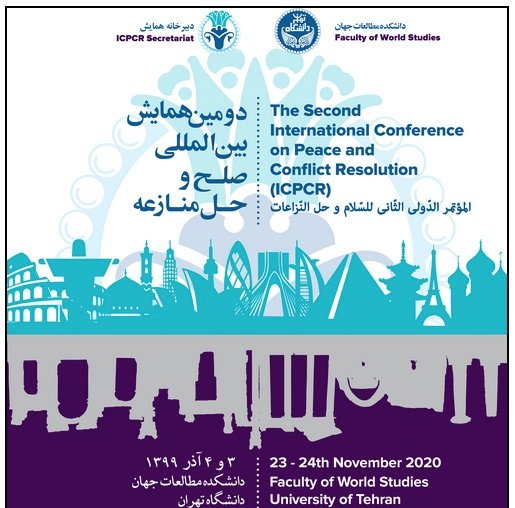
November 23 and 24, 2020, marks an important event in the international academic/university history of peace and conflict research. The reason is that the Faculty of World Studies at Tehran University holds a large – online – conference – “International Conference on Peace and Conflict Resolution (ICPCR)”. My colleague and friend there, associate professor Ali Akbar Alikhani, is the dynamic pioneer of this important endeavour which includes an international Master’s program in peace and conflict studies. It comes in the wake of a lecture I gave at the Faculty 6 years ago about peace and conflict research. As far as I’m informed, Iran is the second country in the Muslim world to establish a fill program of academic peace and conflict studies (Malaysia the first), and this conference marks the opening of this new academic field. Iran’s bustling capital also hosts an interesting, very lively, Tehran Peace Museum – but...
Eutopia_15_PhSh-kopia
“Hell is truth seen too late.”(Anonymous) Why would a small group of people want to crash hijacked airplanes into skyscrapers, killing thousands and terrorizing millions? Perhaps only religion can provide the motivation and collective support for such heinous deeds (occasionally including our dominant secular God, the modern nation-state). Does this mean that religious terrorism can be dismissed as just another example of religious fanaticism? Or is there a “logic” to fundamentalist terrorism, which makes it a regrettable but nonetheless understandable reaction to modernity? Mark Juergensmeyer and Karen Armstrong have shown that religious fundamentalism is not a return to premodern ways of being religious. Jewish, Christian and Islamic fundamentalisms are all recent developments reacting to what is perceived – to a large extent correctly, I shall argue – as the failure of secular modernity. Such fundamentalism, including the violence it occasionally spawns, is the “underside” of modernity, its Jungian shadow. Although such...
bigstock-Woman-changing-reality-091013
Karel Van Wolferen November 17th, 2020 In a famous exchange between a high official at the court of George W. Bush and journalist Ron Susskind, the official – later acknowledged to have been Karl Rove – takes the journalist to task for working in “the reality-based community.” He defined that as believing “that solutions emerge from your judicious study of discernible reality.” Rove then asserted that this was no longer the way in which the world worked. “We’re an empire now, and when we act, we create our own reality. And while you’re studying that reality – judiciously, as you will – we’ll act again, creating other new realities, which you can study too, and that’s how things will sort out. We’re history’s actors . . . and you, all of you, will be left to just study what we do.” (Ron Suskind, NYTimes Magazine, Oct. 17, 2004). Originally posted on Karel...
conspir
Ignas Kalpokas November 19th, 2020 In A Lot of People Are Saying: The New Conspiracism and the Assault on Democracy, Russell Muirhead and Nancy L. Rosenblum identify and outline the emergence of a new type of conspiracist thinking in our contemporary moment, showing it to pose a fundamental threat to democratic functioning. While questioning whether the book ascribes too much intentionality to those engaging in ‘the new conspiracism’, this is nonetheless a timely and important conceptualisation, writes Ignas Kalpokas.  A Lot of People Are Saying: The New Conspiracism and the Assault on Democracy. Russell Muirhead and Nancy L. Rosenblum. Princeton University Press. 2019. Originally posted on LSE’s blog “Impact of Social Science” July 7, 2020 During the past few years at least, there has been a growing discourse on the ‘end’ or ‘crisis’ of democracy. Not least among the concerns leading to such dire insights is the emergence of conspiratorial, fake news or post-truth campaigning as...
seddelpresse
Today the money meme rules our lives and social interactions in most societies on Earth. How did this happen? I studied all the economics textbooks of every perspective from the Austrian “laissez-faire” market fundamentalists to Adam Smith’s Wealth of Nations, (1776) and his earlier Theory of Moral Sentiments, (1759), as well as Karl Marx, who claimed not to be an economist. From Karl Polanyi’s broader views, I learned that trading was innate in human behavior and how indigenous peoples in the South Pacific traded shells in their canoe travels and visits among these islands in “Primitive, Archaic and Modern Economics, (1968). In Polanyi’s “The Great Transformation”, (1944), I learned how traditional societies and local market norms in communitarian village life were over-ruled by legislation in the British parliament which created national markets and facilitated global trade and colonial exploitation as these markets expanded. I was fortunate to know Polanyi personally...
biden
Delaware Senator Joseph Biden presents Secretary of “Defense” William Cohen with a model C5 aircraft at a luncheon in Sec. Cohen’s honor during his visit to Dover Air Force Base on Wednesday, December 15, 1999. 15 November, 2020 In June 2019, Joe Biden promised wealthy so-called donors that nothing would fundamentally change. At this moment hundreds of millions of people — from those shooting off fireworks to those ranting as though they will soon shoot up public places in their MAGA hats — seem convinced that everything will fundamentally change. Biden was wrong. Everybody else is right. Either everything will change for the better or one or both of the twin dangers of environmental and nuclear apocalypse will change everything for the worse. What should someone who cares about ending war think? How can we get from the euphoria of electing a warmonger to mobilizing people to end war? How...
RichardFalk
TFF celebrates the world-renowned international law professor, activist, writer, TFF Associate and dear friend At TFF, we are blessed by having a number of peace and future scholars, world-leading in their professions, who have followed world events over many decades and continue to be committed to world order change and public education. I say “blessed” because I assume that the reader share my reverence for high age and the sharing of long life experience as well as the wisdom that may accompany it in the midst of the youth-worshipping which characterises the ageing and increasingly grumpy West itself – also sometimes called age discrimination. Last month we celebrated Johan Galtung at 90. And today, Richard Falk at 90 – both world-renowned mega-productive scholars restlessly seeking ways to make the world a more peaceful place. And both TFF Associates, mentors and friends of the founders even before we set up TFF...