October 2019

Showing 1-10 of 4016 stories

Sort by
Categories

Year

Author / Contributor

Region

jonathanpower
It’s the most repeated maxim in all the reportage on the war in Afghanistan: “The Americans have the watches, we, the Taliban, have the time.” “Play it again, Sam” was said in “Casablanca”. It should be played, said and listened to in Kabul and Washington today. This is America’s longest war ever – 18 years and counting. It has cost over one trillion dollars and taken 2,500 American lives. President Barack Obama, blind-sided by the generals, he confided later, pumped up the numbers of troops to 100,000. Before very long, Obama came to realize that even if he did a Lyndon Johnson and sent in half a million troops it would end up as it did in Vietnam with a stalemate (still unanswered is why, after 18 years, the Afghan army isn’t trained to do the job themselves). Obama then rolled back the numbers. Three years ago President Donald Trump,...

turkey-russia-putin-erdogan-921407
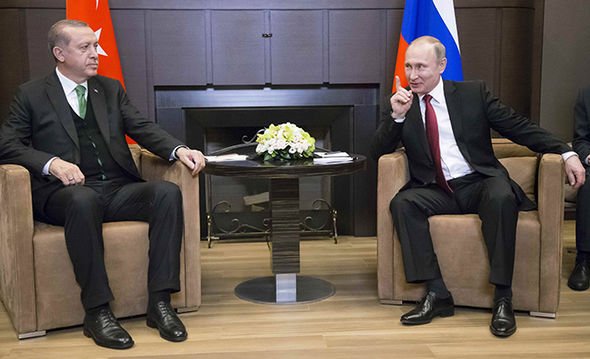
Interviewed by RT International Among other things, I argue that the international so-called ‘community’ – there definitely is no such thing – is still regrettably simple, or primitive, when it comes to making peace. Here two leaders meet and discuss affairs pertaining fundamentally to what shall happen on the territory of a third sovereign state which is not present. Their focus is on the means of violence – which have already been used and created the situation whereas there is no awareness, it seems, of how important it would have been to address the underlying conflicts. Conflicts are the basic unit if you want to create peace – the violence mostly a symptom of conflicts – problems – un-resolved. International law is violated in several ways – and has been the last 10-15 years when it comes to Syria. It started with the US deciding to go for regime change...
US-sanctions
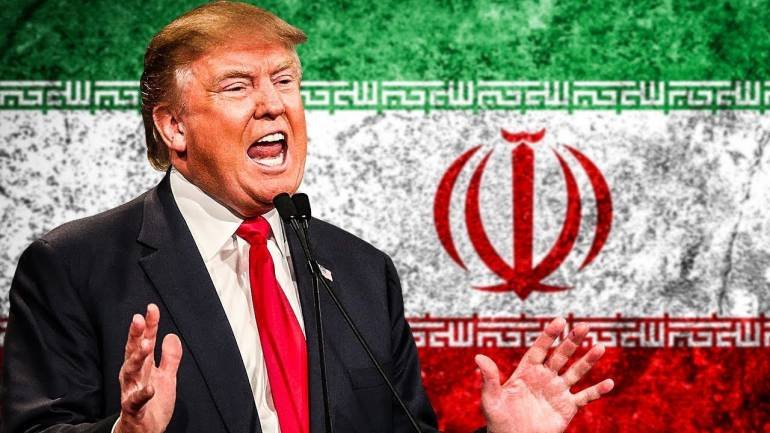
Prefatory Note: The post below is a slightly modified version of an interview published in The Nation on September 25th, following the September 14th attack on Saudi oil facilities. It follows a pattern with respect to Iran of accusations, denials, and public uncertainties. This combination of elements, given the leadership in Washington and Tehran, one blustering, the other inflexible, can easily produce an unintended stumble into war. A second shorter interview is appended, conducted prior to the attacks by an Iranian journalist, M.J. Hassani of Tasnim News Agency. It illustrates the seeming rigidity of Iran’s Supreme Guide, considered as having the final word on government policy, exceeding that of the elected leadership. Originally posted on Richard Falk’s personal blog on October 1, 2019, here Daniel Falcone Introduction to the Interview: After accusations of Iranian drone attacks on Saudi oil facilities, Iranian officials and authorities indicated that “full-fledged war” with the United States could...
gun-un-from-chcago-outdoor-sculpture-blog
As entrenched as the military is in our society and minds, a new book shows that civilians can defend a society without using violence. Imagine that government leaders make an announcement: “We’re going to abdicate responsibility for defense. Over the next few years, our military forces will be phased out. They are too dangerous and counterproductive. It will be up to everyone to figure out how to defend us all without violence.” Environmentalists immediately get to work setting up local renewable energy systems. They know that an aggressor can hold a society to ransom by controlling a few refineries and large power plants. In contrast, aggressors, and terrorists too, will see little point in attacking energy-efficient buildings and rooftop solar panels. Originally published by Transcend Media Service and Journal of Resistance Studies here Town planners adopt the same thinking. They rapidly expand opportunities for travel by foot and cycling, thereby...
jonathanpower
It’s time overdue for the West to make up with Russia. The contretemps over Ukraine, now played out over five years, is too long. As the world goes it doesn’t deserve so much attention. Ukraine in landmass may be a big country but it’s population is only 44 million and its national income per head a quarter of Russia’s. The Ukrainian puppy’s tail has been wagging the West’s dog. It’s part of the West’s human rights commitment to stand up for the little man, but the Ukraine government’s behavior at the time of its great upheavals didn’t deserve the large amount of support it was given. Yes, it was bad that President Vladimir Putin sent his (disguised) troops into western and southern Ukraine. And equally wrong that Putin organized so fast a referendum in the Crimea on withdrawal from Ukraine that broke the norms of international law (the way the...
huawei-shenzenpicoexhibition-ifa-small_b30a443a
October 25, 2019 Christine Tan from CNBC sits down with Huawei’s founder and CEO, Ren Zhengfei, to discuss the company’s attitude and response in the wake of being placed on the U.S. Entity List. How did the company’s leaders feel? Has the ban seriously affected international business? How is the company restructuring in order to thrive, moving into the future?
470x357-C24
October 25, 2019 By Craig MurrayHistorian, human rights activist and former ambassador UPDATE I have received scores of requests to republish and/or translate this article. It is absolutely free to use and reproduce and I should be delighted if everybody does; the world should know what is being done to Julian. So far, over 200,000 people have read it on this blogsite alone and it has already been reproduced on myriad other sites, some with much bigger readerships than my own. I have seen translations into German, Spanish and French and at least extracts in Catalan and Turkish. I only ask that you reproduce it complete or, if edits are made, plainly indicate them. Many thanks. I was deeply shaken while witnessing yesterday’s events in Westminster Magistrates Court. Every decision was railroaded through over the scarcely heard arguments and objections of Assange’s legal team, by a magistrate who barely pretended...
ShanghaiPanoPeople_Warped_Canvas_1000_100dpi
Asia specialist and distinguished columnist David P Goldman is convinced the US and Europe stand a chance against the Red Dragon – but the clock is ticking He was a phantom amongjournalists, using the mysterious nom de plume, “Spengler.” Like his German philosopher namesake, the cultural critic returned again and again to his despairing theories of the decline of the West. The work of “Spengler” drew from a deep and rich intellectual pool.And since the herald has revealed his true identity, we learn why. David P Goldman – philosopher, economist, mathematician and musicologist – is a Renaissance man. A former investment banker for the Bank of Americaand Credit Suisse, the American is known for his widely read column for Forbes magazine and Asia Times. Dutch writer Leon de Winter crowns Goldman’s work as “among the most interesting in the world.” This article was originally published by Switzerland’s Weltwoche We meet at the noble Princeton...
jonathanpower
Insurgencies may not die, but at least, like old soldiers, they usually fade away. Well, that seemed to be the case with the Kurdistan Workers’ Party, the PKK. For the best part of five years between 2000 and 2005 there was a truce in Turkey’s bitter and savage civil war. But it did not last. The Kurdish “problem” goes back to the Ottoman Empire. The rugged mountains where Turkey, Iraq and Iran meet have been called Kurdistan since the early 13th century, and the Kurds’ roots can be traced back at least 2,000 years. Most of the world’s 20m Kurds live in the region, although well over a million have emigrated to Istanbul, Baghdad, Tehran and Beirut, often assimilating well with the local people. Turkish President Recip Tayyip Erdogan blames the PKK for its provocations. However, it is the army that often has done the provoking, even on occasion using...
sustainable-development-and-the-earth-charter-23-728
Prefatory Note: The following essay will appear as a chapter in Peter Burden & Klaus Bosselmann, eds., The Future of Global Ethics (Edward Elgar, 2018),  with the title: Revisiting the Earth Charter 20 Years Later: A Response to Ron Engel Ron Engel has articulated an insider review of the Earth Charter so thoughtfully, urbanely, and persuasively that my initial temptation was to restrict my response to a single word: ‘Amen!’ Yet I am familiar enough with the academic ways of gathering diverse voices to explore a topic or to evaluate the scholarship of a distinguished author, as to discard my one-word option. At the same time, it would be misleading if I didn’t praise Ron Engel for putting so many elusive issues before us in such a lucid and compelling manner as to make my efforts at dialogue feel a bit forced, given the high level of agreement. Originally posted on...
ChurchWindow
By Chas W. Freeman, Jr October 9, 2019 There is currently a good deal of hysteria here in Washington about something called “authoritarianism” allegedly taking the offensive against democratic systems of government.  A century ago, imperialists, colonialists, fascists and communists did indeed articulate theories about their superiority to democracy and seek to impose autocratic systems of government on others.  In World War II and the Cold War, ideology played almost as large a role as geopolitics. Originally posted on Consortium News on October 4, 2019 here Today there are plenty of countries in the grips of autocratic regimes, but there are none propagandizing on behalf of autocracy or “authoritarianism.”  The international appeal of authoritarian systems of government, if any, derives from the extent to which they deliver prosperity and domestic tranquility to their citizens.  In the case of China, this is considerable – vastly superior so far to democratic India,...
jonathanpower
There’s a lot of end-of-the-world hyperbole around on climate change. So there should be. But it blankets out other important causes that are even more imminently important – wiping out malaria and sleeping sickness and introducing pure water supplies, sewerage systems and education for girls – all of which would save many more people than those likely to be hurt by global warning, at least this side of twenty-five years. Global warming, although very much apparent, is happening relatively slowly. Indeed, I feel like coining a slogan: “Kill mosquitoes today, save the icebergs tomorrow”. In fact the world has the resources to do both – a small portion of the money spent on arms would do it. So too would diverting the money spent on cat food, cosmetics, red meat and gas-guzzling SUVs (In the US they make up 60% of car sales.) Fading ever more into the background as...