March 2019

Showing 1-10 of 4016 stories

Sort by
Categories

Year

Author / Contributor

Region

Porter
His book, Manufacturing Crisis: The Untold Story of the Iran Nuclear Scare, is a classic and must-read for those who want to know in depth the history and the games played over decades by the U.S. and Israel against Iran. It is also relevant as a background to the negotiated JCPOA, or “nuclear deal” with Iran in 2015 (that the U.S. later withdrew from). This video is one part in a small series at The Real News Network – a network that will enlighten any student, researcher and concerned citizen. That will enable you to assess how the mainstream media – also in this case – have fed you all kinds of politically biased information and a uniform anti-Iranian perspective. It has been framing the issue in such a way that they have served well the elites who, as it seems, seek to harm Iran in a series of ways....
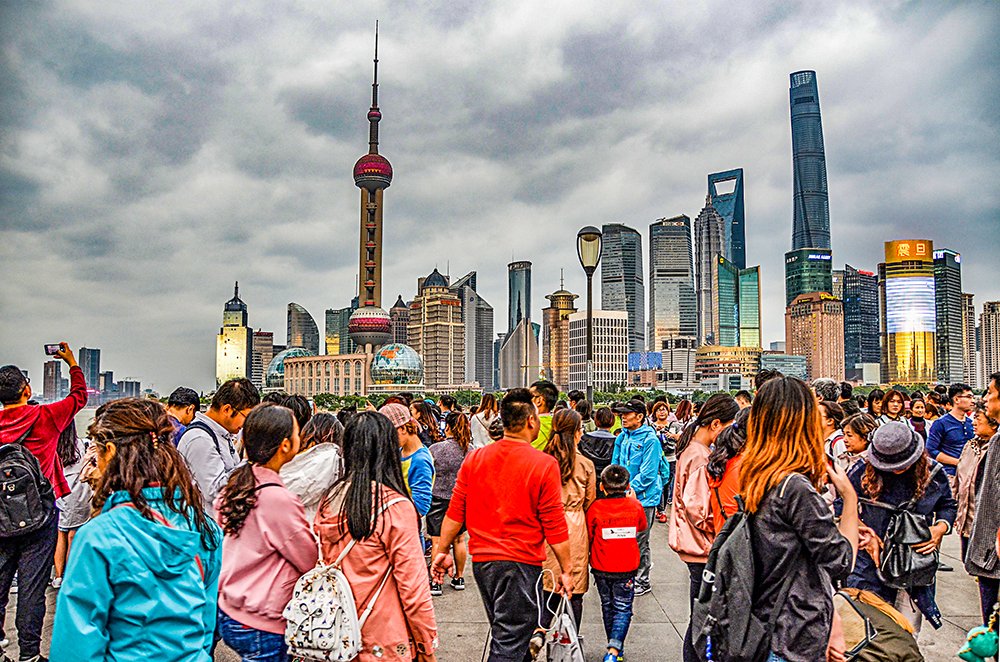
ShanghaiPanoPeople_1000_100dpi
Photo © Jan Öberg Av Karl Wang 28:e mars 2019 Denna artikel är skriven av Karl Wang, pensionerad, tidigare ingenjör inom IT&T. Wang är bosatt i Kina. Den tillför ny information och ger en annan bedömning än en del andra artiklar. Den publicerades först på den av Anders Romelsjö redigerade bloggen Global Politics som du kan läsa mer om här. Karl Wang har delat upp sin framställning i följande avsnitt: Vad är ett imperium? Exempel på imperier Hur kom det sig att det blev så i Kina? Dagens Kina Internationellt Kina idag Läs hela artikeln här och observera också de många synpunkter, som den givit upphov till. Det är principiellt viktigt att lära om Kina och diskutera olika tolkningar och perspektiv.
fdfdc198-0abe-42b8-8865-7d92b75eaa05
Foto: Martin Meissner/AP/TT Av Erni & Ola Friholt* 27:e mars 2019 Såhär kan det gå till “bakom kulisserna” på public service mediet, Sveriges Radio. Men det vet ju inte den som lyssnade på programmet. Vi tycker det är viktigt at förmedla hur det går för sig och kommer självfallet att publicera SR:s svar. Stocken 25 mars 2019 Bästa redaktion för Konflikt! Inför lördagens program om kärnvapenhotet hade Fredsrörelsen på Orust och Maj Britt Theorin kontaktats om intervjuer. Av hänsyn till det förespeglade programinslaget lade Maj Britt om sitt avtalade anförande ”Kvinnor och konflikter. Om kamp för demokrati och jämlikhet”. Istället blev ämnet kvinnors kamp mot kärnvapen, eftersom föredraget skulle spelas in för att (åtminstone delvis) användas i radioprogrammet. Dessutom gjordes en lång intervju med Maj Britt under kvällen. Eftersom det saknades tid inför radioreporterns hemresa till Stockholm uteblev den tidigare önskade intervjun med ordförande och sekreterare i Fredsrörelsen på Orust....
ThoreVestby
By Thore Vestby March 27, 2019 To gather national strength, just create an enemy. In Europe, the Americans are doing this daily on many levels, from small businesses to countries and the continent itself. It is apparent from the media coverage last year that China has been designated “the great danger”. The United States is devoting huge resources to discrediting China in Europe. It is mobilising its political and diplomatic corps to get the world, especially Western nations, to believe that if Chinese economic progress continues, the world might collapse. The strategy seems to be to spread insecurity, suspicion and falsehoods, and to threaten misery if countries fail to follow the US. Originally published by The South China Morning Star on March 26, 2019 Washington has threatened retaliation if the EU limits US involvement in pan-continental military projects. It has warned Turkey not to purchase S-400 rockets from Russia. It...
GlobalRating
Not so Germany, China and Russia Like the above diagram, it looks dark. For the US. Perhaps that’s the reason you have not seen it on the front pages of the Western mainstream press? Not only does this remarkable Gallup survey – made in the US – tell that Germany’s leadership, i.e. Chancellor Merkel, is the most highly approved by others in terms of leadership. Congratulations to the Chancellor, so well deserved! It also tells that the approval rates turn steadily upward for the two countries which the U.S. – bizarre as it is since they would both make great partners – constantly perceives as enemies: China and Russia. You can find a lot of very interesting and precise poll results for the period 2007-2018 pertaining to all the world’s regions in the report, “American First?” Rating World Leaders: 2019. Above you see the summary ratings for the world, based...
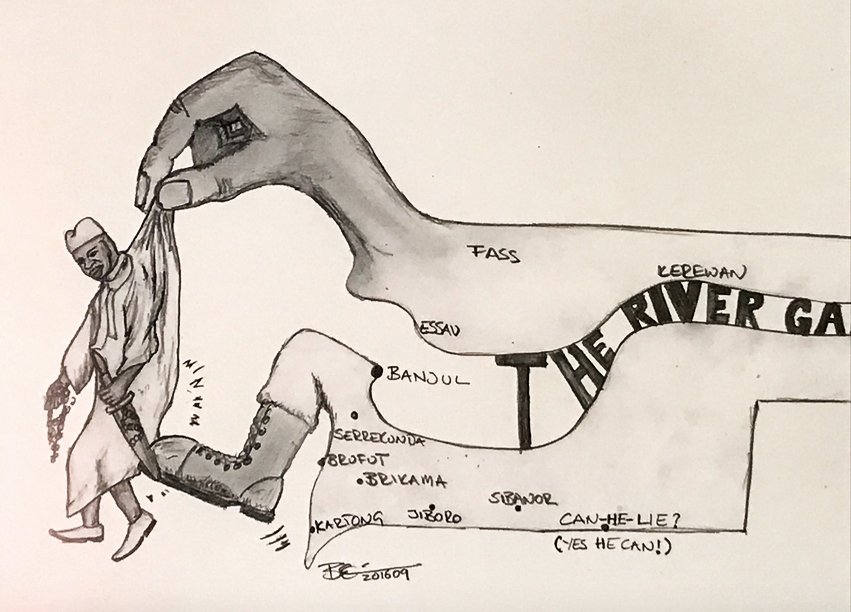
image001
Gambia – or properly The Gambia – a small country in West Africa with about 2 million inhabitants, was peaceful since its internal independent rule was established in 1963. There were good relations with its only neighbour, Senegal. For a long time there was no military force in the country. One could then expect that there would be no militant coups, as in so many other African countries. However, in 1981 a “Revolutionary Council” took power. The revolutionaries were soon ousted by troops from Senegal who reinstated the president.  Now obviously Gambia needed an army “to establish stability” and an army was established. The outcome was that in 1994 a group of soldiers, led by lieutenant Yahya Jammeh, took power. He became the leader of the country, and was elected and re-elected president in 1996, 2001, 2006 and 2011. At least in the early years of his reign, he was...
Russia_flag_Kremlin_ap_img
Russian Air Force Su-25 jets fly past the Russian flag on the Kremlin complex during a rehearsal for the Victory Day military parade in Moscow, Friday, May 4, 2018. (AP Photo / Pavel Golovkin) US Cold Warriors escalate toward actual war with Russia. By Stephen F. Cohen March 26, 2019 The John Batchelor Show, March 20, 2019 Heedless of the consequences, or perhaps welcoming them, America’s Cold Warriors and their media platforms have recently escalated their rhetoric against Russia, especially in March. Anyone who has lived through or studied the preceding 40-year Cold War will recognize the ominous echoes of its most dangerous periods, when actual war was on the horizon or a policy option. Originally published by The Nation on March 20, 2019 here Here are only a few random but representative examples: § In a March 8 Washington Post opinion article, two American professors, neither with any apparent...

jonathanpower
President Donald Trump has been exonerated of collusion with Russia. As I wrote a while back I expected this conclusion from the investigation carried out by Robert Mueller. The big clue lay in Trump’s anti-Russian posture. Trump has continued the expansion of NATO which Russia, more than understandably, sees as a provocative, unfriendly and dangerous move. Then there is the unwillingness to step forward to negotiate an end to the Ukrainian situation. The US, under the presidency of Barack Obama, refused to countenance President Vladimir Putin’s suggestion that UN peace-keeping troops be deployed in southern and eastern Ukraine, and Trump has continued that policy. Then there’s the seeming refusal to extend the treaty (New START ) that dramatically lowers the number of intercontinental nuclear missiles on each side. Trump has also thrown money at the Defence Department while cutting social budgets, vowing to beef up America’s nuclear forces. Recently he...
jonathanpower
By 1914 Europeans ruled 84% of the globe. How did they do it? Eleven hundred years ago Europe was a backwater. There were no grand cities, apart from Muslim Cordoba in Spain, and the remnants of Rome and Athens. The Middle East, India and China were further ahead. It was the Arabs who kept alive the teachings of the Ancient Greeks’ knowledge of science, medicine, architecture and philosophy. We now have two schools of thought. Two years ago came Professor Philip Hoffman of Caltech University with his book “Why Did Europe Conquer The World?” He argued that Europe’s pace of innovation was driven by a peculiar form of military competition which he called a “tournament” – the sort of competition that under the right conditions can drive contestants to exert enormous efforts in the hope of earning a prize. Europe, unlike the Ottoman Empire and China, was a very un-unified...
jonathanpower
The long war is almost over in Syria. Tyranny has won. Violence has won. Most have suffered, many unspeakably. For too long all sides were stalemated by each others’ brutality. Now the government of Bashar Al-Assad has come out on top, aided by Russia and Iran. What to do next? EU member states held their third annual Conference on Supporting the Future of Syria and the Region. It’s time for some radical re-thinking. Well-wishing for good things like the persecution of war crimes is whistling in the wind, at least for now. We are facing a fait accompli and renewed realization that the outside world does not have much leverage, apart from Russia and Iran, and even their influence is circumscribed. Yet, understandably, EU countries insist that in return for helping to re-build Syria the government must commit itself to a human rights agenda – the freeing of political prisoners,...
sipri
SIPRI latest analysis of the global arms trade is just out. When one reads the summary, one may ask: If not now, when is the time to criminalize the international arms trade? Weapons imported into warzones have – without exception – four major effects: a) those who buy or receive the weapons get emboldened to continue war rather than seek a negotiated solution; b) the wars last longer than they otherwise would had there been a moratorium by all external factors on these sales to conflicting paeties; c) human suffering and social costs increase because of a) and b); d) the arms trade economy and world is an integral part of global law-violating behaviour, mafiosi, terrorism, dirty money, corruption, death, drugs, trafficking – you name it. A murky community, indeed. In addition, arms trade is the most immoral of all: private and government dealers sell arms mainly to earn money....
files-copy
Ab At The Transnational, we believe in diversity. And in the likelihood that world events are complex and can be seen from more than one – usually US/Western – perspective. You may have wondered why the, now retired, UN representative for Venezuela, the brilliant lawyer, humanist and poet, Alfred De Zayas, has not been used extensively as an authority of both Venezuela and international law? Well hardly because, like me, you had not heard of him, had you? That’s why we should be grateful to Abby Martin and The Empire Files for having given us this conversation. It debunks – in a fact-based and comprehensive, law-respecting manner – most of what you’ve been told and all of what, as of writing, 54 countries have done in support of the regime policies of the US rather than in support of Venezuela as a sovereign state. And of the UN and its...