March 2014

Showing 1-10 of 5204 stories

Sort by
Categories

Year

Author / Contributor

Region

Bild1_JO_blogg
Av Christina Spännar & Vibeke Bing Kanske du associerar TFF med Jugoslavien, Burundi, Irak, Iran, ickevåld och fredsdebatt? Men vi har i tre år också arbetat med frågor kring integration med tonvikten lagd på ensamkommande barn från Afghanistan. Insatsen här har letts av författarna av denna projektsammanfattning. Vi är stolta över att nu publicera bloggen Som Broar Över Mörka Vatten där allt material finns. Projektet har finansierats av Arvsfonden. “När vi åkte gummibåt över Turkiets hav till Samos i Grekland greps vi av Grekiska poliser. Poliserna kastade alla våra kläder i havet och gjorde små hål i vår båt.” Ali “På kvällen satt vi i en båt. Vi åkte till Grekland. På vägen till Grekland fick vi problem med båten. En polisbåt kom och klippte sönder en del av motorn. Vi paddlade med händerna och fyra åror.” Hassan Vi lever i en märklig tid. Framför våra ögon pågår en stor...
richardfalk
It has always been my intention to make the tiny fragment of the blogosphere that I inhabit a site for civil discourse on a wide spectrum of concerns, issue oriented interpretations of what is transpiring in the world. Recently the comments sections has narrowed from this perspective into a dialogue between adversaries, several of whom seem preoccupied with, if not obsessed by, Israel, the Jewish experience, Zionism, and the Palestinian/Arab narrative and counter-narrative. Some of the contributions have been learned and sensitive to the reality that there are many diverse voices that need to be heard on this inflamed subject-matter, yet others have been intolerant, launched repeated personal attacks questioning motives and motivations, and have created a polemical aura at the site that has inhibited participation by those with other interests, concerns, and style. For these reasons, I have decided to have a moratorium on all comments relating to this...
richardfalk
I have been struck by the unhelpfulness of ideology to my own efforts to think through the complexities of recommended or preferred policy in relation to Syria, and more recently, the Ukraine. There is no obvious posture to be struck by referencing a ‘left’ or ‘right’ identity. A convincing policy proposal depends on sensitivity to context and the particulars of the conflict. To insist that the left/right distinction obscures more than it reveals is not the end of the story. To contend that ideology is unhelpful as a guide for action is not the same as saying that it is irrelevant to the public debate. In the American context, to be on the left generally implies an anti-interventionist stance, while being on the right is usually associated with being pro-interventionist. Yet, these first approximations can be misleading, even ideologically. Liberals, who are deliberately and consigned to the left by the...
janoberg
/10/janoberg.jpg”> Lund, Sweden March 24, 2014 Media with a pro-Western bias usually remind us of 9/11 based on a victim narrative. We just passed 3/20 – the 11th Anniversay of the war on Iraq. Every year they forget 10/7 (Afghanistan) and 3/24, the destruction of Serbia-Kosovo in 1999. What to do when NATO’s raison d’etre – the Warsaw Pact – had dissolved? Answer: Turn NATO into a humanitarian bombing organisation which in – fake – Gandhian style could say: We are bombing for a higher ethical humanitarian purpose to save lives and on this exceptionalist moral high ground we ignore international law. Kosovo 15 years later Kosovo remains a unique result of propaganda and mass killings to produce and independent state without a UN Security Council mandate – which doesn’t prevent Western politicians from teaching Russia international law these very days. If Kosovo, why not Tibet, Taiwan, the Basque country,...
johangaltung
History matters, not only law; like how Crimea and Abkhazia-South Ossetia–basically Russian-Orthodox–became Ukrainian-Georgian. Two Soviet dictators, Khrushchev and Stalin, attached to Ukraine and Georgia, so decided, by dictate. The local people were not asked, nor were Hawaiians when the USA annexed their Kingdom in 1898–by dictate. The first referendum in Crimea was held last Sunday, 16 March 2014: an overwhelming No to Ukraine and Yes to the Russian federation. Khrushchev’s 1954 transfer of Crimea was within the Soviet Union, and under Red Army control. But the Soviet Union collapsed and the Red Army became the Russian army; the conditions were no longer valid. George W. Bush wanted Ukraine and Georgia to become NATO members, moving the Russian minorities two steps away from Russia. Nothing similar applies to the other Russian minorities in the former Soviet republics. They are people living on somebody else’s land, not people living on their own...
jonathanpower2
/10/jonathanpower2.jpg”> March 25th 2014 President Vladimir Putin’s speech to both houses of the Russian parliament last week got bad notices. Anne Applebaum, the experienced Russian-watcher, wrote in her column in the Washington Post that it was “an imperial rant” and went on to say that “Nato should moves its forces from Germany to the alliance’s eastern borders”. Most Western governments also gave their own misleading interpretations of Putin’s speech. In this column I’m not going to defend Putin up and down the hill. I profoundly reject the way the absorption of Crimea into Russia was carried out. One can’t mount a referendum on an issue as important as this with two weeks’ notice – the Scots have been discussing their planned referendum, set for later this year, for years. Moreover, this referendum only had two questions: whether the voters wanted to go back to Russia or whether they wanted increased...
janoberg
/10/janoberg.jpg”> Lund, Sweden March 16, 2014 Of course it is illegal and of course it will be rigged, that referendum in Crimea today. And of course it is a ploy and comes only in the wake of Russia’s (read Putin’s) unprovoked aggression, used as a pretext to build a new Greater Russia. That is, if you browse the mainstream Western media the last week and on this Sunday morning. Referendum means referring an issue back to the people. It is – or should be – an important instrument in democracies. And it’s a much better instrument than war and other violence to settle complex conflicts. Generally, citizens-decided conflict-resolution is likely to last longer and help healing wounds of the past than any type of solution imposed by outside actors. In Switzerland citizens go and vote on all kinds of issues on many a Sunday throughout the year. Sweden has used...
janoberg
“We don’t see things as they are but as we are” – Anais Nin /10/janoberg.jpg”> Lund, Sweden – March 5, 2014 How can we begin to understand the events in Ukraine? Who are the conflict parties and elements? Here is a quick checklist of 13, just a selection: 1. Ukraine – government (earlier/present), opposition (split), people (19 ethnic groups + Ukrainians abroad). Crimea with its diversity and Ukraine’s relations to neighbours – enough for a doctoral dissertation. 2. Russia – the Commonwealth of Independent States, the Customs Union of Belarus, Kazakhstan and Russia and Russia’s more or less strong partners such as Syria. 3. Europe – the EU and European non-EU countries such as e.g. Turkey 4. The United States – the world’s only empire, with a foreign policy establishment in Washington deeply split in neo-conservatives on the one hand and Obama and the rest on the other. 5. China...
MC-cover-final-684x1024
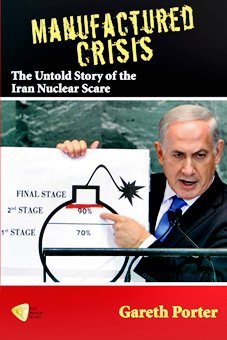
By Farhang Jahanpour As Iran and the world powers resume nuclear talks in Vienna with the hope of reaching a comprehensive agreement over Iran’s nuclear program by mid-July, the Israelis and their lobbyists in Washington are intensifying their efforts to scuttle the talks. In addition to all the efforts in the US Congress to impose additional sanctions on Iran, thus bringing the talks to a premature end, there are indications that Israel and her friends are continuing with various acts of sabotage against Iranian nuclear facilities. In 2010, the so-called Stuxnet virus temporarily disrupted the operation of thousands of Iranian centrifuges. At least five Iranian nuclear scientists have been assassinated. Iran has also said that it has discovered tiny timed explosives planted on centrifuges but has disabled them before they could go off. On Monday 17 March 2014, Iran said that an alleged attempt to sabotage one of its nuclear...
jonathanpower2
. In 1913, following the overthrow of the last emperor, citizens walked, pedalled or rickshawed to the polling stations- although opium smokers, Buddhists and policemen were forbidden from voting. In the annals of the 2,500 years of Chinese civilization it is the one and only time the Chinese have voted in a national election. Under Mao Zedong, the communist leader who overthrew this Nationalist government, any pretence of voting was given short shrift. Politics was outlawed and would-be dissidents severely punished. Only at the top level of Chinese politics – in the ruling politburo – were votes taken. Indeed, on some occasions, Mao was outvoted. But once he was dead some of the leadership of the communist party did want to see a loosening up. There was what Bao Tong, personal aide of deposed Communist Party chief, Zhao Ziyang, called a “freedom faction”. For example, in 1995 politburo member, Tian...

johangaltung
For one who has worked much on the theory and practice of change from systems of hierarchy to systems of equity, June 15 1964 will never be forgotten. Those at the bottom of the world system of states, fragmented away from each other by colonial and imperial structures, marginalized, exploited, came together, 77 of them, and formed–not a very revolutionary word–a Group. In 1967 the Group was confirmed by the Charter of Algiers. They used the UNCTAD-United Nations Conference on Trade and Development as their platform. Then the follow-up in 1974: the New International Economic Order-NIEO, and the Charter of Economic Rights and Duties of States, passed by the UN General Assembly. A trade union of states, or their governments, had been born; today 133-states strong. Not included are almost all states that are members of the Council of Europe (which includes the EU), OECD-Organization of Economic Cooperation and Development,...
richardfalk
I have been asked recently why do I persist in working hard for the things that I believe in, knowing that I will die in the next several years, and am almost certain not to be around for the catastrophic future that seems to cast its dark shadow across the road ahead, and can only be removed by a major transnational movement of the peoples of the world. Similarly, why do I accept the defamation and related unpleasantness that accompanies my efforts to be a truthful witness of the sufferings endured by the Palestinian people in the course of their struggle for freedom and in violation of their fundamental rights? Some friends pointedly suggest ‘why don’t you just sit back, enjoy the pleasures of an easy life, and if still restless and alert enough, devote yourself to the narcissisms of producing a memoir?’ Or at least, why not at least...