
Why do I persist?

I have been asked recently why do I persist in working hard for the things that I believe in, knowing that I will die in the next several years, and am almost certain not to be around for the catastrophic future that seems to cast its dark shadow across the road ahead, and can only be removed by a major transnational movement of the peoples of the world.

Similarly, why do I accept the defamation and related unpleasantness that accompanies my efforts to be a truthful witness of the sufferings endured by the Palestinian people in the course of their struggle for freedom and in violation of their fundamental rights? Some friends pointedly suggest ‘why don’t you just sit back, enjoy the pleasures of an easy life, and if still restless and alert enough, devote yourself to the narcissisms of producing a memoir?’

Or at least, why not at least indulge the self-exploratory pleasures of proving to myself that I am a decent poet or that I can still improve my chess or that, appearances to the contrary, I am still not too old to learn Turkish? At worst, I could continue to write barbed comments on the passing scene from the relative safety and comfort of the blogosphere, and to relieve the monotony of a virtual life, take occasional cruises to exotic destinations seeking out ‘ships of fools.’

Several prominent philosophers have attempted to answer such generic questions in a book recently published with the alluring title of Death and the Afterlife (Oxford University Press, 2013). It contains three lectures given by Samuel Scheffler, two at the Berkeley campus of the University of California and the third at the University of Utah, as well as a series of generally laudatory commentaries by four other distinguished philosophers and a response at the end by Scheffler.

The core argument developed by Scheffler is that human beings care more about the collective survival of humanity than they do about either their own personal immortality or even about the survival of those that they love and befriend, that is, those who are closest to us in our present life.

This rather novel line of inquiry investigates the implications of a thought experiment that supposes the extinction of the human species either due to ‘a doomsday scenario’ in which life on the planet is brought to an end or ‘an infertility scenario’ in which all women stop having the capacity to bear children. On this basis the contention is made by Scheffler that most of what we value in our present lives would be undermined as we act on the assumption that life will go on after we die more or less in the same manner than it has while we were alive.
Why work toward a cure for cancer or climate change when there is no humanity around to benefit from such developments?

I suspect that the appeal of such an argument is its cerebral fascination for philosophers, and others who seem to me to often confuse ‘the life of the mind’ with ‘life.’ I find very little illumination relevant to genuine existential questions from the elaborate back and forth between these ratiocinating philosophers who make many fine points of assessment, but seem to miss altogether the question of why caring for the future of humanity motivates someone such as myself, or for that matter might be quite irrelevant to my motivation.

In the end, and maybe admitting my own limitations and prejudices as a thinker, I find this contemporary Anglo-American philosophical approach to be unhelpful, and not very interesting, in fact trivializing of the dilemmas of old age and the latter stages of life. I do not doubt that such analytic fine tuning seems intrinsically stimulating to members of this particular philosophical fraternity even though it flies well beneath my radar screen.

My own reflections on why I persist in doing what I am doing are more simplistic, less sophisticated, and maybe no less trivializing, but also more satisfying to me as explanations that connect with my experience. In contrast to ScheffIer I would emphasize three distinct lines of explanation that are each experiential, and hopefully not sentimental: lifetime habit, being on the right side of history, and the inherent pleasures of intellectual life.

Habit

There is a tendency to feel comfortable doing what has formed part of your daily life so long as physically and mentally able. Despite bad knees that impair my mobility on a tennis court, and can make descending steep slopes rather painful, I continue to play tennis and table tennis as often as the opportunity presents itself, which is generally three times a week at minimum.

Writing on topics that engage me is similar to this sports life, although less therapeutic. I have written almost daily for the past 60 years, and continue to do so giving almost no consideration to whether there is an afterlife, personal or collective. Admittedly, if there was assured knowledge of the end of humanity looming in the near future, I would undoubtedly be profoundly affected in my daily routine. Experientially, we cannot have such knowledge.

This is the point, and accounts for why Scheffler’s entire inquiry into the afterlife must be posited as a thought experiment, a harmless philosophical fiction that intensely engages the highly trained rational intellect, and can turn up some intriguing speculations, such as the enjoyment of music being independent of our afterlife prospects.

By the way, I have no expectation of an afterlife, but in my current life proceed on the assumption that the collective life of humanity is more dangerously threatened than ever before, but for my purposes, I assume it will continue as far ahead as I am capable of envisioning, and certainly, of living.

History

The claim of being on the right side of history is a matter of ethics and interpretation, but since I thought about the world at all, it has been important for me to align my work as best I could, with the pursuit of justice. In these regards, I have been inspired by the struggles of those enduring injustice, and generally have sided with the underdog in conflict situations.

In this regard, I felt solidarity decades ago with the anti-colonial movements, and believed that their favorable outcome suggested a positive historical trend that was given further concrete validation in the American civil rights movement led by the charismatic figure of Martin Luther King and by South African anti-apartheid campaign and struggle symbolized by that most extraordinary personage, Nelson Mandela. For me, in recent years, the epic ordeal and struggle of the Palestinian people is of the same lineage, and its recent flourishing in a global solidarity movement of growing scope and intensity, has shaped my evolving political sensibility to a considerable extent.

My sadness as a lifelong American is associated, I believe, with the realization that ever since the Vietnam War, and possibly earlier if I had been more attentive, this country has been on the wrong side of history, exerting its might to stem the global emancipatory tide, although not altogether: its belated and reluctant stand against fascism and later Stalinist totalitarianism have certainly made better the history of the last hundred years.

Domestically, as well, the national record is mixed, with racism and homophobia somewhat eclipsed during my lifetime by robust challenges based on American ideals, but gun culture and macho geopolitics being embedded in political culture more than ever, and recently accentuated by a dive into the dangerously dark waters of Islamophobia.

Returning to the theme of this essay, I remain deeply motivated by the gravitational force of struggles for justice, and feel such an attraction independent of any reflections on the impacts of mortality on my work and hopes, and still less of the relevance of post-mortality, whatever that might mean. Do I want to be remembered positively by those I love, or by a wider community, is an issue that neither motivates nor sparks much curiosity, although I suppose it is true if I pause to think about it, and respond honestly, I would not want the defamers of UN Watch to have the last word as to my character, beliefs, and public role.

In this weak sense, it is important that those for whom I care do not conceive of me negatively by situating me on the wrong side of history. At the same time, I have no illusions or ambitions that my contributions will make any historical difference, although I feel vindicated if even one student, reader, or listener responds favorably.

Satisfaction

Enabling me to sustain this life of work and activism through the decades has been the inherent satisfactions associated with the academic life of teaching and scholarship. I have been blessed with an excellent education, and good fortune with respect to career and health. As a mediocre high school student it never occurred to me that I would have a lifetime that revolved around intellectual activity, and when I discovered, first, after barely surviving a first year college experience of ‘academic probation’ that I loved classroom learning, and then, when a series of accidents led me to be a one year replacement teacher for an ill member of the Ohio State University law faculty, I came to the realization that a professorial life was a privileged existence in most of its dimensions (except of course for faculty meetings): setting your own work agenda and schedule, doing no harm, lifelong learning, interaction with young sensibilities, open spaces between semesters allowing ample time for travel and reflection, and participating a community with many likeminded folks.

I never lost a sense of being blessed with this opportunity to live a decent life doing what was most enjoyable for me, although my own trajectory of preoccupations led me into domains of controversy from the mid-1960s until this very day. What bears on my theme here is that the pleasures of writing, reading, conversing, and speaking have been the self-justifying nutrients of my life, although always tinged with an awareness of contingency (of death, disease, misfortune), and a sense of dependence on the material foundations of normalcy, with perhaps a degree of self-indulgence that it is best not to think too closely about.

When younger I was more troubled by the gaps between my beliefs and my life style, the hope for a world where everyone could lead a life of dignity and my own failure to devote the resources I possessed beyond those needed for subsistence to relieve the sufferings of those enduring extreme poverty.

Putting such considerations to one side, recognizing that I do not respond to such an extreme calling, I affirm that the academic life, despite disappointments here and there, has fulfilled my dreams of pleasurable living without any pronounced feeling that it is incomplete unless justified by the symbolic immortality of being remembered in the future as a result of scholarly achievements. It doesn’t really matter to me whether my books will be read and appreciated, although I write them with that ambition although not in relation to whether their impact is prior or subsequent to my death.

In the end, I thank Samuel Scheffler for stimulating these counter-thoughts to his general thesis. Perhaps, the clarity of his probing inquiries, and the unexpected tenor of his argument about valuing of a collective afterlife more than most of us realize or would care to admit, had the dialectical effect of leading me experientially in the opposite direction. If this is so, it would be less than gracious, not to give my thanks.
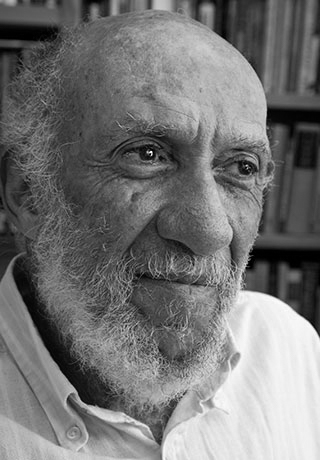

Professor Falk became an adviser to TFF when it was established in 1985.

Share

Leave a Reply

Your email address will not be published. Required fields are marked *

Related Posts

Gandhi, Arun. Lord Richard Attenborough. Kasturba: a lifeNew Delhi: Penguin Books Ltd., 2000.315 pp, 295 Indian Rs, US $22.51 January 29, 2002 Arun Gandhi, grandson to Mohandas and Kasturba, has written a thorough account of Kasturba’s life. Arun begins with a description of Kasturba’s childhood in Porbandar in the late1800s, before she met Mohandas. By having chosen to embark on difficult research into his grandmother’s life, including her first years which are not well-documented, Arun ensures that the reader receives an intimate and life-long portrait of this amazing woman. Kasturba is presented as a lively woman &endash; obedient, yet with a mind of her own. As the relationship between Kasturba and Mohandas developed, Arun maintains that Kasturba’s influence over Mohandas in her own quiet way also grew, to which some of Mohandas’ writings also attest.  Arun paints a vivid picture of the beginnings of Mohandas’ non-violence movement in South Africa, a...
In response to an urgent Appeal from all the living Nobel Peace Prize Laureates, the General Assembly of the United Nations, on November 1998, unanimously declared the first decade of the twenty-first century to be The Decade for a Culture of Peace and Nonviolence. While people are naturally concerned about the amount of violence in our world and how it threatens our future, the Nobel Laureates are right to remind us of the potential of nonviolence and our calling to build a culture of peace and nonviolence.  The twentieth century is instructive in the way that the philosophy and practice of nonviolence have begun to flourish and in the way that nonviolent movements have had an exponential growth across the world. Mohandas Gandhi and Martin Luther King, Jr. are the most famous nonviolent leaders but many have built upon the paths they charted as in country after country, tyrannies and...
We know that medical personnel have failed to report to higher authorities wounds that were clearly caused by torture and that they have neglected to take steps to interrupt this torture. In addition, they have turned over prisoners’ medical records to interrogators who could use them to exploit the prisoners’ weaknesses or vulnerabilities. We have not yet learned the extent of medical involvement in delaying and possibly falsifying the death certificates of prisoners who have been killed by torturers. A May 22 article on Abu Ghraib in the New York Times states that “much of the evidence of abuse at the prison came from medical documents” and that records and statements “showed doctors and medics reporting to the area of the prison where the abuse occurred several times to stitch wounds, tend to collapsed prisoners or see patients with bruised or reddened genitals.” http://www.truthout.org/docs_04/080604J.shtml#16 According to the article, two doctors who...

Recent Articles

Gandhi, Arun. Lord Richard Attenborough. Kasturba: a lifeNew Delhi: Penguin Books Ltd., 2000.315 pp, 295 Indian Rs, US $22.51 January 29, 2002 Arun Gandhi, grandson to Mohandas and Kasturba, has written a thorough account of Kasturba’s life. Arun begins with a description of Kasturba’s childhood in Porbandar in the late1800s, before she met Mohandas. By having chosen to embark on difficult research into his grandmother’s life, including her first years which are not well-documented, Arun ensures that the reader receives an intimate and life-long portrait of this amazing woman. Kasturba is presented as a lively woman &endash; obedient, yet with a mind of her own. As the relationship between Kasturba and Mohandas developed, Arun maintains that Kasturba’s influence over Mohandas in her own quiet way also grew, to which some of Mohandas’ writings also attest.  Arun paints a vivid picture of the beginnings of Mohandas’ non-violence movement in South Africa, a...
In response to an urgent Appeal from all the living Nobel Peace Prize Laureates, the General Assembly of the United Nations, on November 1998, unanimously declared the first decade of the twenty-first century to be The Decade for a Culture of Peace and Nonviolence. While people are naturally concerned about the amount of violence in our world and how it threatens our future, the Nobel Laureates are right to remind us of the potential of nonviolence and our calling to build a culture of peace and nonviolence.  The twentieth century is instructive in the way that the philosophy and practice of nonviolence have begun to flourish and in the way that nonviolent movements have had an exponential growth across the world. Mohandas Gandhi and Martin Luther King, Jr. are the most famous nonviolent leaders but many have built upon the paths they charted as in country after country, tyrannies and...
We know that medical personnel have failed to report to higher authorities wounds that were clearly caused by torture and that they have neglected to take steps to interrupt this torture. In addition, they have turned over prisoners’ medical records to interrogators who could use them to exploit the prisoners’ weaknesses or vulnerabilities. We have not yet learned the extent of medical involvement in delaying and possibly falsifying the death certificates of prisoners who have been killed by torturers. A May 22 article on Abu Ghraib in the New York Times states that “much of the evidence of abuse at the prison came from medical documents” and that records and statements “showed doctors and medics reporting to the area of the prison where the abuse occurred several times to stitch wounds, tend to collapsed prisoners or see patients with bruised or reddened genitals.” http://www.truthout.org/docs_04/080604J.shtml#16 According to the article, two doctors who...

TFF on Substack

Discover more from TFF Transnational Foundation & Jan Oberg.

Most Popular

Gandhi, Arun. Lord Richard Attenborough. Kasturba: a lifeNew Delhi: Penguin Books Ltd., 2000.315 pp, 295 Indian Rs, US $22.51 January 29, 2002 Arun Gandhi, grandson to Mohandas and Kasturba, has written a thorough account of Kasturba’s life. Arun begins with a description of Kasturba’s childhood in Porbandar in the late1800s, before she met Mohandas. By having chosen to embark on difficult research into his grandmother’s life, including her first years which are not well-documented, Arun ensures that the reader receives an intimate and life-long portrait of this amazing woman. Kasturba is presented as a lively woman &endash; obedient, yet with a mind of her own. As the relationship between Kasturba and Mohandas developed, Arun maintains that Kasturba’s influence over Mohandas in her own quiet way also grew, to which some of Mohandas’ writings also attest.  Arun paints a vivid picture of the beginnings of Mohandas’ non-violence movement in South Africa, a...
In response to an urgent Appeal from all the living Nobel Peace Prize Laureates, the General Assembly of the United Nations, on November 1998, unanimously declared the first decade of the twenty-first century to be The Decade for a Culture of Peace and Nonviolence. While people are naturally concerned about the amount of violence in our world and how it threatens our future, the Nobel Laureates are right to remind us of the potential of nonviolence and our calling to build a culture of peace and nonviolence.  The twentieth century is instructive in the way that the philosophy and practice of nonviolence have begun to flourish and in the way that nonviolent movements have had an exponential growth across the world. Mohandas Gandhi and Martin Luther King, Jr. are the most famous nonviolent leaders but many have built upon the paths they charted as in country after country, tyrannies and...
We know that medical personnel have failed to report to higher authorities wounds that were clearly caused by torture and that they have neglected to take steps to interrupt this torture. In addition, they have turned over prisoners’ medical records to interrogators who could use them to exploit the prisoners’ weaknesses or vulnerabilities. We have not yet learned the extent of medical involvement in delaying and possibly falsifying the death certificates of prisoners who have been killed by torturers. A May 22 article on Abu Ghraib in the New York Times states that “much of the evidence of abuse at the prison came from medical documents” and that records and statements “showed doctors and medics reporting to the area of the prison where the abuse occurred several times to stitch wounds, tend to collapsed prisoners or see patients with bruised or reddened genitals.” http://www.truthout.org/docs_04/080604J.shtml#16 According to the article, two doctors who...
Read More
Imagen-thumbnail-The-Transnational-1
Gandhi, Arun. Lord Richard Attenborough. Kasturba: a lifeNew Delhi: Penguin Books Ltd., 2000.315 pp, 295 Indian Rs, US $22.51 January 29, 2002 Arun Gandhi, grandson to Mohandas and Kasturba, has written a thorough account of Kasturba’s life. Arun begins with a description of Kasturba’s childhood in Porbandar in the late1800s, before she met Mohandas. By having chosen to embark on difficult research into his grandmother’s life, including her first years which are not well-documented, Arun ensures that the reader receives an intimate and life-long portrait of this amazing woman. Kasturba is presented as a lively woman &endash; obedient, yet with a mind of her own. As the relationship between Kasturba and Mohandas developed, Arun maintains that Kasturba’s influence over Mohandas in her own quiet way also grew, to which some of Mohandas’ writings also attest.  Arun paints a vivid picture of the beginnings of Mohandas’ non-violence movement in South Africa, a...
Imagen-thumbnail-The-Transnational-1
In response to an urgent Appeal from all the living Nobel Peace Prize Laureates, the General Assembly of the United Nations, on November 1998, unanimously declared the first decade of the twenty-first century to be The Decade for a Culture of Peace and Nonviolence. While people are naturally concerned about the amount of violence in our world and how it threatens our future, the Nobel Laureates are right to remind us of the potential of nonviolence and our calling to build a culture of peace and nonviolence.  The twentieth century is instructive in the way that the philosophy and practice of nonviolence have begun to flourish and in the way that nonviolent movements have had an exponential growth across the world. Mohandas Gandhi and Martin Luther King, Jr. are the most famous nonviolent leaders but many have built upon the paths they charted as in country after country, tyrannies and...
Imagen-thumbnail-The-Transnational-1
We know that medical personnel have failed to report to higher authorities wounds that were clearly caused by torture and that they have neglected to take steps to interrupt this torture. In addition, they have turned over prisoners’ medical records to interrogators who could use them to exploit the prisoners’ weaknesses or vulnerabilities. We have not yet learned the extent of medical involvement in delaying and possibly falsifying the death certificates of prisoners who have been killed by torturers. A May 22 article on Abu Ghraib in the New York Times states that “much of the evidence of abuse at the prison came from medical documents” and that records and statements “showed doctors and medics reporting to the area of the prison where the abuse occurred several times to stitch wounds, tend to collapsed prisoners or see patients with bruised or reddened genitals.” http://www.truthout.org/docs_04/080604J.shtml#16 According to the article, two doctors who...
Imagen-thumbnail-The-Transnational-1
Jan Øberg behandler i artiklen en lang række faktorer, som ligger til grund for den måde vores samfund er organiseret på – og derfor også for konflikter. Artiklen introducerer således sammenhængen mellem familien, foreninger, regeringer, NGO’ er, nation, stat, nationalstat og alliancer for på denne måde bedre at kunne forstå konflikter og i sidste ende blive klogere mht. at løse disse. Øberg, der er fortaler for global bevidsthed, hvilket skal ses i lyset af den øgede globalisering, skelner mellem kulturkamp og kulturdialog. Endelig behandles begrebet magt og magtesløshed: giver magt ret til at udøve magt – fordi man mener at have ret? Litteraturliste og arbejdsspørgsmål efter artiklen. Ordene vi bruger om verden I satellitperspektiv kan man godt tale om den menneskelige familie eller menneskeheden. Udtrykket understreger, at der eksisterer – eller burde eksistere – et fællesskab fordi vi alle er mennesker og sammen bebor denne klode og ingen anden. Og...
Imagen-thumbnail-The-Transnational-1
Kapitel 2: Forskellige sider af Europa og USA…fortsat 2.5 Militære relationer I forbifarten har vi allerede sagt nogle ting om USA’s militære situation. Kig lige en gang til på afsnit 2.3. Nu skal vi uddybe det militære forhold mellem USA og EU. Der er en række ligheder mellem visse europæiske landes og USA’s militær. Næsten alle er med på en eller anden måde i NATO, direkte som medlem – selv Island, der ikke har et forsvar – eller indirekte i Partnerskab for Fred. USA og Canada er med i OSCE (på dansk OSSE), Organisationen for Sikkerhed og Samarbejde i Europa, der tæller over 50 lande. USA samt England og Frankrig er kernevåbenstater og de har styrker til intervention langt borte fra hjemlandet, om end USA’s er tifold større. Alle har også en omfattende våbeneksport og bruger den som et middel til at tjene penge og få loyale venner på, det...
Imagen-thumbnail-The-Transnational-1
Background Christian Harleman and Jan Oberg conducted a fact-finding mission to Burundi between November 26 and December 6, 2003. (See websites about the country here). The first TFF mission took place in March 1999. Unfortunately, since then it has not been practically possible to implement the co-operation with Burundi’s Ministry of Education and Burundian NGOs that was planned at the time. The 2003 mission had three purposes. First, to do fact-finding in general about the situation and, in particular, the progress under the Arusha Peace Process. Second, to explore the possibilities for co-operation between the government and relevant NGOs on the one hand and TFF on the other, in order to develop and deepen the existing competence in fields such as conflict-understanding, reconciliation and peace-building. Finally, third, to find out whether it would be possible, in co-operation with the Swedish Rescue Services Agency (Statens Räddningsverk), to establish a health care unit that...