
What was wrong with Obama's speech in Jerusalem

It was master-crafted as an ingratiating speech by the world’s most important leader and the government that has most consistently championed Israel’s cause over the decades. Enthusiastically received by the audience of Israeli youth, and especially by liberal Jews around the world. Despite the venue, President Obama’s words in Jerusalem on March 21st seemed primarily intended to clear the air somewhat in Washington. Obama may now have a slightly better chance to succeed in his second legacy-building presidential term despite a deeply polarized U.S. Congress, and a struggling American economy if assessed from the perspective of workers’ distress rather than on the basis of robust corporate profits.

As for the speech itself, it did possess several redeeming features. It did acknowledge that alongside Israeli security concerns “Palestinian people’s right of self-determination, their right to justice must also be recognized.” This affirmation was followed by the strongest assertion of all: “..put yourself in their shoes. Look at the world through their eyes.” To consider the realities of the conflict through Palestinian eyes is to confront the ugly realities of prolonged occupation, annexationist settlement projects, an unlawful separation wall, generations confined to the misery of refugee camps and exile, second-class citizenship in Israel, ethnic cleansing in Jerusalem, and a myriad of regulations that make the daily life of Palestinians a narrative of humiliation and frustration.

Of course, Obama did not dare to do this. None of these realities were specified, being left to the imagination of his audience of Israeli youth, but at least the general injunction to see the conflict through the eyes of the other pointed the way toward empathy and reconciliation.

Obama also encouraged in a helpful way Israeli citizen activism on behalf of a just peace based on two states for two peoples. A bit strangely he urged that “for the moment, put aside the plans and process” by which this goal might be achieved, and “instead..build trust between people.” Is this not an odd bit of advice? It seems a stretch to stress trust when the structures and practice of occupation are for the Palestinians unremittingly cruel, exploitative, and whittle away day after day at the attainability of a viable Palestinian state.

But this farfetched entreaty was coupled with a more plausible plea: “I can promise you this: Political leaders will never take risks if the people do not push them to take some risks. You must create the change that you want to see. Ordinary people can accomplish extraordinary things.” There is some genuine hope to be found in these inspirational words, but to what end given the present situation.

In my opinion the speech was deeply flawed in three fundamental respects:

1) By speaking only to Israeli youth, and not arranging a parallel talk in Ramallah to Palestinian youth, the role of the United States as ‘dishonest broker’ was brazenly confirmed; it also signaled that the White House was more interested in appealing to the folks in Washington than to those Palestinians trapped in the West Bank and Gaza, an interpretation reinforced by laying a wreath at the grave of Theodor Herzl but refusing to do so at the tomb of Yasir Arafat.

This disparity of concern was further exhibited when Obama spoke of the children of Sderot in southern Israel, “the same age as my own daughters, who went to bed at night fearful that a rocket would land in their bedroom simply because of who they are and where they live.” To make such an observation without even mentioning the trauma-laden life of children on the other side of the border in Gaza who have been living for years under conditions of blockade, violent incursions, and total vulnerability year after year is to subscribe fully to the one-sided Israeli narrative as to the insecurity being experienced by the two peoples.

2) By speaking about the possibility of peace based on the two state consensus, the old ideas, without mentioning developments that have made more and more people skeptical about Israeli intentions is to lend credence to what seems more and more to be a delusionary approach to resolving the conflict. Coupling this with Obama’s perverse injunction to the leaders of the Middle East that seems willfully oblivious to the present set of circumstances makes the whole appeal seem out of touch: “Now’s the time for the Arab world to take steps towards normalizing relations with Israel.”

How can now be the time, when just days earlier Benjamin Netanyahu announced the formation of the most right-wing, pro-settler government in the history of Israel, selecting a cabinet that is deeply dedicated to settlement expansion and resistant to the very idea of a genuine Palestinian state? It should never be forgotten that when the Palestinian Liberation Organization announced back in 1988 that it was prepared to make a sustained peace with Israel on the basis of the 1967 borders.

By doing this, the Palestinians were making an extraordinary territorial concession that has never been reciprocated. The move meant accepting a state limited to 22% of historic Palestine, or less than half of what the UN had proposed in its 1947 partition plan contained in GA Resolution 181. To expect the Palestinians to be willing now to accept less than these 1967 borders to reach a resolution of the conflict seems unreasonable, and probably not sustainable.

3) By endorsing the formula two states for two peoples was consigning the Palestinian minority in Israel to permanent second-class citizenship without even being worthy of mention as a human rights challenge facing the democratic Israel that Obama was celebrating. As David Bromwich has pointed out in “Tribalism in the Jerusalem speech,” Obama was also endorsing a tribalist view of statehood that seem inconsistent with a globalizing world, and with secularist assumptions that the state should not be exclusivist in either religious or ethnic character. The core Zionist idea of a statist homeland where all Jews can most fully embrace their Jewishness: Israel is rooted not just in history and tradition, but also in a simple and profound idea: the idea that people deserve to be free in a land of their own.”

Such a regressive approach to identity and statehood was also by implication attributed to the Palestinians, also affirmed as entitled. But this is highly misleading, a false symmetry. The Palestinians have no guiding ideology that is comparable to Zionism. Their quest has been to recover rights under international law in the lands of their habitual residence, the exercise of the right of self-determination in such a manner as to roll back the wider claims of settler colonialism so grandiosely part of the vision and practice of the Netanyahu government. Indeed, Obama’s speech was also an affront to many Israeli post-Zionists and secularists who do not affirm the idea of living under in a hyper-nationalist state with pretensions of religious endowments.

In my view, there are two conclusions to be drawn:

(1) Until the rhetoric of seeing the realities of the situation through Palestinian eyes is matched by a consideration of the specifics, there is created a misleading impression that both sides hold equally the keys to peace, and both being at fault to the same extent for being unwilling to use them.

(2) It is a cruel distraction to urge a resumption of negotiations when Israel clearly lacks the political will to establish a Palestinian state within 1967 borders and in circumstances in which the West Bank has been altered by continuous settlement expansion, settler only roads, the separation wall, and all the signs are suggesting that there is more of the same to come. Making matters even worse, Israel is taking many steps to ensure that Jerusalem never becomes the capital of whatever Palestinian entity eventually emerges.

In retrospect, worse than speech was the visit itself. Obama should never have undertaken such the visit without an accompanying willingness to treat the Palestinian reality with at least equal dignity to that of the Israeli reality and without some indication of how to imagine a just peace based on two states for two peoples given the severe continuing Israeli encroachments on occupied Palestinian territory that give every indication of permanence.

Obama made no mention of the wave of recent Palestinian hunger strikes or the degree to which Palestinians have shifted their tactics of resistance away from a reliance on violence. It is perverse to heap praise on the oppressive occupier, and then call on both peoples to move forward toward peace by building relations of trust with one another.

On what planet has Mr. Obama been living?
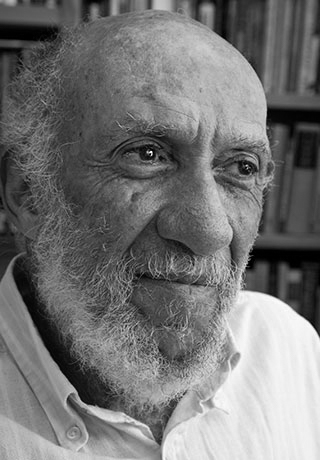
Professor Falk became an adviser to TFF when it was established in 1985.

Share

Leave a Reply

Your email address will not be published. Required fields are marked *

Related Posts

Peace is promoted by constructive proposals and dialogue Four preceding PressInfos have expressed concern over — and criticised — the ongoing, militarisation of the EU. Some will say: but there are no alternatives. We believe that there are always alternatives, that democracies are characterised by alternatives and choice, and that openly discussed alternatives will improve the quality and legitimacy of society’s decision–making. In addition, it is an intellectual and moral challenge to not only criticise but also be constructive. If we only tell people that we think they are wrong, they are not likely to listen. However, if we say: what are your views on this set of ideas and steps? — we may sometimes engage them in dialogue and sow a seed. Most people in power circles live their daily lives in in a time frame and a social space where certain ideas, viewpoints and concepts are just not...
Photos © TFF 2000 Read PressInfo 90 “Lift the Sanctions and Bring More Aid to Yugoslavia” See Pictures from Belgrade © TFF 2000 Please reprint, copy, archive, quote or re-post this item, but please retain the source.
Av FRANK SØHOLM GREVIL 16 augusti 2004  Vi er nu nået til tredje akt i det absurde teaterstykke, der i analogi med de store skueprocesser i Moskva 1936-38 er blevet døbt ‘Grevil-sagen’. Første akt bestod i min anonyme fremlæggelse af egenhændigt nedklassificerede rapporter i Berlingske Tidende i februar og marts. Andet akt udgjordes af min fremtræden med navn og billede i Information i april samt den efterfølgende mediestorm, som uden min direkte medvirken kostede en forsvarsminister taburetten samt en sigtelse for brud på tavshedspligten. Tredje akt bliver en retssag, hvor jeg står tiltalt for at have overtrådt straffelovens bestemmelser om uberettiget videregivelse eller udnyttelse af fortrolige oplysninger. Statsanklageren har ovenikøbet valgt at påberåbe sig særligt skærpende omstændigheder. Da jeg aldrig har modtaget betaling for at stille rapporterne til rådighed eller lade mig interviewe, må det skærpende bestå i, at “videregivelsen eller udnyttelsen er sket under sådanne omstændigheder, at det påfører...

Recent Articles

PressInfo # 141, December 21, 2001It’s time to prepare reconciliation between Albanians and Serbs PressInfo # 140, December 14, 2001Ibrahim Rugova’s decade-long leadership in Kosovo/a PressInfo # 139, 11. december, 2001En god nyhet: Jugoslaviens Sannings- och försoningskommission PressInfo # 139, 11. december, 2001Gode nyheder: Jugoslaviens Sandheds- og Forsoningskommission PressInfo # 139, December 11, 2001Good news: Yugoslavia’s Truth and Reconciliation Commission PressInfo # 138, November 8, 2001TFF co-founder PhD with thesis about young people with roots in other cultures PressInfo # 138, November 8, 2001TFF:s medstiftare doktor på avhandling om unga med ursprung i andra kulturer PressInfo # 137, October 17, 2001A new Marshall Plan: Advancing human security and controlling terrorism PressInfo # 136, October 15, 2001The UN and Annan really deserve it PressInfo # 135, October 10, 2001Preventing a terrorist mushroom cloud PressInfo # 134, 17 oktober, 2001Sverige og 11. september PressInfo # 134, October 9, 2001Sweden and September 11...
Peace is promoted by constructive proposals and dialogue Four preceding PressInfos have expressed concern over — and criticised — the ongoing, militarisation of the EU. Some will say: but there are no alternatives. We believe that there are always alternatives, that democracies are characterised by alternatives and choice, and that openly discussed alternatives will improve the quality and legitimacy of society’s decision–making. In addition, it is an intellectual and moral challenge to not only criticise but also be constructive. If we only tell people that we think they are wrong, they are not likely to listen. However, if we say: what are your views on this set of ideas and steps? — we may sometimes engage them in dialogue and sow a seed. Most people in power circles live their daily lives in in a time frame and a social space where certain ideas, viewpoints and concepts are just not...
Photos © TFF 2000 Read PressInfo 90 “Lift the Sanctions and Bring More Aid to Yugoslavia” See Pictures from Belgrade © TFF 2000 Please reprint, copy, archive, quote or re-post this item, but please retain the source.

TFF on Substack

Discover more from TFF Transnational Foundation & Jan Oberg.

Most Popular

PressInfo # 141, December 21, 2001It’s time to prepare reconciliation between Albanians and Serbs PressInfo # 140, December 14, 2001Ibrahim Rugova’s decade-long leadership in Kosovo/a PressInfo # 139, 11. december, 2001En god nyhet: Jugoslaviens Sannings- och försoningskommission PressInfo # 139, 11. december, 2001Gode nyheder: Jugoslaviens Sandheds- og Forsoningskommission PressInfo # 139, December 11, 2001Good news: Yugoslavia’s Truth and Reconciliation Commission PressInfo # 138, November 8, 2001TFF co-founder PhD with thesis about young people with roots in other cultures PressInfo # 138, November 8, 2001TFF:s medstiftare doktor på avhandling om unga med ursprung i andra kulturer PressInfo # 137, October 17, 2001A new Marshall Plan: Advancing human security and controlling terrorism PressInfo # 136, October 15, 2001The UN and Annan really deserve it PressInfo # 135, October 10, 2001Preventing a terrorist mushroom cloud PressInfo # 134, 17 oktober, 2001Sverige og 11. september PressInfo # 134, October 9, 2001Sweden and September 11...
Peace is promoted by constructive proposals and dialogue Four preceding PressInfos have expressed concern over — and criticised — the ongoing, militarisation of the EU. Some will say: but there are no alternatives. We believe that there are always alternatives, that democracies are characterised by alternatives and choice, and that openly discussed alternatives will improve the quality and legitimacy of society’s decision–making. In addition, it is an intellectual and moral challenge to not only criticise but also be constructive. If we only tell people that we think they are wrong, they are not likely to listen. However, if we say: what are your views on this set of ideas and steps? — we may sometimes engage them in dialogue and sow a seed. Most people in power circles live their daily lives in in a time frame and a social space where certain ideas, viewpoints and concepts are just not...
Photos © TFF 2000 Read PressInfo 90 “Lift the Sanctions and Bring More Aid to Yugoslavia” See Pictures from Belgrade © TFF 2000 Please reprint, copy, archive, quote or re-post this item, but please retain the source.
Read More
Imagen-thumbnail-The-Transnational-1
PressInfo # 141, December 21, 2001It’s time to prepare reconciliation between Albanians and Serbs PressInfo # 140, December 14, 2001Ibrahim Rugova’s decade-long leadership in Kosovo/a PressInfo # 139, 11. december, 2001En god nyhet: Jugoslaviens Sannings- och försoningskommission PressInfo # 139, 11. december, 2001Gode nyheder: Jugoslaviens Sandheds- og Forsoningskommission PressInfo # 139, December 11, 2001Good news: Yugoslavia’s Truth and Reconciliation Commission PressInfo # 138, November 8, 2001TFF co-founder PhD with thesis about young people with roots in other cultures PressInfo # 138, November 8, 2001TFF:s medstiftare doktor på avhandling om unga med ursprung i andra kulturer PressInfo # 137, October 17, 2001A new Marshall Plan: Advancing human security and controlling terrorism PressInfo # 136, October 15, 2001The UN and Annan really deserve it PressInfo # 135, October 10, 2001Preventing a terrorist mushroom cloud PressInfo # 134, 17 oktober, 2001Sverige og 11. september PressInfo # 134, October 9, 2001Sweden and September 11...
Imagen-thumbnail-The-Transnational-1
Peace is promoted by constructive proposals and dialogue Four preceding PressInfos have expressed concern over — and criticised — the ongoing, militarisation of the EU. Some will say: but there are no alternatives. We believe that there are always alternatives, that democracies are characterised by alternatives and choice, and that openly discussed alternatives will improve the quality and legitimacy of society’s decision–making. In addition, it is an intellectual and moral challenge to not only criticise but also be constructive. If we only tell people that we think they are wrong, they are not likely to listen. However, if we say: what are your views on this set of ideas and steps? — we may sometimes engage them in dialogue and sow a seed. Most people in power circles live their daily lives in in a time frame and a social space where certain ideas, viewpoints and concepts are just not...
Imagen-thumbnail-The-Transnational-1
Photos © TFF 2000 Read PressInfo 90 “Lift the Sanctions and Bring More Aid to Yugoslavia” See Pictures from Belgrade © TFF 2000 Please reprint, copy, archive, quote or re-post this item, but please retain the source.
Imagen-thumbnail-The-Transnational-1
Av FRANK SØHOLM GREVIL 16 augusti 2004  Vi er nu nået til tredje akt i det absurde teaterstykke, der i analogi med de store skueprocesser i Moskva 1936-38 er blevet døbt ‘Grevil-sagen’. Første akt bestod i min anonyme fremlæggelse af egenhændigt nedklassificerede rapporter i Berlingske Tidende i februar og marts. Andet akt udgjordes af min fremtræden med navn og billede i Information i april samt den efterfølgende mediestorm, som uden min direkte medvirken kostede en forsvarsminister taburetten samt en sigtelse for brud på tavshedspligten. Tredje akt bliver en retssag, hvor jeg står tiltalt for at have overtrådt straffelovens bestemmelser om uberettiget videregivelse eller udnyttelse af fortrolige oplysninger. Statsanklageren har ovenikøbet valgt at påberåbe sig særligt skærpende omstændigheder. Da jeg aldrig har modtaget betaling for at stille rapporterne til rådighed eller lade mig interviewe, må det skærpende bestå i, at “videregivelsen eller udnyttelsen er sket under sådanne omstændigheder, at det påfører...
Imagen-thumbnail-The-Transnational-1
Af Svenska Irakkommittén mot de Ekonomiska Sanktionerna (SIES) 13 september 2002 FN:s ekonomiska sanktioner mot Irak har nu pågått i tolv år och drabbat det irakiska folket med svåra lidanden. Enligt FN:s egna siffror har mer än 1,5 miljoner människor, varav ca 600 000 barn, dött som en direkt följd av sanktionerna. Dessutom har ett lågintensivt bombkrig mot landet pågått under dessa år. Av all denna förödelse- orsakad huvudsakligen av amerikansk och brittisk politik- har Saddam Husseins brutala och diktatoriska regim snarast stärkts än försvagats. Nu förbereder USA under president Bushs ledning ett storskaligt bombkrig mot Irak som kommer att innebära ett ännu större lidande för civilbefolkningen. Ett sådant krig kommer dessutom att ytterligare undergräva freden och säkerheten i världen. Att upprätta en demokratisk regim i Irak är det irakiska folkets angelägenhet och får enligt folkrätten inte ske med krigshandlingar utifrån. Folkrätten och FN:s stadgar måste respekteras. Vi vädjar till...
