
What the Shah's son should do - instead of siding with Trump

After a long period of relative silence, Reza Pahlavi, the son of the deposed Iranian Shah who has lived in the United States for more than 40 years, recently made a rare public appearance, calling for a U.S.-backed regime change in Iran.

Speaking at the pro-Israel Washington Institute for Near East Policy on Friday, December 14, he called for “non-Military actions” in support of Iranians to replace the Islamic Republic with a secular democracy.

Since coming to office and even during the 2016 election campaign, President Donald Trump has adopted a very hostile attitude towards Iran and the landmark nuclear deal (the Joint Comprehensive Plan of Action or JCPOA) negotiated under President Barack Obama.

Some of the more hawkish members of his team have received huge fees speaking at the annual meetings of the Mojahedin-e Khalq (MEK) that are held outside Paris, and have openly called for regime change in Iran before the end of 2019.

Reza Pahlavi’s speech was in line with the Trump administration’s policies towards Iran, but he went even further and demanded action to bring about regime change. “You cannot come and say we support the Iranian people but we don’t want regime change,” he said. “How the hell do you want us to get to democracy while this regime is still in place?”

His appearance has created great excitement among some sections of the Iranian opposition abroad, who see him as a more viable alternative to the clerical regime than the MEK, which is seen as a terrorist organization and hated by most Iranians.

Could Reza Pahlavi play a role in ushering in regime change in Iran? What might that role be?

Whether we like it or not, the fall of Mohammad Reza Shah ’s government and the establishment of the Islamic Republic was not due to a military coup, as in Egypt, or a foreign coup, such as the 1953 coup against Mohammad Mosaddeq’s popular government.

As someone who lived in Iran and witnessed the early stages of the revolution, it was clear to me, as it will be to anyone who has studied the history of the revolution, that it was a mass movement.

Millions of people rose up against the government and demanded fundamental change, to such an extent that the Shah’s powerful military collapsed in the face of mainly bloodless nationwide demonstrations, strikes and, some terrorist and paramilitary activities mainly perpetrated by the members of the MEK.

The initial slogans of the Iranian revolution were “Freedom, Independence, Social Justice”. People wanted to put an end to arbitrary rule and lack of political freedom. They wanted to achieve independence from foreign domination and exploitation, which in their eyes had reduced Iran almost to the status of a US colony. They also wished to establish an economic system that distributed the enormous wealth of the country more equitably.

Sadly, none of those goals has been achieved and, instead, people even lost the degree of social freedom that they enjoyed under the Shah.

As a result, there is a certain amount of nostalgia for the old times. In several recent protests, people have chanted slogans in Iran and Reza Shah, presumably as a king who opposed and suppressed the clerics.

However, this does not mean that there is any likelihood of the return of the Pahlavis to power. As we say in Persian, “that jug has smashed and the wine has spilt.” Or in more poetic language, “that mighty torrent that has swept down the mountain, its return to the summit is most unlikely.”

Nearly 40 years since the fall of the Shah, it is time for U.S. politicians to understand and admit that fact. Any lasting change in Iran will and should come from within, even though U.S. neocons and their Israeli and Saudi backers wish otherwise.

Unlike most countries in the region, there has been a measure of public participation in politics in Iran, and elections have had an enormous effect on changing the Iranian government.

This is why, for better or worse, most people in Iran believe that they own the system, and it has also given them a measure of independence, completely unlike those regimes that, in the words or President Trump, cannot survive for ten days without U.S. support.

Many educated Iranians once had a very positive outlook towards the United States, but U.S. policies during the past few decades have completely alienated most Iranians. This feeling of hostility has been greatly strengthened as the result of the policies pursued by President Trump and the extremist members of his team.

President Trump cannot on the one hand bar Iranians from visiting the United States, prevent Iranian students from studying in US universities, deprive Iranian grandparents from attending the weddings of their grandchildren, impose unilateral sanctions on Iran, and even deprive Iranians from buying medicine abroad due to banking restrictions, and on the other hand still claim that he is on the side of the Iranian people.

Iranians also look at the outcome of U.S. policies in the Middle East and beyond. During the past few decades, rivers of blood have flowed in practically all Middle Eastern countries, particularly in Iran’s neighbours, while despite all this bloodshed and barbarity, the West has not been able to establish freedom and democracy in the Middle East.

On the contrary, it has destroyed what had formed the basis of some of the oldest civilizations in the world, leaving behind ruins in ancient Syria, Iraq, Yemen, and many other countries.

The US government also supported Saddam Hussein’s brutal invasion of Iran. In the process of militarisation, invasions and massacres, the West has also lost its soul, and its ideals and aspirations have also been diminished.

Both under President Khatami and President Rouhani, Iran extended a hand of friendship to the West. The Iranian government engaged in difficult negotiations andsigned a landmark agreement, not only with the United States, but with all the permanent members of the UN Security Council, plus Germany. The agreement also received the unanimous endorsement of the Security Council Resolution 2231 and the European Union. That agreement, unique in the history of nuclear negotiations, drastically curtailed Iran’s nuclear activities and blocked all the paths to the acquisition of nuclear weapons by Iran. In 12 reports, the International Atomic Energy Agency has repeatedly certified Iran’s full compliance with the terms of the agreement. Yet, against the almost unanimous international support for the JCPOA, President Trump unilaterally withdrew from that deal and imposed extraterritorial sanctions on Iran. Under these circumstances, any U.S. support for any person or opposition group, particularly the hated MEK, would be the kiss of death.

The best thing that Reza Pahlavi can do is to persuade the Trump administration to give up its insane and excessive hostility towards Iran, reverse its violation of the JCPOA, engage in serious multilateral negotiations on other matters of contention, and help the advancement of democracy, human rights and a strong middle class in Iran through greater engagement and economic development. Then, when the time is ripe, Reza Pahlavi can take part in elections in Iran and hopefully be elected to office on the basis of the goodwill that exists towards his father and grandfather.

Farhang Jahanpour is member of the TFF BOard and a former professor and dean of the Faculty of Languages at the University of Isfahan, and a former Senior Research Scholar at Harvard. For the past 30 years he has been teaching courses on the Middle East at the Department of Continuing Education and is a member of Kellogg College at the University of Oxford.

Photo on top: Reza Pahlavi from YouTube
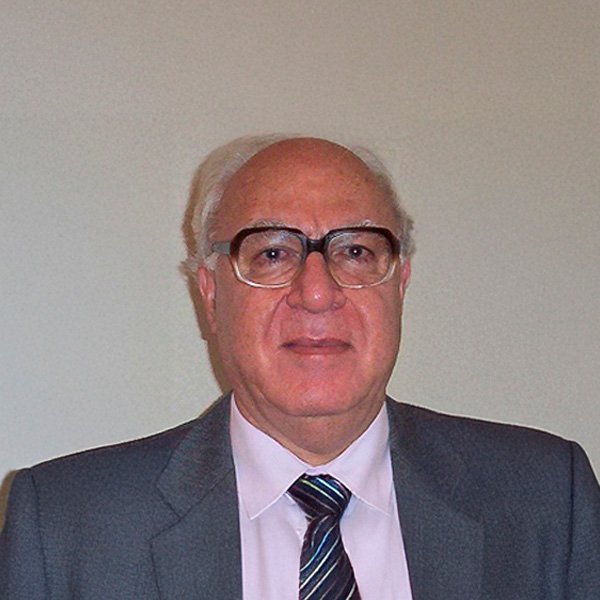
Former Professor and Dean of the Faculty of Languages, University of Isfahan; former lecturer at Cambridge, Harvard and Oxford universities; retired Editor for Middle East and North Africa, BBC Monitoring.

Share

Leave a Reply

Your email address will not be published. Required fields are marked *

Related Posts

Officially, the drones were not identified. By simply thinking critically – which journalists and selected experts no longer do – there may be a good reason for that. And this article will never be mentioned in Denmark… Drones over Denmark. No damage. No trace. No answers. Yet the headlines scream “Russian threat,” and Prime Minister Mette Frederiksen speaks with a certainty that defies logic: “We don’t know they were Russian—but we know Russia is the biggest threat to Europe.” It could be nobody else – unless you make an interest analysis which I did two days ago. This is not security policy. It’s theatre. And the audience is being played. Let’s rewind. These drones—unphotographed, untracked, unclaimed—appear and vanish like ghosts. Airports shut down. Panic spreads. Military budgets swell. And the narrative hardens: Russia is behind it. But what if that’s not just wrong but deliberately misleading? Here’s a hypothesis for...
And why the world, especially the EU, must now declare itself independent of the United States. UN’s 80th anniversary This year, the United Nations celebrates the 80th anniversary of its founding. The UN was formed after the scourge of the Second World War, in which 70 to 85 million people were killed and many countries were destroyed. That war came on the heels of the First World War, which also killed between 15 and 22 million people. After the Second World War, especially after the use of nuclear weapons by the United States, which marked a turning point in the history of warfare that could result in the end of civilisation as we know it, humanity decided to move away from the era of empires and big power politics and usher in a new era of peace, freedom and cooperation. These were the principles enshrined in the UN Charter. The United States...
Drones over Nordic airports. No damage. No trace. No answers. Most assume Russia—but what if that’s not so? Why is there so much we are not told? This article explores the strategic ambiguity behind recent drone incursions and asks: Who else might benefit from sending drones into NATO airspace? From Ukraine’s surprising drone supremacy to Russia’s possible signalling, the silence itself may be the loudest message. These are the kinds of questions decent, intelligent investigative journalists and commentators could easily research. Why don’t they? Did you, dear reader, know or think of this? That the most powerful weapon in today’s conflicts might be the one that leaves no trace – and no answers. Just enough fear to justify the next move? Recently, drones have repeatedly appeared over Nordic airports and near some military facilities. They cause no damage – for which reason the designation “hybrid attack” is misleading but serves a purpose. These...

Recent Articles

PressInfo # 141, December 21, 2001It’s time to prepare reconciliation between Albanians and Serbs PressInfo # 140, December 14, 2001Ibrahim Rugova’s decade-long leadership in Kosovo/a PressInfo # 139, 11. december, 2001En god nyhet: Jugoslaviens Sannings- och försoningskommission PressInfo # 139, 11. december, 2001Gode nyheder: Jugoslaviens Sandheds- og Forsoningskommission PressInfo # 139, December 11, 2001Good news: Yugoslavia’s Truth and Reconciliation Commission PressInfo # 138, November 8, 2001TFF co-founder PhD with thesis about young people with roots in other cultures PressInfo # 138, November 8, 2001TFF:s medstiftare doktor på avhandling om unga med ursprung i andra kulturer PressInfo # 137, October 17, 2001A new Marshall Plan: Advancing human security and controlling terrorism PressInfo # 136, October 15, 2001The UN and Annan really deserve it PressInfo # 135, October 10, 2001Preventing a terrorist mushroom cloud PressInfo # 134, 17 oktober, 2001Sverige og 11. september PressInfo # 134, October 9, 2001Sweden and September 11...
Peace is promoted by constructive proposals and dialogue Four preceding PressInfos have expressed concern over — and criticised — the ongoing, militarisation of the EU. Some will say: but there are no alternatives. We believe that there are always alternatives, that democracies are characterised by alternatives and choice, and that openly discussed alternatives will improve the quality and legitimacy of society’s decision–making. In addition, it is an intellectual and moral challenge to not only criticise but also be constructive. If we only tell people that we think they are wrong, they are not likely to listen. However, if we say: what are your views on this set of ideas and steps? — we may sometimes engage them in dialogue and sow a seed. Most people in power circles live their daily lives in in a time frame and a social space where certain ideas, viewpoints and concepts are just not...
Photos © TFF 2000 Read PressInfo 90 “Lift the Sanctions and Bring More Aid to Yugoslavia” See Pictures from Belgrade © TFF 2000 Please reprint, copy, archive, quote or re-post this item, but please retain the source.

TFF on Substack

Discover more from TFF Transnational Foundation & Jan Oberg.

Most Popular

PressInfo # 141, December 21, 2001It’s time to prepare reconciliation between Albanians and Serbs PressInfo # 140, December 14, 2001Ibrahim Rugova’s decade-long leadership in Kosovo/a PressInfo # 139, 11. december, 2001En god nyhet: Jugoslaviens Sannings- och försoningskommission PressInfo # 139, 11. december, 2001Gode nyheder: Jugoslaviens Sandheds- og Forsoningskommission PressInfo # 139, December 11, 2001Good news: Yugoslavia’s Truth and Reconciliation Commission PressInfo # 138, November 8, 2001TFF co-founder PhD with thesis about young people with roots in other cultures PressInfo # 138, November 8, 2001TFF:s medstiftare doktor på avhandling om unga med ursprung i andra kulturer PressInfo # 137, October 17, 2001A new Marshall Plan: Advancing human security and controlling terrorism PressInfo # 136, October 15, 2001The UN and Annan really deserve it PressInfo # 135, October 10, 2001Preventing a terrorist mushroom cloud PressInfo # 134, 17 oktober, 2001Sverige og 11. september PressInfo # 134, October 9, 2001Sweden and September 11...
Peace is promoted by constructive proposals and dialogue Four preceding PressInfos have expressed concern over — and criticised — the ongoing, militarisation of the EU. Some will say: but there are no alternatives. We believe that there are always alternatives, that democracies are characterised by alternatives and choice, and that openly discussed alternatives will improve the quality and legitimacy of society’s decision–making. In addition, it is an intellectual and moral challenge to not only criticise but also be constructive. If we only tell people that we think they are wrong, they are not likely to listen. However, if we say: what are your views on this set of ideas and steps? — we may sometimes engage them in dialogue and sow a seed. Most people in power circles live their daily lives in in a time frame and a social space where certain ideas, viewpoints and concepts are just not...
Photos © TFF 2000 Read PressInfo 90 “Lift the Sanctions and Bring More Aid to Yugoslavia” See Pictures from Belgrade © TFF 2000 Please reprint, copy, archive, quote or re-post this item, but please retain the source.
Read More
Imagen-thumbnail-The-Transnational-1
PressInfo # 141, December 21, 2001It’s time to prepare reconciliation between Albanians and Serbs PressInfo # 140, December 14, 2001Ibrahim Rugova’s decade-long leadership in Kosovo/a PressInfo # 139, 11. december, 2001En god nyhet: Jugoslaviens Sannings- och försoningskommission PressInfo # 139, 11. december, 2001Gode nyheder: Jugoslaviens Sandheds- og Forsoningskommission PressInfo # 139, December 11, 2001Good news: Yugoslavia’s Truth and Reconciliation Commission PressInfo # 138, November 8, 2001TFF co-founder PhD with thesis about young people with roots in other cultures PressInfo # 138, November 8, 2001TFF:s medstiftare doktor på avhandling om unga med ursprung i andra kulturer PressInfo # 137, October 17, 2001A new Marshall Plan: Advancing human security and controlling terrorism PressInfo # 136, October 15, 2001The UN and Annan really deserve it PressInfo # 135, October 10, 2001Preventing a terrorist mushroom cloud PressInfo # 134, 17 oktober, 2001Sverige og 11. september PressInfo # 134, October 9, 2001Sweden and September 11...
Imagen-thumbnail-The-Transnational-1
Peace is promoted by constructive proposals and dialogue Four preceding PressInfos have expressed concern over — and criticised — the ongoing, militarisation of the EU. Some will say: but there are no alternatives. We believe that there are always alternatives, that democracies are characterised by alternatives and choice, and that openly discussed alternatives will improve the quality and legitimacy of society’s decision–making. In addition, it is an intellectual and moral challenge to not only criticise but also be constructive. If we only tell people that we think they are wrong, they are not likely to listen. However, if we say: what are your views on this set of ideas and steps? — we may sometimes engage them in dialogue and sow a seed. Most people in power circles live their daily lives in in a time frame and a social space where certain ideas, viewpoints and concepts are just not...
Imagen-thumbnail-The-Transnational-1
Photos © TFF 2000 Read PressInfo 90 “Lift the Sanctions and Bring More Aid to Yugoslavia” See Pictures from Belgrade © TFF 2000 Please reprint, copy, archive, quote or re-post this item, but please retain the source.
Imagen-thumbnail-The-Transnational-1
Av FRANK SØHOLM GREVIL 16 augusti 2004  Vi er nu nået til tredje akt i det absurde teaterstykke, der i analogi med de store skueprocesser i Moskva 1936-38 er blevet døbt ‘Grevil-sagen’. Første akt bestod i min anonyme fremlæggelse af egenhændigt nedklassificerede rapporter i Berlingske Tidende i februar og marts. Andet akt udgjordes af min fremtræden med navn og billede i Information i april samt den efterfølgende mediestorm, som uden min direkte medvirken kostede en forsvarsminister taburetten samt en sigtelse for brud på tavshedspligten. Tredje akt bliver en retssag, hvor jeg står tiltalt for at have overtrådt straffelovens bestemmelser om uberettiget videregivelse eller udnyttelse af fortrolige oplysninger. Statsanklageren har ovenikøbet valgt at påberåbe sig særligt skærpende omstændigheder. Da jeg aldrig har modtaget betaling for at stille rapporterne til rådighed eller lade mig interviewe, må det skærpende bestå i, at “videregivelsen eller udnyttelsen er sket under sådanne omstændigheder, at det påfører...
Imagen-thumbnail-The-Transnational-1
Af Svenska Irakkommittén mot de Ekonomiska Sanktionerna (SIES) 13 september 2002 FN:s ekonomiska sanktioner mot Irak har nu pågått i tolv år och drabbat det irakiska folket med svåra lidanden. Enligt FN:s egna siffror har mer än 1,5 miljoner människor, varav ca 600 000 barn, dött som en direkt följd av sanktionerna. Dessutom har ett lågintensivt bombkrig mot landet pågått under dessa år. Av all denna förödelse- orsakad huvudsakligen av amerikansk och brittisk politik- har Saddam Husseins brutala och diktatoriska regim snarast stärkts än försvagats. Nu förbereder USA under president Bushs ledning ett storskaligt bombkrig mot Irak som kommer att innebära ett ännu större lidande för civilbefolkningen. Ett sådant krig kommer dessutom att ytterligare undergräva freden och säkerheten i världen. Att upprätta en demokratisk regim i Irak är det irakiska folkets angelägenhet och får enligt folkrätten inte ske med krigshandlingar utifrån. Folkrätten och FN:s stadgar måste respekteras. Vi vädjar till...
