PressInfo #148 - What if we had approached theMiddle East conflict differently?

Watching the horrors on the West Bank and Colin Powell’s predictable “peace” mission failure, I ask myself at least 3 questions:

b) How much longer shall it be possible to use methods of conflict “management” that have proven disastrous and contrary to international law in virtually all cases since the end of the Cold War, not the least in the Balkans and, latest, in Afghanistan? How much longer will it be possible to avoid the question: does the U.S., the self-appointed mediator, have the required professional skills, altruistic motives and impartiality required to serve as a genuine mediator?

c) Can we learn something constructive from the tragic escalation of violence in the Middle East?

In short, I think we need to explore the what ifs. What if all parties had addressed the conflict in a different manner and used another, professional paradigm during the last few decades?

Israel’s government uses state terror. Some Palestinian groups and individuals use small group terror. Israel’s policies contribute to the Palestinian fear and despair that suicide bombers are made of; suicide bombers contribute to the Israeli fear and despair that the Sharon government needs for its war.

It’s a sad lesson not yet learned: violence feeds upon violence and vicious circles abound. Add violence on top of an otherwise legitimate but difficult conflict and it takes on a dynamics of its own – the only effect of which is to make a solution even more difficult. Some feel good blaming. We can blame one side one day and the other side the next day. But blaming one side or the other will lead us nowhere.

Logically, failed peace processes can be attributed to a) one or more of the conflicting parties, b) the mediator or peacemaker or c) to the approach they have used. The media and the mediators point fingers at one or the other party, the parties point fingers at each other – all of which only justifies new rounds of killing.

Framework

The focus is on Israel/Israelis/Jews and Palestine/Palestians/Arabs.

What if we had looked more at the conflict as one point in the larger regional and global framework and worked with a vision of the whole region in peace?

Conflict analysis

1) Territory

Emphasis has been on territory, maps and borders.

What if we had given equal emphasis to non-territorial aspects, to social, economic, and cultural dimensions of the conflict and dealt seriously with human dimensions such as anger, hate, distrust, traumas and fear?

2) The actors

Emphasis has been on the conflict between Israelis and Palestinians as if they were quite homogenous groups pitted against each other.

What if we had given more emphasis to the multiethnic reality on both sides as well as to the conflicts inside the Israeli and inside the Palestinian “camp,” the soft and the hard attitudes as well as the rich variety inside each?

3) Classes and resources for conflict-resolution

Emphasis has been on leaders, personalities and people in power, both in terms of the conflict itself, the violence and the negotiation processes. The focus remains on the old generation and on men (Sharon 74, Arafat 73).

What if we had focussed on citizens, civil society, the peace capacity and rituals for conflict-resolution that exist in every community?

What if we had focussed on innocent youth, the future generation whose lives are being destroyed?

What if we had worked much more with women who are always carriers of civil society?

4) Violence

Emphasis has always been on violence, war, weapons, and terror. It has made those who use violence powerful and famous.

What if we had focussed on peace groups, dialogue groups, co-existence experiments, peace communities (of which there are many) and made them famous?

What if we had listened more to conscientious objectors and refuseniks than to warlords and terrorists on both sides?

What if the media had told us much more about the will to peace and groups like the “Seeds of Peace” ?

5) Root causes

The international community argues that the violence must first stop and there must be a cease-fire before the parties will be assisted in finding a political settlement.

What if, instead, there had been an effort to understand why people take to violence in the first place, a focus on the root causes of which violence is a symptom?

What if somebody asked whether it was wise to give the parties, Israel in particular, all these weapons and call it “security” and “stability”?

6) Traumas and suffering

Traumas and suffering, historically essential for both sides, have been left virtually unattended. The wounds of the hearts and the souls are given much less attention than those of the bodies being wounded and transported in ambulances.

What if, instead, we had addressed this as a conflict between peoples who are deeply hurt, the Jews by being victims of the Holocaust, the Palestinians by being victims of their settler colonialism? Both feel that they are the victims of each other and of history and that they have a right to revenge.

What if we had insisted on the same principles for all, such as the right to return, not only for the Jews but for the Palestinians too?

What if someone had apologised for the fact that Europeans and the international community are historically guilty too?

What if, in consequence, we had respected the parties’ grievances, views, feelings and hopes for the future instead of imposing our own “peace” plans?

What if we had paid attention to the subtext and the psycho-cultural context and not just to the positions, plans, power games and policies of the diplomats?

What if Western countries had been a bit more humble throughout, listened better and promoted its own interests less?

7) The power relations of the parties

Generally, mainstream media seem to treat this conflict as symmetric. Look, they say, the Palestinians are strong too because the have weapons and use suicide bombers.

But what if we had appreciated the larger correlation of power such as the annual US$ 3-5 billion of aid from the United States to one side; Israel’s overwhelming military power such as almost 4000 tanks, 440 combat aircraft and at least 100 nuclear weapons?

What if, to that, we had added economic power, control of arable land and water? If so, we would have seen it as an a-symmetric conflict. This is important because anyone with a minimum of knowledge about conflict and mediation knows that a-symmetric and symmetric conflicts must be handled in different ways.

In two following PressInfos we shall deal with a) the issues of what if we had worked out a different mediation and peace process; and b) what if we changed the war/peace cycle and moved from militarisation of conflicts to their de-militarisation.

© TFF 2002

TFF PressInfo 149, Don’t blame the patient when the doctor’s “peace” operation fails
TFF PressInfo 150, What if…then perhaps peace is possible

Peace & future researcher + ‌Art Photographer

Share

Related Posts

Af Svenska Irakkommittén mot de Ekonomiska Sanktionerna (SIES) 13 september 2002 FN:s ekonomiska sanktioner mot Irak har nu pågått i tolv år och drabbat det irakiska folket med svåra lidanden. Enligt FN:s egna siffror har mer än 1,5 miljoner människor, varav ca 600 000 barn, dött som en direkt följd av sanktionerna. Dessutom har ett lågintensivt bombkrig mot landet pågått under dessa år. Av all denna förödelse- orsakad huvudsakligen av amerikansk och brittisk politik- har Saddam Husseins brutala och diktatoriska regim snarast stärkts än försvagats. Nu förbereder USA under president Bushs ledning ett storskaligt bombkrig mot Irak som kommer att innebära ett ännu större lidande för civilbefolkningen. Ett sådant krig kommer dessutom att ytterligare undergräva freden och säkerheten i världen. Att upprätta en demokratisk regim i Irak är det irakiska folkets angelägenhet och får enligt folkrätten inte ske med krigshandlingar utifrån. Folkrätten och FN:s stadgar måste respekteras. Vi vädjar till...
LONDON – So far so good, at least on the wider level. While internally Iraq seems on the edge of chaos, the much heralded clash of civilizations between the Muslim and Judaeo-Christian worlds has yet to become apparent. We have anger and despair aplenty in the Arab and Muslim worlds. But very little rushing to the standard and there was no great pilgrimage of warriors to join the fight, as happened when the Soviet Union invaded Afghanistan twenty years ago, and then, having driven the Red Army out, were left to ferment in that mountainous redoubt. With the armaments supplied by the CIA the mujahidin were transformed into Al Qaeda that became, for a relatively brief moment as these things go, ‘the greatest threat to the homeland that America has ever known.’ Nevertheless a ‘Cold War’ between much of the Muslim world and the West is certainly in full swing. Winston...

Recent Articles

Af Svenska Irakkommittén mot de Ekonomiska Sanktionerna (SIES) 13 september 2002 FN:s ekonomiska sanktioner mot Irak har nu pågått i tolv år och drabbat det irakiska folket med svåra lidanden. Enligt FN:s egna siffror har mer än 1,5 miljoner människor, varav ca 600 000 barn, dött som en direkt följd av sanktionerna. Dessutom har ett lågintensivt bombkrig mot landet pågått under dessa år. Av all denna förödelse- orsakad huvudsakligen av amerikansk och brittisk politik- har Saddam Husseins brutala och diktatoriska regim snarast stärkts än försvagats. Nu förbereder USA under president Bushs ledning ett storskaligt bombkrig mot Irak som kommer att innebära ett ännu större lidande för civilbefolkningen. Ett sådant krig kommer dessutom att ytterligare undergräva freden och säkerheten i världen. Att upprätta en demokratisk regim i Irak är det irakiska folkets angelägenhet och får enligt folkrätten inte ske med krigshandlingar utifrån. Folkrätten och FN:s stadgar måste respekteras. Vi vädjar till...
Peace will not result from any “peace” plan circulated to date. Neither will it emerge from warfare – as the elites of NATO, EU, Russia, and Ukraine seem to finally recognise after avoidable, unspeakable losses of people, trust and physical, socio-economic destruction. And horse-trading based on military ‘security’ guarantees reveals only peace and conflict illiteracy. TFF is critical of the widespread and severe misuse of the word peace – as if it did not require any knowledge. But we do not engage in geopolitical-military commentarism or dismissive criticism of present-day Realpolitik and its militarist mindset. Indeed, we do not believe that mainstream political and media elites are aware that they know woefully little about peace and peace-making or see it as a professional field. Thus, we do not expect they would acquaint themselves with a portfolio like this. TFF concentrates on constructive, visionary thinking grounded in the science and art of peace and in our 40 years...

TFF on Substack

Discover more from TFF Transnational Foundation & Jan Oberg.

Most Popular

Af Svenska Irakkommittén mot de Ekonomiska Sanktionerna (SIES) 13 september 2002 FN:s ekonomiska sanktioner mot Irak har nu pågått i tolv år och drabbat det irakiska folket med svåra lidanden. Enligt FN:s egna siffror har mer än 1,5 miljoner människor, varav ca 600 000 barn, dött som en direkt följd av sanktionerna. Dessutom har ett lågintensivt bombkrig mot landet pågått under dessa år. Av all denna förödelse- orsakad huvudsakligen av amerikansk och brittisk politik- har Saddam Husseins brutala och diktatoriska regim snarast stärkts än försvagats. Nu förbereder USA under president Bushs ledning ett storskaligt bombkrig mot Irak som kommer att innebära ett ännu större lidande för civilbefolkningen. Ett sådant krig kommer dessutom att ytterligare undergräva freden och säkerheten i världen. Att upprätta en demokratisk regim i Irak är det irakiska folkets angelägenhet och får enligt folkrätten inte ske med krigshandlingar utifrån. Folkrätten och FN:s stadgar måste respekteras. Vi vädjar till...
Peace will not result from any “peace” plan circulated to date. Neither will it emerge from warfare – as the elites of NATO, EU, Russia, and Ukraine seem to finally recognise after avoidable, unspeakable losses of people, trust and physical, socio-economic destruction. And horse-trading based on military ‘security’ guarantees reveals only peace and conflict illiteracy. TFF is critical of the widespread and severe misuse of the word peace – as if it did not require any knowledge. But we do not engage in geopolitical-military commentarism or dismissive criticism of present-day Realpolitik and its militarist mindset. Indeed, we do not believe that mainstream political and media elites are aware that they know woefully little about peace and peace-making or see it as a professional field. Thus, we do not expect they would acquaint themselves with a portfolio like this. TFF concentrates on constructive, visionary thinking grounded in the science and art of peace and in our 40 years...
Read More
Imagen-thumbnail-The-Transnational-1
Af Svenska Irakkommittén mot de Ekonomiska Sanktionerna (SIES) 13 september 2002 FN:s ekonomiska sanktioner mot Irak har nu pågått i tolv år och drabbat det irakiska folket med svåra lidanden. Enligt FN:s egna siffror har mer än 1,5 miljoner människor, varav ca 600 000 barn, dött som en direkt följd av sanktionerna. Dessutom har ett lågintensivt bombkrig mot landet pågått under dessa år. Av all denna förödelse- orsakad huvudsakligen av amerikansk och brittisk politik- har Saddam Husseins brutala och diktatoriska regim snarast stärkts än försvagats. Nu förbereder USA under president Bushs ledning ett storskaligt bombkrig mot Irak som kommer att innebära ett ännu större lidande för civilbefolkningen. Ett sådant krig kommer dessutom att ytterligare undergräva freden och säkerheten i världen. Att upprätta en demokratisk regim i Irak är det irakiska folkets angelägenhet och får enligt folkrätten inte ske med krigshandlingar utifrån. Folkrätten och FN:s stadgar måste respekteras. Vi vädjar till...
TFFPortfolioVign
Peace will not result from any “peace” plan circulated to date. Neither will it emerge from warfare – as the elites of NATO, EU, Russia, and Ukraine seem to finally recognise after avoidable, unspeakable losses of people, trust and physical, socio-economic destruction. And horse-trading based on military ‘security’ guarantees reveals only peace and conflict illiteracy. TFF is critical of the widespread and severe misuse of the word peace – as if it did not require any knowledge. But we do not engage in geopolitical-military commentarism or dismissive criticism of present-day Realpolitik and its militarist mindset. Indeed, we do not believe that mainstream political and media elites are aware that they know woefully little about peace and peace-making or see it as a professional field. Thus, we do not expect they would acquaint themselves with a portfolio like this. TFF concentrates on constructive, visionary thinking grounded in the science and art of peace and in our 40 years...
BlackNobel
OK, Trump did not get it. But he got a full endorsement of a possible future US regime change in Venezuela. And that is what Ms Machado has advocated. On October 10, 2025, the Norwegian Nobel Committee awarded its Peace Prize to Venezuelan opposition figure María Corina Machado. The citation praised her “tireless work promoting democratic rights.” But Ms Machado has openly called for U.S. military intervention in Venezuela, stating on CBS: “The only way to stop the suppression is by force—U.S. force.” She or her party has received funding from the National Endowment for Democracy (NED), a U.S. government-backed body known as a CIA front organisation and for supporting regime-change operations worldwide. And in 2018, she sent a letter to Israeli Prime Minister Benjamin Netanyahu, asking him to use “force and influence” to help dismantle Venezuela’s government—citing alleged ties to terrorism, Iran and narcotrafficking. This year’s NATO Norwegian prize...
Screenshot-2025-10-08-163458
PRESS RELEASE – 6 OCTOBER 2025 LAY DOWN YOUR ARMSPEACE PRIZE FOR 2025 is awarded Francesca Albanese The United Nations Special Rapporteur on the occupied Palestinian territories – as the person who, in accordance with Alfred Nobel’s will, has “done the most or the best work for fraternity between nations and for the abolition or reduction of standing armies as well as for the holding and promotion of peace congresses.” Francesca Albanese has forcefully and unwaveringly worked against Israel’s full-scale war on the occupied Palestinian territories, in particular Israel´s ongoing genocide against the Palestinian people. She has confronted Israel’s systematic war crimes and crimes against humanity in a truly global outreach. Further, she has brought governments, international organisations and people’s groups together to underline the responsibility of the world at large to act and to stop arming, enabling, and profiting from Israel’s ongoing criminal actions. But first of all, Albanese...
Copilot_20251003_003414
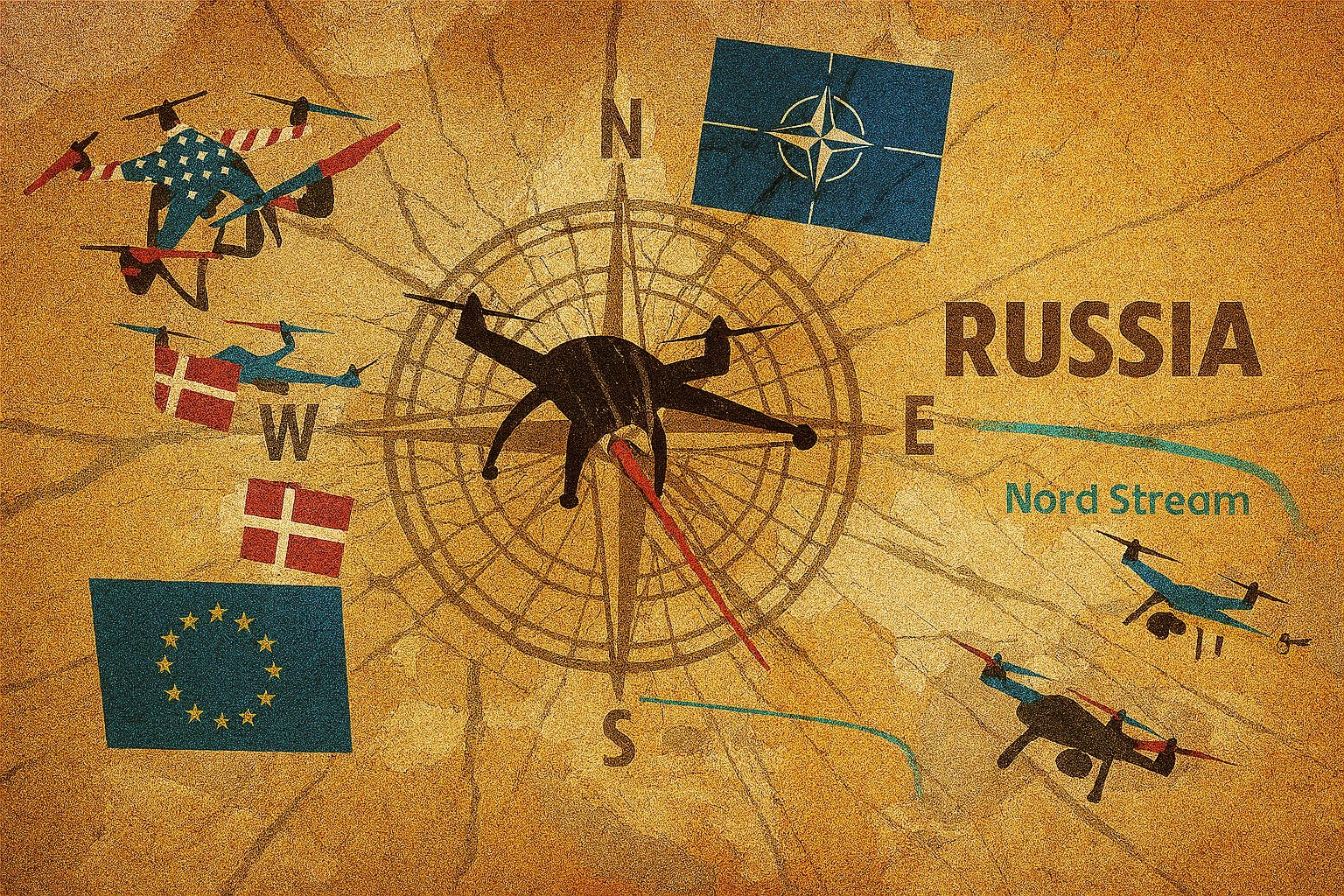
Officially, the drones were not identified. By simply thinking critically – which journalists and selected experts no longer do – there may be a good reason for that. And this article will never be mentioned in Denmark… Drones over Denmark. No damage. No trace. No answers. Yet the headlines scream “Russian threat,” and Prime Minister Mette Frederiksen speaks with a certainty that defies logic: “We don’t know they were Russian—but we know Russia is the biggest threat to Europe.” It could be nobody else – unless you make an interest analysis which I did two days ago. This is not security policy. It’s theatre. And the audience is being played. Let’s rewind. These drones—unphotographed, untracked, unclaimed—appear and vanish like ghosts. Airports shut down. Panic spreads. Military budgets swell. And the narrative hardens: Russia is behind it. But what if that’s not just wrong but deliberately misleading? Here’s a hypothesis for...