
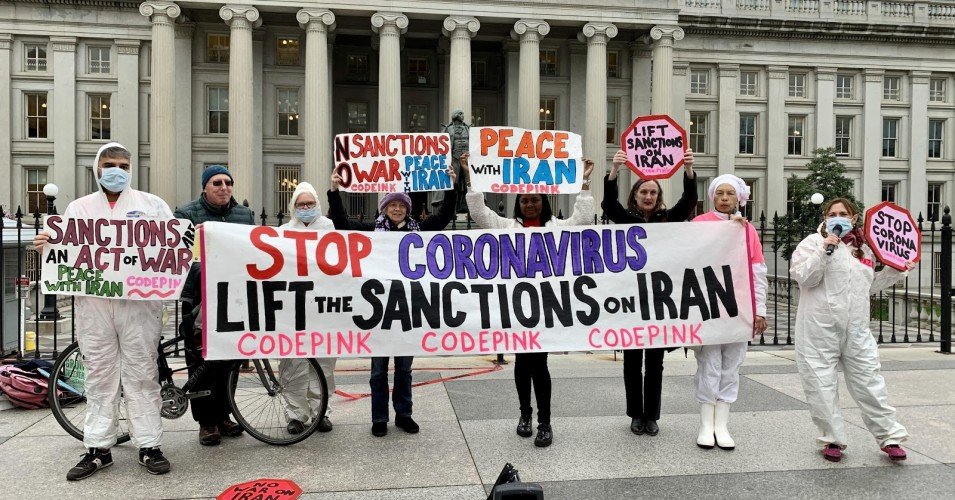

US Sanctions Have Caused Iranians Untold Misery – And Achieved Nothing

Negar Mortazavi and Sina Toossi

February 25, 2020

Iranians’ stories reflect the devastating human costs of US economic sanctions that are often ignored by Washington’s foreign policy elite

Originally posted on Global Research on December 8th, 2020

“My young cousin passed away last week,” an Iranian Twitter user recently lamented. “She needed medication for her cancer that doctors said can’t be found.”

The tweet tragically went on: “Maybe she’d be alongside her little daughter now if she had this medicine and not under a pile of cold dirt.”

These heartbreaking words are from journalist Katayoon Lamezadeh, one of thousands of Iranians who have taken to social media to speak of how sanctions have upended their lives. Their stories reflect the devastating human costs of US economic sanctions that are often ignored by Washington’s foreign policy elite and largely unknown to the American public.

The assassination of Iranian scientist Mohsen Fakhrizadeh is the latest in a long-running pressure campaign against Iran by the US and its allies such as Israel. However, in the case of sanctions, it is ordinary Iranians who are paying the biggest price.

The onslaught of sanctions and covert actions on Iran during the Trump era has not elicited concessions from the Iranian government, but it has caused immense pain inside Iran. Today, Iran’s population is being crushed by the twofold blows of US sanctions and the Covid-19 crisis, all while under the yoke of an increasingly repressive government.

The Trump administration imposed new sanctions after it pulled out of the Iran nuclear deal in May 2018, crippling an economy that supports over 83 million lives. And despite the harrowing toll of the pandemic in Iran, the epicentre of the virus in the Middle East, Trump is bent on increasing sanctions all the way up to President-elect Joe Biden’s inauguration on 20 January. The administration has ignored a wide range of calls from world leaders and the United Nations to provide sanctions relief amid the coronavirus outbreak.

Recently, 75 Democrats in Congress also sent a letter to the Trump administration to demand measures to ensure that all countries can get essential medical equipment during the pandemic despite ramped-up US sanctions.

A humanitarian crisis

In recent weeks, many Iranians have begun documenting the humanitarian crisis unleashed by sanctions using the hashtag, Ravayat-e Tahrim (روایت_تحریم#) meaning “the story of sanctions”. The personal accounts corroborate the dismal economic data coming out of Iran, which show striking declines in the consumption of even staple goods such as red meat and rice.

The suffering and helplessness of the Iranian people today underscores the callous nature of President Trump’s approach to Iran, and the moral and strategic need for relieving pressure on the Iranian people and rethinking America’s sanctions policy under the incoming Biden administration.

Many of the stories Iranians have shared online relate to a loss of access to life-saving medicines. While humanitarian goods such as food and medicine are technically exempt from the US sanctions regime, groups such as Human Rights Watch have documented how the blanket economic and financial sanctions have deterred foreign firms and banks from facilitating humanitarian trade with Iran, including for “vital medicines and medical equipment”.

The outcome of this policy has harmed Iran’s most vulnerable, especially patients suffering from chronic and rare diseases such as multiple sclerosis, haemophilia, HIV/AIDS, epilepsy, and cancers. For many Iranians, their lives now depend on scrounging for increasingly scarce medicine.

One Iranian Twitter user wrote how he searched for his father’s diabetes medication at “seven or eight” pharmacies to no avail. Then, at a pharmacy in Tehran’s Ferdowsi square, he saw a woman who was searching for but could not find the blood thinner medication Plavix. “I forgot my own troubles and stared at her as she left the pharmacy hopeless,” he wrote. “I felt ashamed that we had Plavix at home for my father who suffered a stroke.”

Rapid decline

The firsthand reports of the desperation wreaked by US sanctions are made even bleaker by the overall economic picture in the country. According to the Statistical Centre of Iran, from March 2016 to March this year, GDP per capita decreased by roughly 10 percent. The price of basic foodstuffs such as butter and beans has more than doubled over this period, while housing and automobile prices have skyrocketed to an extent that they are unaffordable for all but the wealthiest citizens.

As the incomes of Iranian households have decreased, so too have domestic consumption patterns, even for vital foodstuffs. The statistics in this regard show how shockingly impoverished Iranians have become: from 2011 to 2020, red meat consumption has declined by 51.6 percent, rice by 34.7 percent, and dairy products by 35.3 percent. Notably, the previous round of sanctions imposed by the Obama administration was only beginning to lift in 2016 before being reimposed with greater severity by President Trump in 2018.

While perennial corruption and domestic mismanagement have long played a role in Iran’s economic malaise, Iran experienced 13 percent growth in 2016, the year the nuclear deal went into effect, and was on the path to further growth.

The rapid economic decline of recent years is directly attributable to the Trump administration’s so-called “maximum pressure” campaign, which has slashed Iran’s oil exports, cut the value of its currency by two-thirds, and resulted in rampant inflation. The Iranian people have been subject to great misery with no discernable dividends for US national security interests or regional stability.

US sanctions have also helped crush Iran’s civil society, which has already been under immense pressure from the state. Over the last several years, Iranian civil society activists, like other Iranians, have grown poorer, sicker, and more hopeless.

“Being poorer means that many engaged in this sector as volunteers are no longer able to continue their activism, as they have to work multiple jobs to make ends meet. As such, Iranian civil society is losing its most valuable asset: its volunteer activists,” said Sussan Tahmasebi, a prominent women’s rights activist and civil society leader.

However, the sad reality is that Iran’s civil society that once advocated rights is now shifting gears to meet basic demands such as for food and medical care. “It will take years for Iranian civil society to recover from these setbacks, just as it will take years for Iranians to recover from the economic setbacks of the last few years,” Tahmasebi added.

Restoring Iranians’ trust

The Trump administration’s sanctions on Iran become an end unto themselves. They have triggered a humanitarian disaster while failing to meet any reasonably defined US objectives towards Iran.

After years of maximum pressure, the Iranian government’s foreign policy is unchanged, its nuclear programme is more advanced, and its most hardline factions are greatly empowered. The current US policy has only managed to brutally immiserate a population already under the yoke of a repressive government.

Hossein Nooraninejad, the spokesperson of Iran’s largest reformist party, the United People’s Party, told us that sanctions have not resulted in their stated goals because the Iranian people have endured them, some as an act of “resistance” to the US and others due to coercion. Nooraninejad adds that Iranians are also increasingly demanding a diplomatic resolution to tensions with the US, because of the impact of sanctions on their lives.

The Biden administration must rethink the use of broad sanctions as a foreign policy tool. As the Iran case currently shows, the net outcome of such sanctions is only widespread suffering and geopolitical instability.

To restore US trust with the Iranian people and its credibility as a defender of human rights globally, President Biden must provide relief from collectively punishing sanctions as a first step to finding diplomatic solutions to disputes with Iran.

Please help TFF remain truly independent and highly productive by contributing if you benefited from this article

[paypal-donation]

Negar Mortazavi is a journalist and political analyst based in Washington DC. She is a columnist for The Independent and host of the Iran Podcast. @NegarMortazavi

Sina Toossi is a Senior Research Analyst at the National Iranian American Council (NIAC). He tweets @SinaToossi

Recommended

Medea Benjamin and Ariel Gold,
To Help Stem Coronavirus, Lift Sanctions on Iran
Among those in Iran who have been unable to get critical medications have been patients with leukemia, epidermolysis bullosa, epilepsy, and chronic eye injuries from exposure to chemical weapons during the Iran-Iraq war. Now coronavirus is added to that list.

Share

Leave a Reply

Your email address will not be published. Required fields are marked *

Related Posts

And why the world, especially the EU, must now declare itself independent of the United States. UN’s 80th anniversary This year, the United Nations celebrates the 80th anniversary of its founding. The UN was formed after the scourge of the Second World War, in which 70 to 85 million people were killed and many countries were destroyed. That war came on the heels of the First World War, which also killed between 15 and 22 million people. After the Second World War, especially after the use of nuclear weapons by the United States, which marked a turning point in the history of warfare that could result in the end of civilisation as we know it, humanity decided to move away from the era of empires and big power politics and usher in a new era of peace, freedom and cooperation. These were the principles enshrined in the UN Charter. The United States...
America’s Strategic Assault on Art, Academia, and the Imagination That Sustains Peace The United States once stood as a beacon of cultural audacity—a place where dissent could be beautiful, and beauty and innovation could challenge the present order of things. Its museums, universities, and artists helped inspire a worldwide imagination rooted in creative freedom and innovation. But today, under the Trump regime’s second term, those dynamic qualities are being systematically dismantled. Just read this. As Trump goes after the arts, many museums remain silent | CNN As CNN reports, the administration has launched an aggressive campaign to “eradicate improper ideology” from federally funded museums. Exhibitions involving race, gender, and identity are being censored or cancelled. Amy Sherald’s reimagining of the Statue of Liberty as a Black, trans woman was pulled from the Smithsonian after curators objected to its symbolism. Sherald warned that “history shows us what happens when governments demand loyalty...
This is the third appeal from TFF. The first and the second here. On August 22, 2025, the UN officially declared famine in Gaza. The world’s top authority on food security called for help and said starvation will spread further within the Strip unless fighting stops and much more aid is allowed in. More than half a million people in the Gaza Strip are facing catastrophic hunger conditions, while more than a million more are in a food emergency phase, the report states. This man-made catastrophic famine could have been prevented by a steady flow of humanitarian aid into the enclave, relief chief Tom Fletcher pointed out. “Yet food stacks up at borders because of systematic obstruction by Israel,” Mr. Fletcher said. “It is a famine within a few 100 meters of food in a fertile land.” The UN’s top aid official underscored that the famine in Gaza is “caused by cruelty, justified...

Recent Articles

PressInfo # 141, December 21, 2001It’s time to prepare reconciliation between Albanians and Serbs PressInfo # 140, December 14, 2001Ibrahim Rugova’s decade-long leadership in Kosovo/a PressInfo # 139, 11. december, 2001En god nyhet: Jugoslaviens Sannings- och försoningskommission PressInfo # 139, 11. december, 2001Gode nyheder: Jugoslaviens Sandheds- og Forsoningskommission PressInfo # 139, December 11, 2001Good news: Yugoslavia’s Truth and Reconciliation Commission PressInfo # 138, November 8, 2001TFF co-founder PhD with thesis about young people with roots in other cultures PressInfo # 138, November 8, 2001TFF:s medstiftare doktor på avhandling om unga med ursprung i andra kulturer PressInfo # 137, October 17, 2001A new Marshall Plan: Advancing human security and controlling terrorism PressInfo # 136, October 15, 2001The UN and Annan really deserve it PressInfo # 135, October 10, 2001Preventing a terrorist mushroom cloud PressInfo # 134, 17 oktober, 2001Sverige og 11. september PressInfo # 134, October 9, 2001Sweden and September 11...
Peace is promoted by constructive proposals and dialogue Four preceding PressInfos have expressed concern over — and criticised — the ongoing, militarisation of the EU. Some will say: but there are no alternatives. We believe that there are always alternatives, that democracies are characterised by alternatives and choice, and that openly discussed alternatives will improve the quality and legitimacy of society’s decision–making. In addition, it is an intellectual and moral challenge to not only criticise but also be constructive. If we only tell people that we think they are wrong, they are not likely to listen. However, if we say: what are your views on this set of ideas and steps? — we may sometimes engage them in dialogue and sow a seed. Most people in power circles live their daily lives in in a time frame and a social space where certain ideas, viewpoints and concepts are just not...
Photos © TFF 2000 Read PressInfo 90 “Lift the Sanctions and Bring More Aid to Yugoslavia” See Pictures from Belgrade © TFF 2000 Please reprint, copy, archive, quote or re-post this item, but please retain the source.

TFF on Substack

Discover more from TFF Transnational Foundation & Jan Oberg.

Most Popular

PressInfo # 141, December 21, 2001It’s time to prepare reconciliation between Albanians and Serbs PressInfo # 140, December 14, 2001Ibrahim Rugova’s decade-long leadership in Kosovo/a PressInfo # 139, 11. december, 2001En god nyhet: Jugoslaviens Sannings- och försoningskommission PressInfo # 139, 11. december, 2001Gode nyheder: Jugoslaviens Sandheds- og Forsoningskommission PressInfo # 139, December 11, 2001Good news: Yugoslavia’s Truth and Reconciliation Commission PressInfo # 138, November 8, 2001TFF co-founder PhD with thesis about young people with roots in other cultures PressInfo # 138, November 8, 2001TFF:s medstiftare doktor på avhandling om unga med ursprung i andra kulturer PressInfo # 137, October 17, 2001A new Marshall Plan: Advancing human security and controlling terrorism PressInfo # 136, October 15, 2001The UN and Annan really deserve it PressInfo # 135, October 10, 2001Preventing a terrorist mushroom cloud PressInfo # 134, 17 oktober, 2001Sverige og 11. september PressInfo # 134, October 9, 2001Sweden and September 11...
Peace is promoted by constructive proposals and dialogue Four preceding PressInfos have expressed concern over — and criticised — the ongoing, militarisation of the EU. Some will say: but there are no alternatives. We believe that there are always alternatives, that democracies are characterised by alternatives and choice, and that openly discussed alternatives will improve the quality and legitimacy of society’s decision–making. In addition, it is an intellectual and moral challenge to not only criticise but also be constructive. If we only tell people that we think they are wrong, they are not likely to listen. However, if we say: what are your views on this set of ideas and steps? — we may sometimes engage them in dialogue and sow a seed. Most people in power circles live their daily lives in in a time frame and a social space where certain ideas, viewpoints and concepts are just not...
Photos © TFF 2000 Read PressInfo 90 “Lift the Sanctions and Bring More Aid to Yugoslavia” See Pictures from Belgrade © TFF 2000 Please reprint, copy, archive, quote or re-post this item, but please retain the source.
Read More
Imagen-thumbnail-The-Transnational-1
PressInfo # 141, December 21, 2001It’s time to prepare reconciliation between Albanians and Serbs PressInfo # 140, December 14, 2001Ibrahim Rugova’s decade-long leadership in Kosovo/a PressInfo # 139, 11. december, 2001En god nyhet: Jugoslaviens Sannings- och försoningskommission PressInfo # 139, 11. december, 2001Gode nyheder: Jugoslaviens Sandheds- og Forsoningskommission PressInfo # 139, December 11, 2001Good news: Yugoslavia’s Truth and Reconciliation Commission PressInfo # 138, November 8, 2001TFF co-founder PhD with thesis about young people with roots in other cultures PressInfo # 138, November 8, 2001TFF:s medstiftare doktor på avhandling om unga med ursprung i andra kulturer PressInfo # 137, October 17, 2001A new Marshall Plan: Advancing human security and controlling terrorism PressInfo # 136, October 15, 2001The UN and Annan really deserve it PressInfo # 135, October 10, 2001Preventing a terrorist mushroom cloud PressInfo # 134, 17 oktober, 2001Sverige og 11. september PressInfo # 134, October 9, 2001Sweden and September 11...
Imagen-thumbnail-The-Transnational-1
Peace is promoted by constructive proposals and dialogue Four preceding PressInfos have expressed concern over — and criticised — the ongoing, militarisation of the EU. Some will say: but there are no alternatives. We believe that there are always alternatives, that democracies are characterised by alternatives and choice, and that openly discussed alternatives will improve the quality and legitimacy of society’s decision–making. In addition, it is an intellectual and moral challenge to not only criticise but also be constructive. If we only tell people that we think they are wrong, they are not likely to listen. However, if we say: what are your views on this set of ideas and steps? — we may sometimes engage them in dialogue and sow a seed. Most people in power circles live their daily lives in in a time frame and a social space where certain ideas, viewpoints and concepts are just not...
Imagen-thumbnail-The-Transnational-1
Photos © TFF 2000 Read PressInfo 90 “Lift the Sanctions and Bring More Aid to Yugoslavia” See Pictures from Belgrade © TFF 2000 Please reprint, copy, archive, quote or re-post this item, but please retain the source.
Imagen-thumbnail-The-Transnational-1
Av FRANK SØHOLM GREVIL 16 augusti 2004  Vi er nu nået til tredje akt i det absurde teaterstykke, der i analogi med de store skueprocesser i Moskva 1936-38 er blevet døbt ‘Grevil-sagen’. Første akt bestod i min anonyme fremlæggelse af egenhændigt nedklassificerede rapporter i Berlingske Tidende i februar og marts. Andet akt udgjordes af min fremtræden med navn og billede i Information i april samt den efterfølgende mediestorm, som uden min direkte medvirken kostede en forsvarsminister taburetten samt en sigtelse for brud på tavshedspligten. Tredje akt bliver en retssag, hvor jeg står tiltalt for at have overtrådt straffelovens bestemmelser om uberettiget videregivelse eller udnyttelse af fortrolige oplysninger. Statsanklageren har ovenikøbet valgt at påberåbe sig særligt skærpende omstændigheder. Da jeg aldrig har modtaget betaling for at stille rapporterne til rådighed eller lade mig interviewe, må det skærpende bestå i, at “videregivelsen eller udnyttelsen er sket under sådanne omstændigheder, at det påfører...
Imagen-thumbnail-The-Transnational-1
Af Svenska Irakkommittén mot de Ekonomiska Sanktionerna (SIES) 13 september 2002 FN:s ekonomiska sanktioner mot Irak har nu pågått i tolv år och drabbat det irakiska folket med svåra lidanden. Enligt FN:s egna siffror har mer än 1,5 miljoner människor, varav ca 600 000 barn, dött som en direkt följd av sanktionerna. Dessutom har ett lågintensivt bombkrig mot landet pågått under dessa år. Av all denna förödelse- orsakad huvudsakligen av amerikansk och brittisk politik- har Saddam Husseins brutala och diktatoriska regim snarast stärkts än försvagats. Nu förbereder USA under president Bushs ledning ett storskaligt bombkrig mot Irak som kommer att innebära ett ännu större lidande för civilbefolkningen. Ett sådant krig kommer dessutom att ytterligare undergräva freden och säkerheten i världen. Att upprätta en demokratisk regim i Irak är det irakiska folkets angelägenhet och får enligt folkrätten inte ske med krigshandlingar utifrån. Folkrätten och FN:s stadgar måste respekteras. Vi vädjar till...