
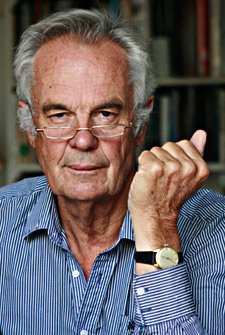
Ukrainian crisis isn't worth a new Cold War

36 were carried out in the post Cold War 1990s. The number of international conflicts decreased quite significantly. Russia and China and other former socialist countries, despite differences in their political systems, were integrated into one global and financial economic system.

Several attempts were made to legally formalize the new balance of power – by concluding in 1990 a treaty on the reunification of Germany between West and East Germany, the Soviet Union, the US, UK and France. There was the Paris Charter of 1990 and the Nato-Russia Founding Act in 1997, that gave Russia important representation at the Nato table. In addition, the Adapted Conventional Armed Forces Europe Treaty was signed in 1999 and negotiations were held on the joint development of missile defence systems.

The young people of today, not least those that triggered the upheavals in Ukraine with their demonstrations in the Maidan in Kiev over a legal document whose essence few people understood – an association agreement with the EU – were of an average age of approximately 25. That means when the Cold War ended and the above efforts to create a new world order were put in place they were in junior school. What did they know? And today’s politicians don’t remind them. Instead they seem to support a new Cold War by other means.

In the Russian foreign policy magazine, Russia in Global Affairs, Alexei Arbatov of Moscow’s Institute of World Economy and International Relations, observes that “in the early 1990s the US had a unique historical chance to lead the creation of a new, multilateral world order. However, it unwisely lost this chance. The US suddenly saw itself as ‘the only superpower in the world’. Gripped by euphoria, it began to substitute international law with the law of force, legitimate decisions of the UN Security Council with the directives of the US, and OSCE prerogatives with Nato actions”.

“This policy laid time bombs under the new world order: Nato’s eastward enlargement (begun by President Bill Clinton against all the advice of the US’s academic foreign policy elite, I should add), the forceful partitioning of Yugoslavia and Serbia, the illegal invasion of Iraq, the US withdrawal from the Anti-Ballistic Missile Treaty, and the failure to ratify the Comprehensive Nuclear Test Ban Treaty. The US treated Russia as if it were a loser country, although it was Russia that put an end to the Soviet Empire and the Cold War”.

Russia, under Boris Yeltsin and then Vladimir Putin took many of these blows on the chin. They decided not to make a fuss. But then as the blows accumulated and appeared to be hitting harder Putin decided to go on the offensive and step by step create a bloody-minded Russia. Now, as Arbatov explains, “What ‘world imperialism’ was formerly blamed for – the policy of building up weapons, muscle-flexing, the establishment of military bases abroad and rivalry in arms trade – is now lauded in Russia. Nuclear weapons have acquired an exceptionally positive meaning.”

Russia may have only 3% of the world’s GDP – as against the US’s 19%, the EU’s 19%, Japan’s 6% (to give a Western per centage total approaching 50)- but it has nuclear weapons.

It is time for the older people of the West and Russia – and, most importantly, young people who can barely remember the Cold War – to read their history and demand a stop to the present dangerous confrontation. “Patriotism”, wrote Samuel Johnson in 1775, “Is the last refuge of a scoundrel.” And, as Trotsky wrote, “You may not be interested in war, but war is interested in you.”

In the recent UK election foreign policy was hardly discussed. In the US, presidential front-runners show no awareness of the good side of the history of the last quarter century. Are we going to throw the baby out with the bath water?

Copyright: Jonathan Power

Foreign affairs columnist, film-maker and author

Share

Leave a Reply

Your email address will not be published. Required fields are marked *

Related Posts

In response to an urgent Appeal from all the living Nobel Peace Prize Laureates, the General Assembly of the United Nations, on November 1998, unanimously declared the first decade of the twenty-first century to be The Decade for a Culture of Peace and Nonviolence. While people are naturally concerned about the amount of violence in our world and how it threatens our future, the Nobel Laureates are right to remind us of the potential of nonviolence and our calling to build a culture of peace and nonviolence.  The twentieth century is instructive in the way that the philosophy and practice of nonviolence have begun to flourish and in the way that nonviolent movements have had an exponential growth across the world. Mohandas Gandhi and Martin Luther King, Jr. are the most famous nonviolent leaders but many have built upon the paths they charted as in country after country, tyrannies and...
We know that medical personnel have failed to report to higher authorities wounds that were clearly caused by torture and that they have neglected to take steps to interrupt this torture. In addition, they have turned over prisoners’ medical records to interrogators who could use them to exploit the prisoners’ weaknesses or vulnerabilities. We have not yet learned the extent of medical involvement in delaying and possibly falsifying the death certificates of prisoners who have been killed by torturers. A May 22 article on Abu Ghraib in the New York Times states that “much of the evidence of abuse at the prison came from medical documents” and that records and statements “showed doctors and medics reporting to the area of the prison where the abuse occurred several times to stitch wounds, tend to collapsed prisoners or see patients with bruised or reddened genitals.” http://www.truthout.org/docs_04/080604J.shtml#16 According to the article, two doctors who...
Jan Øberg behandler i artiklen en lang række faktorer, som ligger til grund for den måde vores samfund er organiseret på – og derfor også for konflikter. Artiklen introducerer således sammenhængen mellem familien, foreninger, regeringer, NGO’ er, nation, stat, nationalstat og alliancer for på denne måde bedre at kunne forstå konflikter og i sidste ende blive klogere mht. at løse disse. Øberg, der er fortaler for global bevidsthed, hvilket skal ses i lyset af den øgede globalisering, skelner mellem kulturkamp og kulturdialog. Endelig behandles begrebet magt og magtesløshed: giver magt ret til at udøve magt – fordi man mener at have ret? Litteraturliste og arbejdsspørgsmål efter artiklen. Ordene vi bruger om verden I satellitperspektiv kan man godt tale om den menneskelige familie eller menneskeheden. Udtrykket understreger, at der eksisterer – eller burde eksistere – et fællesskab fordi vi alle er mennesker og sammen bebor denne klode og ingen anden. Og...

Recent Articles

In response to an urgent Appeal from all the living Nobel Peace Prize Laureates, the General Assembly of the United Nations, on November 1998, unanimously declared the first decade of the twenty-first century to be The Decade for a Culture of Peace and Nonviolence. While people are naturally concerned about the amount of violence in our world and how it threatens our future, the Nobel Laureates are right to remind us of the potential of nonviolence and our calling to build a culture of peace and nonviolence.  The twentieth century is instructive in the way that the philosophy and practice of nonviolence have begun to flourish and in the way that nonviolent movements have had an exponential growth across the world. Mohandas Gandhi and Martin Luther King, Jr. are the most famous nonviolent leaders but many have built upon the paths they charted as in country after country, tyrannies and...
We know that medical personnel have failed to report to higher authorities wounds that were clearly caused by torture and that they have neglected to take steps to interrupt this torture. In addition, they have turned over prisoners’ medical records to interrogators who could use them to exploit the prisoners’ weaknesses or vulnerabilities. We have not yet learned the extent of medical involvement in delaying and possibly falsifying the death certificates of prisoners who have been killed by torturers. A May 22 article on Abu Ghraib in the New York Times states that “much of the evidence of abuse at the prison came from medical documents” and that records and statements “showed doctors and medics reporting to the area of the prison where the abuse occurred several times to stitch wounds, tend to collapsed prisoners or see patients with bruised or reddened genitals.” http://www.truthout.org/docs_04/080604J.shtml#16 According to the article, two doctors who...
Jan Øberg behandler i artiklen en lang række faktorer, som ligger til grund for den måde vores samfund er organiseret på – og derfor også for konflikter. Artiklen introducerer således sammenhængen mellem familien, foreninger, regeringer, NGO’ er, nation, stat, nationalstat og alliancer for på denne måde bedre at kunne forstå konflikter og i sidste ende blive klogere mht. at løse disse. Øberg, der er fortaler for global bevidsthed, hvilket skal ses i lyset af den øgede globalisering, skelner mellem kulturkamp og kulturdialog. Endelig behandles begrebet magt og magtesløshed: giver magt ret til at udøve magt – fordi man mener at have ret? Litteraturliste og arbejdsspørgsmål efter artiklen. Ordene vi bruger om verden I satellitperspektiv kan man godt tale om den menneskelige familie eller menneskeheden. Udtrykket understreger, at der eksisterer – eller burde eksistere – et fællesskab fordi vi alle er mennesker og sammen bebor denne klode og ingen anden. Og...

TFF on Substack

Discover more from TFF Transnational Foundation & Jan Oberg.

Most Popular

In response to an urgent Appeal from all the living Nobel Peace Prize Laureates, the General Assembly of the United Nations, on November 1998, unanimously declared the first decade of the twenty-first century to be The Decade for a Culture of Peace and Nonviolence. While people are naturally concerned about the amount of violence in our world and how it threatens our future, the Nobel Laureates are right to remind us of the potential of nonviolence and our calling to build a culture of peace and nonviolence.  The twentieth century is instructive in the way that the philosophy and practice of nonviolence have begun to flourish and in the way that nonviolent movements have had an exponential growth across the world. Mohandas Gandhi and Martin Luther King, Jr. are the most famous nonviolent leaders but many have built upon the paths they charted as in country after country, tyrannies and...
We know that medical personnel have failed to report to higher authorities wounds that were clearly caused by torture and that they have neglected to take steps to interrupt this torture. In addition, they have turned over prisoners’ medical records to interrogators who could use them to exploit the prisoners’ weaknesses or vulnerabilities. We have not yet learned the extent of medical involvement in delaying and possibly falsifying the death certificates of prisoners who have been killed by torturers. A May 22 article on Abu Ghraib in the New York Times states that “much of the evidence of abuse at the prison came from medical documents” and that records and statements “showed doctors and medics reporting to the area of the prison where the abuse occurred several times to stitch wounds, tend to collapsed prisoners or see patients with bruised or reddened genitals.” http://www.truthout.org/docs_04/080604J.shtml#16 According to the article, two doctors who...
Jan Øberg behandler i artiklen en lang række faktorer, som ligger til grund for den måde vores samfund er organiseret på – og derfor også for konflikter. Artiklen introducerer således sammenhængen mellem familien, foreninger, regeringer, NGO’ er, nation, stat, nationalstat og alliancer for på denne måde bedre at kunne forstå konflikter og i sidste ende blive klogere mht. at løse disse. Øberg, der er fortaler for global bevidsthed, hvilket skal ses i lyset af den øgede globalisering, skelner mellem kulturkamp og kulturdialog. Endelig behandles begrebet magt og magtesløshed: giver magt ret til at udøve magt – fordi man mener at have ret? Litteraturliste og arbejdsspørgsmål efter artiklen. Ordene vi bruger om verden I satellitperspektiv kan man godt tale om den menneskelige familie eller menneskeheden. Udtrykket understreger, at der eksisterer – eller burde eksistere – et fællesskab fordi vi alle er mennesker og sammen bebor denne klode og ingen anden. Og...
Read More
Imagen-thumbnail-The-Transnational-1
In response to an urgent Appeal from all the living Nobel Peace Prize Laureates, the General Assembly of the United Nations, on November 1998, unanimously declared the first decade of the twenty-first century to be The Decade for a Culture of Peace and Nonviolence. While people are naturally concerned about the amount of violence in our world and how it threatens our future, the Nobel Laureates are right to remind us of the potential of nonviolence and our calling to build a culture of peace and nonviolence.  The twentieth century is instructive in the way that the philosophy and practice of nonviolence have begun to flourish and in the way that nonviolent movements have had an exponential growth across the world. Mohandas Gandhi and Martin Luther King, Jr. are the most famous nonviolent leaders but many have built upon the paths they charted as in country after country, tyrannies and...
Imagen-thumbnail-The-Transnational-1
We know that medical personnel have failed to report to higher authorities wounds that were clearly caused by torture and that they have neglected to take steps to interrupt this torture. In addition, they have turned over prisoners’ medical records to interrogators who could use them to exploit the prisoners’ weaknesses or vulnerabilities. We have not yet learned the extent of medical involvement in delaying and possibly falsifying the death certificates of prisoners who have been killed by torturers. A May 22 article on Abu Ghraib in the New York Times states that “much of the evidence of abuse at the prison came from medical documents” and that records and statements “showed doctors and medics reporting to the area of the prison where the abuse occurred several times to stitch wounds, tend to collapsed prisoners or see patients with bruised or reddened genitals.” http://www.truthout.org/docs_04/080604J.shtml#16 According to the article, two doctors who...
Imagen-thumbnail-The-Transnational-1
Jan Øberg behandler i artiklen en lang række faktorer, som ligger til grund for den måde vores samfund er organiseret på – og derfor også for konflikter. Artiklen introducerer således sammenhængen mellem familien, foreninger, regeringer, NGO’ er, nation, stat, nationalstat og alliancer for på denne måde bedre at kunne forstå konflikter og i sidste ende blive klogere mht. at løse disse. Øberg, der er fortaler for global bevidsthed, hvilket skal ses i lyset af den øgede globalisering, skelner mellem kulturkamp og kulturdialog. Endelig behandles begrebet magt og magtesløshed: giver magt ret til at udøve magt – fordi man mener at have ret? Litteraturliste og arbejdsspørgsmål efter artiklen. Ordene vi bruger om verden I satellitperspektiv kan man godt tale om den menneskelige familie eller menneskeheden. Udtrykket understreger, at der eksisterer – eller burde eksistere – et fællesskab fordi vi alle er mennesker og sammen bebor denne klode og ingen anden. Og...
Imagen-thumbnail-The-Transnational-1
Kapitel 2: Forskellige sider af Europa og USA…fortsat 2.5 Militære relationer I forbifarten har vi allerede sagt nogle ting om USA’s militære situation. Kig lige en gang til på afsnit 2.3. Nu skal vi uddybe det militære forhold mellem USA og EU. Der er en række ligheder mellem visse europæiske landes og USA’s militær. Næsten alle er med på en eller anden måde i NATO, direkte som medlem – selv Island, der ikke har et forsvar – eller indirekte i Partnerskab for Fred. USA og Canada er med i OSCE (på dansk OSSE), Organisationen for Sikkerhed og Samarbejde i Europa, der tæller over 50 lande. USA samt England og Frankrig er kernevåbenstater og de har styrker til intervention langt borte fra hjemlandet, om end USA’s er tifold større. Alle har også en omfattende våbeneksport og bruger den som et middel til at tjene penge og få loyale venner på, det...
Imagen-thumbnail-The-Transnational-1
Background Christian Harleman and Jan Oberg conducted a fact-finding mission to Burundi between November 26 and December 6, 2003. (See websites about the country here). The first TFF mission took place in March 1999. Unfortunately, since then it has not been practically possible to implement the co-operation with Burundi’s Ministry of Education and Burundian NGOs that was planned at the time. The 2003 mission had three purposes. First, to do fact-finding in general about the situation and, in particular, the progress under the Arusha Peace Process. Second, to explore the possibilities for co-operation between the government and relevant NGOs on the one hand and TFF on the other, in order to develop and deepen the existing competence in fields such as conflict-understanding, reconciliation and peace-building. Finally, third, to find out whether it would be possible, in co-operation with the Swedish Rescue Services Agency (Statens Räddningsverk), to establish a health care unit that...
Imagen-thumbnail-The-Transnational-1
Former UN Under-Secretary-General with special responsibility for peacekeeping operations TFF associate August 20, 2003 YRINGHAM, Mass.- Ralph Bunche was born in Detroit 100 years ago today (August 7, 2003). His passionate determination to get results did not extend to seeking credit for them, so his work is better remembered than he is. Of all his many accomplishments – civil rights pioneer, Nobel Peace Prize laureate, chief drafter of two chapters of the United Nations charter, negotiator of the armistices that ended the first Arab-Israeli war – Bunche said he was proudest of developing what came to be known as peacekeeping. Setting up the United Nations Truce Supervision Organization in Palestine in 1948, Bunche formulated the principles that have governed peacekeeping operations ever since. In the 1956 Suez crisis, working with Secretary General Dag Hammarskjold and Lester Pearson of Canada, he organized the first peacekeeping force, the United Nations Emergency Force...
