
Think and act - locally and globally

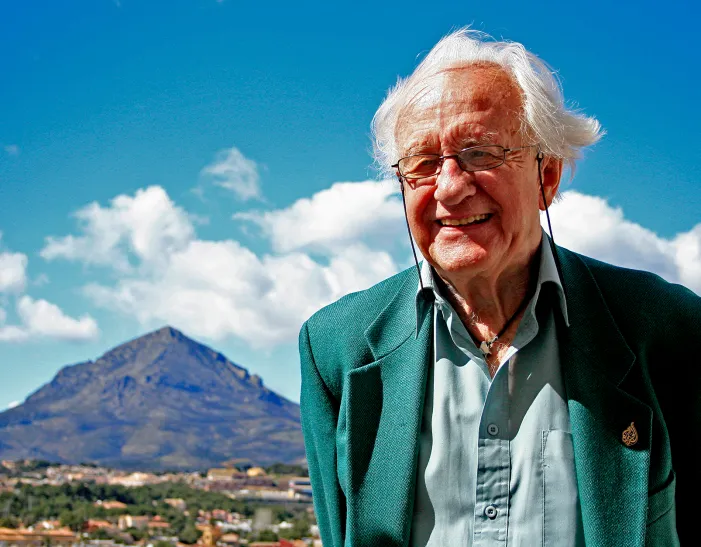
Alfaz del Pi, located between Mediterranean beaches and a couple of majestic mountains, Campana-Aitana (Man and Woman) 1500 meters high. Today this small town generously accommodates 21,500; surrounded by fertile soil, orange and olive trees, vines. Benidorm – the famous tourist resort – and Altea, more for artists, are at hand stretching distance; on the Costa Blanca – white seen from the sea – in Spain.

So far nothing special. But that little town is home to close to one hundred different nations; 57% are foreigners. The English and the Norwegians are the most frequent; the Norwegians arriving already some 45 years ago. Close to half a century of peaceful coexistence; and not only absence of violence but also positive, cooperative peace.

We, a Japanese-Norwegian couple, arrived June 1969. First time in Spain was in 1951, hitchhiking to understand fascism better. Franco had evolved from dictadura, dictatorship, after a brutal civil war, to dictablanda, the softer version. But the basic aspect of dictatorship was there like a nightmare draped over the country: fear, fear, fear; so many listening, so few talking. But some said, if you only come for the beach, stay at home. Bring books; we are isolated, not knowing what happens. Franco will not last forever, we must be prepared.

Books were brought. Customs people hardly knew how to read but quickly identifying more copies than one; hence, one of each. Books were handed over, to the right – in this case left – people, for instance at a conference in Madrid in June 1969. And the books were read.

The summer heat was unbearable. We drove to the coast to visit a friend, officer in the Norwegian army, with years of dialogues behind us. They lived in an “urbanización” that looked like a Scandinavian ghetto, making us exclaim: Never for us! In the evening we had made the downpayment for a house. How come? The beach, the mountains, the roof terrace, a depository for books in transit: Yes!

Alfaz at the time was a tiny village with dirt roads; four women dressed in black were the rush-hour traffic. Flies would fall down, legs up, victims of the afternoon heat. No doubt the influx of foreigners had a dynamizing impact: some money and mores, in exchange for sun and smiles and some mores. And no doubt Alfaz managed this well.

In the shadows of the deep evenings women pulled out the chairs, sitting in the narrow streets for a tertulia, a meeting, handling that new resource, the foreigners, in need of a gardener, a handyman, a painter. The distribution was masterly done. The village grew and grew, very few really rich or poor. Money was invested in huertas, fields, growing vegetables, whatever; shops; services; mini-industries. 300 days of sunshine per year was indeed attractive for people from the foggy North Sea and the stormy Atlantic. 365 days of smiles and charm, friendliness, warmth, that extra glimmer in the eyes, the human climate, proved even more attractive.

Alfaz became more than a summer house for rapid beach access. Alfaz became home. The story repeated itself; coming to visit a friend, parents, whatever; and the downpayment followed. Some made mistakes, underestimating the role of friends and family left behind between fog and storm, and the time needed to build new relations.

Close to half a century without serious incidents; doing what people often do by intuition, building peace. It took time to understand that “in Alfaz behave as the alfazinos do”. Talk Spanish for instance (well, some are still waiting for the Spanish to speak their language). Unfreezing, thawing, smiling. It took less time for Alfaz to pick up some informality and Nordic love mores. And inter-marriages produced ever more bilinguals.

Cooperation spread from the economy to culture. Norwegians took courses, held seminars, studied Spanish history; an institute for the study of Norway is coming; Alfaz transformed, cosmopolitan, polyglot.

And it spread to politics. Norwegians voted, they entered town council and administration; accepted as equals. Norwegians built their own institutions soon to blend with the Spanish, for instance socially for the less privileged. Conflicts, over land and/or money, jealousies were handled or faded out leaving little or no trauma.

Both quickly learned what the world looks like to the other. Food and clothes, music and art in general, serve as great openers to other cultures. National holidays follow. Alfaz respected, even celebrated the Norwegian May 17, that pioneer democratic constitution from 1814; the Norwegians took to fiestas, indeed more frequent, as keys to the Spanish soul. Accompanied by the siesta – by prejudiced eyes seen as Spanish laziness – only to discover how to make two days out of one. Soon the Spanish became more punctual than the Norwegians themselves.

What happened to books? They became summer courses in subjects Spain had missed during the isolation. Like peace and women studies: international courses in Benidorm, with the University of Alicante. Many early participants are today professors all over Spain.

Came 22 July 2011, the monstrous terrorist act; Oslo, Utöya. The mayor of Alfaz, Vicente Arques, immediately expressed the compassion of Alfaz with a country in the deepest distress – how come! – and sorrow. It is easy to celebrate together when the going is good; to share sorrow requires the deep humanity of Alfaz under those friendly skies.

Cooperation for equal benefit, empathy, conflict resolution and trauma reconciliation: key peace tasks anywhere, in the family, at school, at work, in a village-town like Alfaz, as example for a country, for the West-Islam.

And symbolized on 15 June 2013 in a wonderful sculpture by the famous Agustín Ibarrola; against terrorism, in memory of the victims, and for peace, quoting Gandhi, There is no road to Peace; Peace is the Road. Alfaz practices exactly that: think and act, locally and globally.

Homenaje a Alfaz!
Share

Leave a Reply

Your email address will not be published. Required fields are marked *

Related Posts

Peace is promoted by constructive proposals and dialogue Four preceding PressInfos have expressed concern over — and criticised — the ongoing, militarisation of the EU. Some will say: but there are no alternatives. We believe that there are always alternatives, that democracies are characterised by alternatives and choice, and that openly discussed alternatives will improve the quality and legitimacy of society’s decision–making. In addition, it is an intellectual and moral challenge to not only criticise but also be constructive. If we only tell people that we think they are wrong, they are not likely to listen. However, if we say: what are your views on this set of ideas and steps? — we may sometimes engage them in dialogue and sow a seed. Most people in power circles live their daily lives in in a time frame and a social space where certain ideas, viewpoints and concepts are just not...
Photos © TFF 2000 Read PressInfo 90 “Lift the Sanctions and Bring More Aid to Yugoslavia” See Pictures from Belgrade © TFF 2000 Please reprint, copy, archive, quote or re-post this item, but please retain the source.
Av FRANK SØHOLM GREVIL 16 augusti 2004  Vi er nu nået til tredje akt i det absurde teaterstykke, der i analogi med de store skueprocesser i Moskva 1936-38 er blevet døbt ‘Grevil-sagen’. Første akt bestod i min anonyme fremlæggelse af egenhændigt nedklassificerede rapporter i Berlingske Tidende i februar og marts. Andet akt udgjordes af min fremtræden med navn og billede i Information i april samt den efterfølgende mediestorm, som uden min direkte medvirken kostede en forsvarsminister taburetten samt en sigtelse for brud på tavshedspligten. Tredje akt bliver en retssag, hvor jeg står tiltalt for at have overtrådt straffelovens bestemmelser om uberettiget videregivelse eller udnyttelse af fortrolige oplysninger. Statsanklageren har ovenikøbet valgt at påberåbe sig særligt skærpende omstændigheder. Da jeg aldrig har modtaget betaling for at stille rapporterne til rådighed eller lade mig interviewe, må det skærpende bestå i, at “videregivelsen eller udnyttelsen er sket under sådanne omstændigheder, at det påfører...

Recent Articles

PressInfo # 141, December 21, 2001It’s time to prepare reconciliation between Albanians and Serbs PressInfo # 140, December 14, 2001Ibrahim Rugova’s decade-long leadership in Kosovo/a PressInfo # 139, 11. december, 2001En god nyhet: Jugoslaviens Sannings- och försoningskommission PressInfo # 139, 11. december, 2001Gode nyheder: Jugoslaviens Sandheds- og Forsoningskommission PressInfo # 139, December 11, 2001Good news: Yugoslavia’s Truth and Reconciliation Commission PressInfo # 138, November 8, 2001TFF co-founder PhD with thesis about young people with roots in other cultures PressInfo # 138, November 8, 2001TFF:s medstiftare doktor på avhandling om unga med ursprung i andra kulturer PressInfo # 137, October 17, 2001A new Marshall Plan: Advancing human security and controlling terrorism PressInfo # 136, October 15, 2001The UN and Annan really deserve it PressInfo # 135, October 10, 2001Preventing a terrorist mushroom cloud PressInfo # 134, 17 oktober, 2001Sverige og 11. september PressInfo # 134, October 9, 2001Sweden and September 11...
Peace is promoted by constructive proposals and dialogue Four preceding PressInfos have expressed concern over — and criticised — the ongoing, militarisation of the EU. Some will say: but there are no alternatives. We believe that there are always alternatives, that democracies are characterised by alternatives and choice, and that openly discussed alternatives will improve the quality and legitimacy of society’s decision–making. In addition, it is an intellectual and moral challenge to not only criticise but also be constructive. If we only tell people that we think they are wrong, they are not likely to listen. However, if we say: what are your views on this set of ideas and steps? — we may sometimes engage them in dialogue and sow a seed. Most people in power circles live their daily lives in in a time frame and a social space where certain ideas, viewpoints and concepts are just not...
Photos © TFF 2000 Read PressInfo 90 “Lift the Sanctions and Bring More Aid to Yugoslavia” See Pictures from Belgrade © TFF 2000 Please reprint, copy, archive, quote or re-post this item, but please retain the source.

TFF on Substack

Discover more from TFF Transnational Foundation & Jan Oberg.

Most Popular

PressInfo # 141, December 21, 2001It’s time to prepare reconciliation between Albanians and Serbs PressInfo # 140, December 14, 2001Ibrahim Rugova’s decade-long leadership in Kosovo/a PressInfo # 139, 11. december, 2001En god nyhet: Jugoslaviens Sannings- och försoningskommission PressInfo # 139, 11. december, 2001Gode nyheder: Jugoslaviens Sandheds- og Forsoningskommission PressInfo # 139, December 11, 2001Good news: Yugoslavia’s Truth and Reconciliation Commission PressInfo # 138, November 8, 2001TFF co-founder PhD with thesis about young people with roots in other cultures PressInfo # 138, November 8, 2001TFF:s medstiftare doktor på avhandling om unga med ursprung i andra kulturer PressInfo # 137, October 17, 2001A new Marshall Plan: Advancing human security and controlling terrorism PressInfo # 136, October 15, 2001The UN and Annan really deserve it PressInfo # 135, October 10, 2001Preventing a terrorist mushroom cloud PressInfo # 134, 17 oktober, 2001Sverige og 11. september PressInfo # 134, October 9, 2001Sweden and September 11...
Peace is promoted by constructive proposals and dialogue Four preceding PressInfos have expressed concern over — and criticised — the ongoing, militarisation of the EU. Some will say: but there are no alternatives. We believe that there are always alternatives, that democracies are characterised by alternatives and choice, and that openly discussed alternatives will improve the quality and legitimacy of society’s decision–making. In addition, it is an intellectual and moral challenge to not only criticise but also be constructive. If we only tell people that we think they are wrong, they are not likely to listen. However, if we say: what are your views on this set of ideas and steps? — we may sometimes engage them in dialogue and sow a seed. Most people in power circles live their daily lives in in a time frame and a social space where certain ideas, viewpoints and concepts are just not...
Photos © TFF 2000 Read PressInfo 90 “Lift the Sanctions and Bring More Aid to Yugoslavia” See Pictures from Belgrade © TFF 2000 Please reprint, copy, archive, quote or re-post this item, but please retain the source.
Read More
Imagen-thumbnail-The-Transnational-1
PressInfo # 141, December 21, 2001It’s time to prepare reconciliation between Albanians and Serbs PressInfo # 140, December 14, 2001Ibrahim Rugova’s decade-long leadership in Kosovo/a PressInfo # 139, 11. december, 2001En god nyhet: Jugoslaviens Sannings- och försoningskommission PressInfo # 139, 11. december, 2001Gode nyheder: Jugoslaviens Sandheds- og Forsoningskommission PressInfo # 139, December 11, 2001Good news: Yugoslavia’s Truth and Reconciliation Commission PressInfo # 138, November 8, 2001TFF co-founder PhD with thesis about young people with roots in other cultures PressInfo # 138, November 8, 2001TFF:s medstiftare doktor på avhandling om unga med ursprung i andra kulturer PressInfo # 137, October 17, 2001A new Marshall Plan: Advancing human security and controlling terrorism PressInfo # 136, October 15, 2001The UN and Annan really deserve it PressInfo # 135, October 10, 2001Preventing a terrorist mushroom cloud PressInfo # 134, 17 oktober, 2001Sverige og 11. september PressInfo # 134, October 9, 2001Sweden and September 11...
Imagen-thumbnail-The-Transnational-1
Peace is promoted by constructive proposals and dialogue Four preceding PressInfos have expressed concern over — and criticised — the ongoing, militarisation of the EU. Some will say: but there are no alternatives. We believe that there are always alternatives, that democracies are characterised by alternatives and choice, and that openly discussed alternatives will improve the quality and legitimacy of society’s decision–making. In addition, it is an intellectual and moral challenge to not only criticise but also be constructive. If we only tell people that we think they are wrong, they are not likely to listen. However, if we say: what are your views on this set of ideas and steps? — we may sometimes engage them in dialogue and sow a seed. Most people in power circles live their daily lives in in a time frame and a social space where certain ideas, viewpoints and concepts are just not...
Imagen-thumbnail-The-Transnational-1
Photos © TFF 2000 Read PressInfo 90 “Lift the Sanctions and Bring More Aid to Yugoslavia” See Pictures from Belgrade © TFF 2000 Please reprint, copy, archive, quote or re-post this item, but please retain the source.
Imagen-thumbnail-The-Transnational-1
Av FRANK SØHOLM GREVIL 16 augusti 2004  Vi er nu nået til tredje akt i det absurde teaterstykke, der i analogi med de store skueprocesser i Moskva 1936-38 er blevet døbt ‘Grevil-sagen’. Første akt bestod i min anonyme fremlæggelse af egenhændigt nedklassificerede rapporter i Berlingske Tidende i februar og marts. Andet akt udgjordes af min fremtræden med navn og billede i Information i april samt den efterfølgende mediestorm, som uden min direkte medvirken kostede en forsvarsminister taburetten samt en sigtelse for brud på tavshedspligten. Tredje akt bliver en retssag, hvor jeg står tiltalt for at have overtrådt straffelovens bestemmelser om uberettiget videregivelse eller udnyttelse af fortrolige oplysninger. Statsanklageren har ovenikøbet valgt at påberåbe sig særligt skærpende omstændigheder. Da jeg aldrig har modtaget betaling for at stille rapporterne til rådighed eller lade mig interviewe, må det skærpende bestå i, at “videregivelsen eller udnyttelsen er sket under sådanne omstændigheder, at det påfører...
Imagen-thumbnail-The-Transnational-1
Af Svenska Irakkommittén mot de Ekonomiska Sanktionerna (SIES) 13 september 2002 FN:s ekonomiska sanktioner mot Irak har nu pågått i tolv år och drabbat det irakiska folket med svåra lidanden. Enligt FN:s egna siffror har mer än 1,5 miljoner människor, varav ca 600 000 barn, dött som en direkt följd av sanktionerna. Dessutom har ett lågintensivt bombkrig mot landet pågått under dessa år. Av all denna förödelse- orsakad huvudsakligen av amerikansk och brittisk politik- har Saddam Husseins brutala och diktatoriska regim snarast stärkts än försvagats. Nu förbereder USA under president Bushs ledning ett storskaligt bombkrig mot Irak som kommer att innebära ett ännu större lidande för civilbefolkningen. Ett sådant krig kommer dessutom att ytterligare undergräva freden och säkerheten i världen. Att upprätta en demokratisk regim i Irak är det irakiska folkets angelägenhet och får enligt folkrätten inte ske med krigshandlingar utifrån. Folkrätten och FN:s stadgar måste respekteras. Vi vädjar till...
