

The path to ending our global chaos is through the UN

February 15, 2021

By Mona Ali Khalil

By all accounts, 2020 has been a terrible year so far — but is it worse than 1920?

In 1920, World War I, which killed 16 million people, had just ended. The two-year influenza pandemic that followed killed 50 million more. In 2020, the Covid-19 pandemic has already killed more than one million people and infected more than 40 million with infections surging worldwide.

Originally published at Passblue

With 20/20 hindsight, the 20th century was a terrible one. It heralded two world wars that together took more than 85 million lives. The collapse of the Ottoman Empire ushered in an era of British and French colonialism that led to deadly decolonization and national liberation battles in Latin America, Africa and Asia.

It was a century of genocides — including the Holocaust in Europe — which was the worst and most remembered — as well as the Armenian genocide, the Russian pogroms, the Cambodian genocide, the Rwandan genocide and the Bosnian genocide.

It was also a century of partitions: India, Palestine and the Korean Peninsula, all divided in failed attempts to resolve conflicts that still linger into the 21st century. The dissolution of the former Yugoslavia and the Soviet Union were historical watersheds marked by more wars in Europe and Asia.

When we look back at the last century, however, we forget the millions who died in the pandemic and celebrate the medical, technological and digital revolutions.

We forget the demise of the League of Nations and celebrate the establishment of the United Nations. We forget the millions of slaughtered innocents and celebrate the Universal Declaration of Human Rights and other international human-rights and humanitarian conventions.

As we end the 20th year of the 21st century, we have endured the 9/11 terrorist attacks; the war in Afghanistan and aggressions in Iraq and Ukraine; genocide in Darfur and Myanmar and continuing mass-atrocity crimes in Syria and elsewhere; the terror of Al Qaeda and the barbarity of ISIL; the accelerating climate change crisis; and most recently, the Covid-19 pandemic, which continues to take lives and livelihoods on a global scale.

With 2020 foresight, the answer to our descent into cynicism, chaos and crisis can once again be found in the UN, its Charter and its Universal Declaration of Human Rights.

The UN can rise again, using new information and communication technologies, to live up to its founders’ vision of being a center for harmonizing the actions of nations to coordinate an effective, humane response to the coronavirus and climate change and protect civilians from terrorism, nations from aggression and peoples from genocide.

In their UN75 Declaration, the heads of state and government recognized that “[t]here is no other global organization with the legitimacy, convening power and normative impact of the United Nations.” They concluded that “[m]ultilateralism is not an option but a necessity as we build back better for a more equal, more resilient and more sustainable world.”

UN member states have, at least in word, recommitted to the promise and vision of the UN Charter and to fulfill their roles and responsibilities, individually and collectively, as envisioned therein.

They must now rise to the moment — in word and more important, in deed — not only to limit the spread and socioeconomic impacts of the pandemic but also to combat climate change, to alleviate poverty and hunger and to stop genocide and other mass-atrocity crimes.

To survive the pandemic, we as individuals must stand apart for the time being. To survive as a human race, we must stand together and forge a multilateral response to these common challenges guided by our universally accepted principles.

Imagine if the Security Council took the reins and, relying on the guidance and recommendations of the World Health Organization, led a global response to the pandemic.

Imagine if the General Assembly adopted a universal basic income to ensure that no one is left behind in the unfolding economic crisis. Imagine if the secretary-general held a pledging conference to ensure that all countries can provide protective equipment to their first responders; to ensure supplies of therapeutics to the afflicted; and soon, to distribute a safe vaccine to us all.

The founding fathers emerged from World War II and drafted the UN Charter to offer a way out of the scourge of war and a path to peace, development and human rights for all.

Similarly, in their UN75 Declaration, world leaders have vowed to return to the Charter and the Universal Declaration of Human Rights and to build back a post-pandemic world defined by greater security and dignity, less hunger and poverty and larger freedom and justice.

Let us hope they live up to their promise. Our lives and the future of the planet depend on it.

Originally published at Passblue

About the author

Mona Ali Khalil
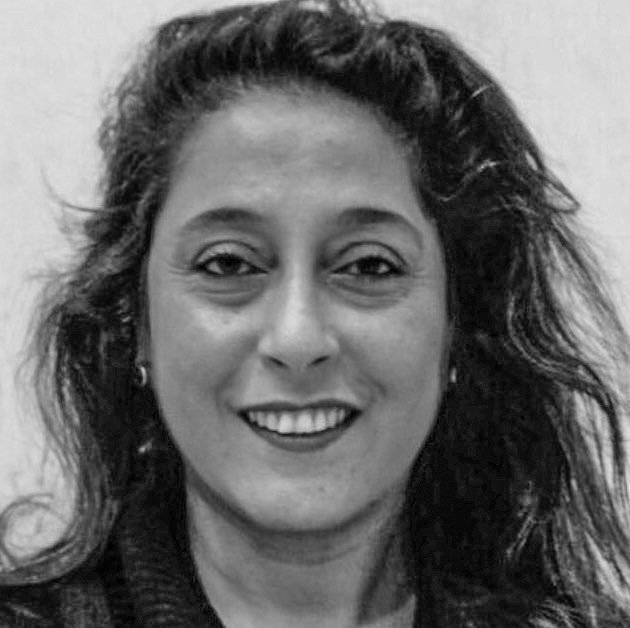
Mona Ali Khalil is an internationally recognized public international lawyer with 25 years of UN and other experience, including a former senior legal officer in the UN and the IAEA, with expertise in peacekeeping, peace enforcement, disarmament and counterterrorism. 
She holds a B.A. and an M.A. in international relations from Harvard University and a master’s in foreign service and a J.D. from Georgetown University. She is an affiliate of the Harvard Law School Program on International Law and Armed Conflict and a nonresident fellow at the UN Institute for Disarmament Research.
She is the founder and director of Mak Law International, a legal advisory and strategic consulting service, assisting governments and intergovernmental organizations in the service of “We the Peoples.”

Please help TFF remain truly independent by contributing if you benefited from this article

[paypal-donation]

Share

Leave a Reply

Your email address will not be published. Required fields are marked *

Related Posts

This is the third appeal from TFF. The first and the second here. On August 22, 2025, the UN officially declared famine in Gaza. The world’s top authority on food security called for help and said starvation will spread further within the Strip unless fighting stops and much more aid is allowed in. More than half a million people in the Gaza Strip are facing catastrophic hunger conditions, while more than a million more are in a food emergency phase, the report states. This man-made catastrophic famine could have been prevented by a steady flow of humanitarian aid into the enclave, relief chief Tom Fletcher pointed out. “Yet food stacks up at borders because of systematic obstruction by Israel,” Mr. Fletcher said. “It is a famine within a few 100 meters of food in a fertile land.” The UN’s top aid official underscored that the famine in Gaza is “caused by cruelty, justified...
Professor, Dr, TFF Board member The second of three TFF Appeals This is an example – for your inspiration – of how you can address your head of state, prime minister and other relevant ministers. To urge them to take action and not just use words.Instead of just sending it by email, which may not be read, it makes a stronger impression if you send it by snail mail – and millions do it too. It is urgently important that every citizen does something to stop the genocide on the Palestinian people now. Everybody can write a letter, short or long, and protest the lack of action. See also ideas to what you may constructively suggest in TFF’s first Appeal here. I address you deliberately in the way you prefer—in the feminine form. I write to you professor to professor, woman to woman, mother to mother, grandmother to grandmother. I...
Contrary to what we stated when publishing this Call, the UN General Assembly (GA) opened on September 9, 2025, in New York, not in Geneva, as we initially wrote. However, due to the host role-violating US ban on visas to Palestinians, the Special GA Segment on Palestine will be held in the UN Geneva from September 22. And it builds up to something historic. Anyhow, here is what we believe you must advocate or do to help stop the Israeli genocide. It’s called people’s power or citizens’ diplomacy. SHARE! The first of three appeals from TFF. The second is here, and the third here. Across the world, people are witnessing the systematic destruction of Palestinian lives, homes, and communities. The scale and intensity of Israel’s military operations — especially in Gaza — have led leading legal bodies, including the International Court of Justice, to warn of a plausible genocide. The...

Recent Articles

PressInfo # 141, December 21, 2001It’s time to prepare reconciliation between Albanians and Serbs PressInfo # 140, December 14, 2001Ibrahim Rugova’s decade-long leadership in Kosovo/a PressInfo # 139, 11. december, 2001En god nyhet: Jugoslaviens Sannings- och försoningskommission PressInfo # 139, 11. december, 2001Gode nyheder: Jugoslaviens Sandheds- og Forsoningskommission PressInfo # 139, December 11, 2001Good news: Yugoslavia’s Truth and Reconciliation Commission PressInfo # 138, November 8, 2001TFF co-founder PhD with thesis about young people with roots in other cultures PressInfo # 138, November 8, 2001TFF:s medstiftare doktor på avhandling om unga med ursprung i andra kulturer PressInfo # 137, October 17, 2001A new Marshall Plan: Advancing human security and controlling terrorism PressInfo # 136, October 15, 2001The UN and Annan really deserve it PressInfo # 135, October 10, 2001Preventing a terrorist mushroom cloud PressInfo # 134, 17 oktober, 2001Sverige og 11. september PressInfo # 134, October 9, 2001Sweden and September 11...
Peace is promoted by constructive proposals and dialogue Four preceding PressInfos have expressed concern over — and criticised — the ongoing, militarisation of the EU. Some will say: but there are no alternatives. We believe that there are always alternatives, that democracies are characterised by alternatives and choice, and that openly discussed alternatives will improve the quality and legitimacy of society’s decision–making. In addition, it is an intellectual and moral challenge to not only criticise but also be constructive. If we only tell people that we think they are wrong, they are not likely to listen. However, if we say: what are your views on this set of ideas and steps? — we may sometimes engage them in dialogue and sow a seed. Most people in power circles live their daily lives in in a time frame and a social space where certain ideas, viewpoints and concepts are just not...
Photos © TFF 2000 Read PressInfo 90 “Lift the Sanctions and Bring More Aid to Yugoslavia” See Pictures from Belgrade © TFF 2000 Please reprint, copy, archive, quote or re-post this item, but please retain the source.

TFF on Substack

Discover more from TFF Transnational Foundation & Jan Oberg.

Most Popular

PressInfo # 141, December 21, 2001It’s time to prepare reconciliation between Albanians and Serbs PressInfo # 140, December 14, 2001Ibrahim Rugova’s decade-long leadership in Kosovo/a PressInfo # 139, 11. december, 2001En god nyhet: Jugoslaviens Sannings- och försoningskommission PressInfo # 139, 11. december, 2001Gode nyheder: Jugoslaviens Sandheds- og Forsoningskommission PressInfo # 139, December 11, 2001Good news: Yugoslavia’s Truth and Reconciliation Commission PressInfo # 138, November 8, 2001TFF co-founder PhD with thesis about young people with roots in other cultures PressInfo # 138, November 8, 2001TFF:s medstiftare doktor på avhandling om unga med ursprung i andra kulturer PressInfo # 137, October 17, 2001A new Marshall Plan: Advancing human security and controlling terrorism PressInfo # 136, October 15, 2001The UN and Annan really deserve it PressInfo # 135, October 10, 2001Preventing a terrorist mushroom cloud PressInfo # 134, 17 oktober, 2001Sverige og 11. september PressInfo # 134, October 9, 2001Sweden and September 11...
Peace is promoted by constructive proposals and dialogue Four preceding PressInfos have expressed concern over — and criticised — the ongoing, militarisation of the EU. Some will say: but there are no alternatives. We believe that there are always alternatives, that democracies are characterised by alternatives and choice, and that openly discussed alternatives will improve the quality and legitimacy of society’s decision–making. In addition, it is an intellectual and moral challenge to not only criticise but also be constructive. If we only tell people that we think they are wrong, they are not likely to listen. However, if we say: what are your views on this set of ideas and steps? — we may sometimes engage them in dialogue and sow a seed. Most people in power circles live their daily lives in in a time frame and a social space where certain ideas, viewpoints and concepts are just not...
Photos © TFF 2000 Read PressInfo 90 “Lift the Sanctions and Bring More Aid to Yugoslavia” See Pictures from Belgrade © TFF 2000 Please reprint, copy, archive, quote or re-post this item, but please retain the source.
Read More
Imagen-thumbnail-The-Transnational-1
PressInfo # 141, December 21, 2001It’s time to prepare reconciliation between Albanians and Serbs PressInfo # 140, December 14, 2001Ibrahim Rugova’s decade-long leadership in Kosovo/a PressInfo # 139, 11. december, 2001En god nyhet: Jugoslaviens Sannings- och försoningskommission PressInfo # 139, 11. december, 2001Gode nyheder: Jugoslaviens Sandheds- og Forsoningskommission PressInfo # 139, December 11, 2001Good news: Yugoslavia’s Truth and Reconciliation Commission PressInfo # 138, November 8, 2001TFF co-founder PhD with thesis about young people with roots in other cultures PressInfo # 138, November 8, 2001TFF:s medstiftare doktor på avhandling om unga med ursprung i andra kulturer PressInfo # 137, October 17, 2001A new Marshall Plan: Advancing human security and controlling terrorism PressInfo # 136, October 15, 2001The UN and Annan really deserve it PressInfo # 135, October 10, 2001Preventing a terrorist mushroom cloud PressInfo # 134, 17 oktober, 2001Sverige og 11. september PressInfo # 134, October 9, 2001Sweden and September 11...
Imagen-thumbnail-The-Transnational-1
Peace is promoted by constructive proposals and dialogue Four preceding PressInfos have expressed concern over — and criticised — the ongoing, militarisation of the EU. Some will say: but there are no alternatives. We believe that there are always alternatives, that democracies are characterised by alternatives and choice, and that openly discussed alternatives will improve the quality and legitimacy of society’s decision–making. In addition, it is an intellectual and moral challenge to not only criticise but also be constructive. If we only tell people that we think they are wrong, they are not likely to listen. However, if we say: what are your views on this set of ideas and steps? — we may sometimes engage them in dialogue and sow a seed. Most people in power circles live their daily lives in in a time frame and a social space where certain ideas, viewpoints and concepts are just not...
Imagen-thumbnail-The-Transnational-1
Photos © TFF 2000 Read PressInfo 90 “Lift the Sanctions and Bring More Aid to Yugoslavia” See Pictures from Belgrade © TFF 2000 Please reprint, copy, archive, quote or re-post this item, but please retain the source.
Imagen-thumbnail-The-Transnational-1
Av FRANK SØHOLM GREVIL 16 augusti 2004  Vi er nu nået til tredje akt i det absurde teaterstykke, der i analogi med de store skueprocesser i Moskva 1936-38 er blevet døbt ‘Grevil-sagen’. Første akt bestod i min anonyme fremlæggelse af egenhændigt nedklassificerede rapporter i Berlingske Tidende i februar og marts. Andet akt udgjordes af min fremtræden med navn og billede i Information i april samt den efterfølgende mediestorm, som uden min direkte medvirken kostede en forsvarsminister taburetten samt en sigtelse for brud på tavshedspligten. Tredje akt bliver en retssag, hvor jeg står tiltalt for at have overtrådt straffelovens bestemmelser om uberettiget videregivelse eller udnyttelse af fortrolige oplysninger. Statsanklageren har ovenikøbet valgt at påberåbe sig særligt skærpende omstændigheder. Da jeg aldrig har modtaget betaling for at stille rapporterne til rådighed eller lade mig interviewe, må det skærpende bestå i, at “videregivelsen eller udnyttelsen er sket under sådanne omstændigheder, at det påfører...
Imagen-thumbnail-The-Transnational-1
Af Svenska Irakkommittén mot de Ekonomiska Sanktionerna (SIES) 13 september 2002 FN:s ekonomiska sanktioner mot Irak har nu pågått i tolv år och drabbat det irakiska folket med svåra lidanden. Enligt FN:s egna siffror har mer än 1,5 miljoner människor, varav ca 600 000 barn, dött som en direkt följd av sanktionerna. Dessutom har ett lågintensivt bombkrig mot landet pågått under dessa år. Av all denna förödelse- orsakad huvudsakligen av amerikansk och brittisk politik- har Saddam Husseins brutala och diktatoriska regim snarast stärkts än försvagats. Nu förbereder USA under president Bushs ledning ett storskaligt bombkrig mot Irak som kommer att innebära ett ännu större lidande för civilbefolkningen. Ett sådant krig kommer dessutom att ytterligare undergräva freden och säkerheten i världen. Att upprätta en demokratisk regim i Irak är det irakiska folkets angelägenhet och får enligt folkrätten inte ske med krigshandlingar utifrån. Folkrätten och FN:s stadgar måste respekteras. Vi vädjar till...