
The Half-Millennium When Rome excluded Jews from Jerusalem and how Iran and Muslims Saved Them


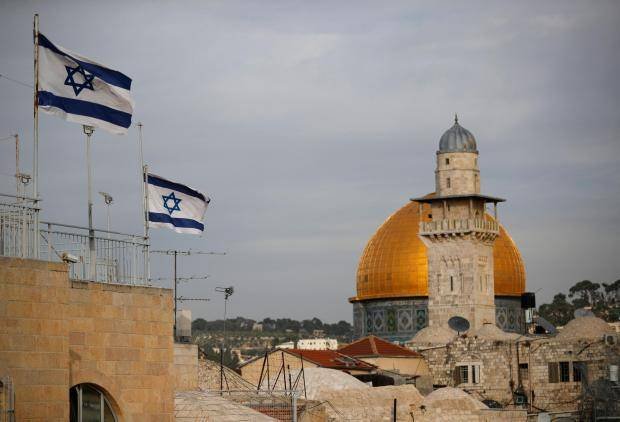
The move of the Trump administration of the US embassy to Jerusalem is intended, according to the president, to signal a recognition of the reality that Jerusalem is the capital of Israel.

This move is controversial because Israel’s sovereignty over Jerusalem is not recognized in international law.

The 1947 partition plan suggested in the UN General Assembly for what should happen in the British Mandate of Palestine after the British decamped did not have the force of law, since it was never endorsed by the UN Security Council.


Originally published on Informed Comment here

But even the UNGA partition did not award Jerusalem to the 500,000 European Zionist settlers brought into Palestine by the British colonial authorities as part of their long-term plan to divide and rule the Middle East. (In 1799 General Bonaparte invaded Ottoman Palestine and only found about 3,000 Jews there. After the Crusades, there is no evidence for a significant Jewish presence there for some 800 years).

The 1948 war that broke out as the British began leaving ended with the Jewish forces in control of West Jerusalem. Jordan had the eastern part of the city, religiously significant for both Jews and Muslims. Israel launched the 1967 war of conquest in a bid to add the West Bank of the Jordan, the Sinai Peninsula, and the Syrian Golan Heights to Israeli territory (yes, Israel fired the first shot in that war, taking advantage of unrealistic bombast from Egypt’s Gamal Abdel Nasser, whose best troops were tied down in the Yemen War).

The scheme succeeded wildly, giving the expansionist hawks more territory and all of Jerusalem but also making Israel an Apartheid binational state with a Palestinian Bantustan under the Israeli jackboot in the West Bank and Gaza.

The Israelis illegally detached part of the West Bank and added it to their province of Jerusalem. They have ever since been using a combination of force, squatter settlement construction, and shyster legal ploys to kick Palestinians out of East Jerusalem.

It is this aggressive Israeli expansionism and colonization that Trump’s move of the embassy is intended to legitimize. It cannot do so in international law, of course, but the Israelis have all along counted on might makes right. That will work for them until might is no longer on their side.

Prime Minister Binyamin Netanyahu has a romantic nationalist view of history, trying to make Jerusalem “Jewish” for thousands of years. However, the city was founded by Canaanites or their predecessors in honor of the god Shalem, and Jewish ethnogenesis out of the Canaanites is probably a process of the first millennium BCE, and not the earliest part of that millennium.

Jews almost never ruled Jerusalem after the Babylonian conquest; Iraqis, Iranians, Romans and Muslims did.

• • •

The Romans gradually established themselves in Palestine (yes, that is what they called it), taking Judea in 63 BCE and ruling through local proxies. After a brief Iranian Parthian conquest, they came back and used Herod. But in 6 CE the Romans assumed direct rule of Palestine.

Local Jews chafed under Roman rule and got up some rebellions, the most significant 66-70. The Great Rebellion was brutally crushed by the Romans in 70 and they destroyed the Second Temple. Jews no longer had a direct ritual link to the city, and their worship became more local. After a second big revolt, 132-136 CE [AD], led by Simon bar Kochba, the Romans expelled Jews from Jerusalem.

The pagan Romans did not deal well with dissent, being perfectly willing to adopt scorched-earth tactics and to kill large numbers of people or expel them from their territory.

That famous Pax Romana came with a high price of repression, though admittedly the emperors after Augustus appear to have been less viciously brutal than had been the Republic.

So the Romans from 136 just forbade Jews to live in Jerusalem.

Then they reconfigured it as a pagan city, Aelia Capitolina. They literally wiped Jewish Jerusalem off the face of the map. And they built enormous pagan temples to Jupiter and Venus for Roman worshippers of the gods. They erected a statue of Jupiter on the abandoned Temple Mount.

The Romans did not scatter the Jews from Palestine, however, just from Jerusalem. Significant Jewish communities remained in the Galilee, Tiberias, Ptolemais (Akka), etc. And while the law forbade Jews to live in Aelia Capitolina, laws are always imperfectly enforced and there may have been a small community there that officials winked at.

• • •

The Jews in Roman Palestine were a bigger and more important community than were the small Levantine Christian community.

Imagine their surprise when the Roman Emperor Constantine in 312 adopted Christianity (well, sort of), and his successors transformed the Roman Empire into a Christian state and arranged for most urban pagans to convert to the new religion over the succeeding two centuries. (Pagan survivals in the countryside are clear from the archeology, into the 500s and 600s, and are attested in the Qur’an in the 610s).

Constantine’s mother Helena made a tour of the Near East and was appalled at the pagan dominance of Jerusalem. At her instance, the big pagan temples to Jupiter and Venus (probably viewed as the North Arabian goddess al-`Uzza by the local Nabatean and Arab populations) were pulled down. The Church of the Holy Sepulcher was built. Since Helena claimed to have found a relic of the True Cross, it was placed there. This church became the new center of the Christian New Jerusalem. The Temple Mount gradually became an abandoned esplanade with a crumbling statue of Zeus.

The new Christian masters of Jerusalem maintained the de jure ban on Jews in Jerusalem.

• • •

In 614, the Iranian Sasanian Empire took Jerusalem, having invaded the Near East. In 619 they took Egypt and deprived the Eastern Roman Empire (now based in Constantinople) of its breadbasket.

The Sasanians are said to have been helped by Palestinian Jews, who preferred the Zoroastrian Iranians to the somewhat fanatical Christian Roman emperors (Justinian even had ordered that synagogues in Roman Africa (Tunisia) be made into churches, though probably the decree was not widely implemented).

Then the Sasanians are said to have appointed Jews to rule Jerusalem until about 619.

This Jerusalem policy angered eastern Christians in the Sasanian Empire, and the bishop in Ctesiphon (today’s Madain in Iraq) lobbied to restore Christian suzerainty there. Emperor Khosrow II, who legend says had a Christian wife, Shirin, acquiesced.

But under Iranian rule 614-629, Jews were free to live and worship in Jerusalem, and may have established a makeshift altar on the temple mount.

Roman restoration of control over Palestine, circa 630-636, was brief, since Arab Muslims moved in to the Near East and perhaps Islam spread among Arab tribes in Transjordan, Palestine and Syria.

The Muslim commander of the faithful and vicar of the prophet, Omar bin al-Khattab, took Jerusalem in 636-37 and visited it that April.

Muslim rule was to last save for the short hiatus of the Crusader kingdoms until World War I, when General Allenby took Jerusalem from the Ottoman Empire.

Muslims viewed Jews as a legitimate religious community, unlike Inquisition-era Europeans such as the Spanish, and so Jews were free to live in Jerusalem, though few did since it was a small and insignificant city and many went to Muslim capitals such as Cairo, and later Istanbul, instead.

• • •

So it isn’t true that Jerusalem has throughout history been “Jewish.” For hundreds of years under the Romans, whether pagan or Christian, the city was made completely devoid of Jews, at least by law.

Ironically, it was Iran and the Muslims who rescued the Jews from that exile from Jerusalem.

I am going to tease you and say that a fuller presentation of the late-antique story of Jerusalem, and a theory about it and the rise of Islam, will be given in my book, due in October:

Announcement: Forthcoming October 9 and available for pre-order–
Muhammad: Prophet of Peace amid the Clash of Empires

Share

Leave a Reply

Your email address will not be published. Required fields are marked *

Related Posts

This is the third appeal from TFF. The first and the second here. On August 22, 2025, the UN officially declared famine in Gaza. The world’s top authority on food security called for help and said starvation will spread further within the Strip unless fighting stops and much more aid is allowed in. More than half a million people in the Gaza Strip are facing catastrophic hunger conditions, while more than a million more are in a food emergency phase, the report states. This man-made catastrophic famine could have been prevented by a steady flow of humanitarian aid into the enclave, relief chief Tom Fletcher pointed out. “Yet food stacks up at borders because of systematic obstruction by Israel,” Mr. Fletcher said. “It is a famine within a few 100 meters of food in a fertile land.” The UN’s top aid official underscored that the famine in Gaza is “caused by cruelty, justified...
Professor, Dr, TFF Board member The second of three TFF Appeals This is an example – for your inspiration – of how you can address your head of state, prime minister and other relevant ministers. To urge them to take action and not just use words.Instead of just sending it by email, which may not be read, it makes a stronger impression if you send it by snail mail – and millions do it too. It is urgently important that every citizen does something to stop the genocide on the Palestinian people now. Everybody can write a letter, short or long, and protest the lack of action. See also ideas to what you may constructively suggest in TFF’s first Appeal here. I address you deliberately in the way you prefer—in the feminine form. I write to you professor to professor, woman to woman, mother to mother, grandmother to grandmother. I...
The text below was published in “The Nation” on July 15, 2025, appears here unmodified. The delay is due to a weak Internet here in Turkey. There has been much critical reaction to this US Government defamatory statement justifying the imposition of sanctions on this exceptional independent expert appointed by the UN to an unpaid position, and left to hang in the wind by the politically motivated show of indifference by the UN Secretariat.] Justifying US Sanctions US Secretary of State, Marco Rubio, in a dazzling Orwellian display inverted reality by slapping sanctions on Francesca Albanese, the much-embattled UN Special Rapporteur for the Occupied Palestinian Territories of East Jerusalem, West Bank, and Gaza. If the sanctions are implemented against this extraordinary citizen of Italy, in the face of strong UN objections, Albanese will be barred from entering the US, presumably even to discharge her annual UN duty to present a...

Recent Articles

PressInfo # 141, December 21, 2001It’s time to prepare reconciliation between Albanians and Serbs PressInfo # 140, December 14, 2001Ibrahim Rugova’s decade-long leadership in Kosovo/a PressInfo # 139, 11. december, 2001En god nyhet: Jugoslaviens Sannings- och försoningskommission PressInfo # 139, 11. december, 2001Gode nyheder: Jugoslaviens Sandheds- og Forsoningskommission PressInfo # 139, December 11, 2001Good news: Yugoslavia’s Truth and Reconciliation Commission PressInfo # 138, November 8, 2001TFF co-founder PhD with thesis about young people with roots in other cultures PressInfo # 138, November 8, 2001TFF:s medstiftare doktor på avhandling om unga med ursprung i andra kulturer PressInfo # 137, October 17, 2001A new Marshall Plan: Advancing human security and controlling terrorism PressInfo # 136, October 15, 2001The UN and Annan really deserve it PressInfo # 135, October 10, 2001Preventing a terrorist mushroom cloud PressInfo # 134, 17 oktober, 2001Sverige og 11. september PressInfo # 134, October 9, 2001Sweden and September 11...
Peace is promoted by constructive proposals and dialogue Four preceding PressInfos have expressed concern over — and criticised — the ongoing, militarisation of the EU. Some will say: but there are no alternatives. We believe that there are always alternatives, that democracies are characterised by alternatives and choice, and that openly discussed alternatives will improve the quality and legitimacy of society’s decision–making. In addition, it is an intellectual and moral challenge to not only criticise but also be constructive. If we only tell people that we think they are wrong, they are not likely to listen. However, if we say: what are your views on this set of ideas and steps? — we may sometimes engage them in dialogue and sow a seed. Most people in power circles live their daily lives in in a time frame and a social space where certain ideas, viewpoints and concepts are just not...
Photos © TFF 2000 Read PressInfo 90 “Lift the Sanctions and Bring More Aid to Yugoslavia” See Pictures from Belgrade © TFF 2000 Please reprint, copy, archive, quote or re-post this item, but please retain the source.

TFF on Substack

Discover more from TFF Transnational Foundation & Jan Oberg.

Most Popular

PressInfo # 141, December 21, 2001It’s time to prepare reconciliation between Albanians and Serbs PressInfo # 140, December 14, 2001Ibrahim Rugova’s decade-long leadership in Kosovo/a PressInfo # 139, 11. december, 2001En god nyhet: Jugoslaviens Sannings- och försoningskommission PressInfo # 139, 11. december, 2001Gode nyheder: Jugoslaviens Sandheds- og Forsoningskommission PressInfo # 139, December 11, 2001Good news: Yugoslavia’s Truth and Reconciliation Commission PressInfo # 138, November 8, 2001TFF co-founder PhD with thesis about young people with roots in other cultures PressInfo # 138, November 8, 2001TFF:s medstiftare doktor på avhandling om unga med ursprung i andra kulturer PressInfo # 137, October 17, 2001A new Marshall Plan: Advancing human security and controlling terrorism PressInfo # 136, October 15, 2001The UN and Annan really deserve it PressInfo # 135, October 10, 2001Preventing a terrorist mushroom cloud PressInfo # 134, 17 oktober, 2001Sverige og 11. september PressInfo # 134, October 9, 2001Sweden and September 11...
Peace is promoted by constructive proposals and dialogue Four preceding PressInfos have expressed concern over — and criticised — the ongoing, militarisation of the EU. Some will say: but there are no alternatives. We believe that there are always alternatives, that democracies are characterised by alternatives and choice, and that openly discussed alternatives will improve the quality and legitimacy of society’s decision–making. In addition, it is an intellectual and moral challenge to not only criticise but also be constructive. If we only tell people that we think they are wrong, they are not likely to listen. However, if we say: what are your views on this set of ideas and steps? — we may sometimes engage them in dialogue and sow a seed. Most people in power circles live their daily lives in in a time frame and a social space where certain ideas, viewpoints and concepts are just not...
Photos © TFF 2000 Read PressInfo 90 “Lift the Sanctions and Bring More Aid to Yugoslavia” See Pictures from Belgrade © TFF 2000 Please reprint, copy, archive, quote or re-post this item, but please retain the source.
Read More
Imagen-thumbnail-The-Transnational-1
PressInfo # 141, December 21, 2001It’s time to prepare reconciliation between Albanians and Serbs PressInfo # 140, December 14, 2001Ibrahim Rugova’s decade-long leadership in Kosovo/a PressInfo # 139, 11. december, 2001En god nyhet: Jugoslaviens Sannings- och försoningskommission PressInfo # 139, 11. december, 2001Gode nyheder: Jugoslaviens Sandheds- og Forsoningskommission PressInfo # 139, December 11, 2001Good news: Yugoslavia’s Truth and Reconciliation Commission PressInfo # 138, November 8, 2001TFF co-founder PhD with thesis about young people with roots in other cultures PressInfo # 138, November 8, 2001TFF:s medstiftare doktor på avhandling om unga med ursprung i andra kulturer PressInfo # 137, October 17, 2001A new Marshall Plan: Advancing human security and controlling terrorism PressInfo # 136, October 15, 2001The UN and Annan really deserve it PressInfo # 135, October 10, 2001Preventing a terrorist mushroom cloud PressInfo # 134, 17 oktober, 2001Sverige og 11. september PressInfo # 134, October 9, 2001Sweden and September 11...
Imagen-thumbnail-The-Transnational-1
Peace is promoted by constructive proposals and dialogue Four preceding PressInfos have expressed concern over — and criticised — the ongoing, militarisation of the EU. Some will say: but there are no alternatives. We believe that there are always alternatives, that democracies are characterised by alternatives and choice, and that openly discussed alternatives will improve the quality and legitimacy of society’s decision–making. In addition, it is an intellectual and moral challenge to not only criticise but also be constructive. If we only tell people that we think they are wrong, they are not likely to listen. However, if we say: what are your views on this set of ideas and steps? — we may sometimes engage them in dialogue and sow a seed. Most people in power circles live their daily lives in in a time frame and a social space where certain ideas, viewpoints and concepts are just not...
Imagen-thumbnail-The-Transnational-1
Photos © TFF 2000 Read PressInfo 90 “Lift the Sanctions and Bring More Aid to Yugoslavia” See Pictures from Belgrade © TFF 2000 Please reprint, copy, archive, quote or re-post this item, but please retain the source.
Imagen-thumbnail-The-Transnational-1
Av FRANK SØHOLM GREVIL 16 augusti 2004  Vi er nu nået til tredje akt i det absurde teaterstykke, der i analogi med de store skueprocesser i Moskva 1936-38 er blevet døbt ‘Grevil-sagen’. Første akt bestod i min anonyme fremlæggelse af egenhændigt nedklassificerede rapporter i Berlingske Tidende i februar og marts. Andet akt udgjordes af min fremtræden med navn og billede i Information i april samt den efterfølgende mediestorm, som uden min direkte medvirken kostede en forsvarsminister taburetten samt en sigtelse for brud på tavshedspligten. Tredje akt bliver en retssag, hvor jeg står tiltalt for at have overtrådt straffelovens bestemmelser om uberettiget videregivelse eller udnyttelse af fortrolige oplysninger. Statsanklageren har ovenikøbet valgt at påberåbe sig særligt skærpende omstændigheder. Da jeg aldrig har modtaget betaling for at stille rapporterne til rådighed eller lade mig interviewe, må det skærpende bestå i, at “videregivelsen eller udnyttelsen er sket under sådanne omstændigheder, at det påfører...
Imagen-thumbnail-The-Transnational-1
Af Svenska Irakkommittén mot de Ekonomiska Sanktionerna (SIES) 13 september 2002 FN:s ekonomiska sanktioner mot Irak har nu pågått i tolv år och drabbat det irakiska folket med svåra lidanden. Enligt FN:s egna siffror har mer än 1,5 miljoner människor, varav ca 600 000 barn, dött som en direkt följd av sanktionerna. Dessutom har ett lågintensivt bombkrig mot landet pågått under dessa år. Av all denna förödelse- orsakad huvudsakligen av amerikansk och brittisk politik- har Saddam Husseins brutala och diktatoriska regim snarast stärkts än försvagats. Nu förbereder USA under president Bushs ledning ett storskaligt bombkrig mot Irak som kommer att innebära ett ännu större lidande för civilbefolkningen. Ett sådant krig kommer dessutom att ytterligare undergräva freden och säkerheten i världen. Att upprätta en demokratisk regim i Irak är det irakiska folkets angelägenhet och får enligt folkrätten inte ske med krigshandlingar utifrån. Folkrätten och FN:s stadgar måste respekteras. Vi vädjar till...