TFF Associate and former Board member
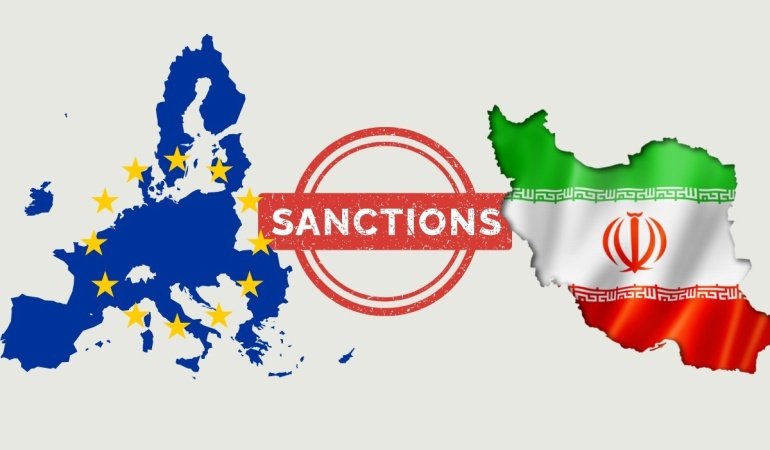
On 28 August 2025, France, Germany, and the United Kingdom (the EU Troika) decided to trigger the so-called “snapback mechanism” and reimpose stringent sanctions on Iran after 30 days for its alleged violation of the terms of the Iran nuclear deal, known as the Joint Comprehensive Plan of Action (JCPOA), if Iran did not give in to their demands within 30 days.
In the lawless world in which we are living at the moment, discussing the principles of international law is futile and irrelevant. We have reverted to the age of imperial dictatorship and big power dominance. This state of affairs is dangerous for the whole world, especially the Global South, which is at the mercy of the dictates of the superpowers. However, a return to the rivalry between powerful empires outside the scope of international law, which led to the two world wars, is extremely dangerous even for the superpowers in the age of nuclear weapons.
After the devastations of the First and Second World Wars, the entire international community agreed to the formation of the United Nations, which was tasked to resolve the disputes between different countries on the basis of international law, to prevent the scourge of war and to establish peace by peaceful means. The resolutions of its Security Council were meant to be binding, although they are repeatedly subverted by the use of a veto by one of the five permanent members.
UN principles have been regularly violated by the superpowers, especially the United States, with its frequent interventions in the affairs of other countries, coup d’états, regime changes, illegal invasions of weaker countries, killing millions of people, and imposing unilateral sanctions on other countries. The United States has established more than 750 military bases in some 80 countries in order to interfere in the affairs of those countries and pursue US interests.
Meanwhile, the US’s proxies and satellites, most glaringly Israel, have managed to get away with murder due to the US’s massive military, economic and diplomatic support. We have seen the consequences of this lawlessness and impunity in the unprecedented genocide, ethnic cleansing and starvation of more than two million Palestinians in Gaza, which has continued for nearly two years, despite global condemnation, due to the US’s use of numerous vetoes to prevent a ceasefire.
Despite these grotesque violations of international law, the United Nations and the Security Council still continue to exist, at least in name, and their rulings are respected by the vast majority of the states in the world. They provide the only hope of preventing a return to the age of barbarism and imperial rule. Even now, and especially now, the UN and its various organisations must be supported and strengthened, as they provide the last hope for a return to sanity and a just world.
However, even under the current circumstances and the overt violation of international law by the US government and its satellites, the decision of the European Troika to trigger the snapback mechanism and reinstitute sanctions on Iran is truly beyond the pale.
After years of false Israeli accusations about an imminent Iranian nuclear weapon, obediently supported by Western powers, Iran and the five permanent members of the Security Council plus Germany (5+1) reached a landmark nuclear agreement, known as the Joint Comprehensive Plan of Action (JCPOA), according to which Iran massively reduced its peaceful, civilian nuclear activities and accepted IAEA inspections in return for the lifting of all sanctions. To strengthen its commitment to the nuclear agreement, Iran voluntarily joined the so-called “Additional Protocol”, which allows unannounced IAEA inspections of all nuclear sites. The agreement was unanimously endorsed by the UNSC Resolution 2231, lifting all the UN sanctions on Iran.
Even under President Obama, the sanctions on Iran were not fully lifted due to the objections of the AIPAC-dominated Congress, although Iran managed to resume economic relations with several European countries. Most Iranians welcomed the agreement, hoping that it would usher in a new era in Iran-US relations. The Iranian government described the agreement as the floor, not the ceiling, of future deals with the United States and the West as a whole. Iran put in orders for a large number of Boeing passenger aircraft and was anxious to involve US companies in its oil and gas explorations. However, despite the empty promises, Iran did not get very much from the deal.
Right from the start, instead of welcoming the agreement which had blocked all the paths to Iran’s militarisation of its nuclear programme, Benjamin Netanyahu strongly opposed the deal. He even asked his friends in Congress to invite him to address a joint session of Congress, in which he opposed the main policy of a sitting president and received dozens of ovations from US Congressmen.
The Iranian side, meanwhile, abided by the terms of the JCPOA and, in regular reports, the IAEA confirmed that Iran had implemented all the terms of the agreement and there had not been any diversion of the civilian nuclear programme to military purposes. However, with Donald Trump’s victory in the US presidential election in 2016, Netanyahu found an opportunity to subvert the agreement. Trump withdrew the United States from the nuclear deal in 2018, and imposed even more stringent, crippling sanctions on Iran, contrary to the terms of the agreement and the UNSC Resolution 2231.
Despite the US’s illegal withdrawal from the deal, Iran continued to abide by the terms of the deal for a further two years, hoping that the next administration would honour its commitments. Meanwhile, the European Troika pledged to abide by the deal and ignore the sanctions. Despite his promises during his presidential campaign to lift the sanctions, President Joe Biden continued the sanctions imposed by Trump, and the European countries also gradually violated their commitments and, in practice, left the JCPOA.
Being faced with the US and European violation of the agreement, Iran decided to resume its nuclear programme, and enriched uranium up to 60% as a bargaining chip in future dealings with the West. However, the IAEA continued to report that Iranian nuclear activities had been within the agency’s safeguards and that there had been no diversion towards militarisation. Even as late as March 2025, Trump’s national security director, Tulsi Gabbard, stated that there were no signs that Iran was planning to obtain nuclear weapons.
Under Trump’s second term, Iran started a series of talks with Trump’s envoy Steve Witkoff in order to reach a new nuclear deal. They held five rounds of talks, and both Trump and Witkoff spoke positively about the progress of the talks. Nevertheless, on 13 June 2025, Israel carried out a massive, unprovoked attack on Iran and its nuclear installations. Only a day before the Israeli “pre-emptive” attack on Iranian nuclear sites, Trump said that he had told Netanyahu not to attack Iran while the talks were continuing. A sixth round of talks had been planned for Sunday, 15th June, but only two days before that date, the Israelis carried out their unprovoked attack despite Trump’s plea not to do so.
On the same day, the IAEA Director General, Rafael Grossi, issued a statement denouncing the attack. He wrote:
“This development is deeply concerning. I have repeatedly stated that nuclear facilities must never be attacked, regardless of the context or circumstances, as it could harm both people and the environment. Such attacks have serious implications for nuclear safety, security and safeguards, as well as regional and international peace and security.” (1)
During their aggressive 12-day war against Iran, in addition to killing a large number of Iranian military commanders and members of their families, dozens of scientists and hundreds of civilians, Israel and America also attacked Iranian nuclear installations in Isfahan, Natanz and Fordow, which is strictly forbidden by international law. Trump called for Iran’s unconditional surrender but, in reality, he had unconditionally surrendered to Netanyahu’s demands. Later, he claimed that the attacks had totally obliterated the Iranian nuclear programme.
Former Director General of the Atomic Energy Agency, Mohamed ElBaradei, warned that the use of force against Iranian nuclear installations and demanding that it stop its peaceful nuclear enrichment, which is its right under the NPT, is not only illegal but will also destroy the NPT. In a post on X, he wrote:
“For #Israel to attack #Iran including its nuclear facilities (prohibited by international law) and for #Trump to ask Iran for “total surrender” and forgo a treaty right (uranium enrichment) in a clear act of national humiliation, on suspicion that it is developing nuclear weapons (possessed by both #Israel and #US), suspicion that does not constitute an “imminent threat” as confirmed by all western intelligence agencies and was dealt with through negotiations in JCPOA agreement of 2015 which the US withdrew from in 2018 [is an illegal act].”
On Friday, June 20, 2025, just hours before President Trump ordered American attacks on Iran, over 1,000 leading international scholars issued a statement calling for an immediate stop to Israel’s war on Iran and a warning against the US joining this disastrous and illegal war. The International Commission of Jurists also described the Israeli attacks as violations of international law.
It is quite remarkable that the United States and Europe, which withdrew from the nuclear agreement and even attacked and destroyed Iranian nuclear installations, are now claiming that Iran has violated the terms of the nuclear agreement and, therefore, they are triggering the snapback mechanism and imposing UN sanctions on Iran. Such reasoning would be laughable if it were not so tragic.
To their eternal shame, not only did the Troika, which were partners in the JCPOA, not condemn the highly irresponsible and aggressive Israeli attacks on Iranian nuclear installations, but the German Chancellor Friedrich Merz even praised Israel for doing Europe’s dirty work for it. How can these people ever speak again about the rule of law, international treaties, Security Council resolutions or political agreements?
As a result of what they have done, the whole world has lost faith in them and in any international agreement. This is a lesson which will not be forgotten by the countries that seek to develop nuclear weapons in the future. They will point to Iran, which abided by its agreement and was attacked, while the violent, genocidal, apartheid Israeli regime, which manufactured nuclear weapons secretly and deceitfully, continues to be supported by the West.
Even under the current lawless circumstances, such overt violation of international rules is beyond the pale and must be condemned by all countries if they do not wish to see the total dismantling of the United Nations and the rule of law.
In an interview with Foreign Policy, Iran’s former foreign minister, Mohammad Javad Zarif, who was one of the main architects of the deal, said that the efforts of the European signatories to the Iran nuclear deal are unfounded because Iran remained in full compliance, even a year after the US withdrawal. He went on to say, “Let’s not confuse domestic and foreign policy. I think what the E3 are trying to do is, first of all, unfounded because Iran was observing fully the JCPOA, even a year after Trump left it. Europe failed to implement its own commitments. After Trump withdrew from the JCPOA, the Europeans urged us not to stop. They made 11 commitments in two sessions, in June and September of 2018, to me personally. They were not able to even implement one of them. They decided to create a 19th-century barter agreement with Iran. They were not even able to do that.” (2)
In a letter to the United Nations, Iran’s current Foreign Minister Abbas Araghchi described the Troika’s decision as a dangerous move and a flagrant violation of their own commitments. He warned that it would render the European Troika an ineffective force regarding Iran. (3)
In a note on X, Araghchi wrote:
“Acting on behalf of Israel and the U.S., the E3 have decided to maliciously pursue pressure on the Iranian people. This folly—which Iran has sternly warned against—is immoral, unjustified, and unlawful… the E3’s decision will have significant adverse impacts on diplomacy. It will severely undermine the ongoing dialogue between Iran and the IAEA. It will also compel an appropriate response.”
Speaking to a gathering of reporters on Friday, 29th August in New York, Iranian Ambassador to the United Nations Amir Saeed Iravani said: “The E3 and the US violated the JCPOA first. They cannot now claim to act in good faith.” He pointed out that Iran’s remedial steps have been “gradual, proportionate, and fully legal”. He added that the E3 action “distorts reality, rewards the violator and punishes the victims.” (4)
Trita Parsi, co-founder and executive vice president of the Quincy Institute for Responsible Statecraft, commented on X: “By triggering snapback, the E3 are repeating the very mistake they were created to prevent. They are placing tactical alignment with Washington and Tel Aviv above their own long-term interest in regional stability. They are confusing punishment with strategy, coercion with diplomacy. And they are doing so in the full knowledge that the likeliest outcome is not renewed talks, but renewed war.”
China and Russia have denounced the move as an unwarranted escalation and have disputed the E3’s legal standing to invoke the snapback. They have proposed a draft resolution to extend for six months, until 18 April 2026, the terms of the JCPOA agreement in order to allow more time for negotiations. (5)
The measures taken by the Troika are not only unfair and in violation of their commitments under the JCPOA, but they are also very dangerous and can have the reverse effect of what they intend to achieve. Deputy Iranian Foreign Minister Kazem Gharibabadi stated that future cooperation with the IAEA would likely come to an end should the E3 trigger the snapback sanctions. (6)
Iran may also decide to leave the NPT, in which case either Iran would be able to continue its nuclear activities outside IAEA inspection and may even opt for developing a bomb, or there would be a devastating war to stop Iran from going nuclear.
Meanwhile, the genocide, starvation and ethnic cleansing continue in Gaza and Israel’s illegal settlements are expanding in the West Bank, with the deliberate aim of making a two-state solution impossible. Israel’s massive nuclear arsenal, which was manufactured in secret and through deception, continues outside the IAEA inspection, although various Israeli leaders have openly threatened to use it in Gaza and elsewhere. These dangerous weapons in the hands of an irresponsible and genocidal regime pose the greatest danger to international peace and security. At a time like this, trying to reimpose sanctions on Iran for its non-existent nuclear programme is the height of cynicism and hypocrisy and an attempt to bully Iran at a time of its perceived weakness.
Even at this late hour, it is possible not only to reverse course, but the E3 can start a process that can lead to limiting Iran’s nuclear activities to civilian use as was done by the JCPOA through negotiations, and also to create a framework for regional security that would include Iran and would restrain Israel’s out-of-control behaviour. In order to achieve this, the European states must regain their independence from the United States and Israel and must restore a measure of credibility in their dealings with the rest of the world.
They should recognise the scale of their responsibilities to their own citizens and to the rest of the world at a time when the United States is going through a period of undemocratic and chauvinistic politics. By doing so, they can not only save the world from instability and conflict, but even from the scourge of a world war of unimaginable consequences. This is no time for gesture politics, but for real statesmanship. European leaders must rise up to the occasion.
Footnotes
1- https://www.iaea.org/newscenter/statements/statement-on-the-situation-in-iran-13-june-2025
2- https://en.mehrnews.com/news/235871/Zarif-calls-Snapback-Mechanism-activation-unfounded
3- https://iranpress.com/content/309409/iran-un-europe-snapback-move-illegal-followed-consequences
The author
Farhang Jahanpour is a British national of Iranian origin. He is a former professor and dean of the Faculty of Languages at the University of Isfahan and a former Editor for Middle East and North Africa at the BBC Monitoring. He has taught many courses on Persian literature and Middle Eastern Politics at Harvard, Cambridge and Oxford universities – and has been a TFF Associate since 2006.