
TFF PressInfo - Why Obama's speech should make us think

/10/janoberg.jpg”>

Lund, Sweden – May 29, 2014

In a speech by the President of the United States of America – read by millions in all corners of our world in minutes – rest assured that every single word has been weighed with utmost care.

With this in mind, Obama’s speech can be analysed as both offending to the rest of us and – exceptionally – weak.

It caused no enthusiasm among the future army officers he spoke to and no enthusiasm among leading Western media.

I will argue that

• Intellectually and morally the speech doesn’t have the basics – full of contradictions and imbued with unbearable self-praise.

• While there is a recognition of ”mistakes” such as ”our” war in Iraq and a potential step-back from interventionism, there is neither an adequate analysis of the past nor of what the future may need in terms of leadership.

• Little had I anticipated that my analysis in the TFF PressInfo on ”Psycho politics in the age of imperial decline” just a few days ago would be confirmed so quickly and so strongly.

This PressInfo is longer than usual. I have wanted to do justice to the speech by quoting its texts at length and commenting.

”By most measures, America has rarely been stronger relative to the rest of the world…Think about it. Our military has no peer.”

Most measures? Wrong. Take trade and investment, political, economic and cultural power relative to the rest of the world; take perceived legitimacy worldwide, take moral/values and take adherence to international law – the U.S. is a shadow of what it was, say, 50 years ago.

True, militarily it is second to none. But that is exactly the problem when you are getting weaker on all other indicators.

”And when a typhoon hits the Philippines, or girls are kidnapped in Nigeria, or masked men occupy a building in Ukraine – it is America that the world looks to for help.”

Even if it were true that the world sees the U.S. as the benign helper, Obama ought to have deplored that countries don’t turn to the multilateral or regional institutions.

The U.S. has, since Yugoslavia, done about everything it could to undermine the U.N. Later he says that ”the UN provides a platform to keep the peace in states torn apart by conflict.”

But is it that really the task of the world’s normatively most important organisation: to make peace where others, including the U.S. itself, has ravaged countries?

The U.S. as a great helper is not a perception shared by many enlightened people – see the failure in the Israel-Palestinian mediation and the handling of Syria. Btw. he doesn’t even mention the Middle East.

”The United States is the one indispensable nation. That has been true for the century passed, and will likely be true for the century to come.”

What in effect Obama is saying here is that every other nation – peoples of the earth – can be dispensed with. Why offend everybody? Why make yourself so good that it becomes pathetic, laughable?

And 100 years more? Just how stupid do the speechwriters in the White House think we are? Regrettably, there is more where it comes from:

”The question we face – the question you will face – is not whether America will lead, but how we will lead, not just to secure our peace and prosperity, but also to extend peace and prosperity around the globe.”

The obsession with leadership that goes through his speech reveals a deep fear of not being a leader for much longer.

But people with little sense of history and young West Point patriots may believe such nonsense – including the stated but unfounded unity between America’s and the world’s peace and prosperity. And peace is extended from the U.S. – it is not something we create together.

”Regional aggression that goes unchecked – in southern Ukraine, the South China Sea, or anywhere else in the world – will ultimately impact our allies, and could draw in our military.”

Here Obama ignores the brilliant opportunity to reach out as a true world leader would to Russia and China at this important moment. And who can talk convincingly about what aggression is and how unacceptable it is?

”Here’s my bottom line: America must always lead on the world stage. If we don’t, no one else will.”

Again the leadership obsession – ”must always lead”. ”If we don’t, no one else will” – well, that could be a much much better world for all humankind! But President Obama believes that only the U.S. can lead.

It is extremely interesting that he does not see the obvious coming: the multipolar world where others contribute in leading the world.

One can only wonder how amusing the people to be lead by Washington the next century in Beijing, Moscow, Delhi, Cape Town, Brasília and other capitals around the world find this?

”First, let me repeat a principle I put forward at the outset of my presidency: the United States will use military force, unilaterally if necessary, when our core interests demand it – when our people are threatened; when our livelihood is at stake; or when the security of our allies is in danger.”

Gone is suddenly the idea of common interests and action with allies. When U.S. interests are at stake – like they were in the ”mistake” called Iraq – the U.S. will do what it has always done: Use the hammer.

”For the foreseeable future, the most direct threat to America at home and abroad remains terrorism. But a strategy that involves invading every country that harbors terrorist networks is naïve and unsustainable.”

What criteria does the intellectuals in his White House team use to conclude that terrorism is the largest threat?

Any 10-year old child could tell about other things to worry about – nuclear weapons, global warming, poverty, cyber warfare, emerging fascism, etc. It hasn’t got anything to do with reality but with his next sentence: ”I am calling on Congress to support a new Counter-Terrorism Partnerships Fund of up to $5 billion”. On top of history’s largest security budget? Enough is never enough!

President Obama goes on to justify drone warfare and liquidation of presumed terrorists without trial without even noticing that fighting terrorism and killing terrorists are two vitally different things.

And then he squares the circle for the umpteenth time:

”In taking direct action, we must uphold standards that reflect our values. That means taking strikes only when we face a continuing, imminent threat, and only where there is near certainty of no civilian casualties. For our actions should meet a simple test: we must not create more enemies than we take off the battlefield.”

OK, I’d like to believe that from today everything will be done differently from every day since 9/11. But I can’t. It is not credible.

Then comes yet another unbearable self-praise:

”In Ukraine, Russia’s recent actions recall the days when Soviet tanks rolled into Eastern Europe. But this isn’t the Cold War. Our ability to shape world opinion helped isolate Russia right away. Because of American leadership, the world immediately condemned Russian actions. Europe and the G-7 joined with us to impose sanctions. NATO reinforced our commitment to Eastern European allies. The IMF is helping to stabilize Ukraine’s economy. OSCE monitors brought the eyes of the world to unstable parts of Ukraine. This mobilization of world opinion and institutions served as a counterweight to Russian propaganda, Russian troops on the border, and armed militias.”

What is the relevance of those Cold War tanks today if we are not living in the Cold War?

As a world leader he takes no responsibility for the U.S. neo-conservatives around him who contributed to creating the crisis in the first place, neither of all the confrontational initiatives taken by the U.S. and NATO.

There is no space in his world for the praise of those who like Germany have helped mitigate the crisis and calm down quite hotheaded U.S. rhetorics and confrontational policies.

On Iran:

”We built a coalition that imposed sanctions on the Iranian economy, while extending the hand of diplomacy to the Iranian government. Now, we have an opportunity to resolve our differences peacefully. The odds of success are still long, and we reserve all options to prevent Iran from obtaining a nuclear weapon.

Not a word about the remarkable elections and new political leadership in Iran or that it is Iran that has gone, repeatedly, the extra mile. No, it was all shaped by the U.S.

And to be maximum counterproductive and showing off military instead of intellectual power he states that all options are reserved – read bombing Iran – while very delicate negotiations are going on. Was it really necessary to say that again, Mr. President?

”I believe in American exceptionalism with every fiber of my being. But what makes us exceptional is not our ability to flout international norms and the rule of law; it’s our willingness to affirm them through our actions.”

Consider the falseness of this statement. Washington’s ability to flout has, for decades, been second to none.

Furthermore, President Obama again offends all other people around the world by saying that they don’t affirm international norms and the rule of law since they are not exceptional (or are exceptional only for their evil doings).

Now to human rights, dignity, democracy and American idealism! Please read the next two paras together:

”The fourth and final element of American leadership: our willingness to act on behalf of human dignity. America’s support for democracy and human rights goes beyond idealism – it’s a matter of national security. Democracies are our closest friends, and are far less likely to go to war. Free and open economies perform better, and become markets for our goods. Respect for human rights is an antidote to instability, and the grievances that fuel violence and terror /…/

In Egypt, we acknowledge that our relationship is anchored in security interests – from the peace treaty with Israel, to shared efforts against violent extremism. So we have not cut off cooperation with the new government. But we can and will persistently press for the reforms that the Egyptian people have demanded.”

Intellectually and morally this does not make sense. One, the idealist struggle for human rights can not be subordinate to national security. Secondly, Abdel al-Sisi, heading for the Presidency these very hours, is a military junta leader with rampant repression and death penalties in the hundreds on top of his agenda.

Here Obama puts the security argument before the ethics and applies the both/and principle of having no principles. This is not – moral – leadership. It’s profit-making militarism.

What the speech lacks – and the audacity of fear

These are some of the things President Obama wants us to know and believe. But he simply isn’t able to convince. His muddled speech is offending to the rest of the world and every moral principle.

Had any other leader spoken like this Western media commentaries would say that here speaks a dangerous nationalist.

What is conspicuously lacking in the President’s West Point speech?

• Any reasonably accurate appraisal of the world and the role of other nations.

• A sense of humility and respect for allies and other countries in this world.

• Every element of a grand strategy for America, for its foreign and security policy and some kind of vision of what a better world would look like. This speech with all its tired, self-aggrandising rhetorics is a thin cover-up for the fact that there is no such vision or overall strategy.

• Some little hint of reforms of existing institutions or new thinking about globalisation and global democratic decision-making.

• Ideas and initiatives – stretched-out hands – to help the world move towards conflict-resolution in crisis areas such as Ukraine, Syria, Libya, China-Japan and Iran. Not a trace of creativity.

In short – it lacks the essence and practice of exactly the leadership Obama mistakenly believes he and the U.S. today stand for.

In its reality-defying arrogance and self-praise it leaves little hope for those of us who have always been fascinated by the American cultural and other creativity and – earlier – leadership while loathed its empire’s arrogance, exceptionalist militarism and insensitivity to the victims of its policies.

The audacity of hope is crushed. Regrettably, with this speech one has to think more in terms of the audacity of fear to begin to perceive the potentially catastrophic combination of militarism, hubris, a decreasing sense of reality and silly self-praise.
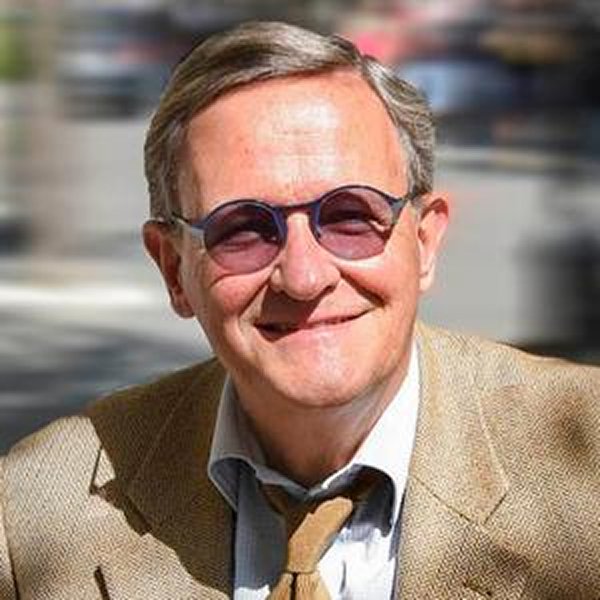

Peace & future researcher + ‌Art Photographer

Share

Leave a Reply

Your email address will not be published. Required fields are marked *

Related Posts

Gandhi, Arun. Lord Richard Attenborough. Kasturba: a lifeNew Delhi: Penguin Books Ltd., 2000.315 pp, 295 Indian Rs, US $22.51 January 29, 2002 Arun Gandhi, grandson to Mohandas and Kasturba, has written a thorough account of Kasturba’s life. Arun begins with a description of Kasturba’s childhood in Porbandar in the late1800s, before she met Mohandas. By having chosen to embark on difficult research into his grandmother’s life, including her first years which are not well-documented, Arun ensures that the reader receives an intimate and life-long portrait of this amazing woman. Kasturba is presented as a lively woman &endash; obedient, yet with a mind of her own. As the relationship between Kasturba and Mohandas developed, Arun maintains that Kasturba’s influence over Mohandas in her own quiet way also grew, to which some of Mohandas’ writings also attest.  Arun paints a vivid picture of the beginnings of Mohandas’ non-violence movement in South Africa, a...
In response to an urgent Appeal from all the living Nobel Peace Prize Laureates, the General Assembly of the United Nations, on November 1998, unanimously declared the first decade of the twenty-first century to be The Decade for a Culture of Peace and Nonviolence. While people are naturally concerned about the amount of violence in our world and how it threatens our future, the Nobel Laureates are right to remind us of the potential of nonviolence and our calling to build a culture of peace and nonviolence.  The twentieth century is instructive in the way that the philosophy and practice of nonviolence have begun to flourish and in the way that nonviolent movements have had an exponential growth across the world. Mohandas Gandhi and Martin Luther King, Jr. are the most famous nonviolent leaders but many have built upon the paths they charted as in country after country, tyrannies and...
We know that medical personnel have failed to report to higher authorities wounds that were clearly caused by torture and that they have neglected to take steps to interrupt this torture. In addition, they have turned over prisoners’ medical records to interrogators who could use them to exploit the prisoners’ weaknesses or vulnerabilities. We have not yet learned the extent of medical involvement in delaying and possibly falsifying the death certificates of prisoners who have been killed by torturers. A May 22 article on Abu Ghraib in the New York Times states that “much of the evidence of abuse at the prison came from medical documents” and that records and statements “showed doctors and medics reporting to the area of the prison where the abuse occurred several times to stitch wounds, tend to collapsed prisoners or see patients with bruised or reddened genitals.” http://www.truthout.org/docs_04/080604J.shtml#16 According to the article, two doctors who...

Recent Articles

Gandhi, Arun. Lord Richard Attenborough. Kasturba: a lifeNew Delhi: Penguin Books Ltd., 2000.315 pp, 295 Indian Rs, US $22.51 January 29, 2002 Arun Gandhi, grandson to Mohandas and Kasturba, has written a thorough account of Kasturba’s life. Arun begins with a description of Kasturba’s childhood in Porbandar in the late1800s, before she met Mohandas. By having chosen to embark on difficult research into his grandmother’s life, including her first years which are not well-documented, Arun ensures that the reader receives an intimate and life-long portrait of this amazing woman. Kasturba is presented as a lively woman &endash; obedient, yet with a mind of her own. As the relationship between Kasturba and Mohandas developed, Arun maintains that Kasturba’s influence over Mohandas in her own quiet way also grew, to which some of Mohandas’ writings also attest.  Arun paints a vivid picture of the beginnings of Mohandas’ non-violence movement in South Africa, a...
In response to an urgent Appeal from all the living Nobel Peace Prize Laureates, the General Assembly of the United Nations, on November 1998, unanimously declared the first decade of the twenty-first century to be The Decade for a Culture of Peace and Nonviolence. While people are naturally concerned about the amount of violence in our world and how it threatens our future, the Nobel Laureates are right to remind us of the potential of nonviolence and our calling to build a culture of peace and nonviolence.  The twentieth century is instructive in the way that the philosophy and practice of nonviolence have begun to flourish and in the way that nonviolent movements have had an exponential growth across the world. Mohandas Gandhi and Martin Luther King, Jr. are the most famous nonviolent leaders but many have built upon the paths they charted as in country after country, tyrannies and...
We know that medical personnel have failed to report to higher authorities wounds that were clearly caused by torture and that they have neglected to take steps to interrupt this torture. In addition, they have turned over prisoners’ medical records to interrogators who could use them to exploit the prisoners’ weaknesses or vulnerabilities. We have not yet learned the extent of medical involvement in delaying and possibly falsifying the death certificates of prisoners who have been killed by torturers. A May 22 article on Abu Ghraib in the New York Times states that “much of the evidence of abuse at the prison came from medical documents” and that records and statements “showed doctors and medics reporting to the area of the prison where the abuse occurred several times to stitch wounds, tend to collapsed prisoners or see patients with bruised or reddened genitals.” http://www.truthout.org/docs_04/080604J.shtml#16 According to the article, two doctors who...

TFF on Substack

Discover more from TFF Transnational Foundation & Jan Oberg.

Most Popular

Gandhi, Arun. Lord Richard Attenborough. Kasturba: a lifeNew Delhi: Penguin Books Ltd., 2000.315 pp, 295 Indian Rs, US $22.51 January 29, 2002 Arun Gandhi, grandson to Mohandas and Kasturba, has written a thorough account of Kasturba’s life. Arun begins with a description of Kasturba’s childhood in Porbandar in the late1800s, before she met Mohandas. By having chosen to embark on difficult research into his grandmother’s life, including her first years which are not well-documented, Arun ensures that the reader receives an intimate and life-long portrait of this amazing woman. Kasturba is presented as a lively woman &endash; obedient, yet with a mind of her own. As the relationship between Kasturba and Mohandas developed, Arun maintains that Kasturba’s influence over Mohandas in her own quiet way also grew, to which some of Mohandas’ writings also attest.  Arun paints a vivid picture of the beginnings of Mohandas’ non-violence movement in South Africa, a...
In response to an urgent Appeal from all the living Nobel Peace Prize Laureates, the General Assembly of the United Nations, on November 1998, unanimously declared the first decade of the twenty-first century to be The Decade for a Culture of Peace and Nonviolence. While people are naturally concerned about the amount of violence in our world and how it threatens our future, the Nobel Laureates are right to remind us of the potential of nonviolence and our calling to build a culture of peace and nonviolence.  The twentieth century is instructive in the way that the philosophy and practice of nonviolence have begun to flourish and in the way that nonviolent movements have had an exponential growth across the world. Mohandas Gandhi and Martin Luther King, Jr. are the most famous nonviolent leaders but many have built upon the paths they charted as in country after country, tyrannies and...
We know that medical personnel have failed to report to higher authorities wounds that were clearly caused by torture and that they have neglected to take steps to interrupt this torture. In addition, they have turned over prisoners’ medical records to interrogators who could use them to exploit the prisoners’ weaknesses or vulnerabilities. We have not yet learned the extent of medical involvement in delaying and possibly falsifying the death certificates of prisoners who have been killed by torturers. A May 22 article on Abu Ghraib in the New York Times states that “much of the evidence of abuse at the prison came from medical documents” and that records and statements “showed doctors and medics reporting to the area of the prison where the abuse occurred several times to stitch wounds, tend to collapsed prisoners or see patients with bruised or reddened genitals.” http://www.truthout.org/docs_04/080604J.shtml#16 According to the article, two doctors who...
Read More
Imagen-thumbnail-The-Transnational-1
Gandhi, Arun. Lord Richard Attenborough. Kasturba: a lifeNew Delhi: Penguin Books Ltd., 2000.315 pp, 295 Indian Rs, US $22.51 January 29, 2002 Arun Gandhi, grandson to Mohandas and Kasturba, has written a thorough account of Kasturba’s life. Arun begins with a description of Kasturba’s childhood in Porbandar in the late1800s, before she met Mohandas. By having chosen to embark on difficult research into his grandmother’s life, including her first years which are not well-documented, Arun ensures that the reader receives an intimate and life-long portrait of this amazing woman. Kasturba is presented as a lively woman &endash; obedient, yet with a mind of her own. As the relationship between Kasturba and Mohandas developed, Arun maintains that Kasturba’s influence over Mohandas in her own quiet way also grew, to which some of Mohandas’ writings also attest.  Arun paints a vivid picture of the beginnings of Mohandas’ non-violence movement in South Africa, a...
Imagen-thumbnail-The-Transnational-1
In response to an urgent Appeal from all the living Nobel Peace Prize Laureates, the General Assembly of the United Nations, on November 1998, unanimously declared the first decade of the twenty-first century to be The Decade for a Culture of Peace and Nonviolence. While people are naturally concerned about the amount of violence in our world and how it threatens our future, the Nobel Laureates are right to remind us of the potential of nonviolence and our calling to build a culture of peace and nonviolence.  The twentieth century is instructive in the way that the philosophy and practice of nonviolence have begun to flourish and in the way that nonviolent movements have had an exponential growth across the world. Mohandas Gandhi and Martin Luther King, Jr. are the most famous nonviolent leaders but many have built upon the paths they charted as in country after country, tyrannies and...
Imagen-thumbnail-The-Transnational-1
We know that medical personnel have failed to report to higher authorities wounds that were clearly caused by torture and that they have neglected to take steps to interrupt this torture. In addition, they have turned over prisoners’ medical records to interrogators who could use them to exploit the prisoners’ weaknesses or vulnerabilities. We have not yet learned the extent of medical involvement in delaying and possibly falsifying the death certificates of prisoners who have been killed by torturers. A May 22 article on Abu Ghraib in the New York Times states that “much of the evidence of abuse at the prison came from medical documents” and that records and statements “showed doctors and medics reporting to the area of the prison where the abuse occurred several times to stitch wounds, tend to collapsed prisoners or see patients with bruised or reddened genitals.” http://www.truthout.org/docs_04/080604J.shtml#16 According to the article, two doctors who...
Imagen-thumbnail-The-Transnational-1
Jan Øberg behandler i artiklen en lang række faktorer, som ligger til grund for den måde vores samfund er organiseret på – og derfor også for konflikter. Artiklen introducerer således sammenhængen mellem familien, foreninger, regeringer, NGO’ er, nation, stat, nationalstat og alliancer for på denne måde bedre at kunne forstå konflikter og i sidste ende blive klogere mht. at løse disse. Øberg, der er fortaler for global bevidsthed, hvilket skal ses i lyset af den øgede globalisering, skelner mellem kulturkamp og kulturdialog. Endelig behandles begrebet magt og magtesløshed: giver magt ret til at udøve magt – fordi man mener at have ret? Litteraturliste og arbejdsspørgsmål efter artiklen. Ordene vi bruger om verden I satellitperspektiv kan man godt tale om den menneskelige familie eller menneskeheden. Udtrykket understreger, at der eksisterer – eller burde eksistere – et fællesskab fordi vi alle er mennesker og sammen bebor denne klode og ingen anden. Og...
Imagen-thumbnail-The-Transnational-1
Kapitel 2: Forskellige sider af Europa og USA…fortsat 2.5 Militære relationer I forbifarten har vi allerede sagt nogle ting om USA’s militære situation. Kig lige en gang til på afsnit 2.3. Nu skal vi uddybe det militære forhold mellem USA og EU. Der er en række ligheder mellem visse europæiske landes og USA’s militær. Næsten alle er med på en eller anden måde i NATO, direkte som medlem – selv Island, der ikke har et forsvar – eller indirekte i Partnerskab for Fred. USA og Canada er med i OSCE (på dansk OSSE), Organisationen for Sikkerhed og Samarbejde i Europa, der tæller over 50 lande. USA samt England og Frankrig er kernevåbenstater og de har styrker til intervention langt borte fra hjemlandet, om end USA’s er tifold større. Alle har også en omfattende våbeneksport og bruger den som et middel til at tjene penge og få loyale venner på, det...
Imagen-thumbnail-The-Transnational-1
Background Christian Harleman and Jan Oberg conducted a fact-finding mission to Burundi between November 26 and December 6, 2003. (See websites about the country here). The first TFF mission took place in March 1999. Unfortunately, since then it has not been practically possible to implement the co-operation with Burundi’s Ministry of Education and Burundian NGOs that was planned at the time. The 2003 mission had three purposes. First, to do fact-finding in general about the situation and, in particular, the progress under the Arusha Peace Process. Second, to explore the possibilities for co-operation between the government and relevant NGOs on the one hand and TFF on the other, in order to develop and deepen the existing competence in fields such as conflict-understanding, reconciliation and peace-building. Finally, third, to find out whether it would be possible, in co-operation with the Swedish Rescue Services Agency (Statens Räddningsverk), to establish a health care unit that...