
TFF PressInfo # 375 Close calls: We were closer to nuclear destruction than we knew (2)

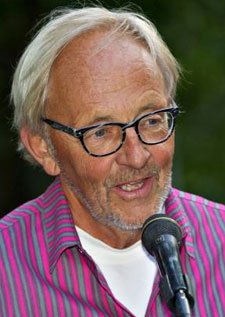
By Gunnar Westberg

The proposition that nuclear weapons can be retained in perpetuity and never used – accidentally or by decision – defies credibility”.

Other serious close calls

In November 1979, a recorded scenario describing a Russian nuclear attack had been entered into the US warning system NORAD. The scenario was perceived as a real full-scale Soviet attack. Nuclear missiles and bombers were readied. After six minutes the mistake became obvious. After this incident new security routines were introduced.

Despite these changed routines, less that one year later the mistake was repeated – this time more persistent and dangerous. Zbigniew Brzezinski, the US national security adviser, was called at three o’clock in the morning by a general on duty. He was informed that 220 Soviet missiles were on their way towards the USA. A moment later a new call came, saying that 2,200 missiles had been launched.

Brzezinski was about to call President Jimmy Carter when the general called for a third time reporting that the alarm had been cancelled.

The mistake was caused by a malfunctioning computer chip. Several similar false alarms have been reported, although they did not reach the national command.

We have no reports from the Soviet Union similar to these computer malfunctions. Maybe the Russians have less trust in their computers, just as Colonel Petrov showed? However, there are many reports on serious accidents in the manufacture and handling of nuclear weapons.

I have received reliable information from senior military officers in the Soviet Union regarding heavy use of alcohol and drugs among the personnel that monitor the warning and control systems, just as in the USA.

The story of the “Norwegian weather rocket” in 1995 is often presented as a particularly dangerous incident. Russians satellites warned of a missile on its way from Norway towards Russia. President Yeltsin was called in the middle of the night; the “nuclear war laptop” was opened; and the president discussed the situation with his staff. The “missile” turned out not to be directed towards Russia.

I see this incident as an indication that when the relations between the nuclear powers are good, then the risk of a misunderstanding is very small. The Russians were not likely to expect an attack at that time.

Indian soldiers fire artillery in northernmost part of Kargil region

Close calls have occurred not only between the two superpowers. India and Pakistan are in a chronic but active conflict regarding Kashmir. At least twice this engagement has threatened to expand into a nuclear war, namely at the Kargil conflict in 1999 and after an attack on the Indian Parliament by Pakistani terrorists in 2001.

Both times, Pakistan readied nuclear weapons for delivery. Pakistan has a doctrine of first use: If Indian military forces transgress over the border to Pakistan, that country intends to use nuclear weapons.

Pakistan does not have a system with a “permissive link”, where a code must be transmitted from the highest authority in order to make a launch of nuclear weapons possible. Military commanders in Pakistan have the technical ability to use nuclear weapons without the approval of the political leaders in the country. India, with much stronger conventional forces, uses the permissive link and has declared a “no first use” principle.

The available extensive reports from both these incidents show that the communication between the political and the military leaders was highly inadequate. Misunderstandings on very important matters occurred to an alarming degree. During both conflicts between India and Pakistan, intervention by US leaders was important in preventing escalation and a nuclear war.

We know little about close calls in the other nuclear-weapon states.

The UK prepared its nuclear weapons for use during the Cuba conflict. There were important misunderstandings between military and political leaders during that incident. Today all British nuclear weapons are based on submarines. The missiles can, as a rule, be launched only after a delay of many hours. Mistakes will thus be much less likely. The Guardian carried this report in 2014 with some very serious examples of accidents.

France, on the contrary, claims that it has parts of its nuclear arsenal ready for immediate action, on order from the President. There are no reports of close calls. There is no reason to label the collision between a British and French nuclear-armed submarine in 2009 as a close call.

China has a “no first use” doctrine and probably does not have weapons on hair-trigger alert, which decreases the risk of dangerous mistakes.

Why was there no nuclear war?

Eric Schlosser, author of the book “Command and Control,” told this story: “An elderly physicist, who had taken part in the development of the nuclear weapons, told me: ‘If anyone had said in 1945, after the bombing of Nagasaki, that no other city in the world would be attacked with atomic weapons, no one would have believed him. We expected more nuclear wars.’”

Yes, how come there was no more nuclear war?

In the nuclear-weapon states they say that deterrence was the reason. MAD – “Mutual Assured Destruction” – saved us. Even if I attack first, the other side will have sufficient weapons left to cause “unacceptable” damage to my country. So I won’t do it.

Deterrence was important. In addition, the “nuclear winter” concept was documented in the mid-1980s. The global climate consequences of a major nuclear war would be so severe that the “winner” would starve to death. An attack would be suicidal. Maybe this insight contributed to the decrease in nuclear arsenals that started after 1985?

MAD cannot explain why nuclear weapons were not used in wars against countries that did not have them. In the Korean war, General MacArthur wanted to use nuclear weapons against the Chinese forces that came in on the North Korean side but he was stopped by President Truman.

During the Vietnam war many voices in the USA demanded that nukes should be used.

In the two wars against Iraq the US administration threatened to use nuclear weapons if Iraq used chemical weapons. Many Soviet military leaders wanted to use atomic bombs in Afghanistan.

What held them back?

Most important were moral and humanitarian reasons. This was called the “Nuclear Threshold.”

If the USA had used nuclear weapons against North Vietnam the results would have been so terrible that the US would have been a pariah country for decades. The domestic opinion in the US would not have accepted the bombing. Furthermore, the radioactive fallout in neighbouring countries, some of them allies to the US, would have been unacceptable.

Are moral and humanitarian reasons a sufficient explanation why nukes were never used? I do not know, but find no other.

Civil society organisations have been important in establishing a high nuclear threshold. International Physicians for the Prevention of Nuclear War (IPPNW) has been particularly important in this regard. IPPNW has persistently pointed at the humanitarian consequences of nuclear weapons and warned that a global nuclear war could end human civilisation and, maybe, exterminate mankind.

The opinion by the International Court in The Hague, that the use or threat of use of nuclear weapons was generally prohibited, is also important.

The nuclear-weapon states do not intend to use nuclear weapons except as deterrence against attack. Deterrence, however, works only if the enemy believes that, in the end, I am prepared to use nuclear weapons.

Both NATO and Russia have doctrines that nukes can be used even if the other side has not done so. In a conflict of great importance, a side that is much weaker and maybe is in danger of being overrun is likely to threaten to use its atomic weapons. If you threaten to use them you may in the end be forced to follow through on your threat.

The close calls I have described in this article mean that mankind could have been exterminated by mistake. Only decades after the events have we been allowed to learn about these threats. It is likely that equally dangerous close calls have occurred.

So why did these mistakes not lead to a nuclear war, when during the Cold War the tension was so high and the superpowers seemed to have expected a nuclear war to break out?

Let me tell of a close call I have experienced in my personal life. I was driving on a highway, in the middle of the day, when I felt that the urge to fall asleep, which sometimes befalls me, was about to overpower my vigilance. There was no place to stop for a rest. After a minute I fell asleep. The car veered against the partition in the middle of the road and its side was torn up. My wife and I were unharmed.

But if there had been no banister? The traffic on the opposing side of the road was heavy and there were lorries.

The nuclear close calls did not lead to a war. Those who study accidents say that often there must be two and often three mistakes or failures occurring simultaneously.

There have been a sufficient number of dangerous situations between the USA and Russia that could have happened at almost the same time. Shortly before the Able Archer exercise, a Korean passenger plane was shot down by Soviet airplanes.

What if?

But what if Soviet fighters had, by mistake, been attacked and shot down over Europe? What if any of the American airplanes carrying nuclear weapons had mistaken the order in the exercise for a real order to bomb Soviet targets? In the Soviet Union bombers were on high alert, with pilots in the cockpit, waiting for a US attack.

What if the fighters sent to protect the U-2 plane that had strayed into Soviet territory in Siberia during the Cuba crisis had used the nuclear missile they were carrying?

Eric Schlosser tells in his book about a great number of mistakes and accidents in the handling of nuclear weapons in the USA.

Bombs have fallen from airplanes or crashed with the carrier. These accidents would not cause a nuclear war, but a nuclear explosion during a tense international crisis when something else also went wrong, such as the “Petrov Incident” mentioned earlier, could have led to very dangerous mistakes.

Terrorist attacks with nuclear weapons simultaneous with a large cyber attack might start the final war, if the political situation is strained.

Dr. Alan Philips guessed in a study from the year 2003 that the risk of a nuclear war occurring during the Cold War was 40%. Maybe so. Or maybe 20%. Or 75%. But most definitely not zero -not close to zero.

Today the danger of a nuclear war between Russia and the USA is much lower that during the Cold War. However, mistakes can happen.

Dr. Bruce Blair, who has been in the chain of command for nuclear weapons, insists that unauthorized firing of nuclear missiles is possible. The protection is not perfect.

In general, the system for control and for launching is built to function with great redundancy, whatever happens to the lines of command or to the command centers. The controls against launches by mistake, equipment failure, interception by hackers, technical malfunction, or human madness, seem to have a lower priority. At least in the US, but there is no reason to believe the situation in Russia to be more secure.

The tension between Russia and the USA is increasing. Threats of use of nuclear weapons have, unbelievably, been heard.

But we have been lucky so far.

As I said in the beginning of this paper, quoting the Canberra Commission:

The proposition that nuclear weapons can be retained in perpetuity and never used — accidentally or by decision — defies credibility. The only complete defence is the elimination of nuclear weapons and assurance that they will never be produced again.”

The most important source for this review is the Chatham House Report from 2014 “Too close for comfort.”

This and Part 1 was originally published at the IPPNW Peace and Health blog.


Medical education and professional career

Share

Leave a Reply

Your email address will not be published. Required fields are marked *

Related Posts

Gandhi, Arun. Lord Richard Attenborough. Kasturba: a lifeNew Delhi: Penguin Books Ltd., 2000.315 pp, 295 Indian Rs, US $22.51 January 29, 2002 Arun Gandhi, grandson to Mohandas and Kasturba, has written a thorough account of Kasturba’s life. Arun begins with a description of Kasturba’s childhood in Porbandar in the late1800s, before she met Mohandas. By having chosen to embark on difficult research into his grandmother’s life, including her first years which are not well-documented, Arun ensures that the reader receives an intimate and life-long portrait of this amazing woman. Kasturba is presented as a lively woman &endash; obedient, yet with a mind of her own. As the relationship between Kasturba and Mohandas developed, Arun maintains that Kasturba’s influence over Mohandas in her own quiet way also grew, to which some of Mohandas’ writings also attest.  Arun paints a vivid picture of the beginnings of Mohandas’ non-violence movement in South Africa, a...
In response to an urgent Appeal from all the living Nobel Peace Prize Laureates, the General Assembly of the United Nations, on November 1998, unanimously declared the first decade of the twenty-first century to be The Decade for a Culture of Peace and Nonviolence. While people are naturally concerned about the amount of violence in our world and how it threatens our future, the Nobel Laureates are right to remind us of the potential of nonviolence and our calling to build a culture of peace and nonviolence.  The twentieth century is instructive in the way that the philosophy and practice of nonviolence have begun to flourish and in the way that nonviolent movements have had an exponential growth across the world. Mohandas Gandhi and Martin Luther King, Jr. are the most famous nonviolent leaders but many have built upon the paths they charted as in country after country, tyrannies and...
We know that medical personnel have failed to report to higher authorities wounds that were clearly caused by torture and that they have neglected to take steps to interrupt this torture. In addition, they have turned over prisoners’ medical records to interrogators who could use them to exploit the prisoners’ weaknesses or vulnerabilities. We have not yet learned the extent of medical involvement in delaying and possibly falsifying the death certificates of prisoners who have been killed by torturers. A May 22 article on Abu Ghraib in the New York Times states that “much of the evidence of abuse at the prison came from medical documents” and that records and statements “showed doctors and medics reporting to the area of the prison where the abuse occurred several times to stitch wounds, tend to collapsed prisoners or see patients with bruised or reddened genitals.” http://www.truthout.org/docs_04/080604J.shtml#16 According to the article, two doctors who...

Recent Articles

Gandhi, Arun. Lord Richard Attenborough. Kasturba: a lifeNew Delhi: Penguin Books Ltd., 2000.315 pp, 295 Indian Rs, US $22.51 January 29, 2002 Arun Gandhi, grandson to Mohandas and Kasturba, has written a thorough account of Kasturba’s life. Arun begins with a description of Kasturba’s childhood in Porbandar in the late1800s, before she met Mohandas. By having chosen to embark on difficult research into his grandmother’s life, including her first years which are not well-documented, Arun ensures that the reader receives an intimate and life-long portrait of this amazing woman. Kasturba is presented as a lively woman &endash; obedient, yet with a mind of her own. As the relationship between Kasturba and Mohandas developed, Arun maintains that Kasturba’s influence over Mohandas in her own quiet way also grew, to which some of Mohandas’ writings also attest.  Arun paints a vivid picture of the beginnings of Mohandas’ non-violence movement in South Africa, a...
In response to an urgent Appeal from all the living Nobel Peace Prize Laureates, the General Assembly of the United Nations, on November 1998, unanimously declared the first decade of the twenty-first century to be The Decade for a Culture of Peace and Nonviolence. While people are naturally concerned about the amount of violence in our world and how it threatens our future, the Nobel Laureates are right to remind us of the potential of nonviolence and our calling to build a culture of peace and nonviolence.  The twentieth century is instructive in the way that the philosophy and practice of nonviolence have begun to flourish and in the way that nonviolent movements have had an exponential growth across the world. Mohandas Gandhi and Martin Luther King, Jr. are the most famous nonviolent leaders but many have built upon the paths they charted as in country after country, tyrannies and...
We know that medical personnel have failed to report to higher authorities wounds that were clearly caused by torture and that they have neglected to take steps to interrupt this torture. In addition, they have turned over prisoners’ medical records to interrogators who could use them to exploit the prisoners’ weaknesses or vulnerabilities. We have not yet learned the extent of medical involvement in delaying and possibly falsifying the death certificates of prisoners who have been killed by torturers. A May 22 article on Abu Ghraib in the New York Times states that “much of the evidence of abuse at the prison came from medical documents” and that records and statements “showed doctors and medics reporting to the area of the prison where the abuse occurred several times to stitch wounds, tend to collapsed prisoners or see patients with bruised or reddened genitals.” http://www.truthout.org/docs_04/080604J.shtml#16 According to the article, two doctors who...

TFF on Substack

Discover more from TFF Transnational Foundation & Jan Oberg.

Most Popular

Gandhi, Arun. Lord Richard Attenborough. Kasturba: a lifeNew Delhi: Penguin Books Ltd., 2000.315 pp, 295 Indian Rs, US $22.51 January 29, 2002 Arun Gandhi, grandson to Mohandas and Kasturba, has written a thorough account of Kasturba’s life. Arun begins with a description of Kasturba’s childhood in Porbandar in the late1800s, before she met Mohandas. By having chosen to embark on difficult research into his grandmother’s life, including her first years which are not well-documented, Arun ensures that the reader receives an intimate and life-long portrait of this amazing woman. Kasturba is presented as a lively woman &endash; obedient, yet with a mind of her own. As the relationship between Kasturba and Mohandas developed, Arun maintains that Kasturba’s influence over Mohandas in her own quiet way also grew, to which some of Mohandas’ writings also attest.  Arun paints a vivid picture of the beginnings of Mohandas’ non-violence movement in South Africa, a...
In response to an urgent Appeal from all the living Nobel Peace Prize Laureates, the General Assembly of the United Nations, on November 1998, unanimously declared the first decade of the twenty-first century to be The Decade for a Culture of Peace and Nonviolence. While people are naturally concerned about the amount of violence in our world and how it threatens our future, the Nobel Laureates are right to remind us of the potential of nonviolence and our calling to build a culture of peace and nonviolence.  The twentieth century is instructive in the way that the philosophy and practice of nonviolence have begun to flourish and in the way that nonviolent movements have had an exponential growth across the world. Mohandas Gandhi and Martin Luther King, Jr. are the most famous nonviolent leaders but many have built upon the paths they charted as in country after country, tyrannies and...
We know that medical personnel have failed to report to higher authorities wounds that were clearly caused by torture and that they have neglected to take steps to interrupt this torture. In addition, they have turned over prisoners’ medical records to interrogators who could use them to exploit the prisoners’ weaknesses or vulnerabilities. We have not yet learned the extent of medical involvement in delaying and possibly falsifying the death certificates of prisoners who have been killed by torturers. A May 22 article on Abu Ghraib in the New York Times states that “much of the evidence of abuse at the prison came from medical documents” and that records and statements “showed doctors and medics reporting to the area of the prison where the abuse occurred several times to stitch wounds, tend to collapsed prisoners or see patients with bruised or reddened genitals.” http://www.truthout.org/docs_04/080604J.shtml#16 According to the article, two doctors who...
Read More
Imagen-thumbnail-The-Transnational-1
Gandhi, Arun. Lord Richard Attenborough. Kasturba: a lifeNew Delhi: Penguin Books Ltd., 2000.315 pp, 295 Indian Rs, US $22.51 January 29, 2002 Arun Gandhi, grandson to Mohandas and Kasturba, has written a thorough account of Kasturba’s life. Arun begins with a description of Kasturba’s childhood in Porbandar in the late1800s, before she met Mohandas. By having chosen to embark on difficult research into his grandmother’s life, including her first years which are not well-documented, Arun ensures that the reader receives an intimate and life-long portrait of this amazing woman. Kasturba is presented as a lively woman &endash; obedient, yet with a mind of her own. As the relationship between Kasturba and Mohandas developed, Arun maintains that Kasturba’s influence over Mohandas in her own quiet way also grew, to which some of Mohandas’ writings also attest.  Arun paints a vivid picture of the beginnings of Mohandas’ non-violence movement in South Africa, a...
Imagen-thumbnail-The-Transnational-1
In response to an urgent Appeal from all the living Nobel Peace Prize Laureates, the General Assembly of the United Nations, on November 1998, unanimously declared the first decade of the twenty-first century to be The Decade for a Culture of Peace and Nonviolence. While people are naturally concerned about the amount of violence in our world and how it threatens our future, the Nobel Laureates are right to remind us of the potential of nonviolence and our calling to build a culture of peace and nonviolence.  The twentieth century is instructive in the way that the philosophy and practice of nonviolence have begun to flourish and in the way that nonviolent movements have had an exponential growth across the world. Mohandas Gandhi and Martin Luther King, Jr. are the most famous nonviolent leaders but many have built upon the paths they charted as in country after country, tyrannies and...
Imagen-thumbnail-The-Transnational-1
We know that medical personnel have failed to report to higher authorities wounds that were clearly caused by torture and that they have neglected to take steps to interrupt this torture. In addition, they have turned over prisoners’ medical records to interrogators who could use them to exploit the prisoners’ weaknesses or vulnerabilities. We have not yet learned the extent of medical involvement in delaying and possibly falsifying the death certificates of prisoners who have been killed by torturers. A May 22 article on Abu Ghraib in the New York Times states that “much of the evidence of abuse at the prison came from medical documents” and that records and statements “showed doctors and medics reporting to the area of the prison where the abuse occurred several times to stitch wounds, tend to collapsed prisoners or see patients with bruised or reddened genitals.” http://www.truthout.org/docs_04/080604J.shtml#16 According to the article, two doctors who...
Imagen-thumbnail-The-Transnational-1
Jan Øberg behandler i artiklen en lang række faktorer, som ligger til grund for den måde vores samfund er organiseret på – og derfor også for konflikter. Artiklen introducerer således sammenhængen mellem familien, foreninger, regeringer, NGO’ er, nation, stat, nationalstat og alliancer for på denne måde bedre at kunne forstå konflikter og i sidste ende blive klogere mht. at løse disse. Øberg, der er fortaler for global bevidsthed, hvilket skal ses i lyset af den øgede globalisering, skelner mellem kulturkamp og kulturdialog. Endelig behandles begrebet magt og magtesløshed: giver magt ret til at udøve magt – fordi man mener at have ret? Litteraturliste og arbejdsspørgsmål efter artiklen. Ordene vi bruger om verden I satellitperspektiv kan man godt tale om den menneskelige familie eller menneskeheden. Udtrykket understreger, at der eksisterer – eller burde eksistere – et fællesskab fordi vi alle er mennesker og sammen bebor denne klode og ingen anden. Og...
Imagen-thumbnail-The-Transnational-1
Kapitel 2: Forskellige sider af Europa og USA…fortsat 2.5 Militære relationer I forbifarten har vi allerede sagt nogle ting om USA’s militære situation. Kig lige en gang til på afsnit 2.3. Nu skal vi uddybe det militære forhold mellem USA og EU. Der er en række ligheder mellem visse europæiske landes og USA’s militær. Næsten alle er med på en eller anden måde i NATO, direkte som medlem – selv Island, der ikke har et forsvar – eller indirekte i Partnerskab for Fred. USA og Canada er med i OSCE (på dansk OSSE), Organisationen for Sikkerhed og Samarbejde i Europa, der tæller over 50 lande. USA samt England og Frankrig er kernevåbenstater og de har styrker til intervention langt borte fra hjemlandet, om end USA’s er tifold større. Alle har også en omfattende våbeneksport og bruger den som et middel til at tjene penge og få loyale venner på, det...
Imagen-thumbnail-The-Transnational-1
Background Christian Harleman and Jan Oberg conducted a fact-finding mission to Burundi between November 26 and December 6, 2003. (See websites about the country here). The first TFF mission took place in March 1999. Unfortunately, since then it has not been practically possible to implement the co-operation with Burundi’s Ministry of Education and Burundian NGOs that was planned at the time. The 2003 mission had three purposes. First, to do fact-finding in general about the situation and, in particular, the progress under the Arusha Peace Process. Second, to explore the possibilities for co-operation between the government and relevant NGOs on the one hand and TFF on the other, in order to develop and deepen the existing competence in fields such as conflict-understanding, reconciliation and peace-building. Finally, third, to find out whether it would be possible, in co-operation with the Swedish Rescue Services Agency (Statens Räddningsverk), to establish a health care unit that...
