
TFF PressInfo # 374: Close calls: We were closer to nuclear destruction than we knew (1)

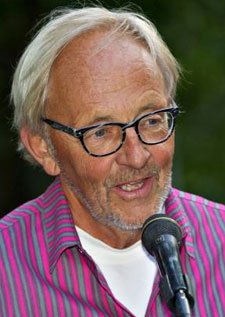
By Gunnar Westberg

The proposition that nuclear weapons can be retained in perpetuity and never used – accidentally or by decision – defies credibility”.

This unanimous statement was published by the Canberra Commission in 1996. Among the commission members were internationally known former ministers of defense and of foreign affairs and generals.

The nuclear-weapon states do not intend to abolish their nuclear weapons. They promised to do so when they signed the Nuclear Non-Proliferation Treaty (NPT) of 1970.

Furthermore, the International Court in The Hague concluded in its advisory opinion more than 20 years ago that these states were obliged to negotiate and bring to a conclusion such negotiations on complete nuclear disarmament.

The nuclear-weapon states disregard this obligation. On the contrary, they invest enormous sums in the modernization of these weapons of global destruction.
It is difficult today to raise a strong opinion in the nuclear-weapon states for nuclear disarmament. One reason is that the public sees the risk of a nuclear war between these states as so unlikely that it can be disregarded.

It is then important to remind ourselves that we were for decades, during the Cold War, threatened by extinction by nuclear war. We were not aware at that time how close we were.

In this article I will summarize some of the best-known critical situations. Recently published evidence shows that the danger was considerably greater than we knew at the time.

The risk today of a nuclear omnicide – killing all or almost all humans – is probably smaller than during the Cold War, but the risk is even today real and it may be rising. That is the reason I wish us to remind ourselves again: as long as nuclear weapons exist we are in danger of extermination.

Nuclear weapons must be abolished before they abolish us.

Stanislav Petrov: The man who saved the world

1983 was probably the most dangerous year for mankind ever in history. We were twice close to a nuclear war between the Soviet Union and the USA. But we did not know that.

The situation between the USA and the Soviet Union was very dangerous. In his notorious speech in March 1983, President Reagan spoke of the “Axis of Evil” states in a way that seriously upset the Soviet leaders. The speech ended the period of mutual cooperation, which had prevailed since the Cuba Missile Crisis.

In the Soviet Union many political and military leaders were convinced that the USA would launch a nuclear attack.

Peter Handberg, a Swedish journalist, has reported of meetings with men who at that time watched over sites where the intercontinental missiles were stored. These men strongly believed that an American attack was imminent and they expected a launch order.

In Moscow, the leaders of the Communist party prepared for a counter attack. The head of the KGB, the foreign intelligence agency, General Ileg Kalunin, had ordered his agents in the world to watch for any sign of a large attack on the Mother Country.

A previous head of the KGB, Jurij Andropov, was now leader of the country. He was severely ill and was treated with chronic dialysis. He was the man ultimately responsible for giving the order to fire the nuclear missiles.

The nuclear arms race was intense. The USA and the Soviet Union were both arming the “European Theater” with medium-distance nuclear missiles. President Reagan’s “Star Wars” program was a source of much anxiety on the Russian side. The belief was that the USA was trying to obtain a first strike capacity.

In Russia, a Doomsday machine was planned—a system that would automatically launch all strategic nuclear weapons if contact with the military and political leaders of the country was completely disabled.
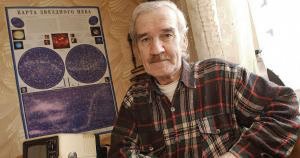
Stanislov Petrov

The increased risk of war was felt particularly strongly by those in Russia who were ordered to prepare for an immediate response in case of a nuclear attack. The command centre situated in the military city Serpukov-15 was the hub for the vigilance, evaluating reports from satellites in space and radar stations at the borders. Colonel Stanislav Petrov was ordered to take the watch on the evening of September 25, instead of a colleague who had called in sick.

Late in the evening, the alarm sounded. A missile had apparently been fired from the American west coast. Soon two were detected; finally four. The computer warned that the probability of an attack was at the highest level.

Petrov should now, according to the instructions, immediately report that an American attack had been discovered.

Against orders, he decided to wait. He knew that if he reported a nuclear attack a global war would be likely. The USA, the Soviet Union, and most of mankind would be exterminated. Petrov waited for more information.

He found it very unlikely that the USA had launched only a few missiles. Petrov was well informed about the computer system and he knew that it was not perfect.

After a long wait the “missiles” disappeared from the screens. The explanation came at last: There was a glitch in the computer system.

Petrov had himself been involved in developing the system. Maybe this special knowledge saved us? Or unusual self-confidence and courage in an unusual individual?

This fateful event became known when a superior officer, who had criticized omissions in Petrov’s records of the evening, told the story on his deathbed. Petrov has received rather little recognition in Russia.

What happened that critical night – and Petrov’s part in the story – is played out in a recent movie by the Danish producer Peter Anthony: “The man who saved the world.”

“Able Archer”: A NATO exercise which could have become the last

Just like the “Petrov incident,” the “Able Archer” crisis was known only to a few military and political leaders in Russia and the USA until decades later. Only in 2013 could the Nuclear Information Service get access to the classified US file. Important documents from Russia and Great Britain are still not available. Why do our leaders feel they need to “protect” us against the truth of the greatest dangers mankind has faced?
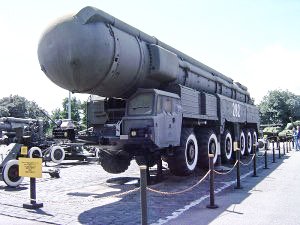
Soviet SS-20 missile

“Able Archer” was a NATO exercise carried out in the beginning of November 1983. The purpose was so simulate a Soviet invasion stopped by a nuclear attack. About 40,000 soldiers participated and large troop movements took place.

Similar exercises had been carried out in previous years. The development could be monitored by Soviet intelligence through radio eavesdropping. What was new was that the tension between Soviet and the USA was stronger than before.

In the background was the Soviet operation RYAN, an acronym for an attack with nuclear missiles. RYAN had become the strategic plan of the Soviet KGB two years earlier, on how to respond to an expected American nuclear attack. The combination of Soviet paranoia and the rhetoric of President Ronald Reagan did place the world in great danger.

Soviet leaders thought that this exercise could be a parallel to Hitler’s Operation Barbarossa, the military maneuver that suddenly was turned into a full-scale attack on the Soviet Union.

The Soviet leaders placed bomb planes on highest alert, with pilots in place in the cockpits. Submarines carrying nuclear missiles were placed in protected positions under the Arctic ice. Missiles of the SS-20 type were readied.

NATO concluded the exercises after a few days, with an order to launch nuclear weapons against the Soviet Union and Eastern Europe. No missiles were fired, however, and the participants went back home.

After the exercise the British Prime Minister Margaret Thatcher learnt from the intelligence service how the NATO command had been ignorant of the serious misunderstanding in Russia of the intention of this exercise. She conferred with President Ronald Reagan. It is likely that this information, together with his viewing of the film “The Day After,” caused the conversion of the President which was expressed in his State of the Union message in 1984: “A nuclear war cannot be won and must never be fought.”

Reagan continued this process up to the famous meeting in Reykjavik in 1986, when he and President Gorbachev for a brief moment agreed to abolish all nuclear weapons before the end of the century.

An interesting and most worrying rendition of how the exercises were perceived in Russia is given in the documentary movie “1983: Brink of the Apocalypse.”

The story is based on documents that became available in 2013 and on interviews with some of those who were active on both sides in the situation. Two spies were important in convincing the leaders of KGB that no attack was underway. One was a Russian spy in NATO headquarters who insisted to the KGB that this was an exercise and not a preparation for an attack. The other, a Russian spy in London, gave the same picture.

We can conclude that a lack of insight in the USA and in NATO into the perceptions in the Soviet Union put the world in mortal danger. Did two spies save the world?

A reflection of the danger associated with this NATO exercise plays out in the recent German TV production “Deutschland.”
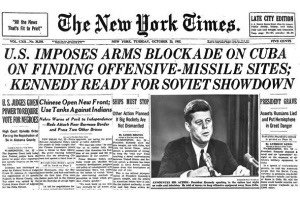
The Cuba crisis: More dangerous than we knew

Soviet nuclear weapons were placed in Cuba. Fidel Castro and Russia’s generals intended to use them if the USA attacked. A Russian submarine that came under attack carried a nuclear weapon. A nuclear attack on the US was closer than we knew.

The development of this crisis has been described in several American books. “Thirteen Days” by Robert Kennedy is the best known and has also been made into a movie. As the story is so well known I will not repeat it here.

In the reports, we can experience how badly prepared the political and military leadership were for such a situation, and how little these two groups understood each other. The generals saw no alternatives other than doing nothing or destroying Cuba with a full-scale nuclear attack. Robert Kennedy wrote that he even feared a military coup!

The US side had little information about plans and evaluations in Moscow. There was no direct communication between Kennedy and Khrushchev.  The final Russian answer to President Kennedy’s proposal was sent from the Russian Embassy to Kennedy by a bicycle messenger! (The “Hot line” was only installed after – and because of – the Cuban Missile Crisis).

We know less about what went on in Moscow, but Khrushchev’s memoirs give some insights. It seems that the Russian generals were greatly worried about the image and prestige of Russia. “If we give in to the US in this situation how could our allies trust us in the future. How could the Chinese have any respect for us?”

The world knew at the time that the crisis was very dangerous and that a nuclear war was a real possibility. Decades later we know more. Thus, Cuban President Fidel Castro, at a meeting many years later with US Secretary of Defense McNamara, said that if the USA had attacked Cuba, Castro would have demanded that Russian nuclear missiles be launched against the USA.

An American U-2 spy plane was shot down over Cuba during the crisis. Only much later were we informed that another U-2 plane in the Arctic had entered over Soviet territory, misled by the influence of the Northern Light!

US fighter planes were sent to protect the U-2 plane. These planes were equipped with nuclear weapons for this mission. Why? Was it possible for the lone pilot to launch these weapons?

We have also belatedly learned that four Russian submarines carrying nuclear torpedoes were navigating close to Cuba. The commanders were instructed to use their nuclear weapons if bombs seriously damaged their vessel. At least one of the submarines was hit by charges that were intended as warnings, but the commander did not know this.

The captain believed his submarine was damaged and he wanted to launch his nuclear torpedo. His deputy, Captain Vasilij Alexandrovich Arkhipov, persuaded him to wait for an order from Moscow. No connection was established but the submarine escaped. Arkhipov’s role has been highlighted in a movie which, like the film about Petrov, is called “The man who saved the world.”

What would have been the consequence had the nuclear torpedo hit the US aircraft carrier that led the US operation?

Quite recently, reports have surfaced from the US base on Okinawa, Japan. During the Cuba crisis the order came to prepare for a nuclear attack against the Soviet Union. There was considerable confusion at the nuclear command at the base. An increase in the alarm level from DefCon-2 to DefCon-1 was expected but never came.

A bizarre event, which could have been found in a novel by John le Carré, was called “Penkovsky’s sighs.” Oleg Penkovsky was a double agent who had given important information to the CIA – the US Central Intelligence Agency – about the Soviet nuclear weapons in Cuba. He had been instructed to send a coded message – three deep exhalations repeated twice – to his contact were he informed that the Soviets intended to attack.

This sighing message was sent during the Cuba crisis to the CIA. The CIA contact, however, realized that Penkovsky had been captured and tortured and the code had been extricated.

Originally published in The International Physicians for the Prevention of Nuclear War, IPPNW, Peace and Health Blog.


Medical education and professional career

Share

Leave a Reply

Your email address will not be published. Required fields are marked *

Related Posts

Gandhi, Arun. Lord Richard Attenborough. Kasturba: a lifeNew Delhi: Penguin Books Ltd., 2000.315 pp, 295 Indian Rs, US $22.51 January 29, 2002 Arun Gandhi, grandson to Mohandas and Kasturba, has written a thorough account of Kasturba’s life. Arun begins with a description of Kasturba’s childhood in Porbandar in the late1800s, before she met Mohandas. By having chosen to embark on difficult research into his grandmother’s life, including her first years which are not well-documented, Arun ensures that the reader receives an intimate and life-long portrait of this amazing woman. Kasturba is presented as a lively woman &endash; obedient, yet with a mind of her own. As the relationship between Kasturba and Mohandas developed, Arun maintains that Kasturba’s influence over Mohandas in her own quiet way also grew, to which some of Mohandas’ writings also attest.  Arun paints a vivid picture of the beginnings of Mohandas’ non-violence movement in South Africa, a...
In response to an urgent Appeal from all the living Nobel Peace Prize Laureates, the General Assembly of the United Nations, on November 1998, unanimously declared the first decade of the twenty-first century to be The Decade for a Culture of Peace and Nonviolence. While people are naturally concerned about the amount of violence in our world and how it threatens our future, the Nobel Laureates are right to remind us of the potential of nonviolence and our calling to build a culture of peace and nonviolence.  The twentieth century is instructive in the way that the philosophy and practice of nonviolence have begun to flourish and in the way that nonviolent movements have had an exponential growth across the world. Mohandas Gandhi and Martin Luther King, Jr. are the most famous nonviolent leaders but many have built upon the paths they charted as in country after country, tyrannies and...
We know that medical personnel have failed to report to higher authorities wounds that were clearly caused by torture and that they have neglected to take steps to interrupt this torture. In addition, they have turned over prisoners’ medical records to interrogators who could use them to exploit the prisoners’ weaknesses or vulnerabilities. We have not yet learned the extent of medical involvement in delaying and possibly falsifying the death certificates of prisoners who have been killed by torturers. A May 22 article on Abu Ghraib in the New York Times states that “much of the evidence of abuse at the prison came from medical documents” and that records and statements “showed doctors and medics reporting to the area of the prison where the abuse occurred several times to stitch wounds, tend to collapsed prisoners or see patients with bruised or reddened genitals.” http://www.truthout.org/docs_04/080604J.shtml#16 According to the article, two doctors who...

Recent Articles

Gandhi, Arun. Lord Richard Attenborough. Kasturba: a lifeNew Delhi: Penguin Books Ltd., 2000.315 pp, 295 Indian Rs, US $22.51 January 29, 2002 Arun Gandhi, grandson to Mohandas and Kasturba, has written a thorough account of Kasturba’s life. Arun begins with a description of Kasturba’s childhood in Porbandar in the late1800s, before she met Mohandas. By having chosen to embark on difficult research into his grandmother’s life, including her first years which are not well-documented, Arun ensures that the reader receives an intimate and life-long portrait of this amazing woman. Kasturba is presented as a lively woman &endash; obedient, yet with a mind of her own. As the relationship between Kasturba and Mohandas developed, Arun maintains that Kasturba’s influence over Mohandas in her own quiet way also grew, to which some of Mohandas’ writings also attest.  Arun paints a vivid picture of the beginnings of Mohandas’ non-violence movement in South Africa, a...
In response to an urgent Appeal from all the living Nobel Peace Prize Laureates, the General Assembly of the United Nations, on November 1998, unanimously declared the first decade of the twenty-first century to be The Decade for a Culture of Peace and Nonviolence. While people are naturally concerned about the amount of violence in our world and how it threatens our future, the Nobel Laureates are right to remind us of the potential of nonviolence and our calling to build a culture of peace and nonviolence.  The twentieth century is instructive in the way that the philosophy and practice of nonviolence have begun to flourish and in the way that nonviolent movements have had an exponential growth across the world. Mohandas Gandhi and Martin Luther King, Jr. are the most famous nonviolent leaders but many have built upon the paths they charted as in country after country, tyrannies and...
We know that medical personnel have failed to report to higher authorities wounds that were clearly caused by torture and that they have neglected to take steps to interrupt this torture. In addition, they have turned over prisoners’ medical records to interrogators who could use them to exploit the prisoners’ weaknesses or vulnerabilities. We have not yet learned the extent of medical involvement in delaying and possibly falsifying the death certificates of prisoners who have been killed by torturers. A May 22 article on Abu Ghraib in the New York Times states that “much of the evidence of abuse at the prison came from medical documents” and that records and statements “showed doctors and medics reporting to the area of the prison where the abuse occurred several times to stitch wounds, tend to collapsed prisoners or see patients with bruised or reddened genitals.” http://www.truthout.org/docs_04/080604J.shtml#16 According to the article, two doctors who...

TFF on Substack

Discover more from TFF Transnational Foundation & Jan Oberg.

Most Popular

Gandhi, Arun. Lord Richard Attenborough. Kasturba: a lifeNew Delhi: Penguin Books Ltd., 2000.315 pp, 295 Indian Rs, US $22.51 January 29, 2002 Arun Gandhi, grandson to Mohandas and Kasturba, has written a thorough account of Kasturba’s life. Arun begins with a description of Kasturba’s childhood in Porbandar in the late1800s, before she met Mohandas. By having chosen to embark on difficult research into his grandmother’s life, including her first years which are not well-documented, Arun ensures that the reader receives an intimate and life-long portrait of this amazing woman. Kasturba is presented as a lively woman &endash; obedient, yet with a mind of her own. As the relationship between Kasturba and Mohandas developed, Arun maintains that Kasturba’s influence over Mohandas in her own quiet way also grew, to which some of Mohandas’ writings also attest.  Arun paints a vivid picture of the beginnings of Mohandas’ non-violence movement in South Africa, a...
In response to an urgent Appeal from all the living Nobel Peace Prize Laureates, the General Assembly of the United Nations, on November 1998, unanimously declared the first decade of the twenty-first century to be The Decade for a Culture of Peace and Nonviolence. While people are naturally concerned about the amount of violence in our world and how it threatens our future, the Nobel Laureates are right to remind us of the potential of nonviolence and our calling to build a culture of peace and nonviolence.  The twentieth century is instructive in the way that the philosophy and practice of nonviolence have begun to flourish and in the way that nonviolent movements have had an exponential growth across the world. Mohandas Gandhi and Martin Luther King, Jr. are the most famous nonviolent leaders but many have built upon the paths they charted as in country after country, tyrannies and...
We know that medical personnel have failed to report to higher authorities wounds that were clearly caused by torture and that they have neglected to take steps to interrupt this torture. In addition, they have turned over prisoners’ medical records to interrogators who could use them to exploit the prisoners’ weaknesses or vulnerabilities. We have not yet learned the extent of medical involvement in delaying and possibly falsifying the death certificates of prisoners who have been killed by torturers. A May 22 article on Abu Ghraib in the New York Times states that “much of the evidence of abuse at the prison came from medical documents” and that records and statements “showed doctors and medics reporting to the area of the prison where the abuse occurred several times to stitch wounds, tend to collapsed prisoners or see patients with bruised or reddened genitals.” http://www.truthout.org/docs_04/080604J.shtml#16 According to the article, two doctors who...
Read More
Imagen-thumbnail-The-Transnational-1
Gandhi, Arun. Lord Richard Attenborough. Kasturba: a lifeNew Delhi: Penguin Books Ltd., 2000.315 pp, 295 Indian Rs, US $22.51 January 29, 2002 Arun Gandhi, grandson to Mohandas and Kasturba, has written a thorough account of Kasturba’s life. Arun begins with a description of Kasturba’s childhood in Porbandar in the late1800s, before she met Mohandas. By having chosen to embark on difficult research into his grandmother’s life, including her first years which are not well-documented, Arun ensures that the reader receives an intimate and life-long portrait of this amazing woman. Kasturba is presented as a lively woman &endash; obedient, yet with a mind of her own. As the relationship between Kasturba and Mohandas developed, Arun maintains that Kasturba’s influence over Mohandas in her own quiet way also grew, to which some of Mohandas’ writings also attest.  Arun paints a vivid picture of the beginnings of Mohandas’ non-violence movement in South Africa, a...
Imagen-thumbnail-The-Transnational-1
In response to an urgent Appeal from all the living Nobel Peace Prize Laureates, the General Assembly of the United Nations, on November 1998, unanimously declared the first decade of the twenty-first century to be The Decade for a Culture of Peace and Nonviolence. While people are naturally concerned about the amount of violence in our world and how it threatens our future, the Nobel Laureates are right to remind us of the potential of nonviolence and our calling to build a culture of peace and nonviolence.  The twentieth century is instructive in the way that the philosophy and practice of nonviolence have begun to flourish and in the way that nonviolent movements have had an exponential growth across the world. Mohandas Gandhi and Martin Luther King, Jr. are the most famous nonviolent leaders but many have built upon the paths they charted as in country after country, tyrannies and...
Imagen-thumbnail-The-Transnational-1
We know that medical personnel have failed to report to higher authorities wounds that were clearly caused by torture and that they have neglected to take steps to interrupt this torture. In addition, they have turned over prisoners’ medical records to interrogators who could use them to exploit the prisoners’ weaknesses or vulnerabilities. We have not yet learned the extent of medical involvement in delaying and possibly falsifying the death certificates of prisoners who have been killed by torturers. A May 22 article on Abu Ghraib in the New York Times states that “much of the evidence of abuse at the prison came from medical documents” and that records and statements “showed doctors and medics reporting to the area of the prison where the abuse occurred several times to stitch wounds, tend to collapsed prisoners or see patients with bruised or reddened genitals.” http://www.truthout.org/docs_04/080604J.shtml#16 According to the article, two doctors who...
Imagen-thumbnail-The-Transnational-1
Jan Øberg behandler i artiklen en lang række faktorer, som ligger til grund for den måde vores samfund er organiseret på – og derfor også for konflikter. Artiklen introducerer således sammenhængen mellem familien, foreninger, regeringer, NGO’ er, nation, stat, nationalstat og alliancer for på denne måde bedre at kunne forstå konflikter og i sidste ende blive klogere mht. at løse disse. Øberg, der er fortaler for global bevidsthed, hvilket skal ses i lyset af den øgede globalisering, skelner mellem kulturkamp og kulturdialog. Endelig behandles begrebet magt og magtesløshed: giver magt ret til at udøve magt – fordi man mener at have ret? Litteraturliste og arbejdsspørgsmål efter artiklen. Ordene vi bruger om verden I satellitperspektiv kan man godt tale om den menneskelige familie eller menneskeheden. Udtrykket understreger, at der eksisterer – eller burde eksistere – et fællesskab fordi vi alle er mennesker og sammen bebor denne klode og ingen anden. Og...
Imagen-thumbnail-The-Transnational-1
Kapitel 2: Forskellige sider af Europa og USA…fortsat 2.5 Militære relationer I forbifarten har vi allerede sagt nogle ting om USA’s militære situation. Kig lige en gang til på afsnit 2.3. Nu skal vi uddybe det militære forhold mellem USA og EU. Der er en række ligheder mellem visse europæiske landes og USA’s militær. Næsten alle er med på en eller anden måde i NATO, direkte som medlem – selv Island, der ikke har et forsvar – eller indirekte i Partnerskab for Fred. USA og Canada er med i OSCE (på dansk OSSE), Organisationen for Sikkerhed og Samarbejde i Europa, der tæller over 50 lande. USA samt England og Frankrig er kernevåbenstater og de har styrker til intervention langt borte fra hjemlandet, om end USA’s er tifold større. Alle har også en omfattende våbeneksport og bruger den som et middel til at tjene penge og få loyale venner på, det...
Imagen-thumbnail-The-Transnational-1
Background Christian Harleman and Jan Oberg conducted a fact-finding mission to Burundi between November 26 and December 6, 2003. (See websites about the country here). The first TFF mission took place in March 1999. Unfortunately, since then it has not been practically possible to implement the co-operation with Burundi’s Ministry of Education and Burundian NGOs that was planned at the time. The 2003 mission had three purposes. First, to do fact-finding in general about the situation and, in particular, the progress under the Arusha Peace Process. Second, to explore the possibilities for co-operation between the government and relevant NGOs on the one hand and TFF on the other, in order to develop and deepen the existing competence in fields such as conflict-understanding, reconciliation and peace-building. Finally, third, to find out whether it would be possible, in co-operation with the Swedish Rescue Services Agency (Statens Räddningsverk), to establish a health care unit that...