
Ted Snider: Putin sets a new red line on NATO expansion

Ted Snider

January 20, 2022

Since its assurances not to move “one inch” outside Germany, the alliance has moved 600 miles closer to Russia.

Originally posted on Responsible Statecraft on December 4, 2021

It is possible to actually measure Washington’s dishonesty. How big is it? It’s about 600 miles.

In 1990, according to declassified documents, Secretary of State James Baker assured Soviet leader Mikhail Gorbachev that NATO would not expand “one inch” east of Germany. Thirty years ago, that was Russia’s red line.

On December 2, that red line moved from one inch to 600 miles as Vladimir Putin said he would now seek a promise that NATO would not expand further east to Ukraine.

Since these assurances, NATO has wandered its way through Hungary, the Czech Republic, Estonia, Latvia, Lithuania, Bulgaria, Romania, Slovakia, Slovenia, Albania, Croatia, Montenegro and Poland. Six hundred miles of broken pledges have brought the U.S. and NATO to the border of Ukraine.

On September 1, President Biden met with Ukrainian President Volodymyr Zelensky at the White House. Biden used code words for NATO encroachment when he pledged his “support for Ukraine’s Euro-Atlantic aspirations” and American support for Ukraine’s “being completely integrated in Europe.” He then announced “a new $60 million security assistance package” in addition to the $400 million in security assistance the U.S. has already provided Ukraine this year.

Having retreated 600 miles from Gorbachev’s red line, Putin drew a new red line on December 2, seeking “reliable and long-term security guarantees.” Those guarantees “would exclude any further NATO moves eastward and the deployment of weapons systems that threaten us in close vicinity to Russian territory.”

Putin is keenly aware that the red line has moved east 600 miles. At the Munich Conference on Security Policy in 2007, Putin asked the world, “And what happened to the assurances our Western partners made after the dissolution of the Warsaw Pact? Where are those declarations today? No one even remembers them. But I will allow myself to remind this audience of what was said. I would like to quote the speech of NATO General Secretary Mr Woerner in Brussels on 17 May 1990. He said at the time that: ‘the fact that we are ready not to place a NATO army outside of German territory gives the Soviet Union a firm security guarantee.’ Where are these guarantees?”

The guarantees were a deception, and the red line has moved hundreds of miles and has become a threat. Seven years later, in its review of 2014, Russia’s Ministry of Foreign Affairs would note that the “ongoing eastward expansion [and] successive waves of NATO enlargement [are] contrary to the assurances issued at the highest level.” In 2015, Russia’s National Security Strategy would note that NATO’s “continued expansion and the approach of its military infrastructure to Russia’s borders, all create a threat to national security.”

The first guarantee was given on February 9, 1990, when Secretary of State Baker assured Gorbachev that if NATO got Germany and Russia pulled its troops out of East Germany, NATO would not expand east of Germany. Gorbachev records in his memoirs that he agreed to Baker’s terms “with the guarantee that NATO jurisdiction or troops would not extend east of the current line.” 

In his book Superpower Illusions, Jack F. Matlock Jr., who was the American ambassador to Russia at the time and was present at the meeting, confirms Gorbachev’s account, saying that it “coincides with my notes of the conversation except that mine indicate that Baker added ‘not one inch.’”

The next day, according to West German foreign ministry documents, on February 10, 1990, West German Foreign Minister Hans-Dietrich Genscher told his Soviet counterpart Eduard Shevardnadze “‘For us . . . one thing is certain: NATO will not expand to the east.’ And because the conversation revolved mainly around East Germany, Genscher added explicitly: ‘As far as the non-expansion of NATO is concerned, this also applies in general.’”

Even earlier, on January 31, 1990, Genscher had said in a major speech that there would not be “an expansion of NATO territory to the east, in other words, closer to the borders of the Soviet Union.”

The National Security Archive published the actual documents detailing what Gorbachev was promised on December 12, 2017. According to the late Stephen Cohen in his book, ”War With Russia?” the documents finally, and authoritatively, reveal that, “the truth, and the promises broken, are much more expansive than previously known: all of the Western powers involved — the US, the UK, France, Germany itself — made the same promise to Gorbachev on multiple occasions and in various emphatic ways.”

It didn’t have to be this way. Like Gorbachev before him at the end of the cold war, Putin has hoped to help create an international community that, rather than building blocs, featured cooperation among equals. He had even suggested Russian membership in NATO. Even in the speech where he drew Russia’s new red line, Putin was still suggesting a cooperative solution. He said that the “working out specific agreements” should be done “in a dialogue with the United States and its allies.” He added, diplomatically, that “we aren’t demanding any special conditions for ourselves and realize that any agreements must take interests of Russia and all Euro-Atlantic countries into account.”

While this would obviously be the least confrontational path, it is the least likely to be taken, as the only assurances being given today come in the form of Sec. of Defense Lloyd Austin, who recently reassured Georgia and Ukraine that the “door is still open” to NATO membership, much to the chagrin of Moscow.
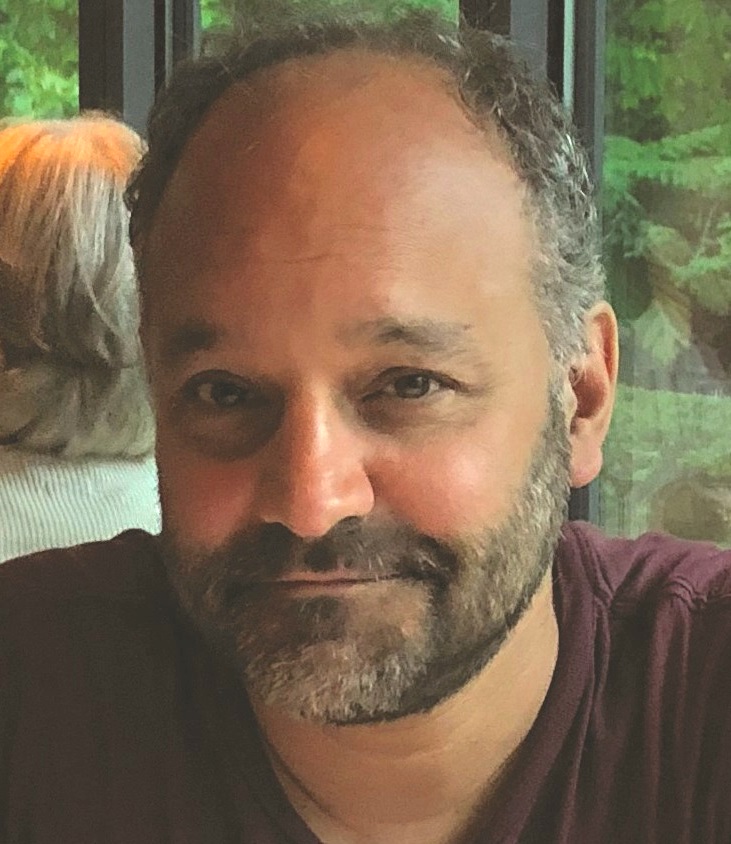
Ted Snider has a graduate degree in philosophy and is a regular columnist on U.S. foreign policy and history at Antiwar.com. He is also a frequent contributor to Truthout, Mondoweiss, CommonDreams, as well as other outlets.

TFF is independent of corporate and government funds and nobody is paid. We rely on you and that is how we can remain truly free in contrast to virtually all other social research today. And you finance wars by your tax money. We hope you will make a contribution in return for all the knowledge and public education we continue to produce, now in our fourth decade of existence. Many thanks!

Share

Leave a Reply

Your email address will not be published. Required fields are marked *

Related Posts

America’s Strategic Assault on Art, Academia, and the Imagination That Sustains Peace The United States once stood as a beacon of cultural audacity—a place where dissent could be beautiful, and beauty and innovation could challenge the present order of things. Its museums, universities, and artists helped inspire a worldwide imagination rooted in creative freedom and innovation. But today, under the Trump regime’s second term, those dynamic qualities are being systematically dismantled. Just read this. As Trump goes after the arts, many museums remain silent | CNN As CNN reports, the administration has launched an aggressive campaign to “eradicate improper ideology” from federally funded museums. Exhibitions involving race, gender, and identity are being censored or cancelled. Amy Sherald’s reimagining of the Statue of Liberty as a Black, trans woman was pulled from the Smithsonian after curators objected to its symbolism. Sherald warned that “history shows us what happens when governments demand loyalty...
Foreword The Board of The Transnational Foundation in Sweden has decided to publish an easy-to-read, scholarly anthology that addresses one of the most important – and potentially dangerous – issues of our time: Why are the political, economic, and medialised Western images of China so consistently negative – and what can you do to understand China better? These images may be expressions of a political will to present only various shades of grey and black with the aim of building a consciousness about China as an enemy and not a partner. They may also be seen as a sort of world-dominating ethos of ignorance based upon the assumption that “we’ve-got-nothing-to-learn-from-others,’ we are the teacher. Another possibility is that the West, deep down, feels that it is getting relatively weaker from a macro-historical perspective and comforts itself with denial and accusations against “the other” of being the reason for its manifest...
With a few words about the US’ domestic authoritarianism and NATO’s reckless expansion and re-armament where everything else but that is needed. George Orwell’s prophetic book, 1984, was written in 1948 and was published on 9 June 1949. So, today is the 76th anniversary of the publication of that important and prophetic book. The book centres on the consequences of the decline of democracy and the rise of totalitarianism, mass surveillance and repressive regimentation of people’s behaviour within society. The book was influenced by totalitarianism under Stalin and censorship and propaganda under the Nazis. The book is not about any particular society but refers to any society that falls under the influence of those oppressive policies. The book is basically about the power of propaganda and indoctrination employed in the service of authoritarian rulers and regimes. Orwell warned us that the manipulation of the public in the service of autocracies did...

Recent Articles

PressInfo # 141, December 21, 2001It’s time to prepare reconciliation between Albanians and Serbs PressInfo # 140, December 14, 2001Ibrahim Rugova’s decade-long leadership in Kosovo/a PressInfo # 139, 11. december, 2001En god nyhet: Jugoslaviens Sannings- och försoningskommission PressInfo # 139, 11. december, 2001Gode nyheder: Jugoslaviens Sandheds- og Forsoningskommission PressInfo # 139, December 11, 2001Good news: Yugoslavia’s Truth and Reconciliation Commission PressInfo # 138, November 8, 2001TFF co-founder PhD with thesis about young people with roots in other cultures PressInfo # 138, November 8, 2001TFF:s medstiftare doktor på avhandling om unga med ursprung i andra kulturer PressInfo # 137, October 17, 2001A new Marshall Plan: Advancing human security and controlling terrorism PressInfo # 136, October 15, 2001The UN and Annan really deserve it PressInfo # 135, October 10, 2001Preventing a terrorist mushroom cloud PressInfo # 134, 17 oktober, 2001Sverige og 11. september PressInfo # 134, October 9, 2001Sweden and September 11...
Peace is promoted by constructive proposals and dialogue Four preceding PressInfos have expressed concern over — and criticised — the ongoing, militarisation of the EU. Some will say: but there are no alternatives. We believe that there are always alternatives, that democracies are characterised by alternatives and choice, and that openly discussed alternatives will improve the quality and legitimacy of society’s decision–making. In addition, it is an intellectual and moral challenge to not only criticise but also be constructive. If we only tell people that we think they are wrong, they are not likely to listen. However, if we say: what are your views on this set of ideas and steps? — we may sometimes engage them in dialogue and sow a seed. Most people in power circles live their daily lives in in a time frame and a social space where certain ideas, viewpoints and concepts are just not...
Photos © TFF 2000 Read PressInfo 90 “Lift the Sanctions and Bring More Aid to Yugoslavia” See Pictures from Belgrade © TFF 2000 Please reprint, copy, archive, quote or re-post this item, but please retain the source.

TFF on Substack

Discover more from TFF Transnational Foundation & Jan Oberg.

Most Popular

PressInfo # 141, December 21, 2001It’s time to prepare reconciliation between Albanians and Serbs PressInfo # 140, December 14, 2001Ibrahim Rugova’s decade-long leadership in Kosovo/a PressInfo # 139, 11. december, 2001En god nyhet: Jugoslaviens Sannings- och försoningskommission PressInfo # 139, 11. december, 2001Gode nyheder: Jugoslaviens Sandheds- og Forsoningskommission PressInfo # 139, December 11, 2001Good news: Yugoslavia’s Truth and Reconciliation Commission PressInfo # 138, November 8, 2001TFF co-founder PhD with thesis about young people with roots in other cultures PressInfo # 138, November 8, 2001TFF:s medstiftare doktor på avhandling om unga med ursprung i andra kulturer PressInfo # 137, October 17, 2001A new Marshall Plan: Advancing human security and controlling terrorism PressInfo # 136, October 15, 2001The UN and Annan really deserve it PressInfo # 135, October 10, 2001Preventing a terrorist mushroom cloud PressInfo # 134, 17 oktober, 2001Sverige og 11. september PressInfo # 134, October 9, 2001Sweden and September 11...
Peace is promoted by constructive proposals and dialogue Four preceding PressInfos have expressed concern over — and criticised — the ongoing, militarisation of the EU. Some will say: but there are no alternatives. We believe that there are always alternatives, that democracies are characterised by alternatives and choice, and that openly discussed alternatives will improve the quality and legitimacy of society’s decision–making. In addition, it is an intellectual and moral challenge to not only criticise but also be constructive. If we only tell people that we think they are wrong, they are not likely to listen. However, if we say: what are your views on this set of ideas and steps? — we may sometimes engage them in dialogue and sow a seed. Most people in power circles live their daily lives in in a time frame and a social space where certain ideas, viewpoints and concepts are just not...
Photos © TFF 2000 Read PressInfo 90 “Lift the Sanctions and Bring More Aid to Yugoslavia” See Pictures from Belgrade © TFF 2000 Please reprint, copy, archive, quote or re-post this item, but please retain the source.
Read More
Imagen-thumbnail-The-Transnational-1
PressInfo # 141, December 21, 2001It’s time to prepare reconciliation between Albanians and Serbs PressInfo # 140, December 14, 2001Ibrahim Rugova’s decade-long leadership in Kosovo/a PressInfo # 139, 11. december, 2001En god nyhet: Jugoslaviens Sannings- och försoningskommission PressInfo # 139, 11. december, 2001Gode nyheder: Jugoslaviens Sandheds- og Forsoningskommission PressInfo # 139, December 11, 2001Good news: Yugoslavia’s Truth and Reconciliation Commission PressInfo # 138, November 8, 2001TFF co-founder PhD with thesis about young people with roots in other cultures PressInfo # 138, November 8, 2001TFF:s medstiftare doktor på avhandling om unga med ursprung i andra kulturer PressInfo # 137, October 17, 2001A new Marshall Plan: Advancing human security and controlling terrorism PressInfo # 136, October 15, 2001The UN and Annan really deserve it PressInfo # 135, October 10, 2001Preventing a terrorist mushroom cloud PressInfo # 134, 17 oktober, 2001Sverige og 11. september PressInfo # 134, October 9, 2001Sweden and September 11...
Imagen-thumbnail-The-Transnational-1
Peace is promoted by constructive proposals and dialogue Four preceding PressInfos have expressed concern over — and criticised — the ongoing, militarisation of the EU. Some will say: but there are no alternatives. We believe that there are always alternatives, that democracies are characterised by alternatives and choice, and that openly discussed alternatives will improve the quality and legitimacy of society’s decision–making. In addition, it is an intellectual and moral challenge to not only criticise but also be constructive. If we only tell people that we think they are wrong, they are not likely to listen. However, if we say: what are your views on this set of ideas and steps? — we may sometimes engage them in dialogue and sow a seed. Most people in power circles live their daily lives in in a time frame and a social space where certain ideas, viewpoints and concepts are just not...
Imagen-thumbnail-The-Transnational-1
Photos © TFF 2000 Read PressInfo 90 “Lift the Sanctions and Bring More Aid to Yugoslavia” See Pictures from Belgrade © TFF 2000 Please reprint, copy, archive, quote or re-post this item, but please retain the source.
Imagen-thumbnail-The-Transnational-1
Av FRANK SØHOLM GREVIL 16 augusti 2004  Vi er nu nået til tredje akt i det absurde teaterstykke, der i analogi med de store skueprocesser i Moskva 1936-38 er blevet døbt ‘Grevil-sagen’. Første akt bestod i min anonyme fremlæggelse af egenhændigt nedklassificerede rapporter i Berlingske Tidende i februar og marts. Andet akt udgjordes af min fremtræden med navn og billede i Information i april samt den efterfølgende mediestorm, som uden min direkte medvirken kostede en forsvarsminister taburetten samt en sigtelse for brud på tavshedspligten. Tredje akt bliver en retssag, hvor jeg står tiltalt for at have overtrådt straffelovens bestemmelser om uberettiget videregivelse eller udnyttelse af fortrolige oplysninger. Statsanklageren har ovenikøbet valgt at påberåbe sig særligt skærpende omstændigheder. Da jeg aldrig har modtaget betaling for at stille rapporterne til rådighed eller lade mig interviewe, må det skærpende bestå i, at “videregivelsen eller udnyttelsen er sket under sådanne omstændigheder, at det påfører...
Imagen-thumbnail-The-Transnational-1
Af Svenska Irakkommittén mot de Ekonomiska Sanktionerna (SIES) 13 september 2002 FN:s ekonomiska sanktioner mot Irak har nu pågått i tolv år och drabbat det irakiska folket med svåra lidanden. Enligt FN:s egna siffror har mer än 1,5 miljoner människor, varav ca 600 000 barn, dött som en direkt följd av sanktionerna. Dessutom har ett lågintensivt bombkrig mot landet pågått under dessa år. Av all denna förödelse- orsakad huvudsakligen av amerikansk och brittisk politik- har Saddam Husseins brutala och diktatoriska regim snarast stärkts än försvagats. Nu förbereder USA under president Bushs ledning ett storskaligt bombkrig mot Irak som kommer att innebära ett ännu större lidande för civilbefolkningen. Ett sådant krig kommer dessutom att ytterligare undergräva freden och säkerheten i världen. Att upprätta en demokratisk regim i Irak är det irakiska folkets angelägenhet och får enligt folkrätten inte ske med krigshandlingar utifrån. Folkrätten och FN:s stadgar måste respekteras. Vi vädjar till...