
Some Ideas on China and World Harmony

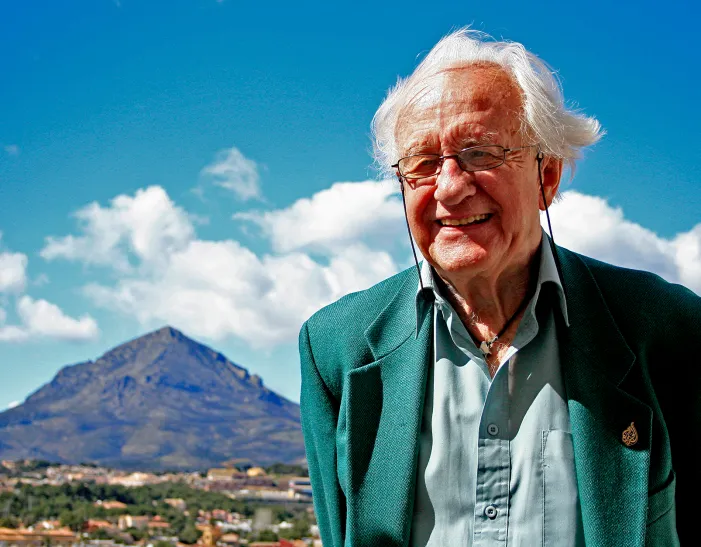
Johan Galtung wrote this article in 2010, the original here. It is remarkable, bordering on the prophetic, that Galtung already suggested – in section 4 below – what closely resembles China’s and President Xi Jinping’s Belt and Road Initiative (BRI), which was launched in 2013.

With the current regionalization of the world where and even the biggest states will find their place, an East Asian Community of the two Chinas, the two Koreas and the three Japans (with the Ryu Kyu Islands–Okinawa–and an Ainu region both at high autonomy levels), is inevitable.  The European Community-Union got started around steel and coal, ESC; how about starting with the tricky issues, like right now Diaoyu, of the islet clusters and their economic zones in the East Asian Sea? 

An East Asian Sea Authority could declare joint sovereignty, and go beyond joint ventures, exploiting and protecting resources together, the costs and benefits being distributed according to a formula reflecting past uses of the areas.  In Europe the Danube Commission of 1856, with eleven state members and four observers, has served such purposes well, if not unproblematically.  So did the ESCC.

With the expansion of NATO eastward, and the US-Japan Security Treaty de facto westward, with South Korea and Taiwan and deployment patterns for Japan’s SDF, SCO was bound to come.  And bound to expand (currently six members, five observers with Mongolia and Sri Lanka) and a new opening as dialogue partners, gradually filling the gap of a missing Organization for Security and Cooperation in Asia-Pacific. SCO focuses on economic development, and military cooperation in anti-terrorism (China Daily News 11-09-10 reports a chiefs of general staffs of member countries meeting in Almaty); maybe somewhat single mindedly focused on economic development as the key to reducing terrorism. Political and cultural autonomy issues, being ruled by one’s own kind, if not necessarily as an independent country, may be as or more important. And “soft” economic and cultural power can be even harder than military power.

The SCO sees the situation in Afghanistan as a threat to neighboring countries, including China, exporting of terrorism, drugs and criminality; the remedy being development.  With that atrocious war slowly coming to an end, with US withdrawal on the horizon, SCO countries will play a major role in Afghanistan, facilitating more autonomy for all nations within the country, open borders to their co-nationals in neighboring countries, equal development for all nations and for both genders, and peacekeeping (not peace enforcing).  For this SCO might cooperate with the ECOEconomic Cooperation Organization of Turkey, Iran and Pakistan, founded in 1985 (as a successor to the Regional Cooperation for Development 1964-79) to help Afghanistan recover and develop in all regards.  And, how about expanding the China-Kazakhstan railroad, linking Beijing and Ankara-Istanbul through a neutral Afghanistan, having Afghanistan join the world through its SCO-ECO neighbors?

Roughly speaking from 500 to 1500 the trade from China via West Asia to East Africa (Somalia) was the overwhelming part of the world trade volume, Europe being inward-looking, the Atlantic and the Pacific oceans not yet being used.  Considerably more than silk was traded, and the “road” was mainly by the East Asian sea and the Indian Ocean.  The traders were Buddhists in the East and Muslims in the West, till the whole pattern was destroyed by the Portuguese, the English and others, in the name of their kings and companies.  Fortunately, that colonization is over.

How about expanding that “road” for goods, services, people, through Africa, and the Atlantic, to Latin America by road-rail from Dar es-Sala’am to Kinshasa’s port, saving the voyage round South Africa, opening Africa East-West and the world South-South?  Not substituting for the North-South trade established by colonialism, but complementing it?  Weaving the world better together?

The world goes through huge urbanization, and China, bridging dichotomies, is creating urban villages (that one has only 580 houses, for 3,000 inhabitants), combining collective agriculture and land ownership, with a cooperative construction company for building in Beijing and anywhere, with a former cement worker as highly entrepreneurial CEO.  The village also offers houses for retired people and others. Such imaginative bridging is very much needed all over the world, like in a Cuba in search of some kind of “capi-communism”.

In an excellent book with that title, China Society for Human Rights Studies, Beijing 2007, key concerns at individual and global levels are linked creatively.   For a world dialogue all parties should embrace both the civil-political and the economic-social-cultural conventions of 16 December 1966, and look for ways of implementing the third generation of human rights to peace, development and clean environment.  With a focus on the international, not only domestic, violations of human rights.

Academic peace studies in China could build on China’s rich harmony-focused tradition, and the 1954-55 peace pillar of cooperation with all for mutual and equal benefit.  Studies of reconciliation, mediation and peace construction would be enriched by opening for Chinese thought, and vice versa.

China should become better at explaining herself, both in a Western market-growth-democracy-human rights discourse, and in a Chinese discourse of both-and, yin-yang dialectics, distribution and social and world harmony.  An oriental Davos in Hong Kong in dialogue with that Western one; and a global TV, more like multi-angle Al Jazeera than BBC-CNN, would give the world a strong, not abrasive, Chinese voice.  With very much to say that the world in general, and the West in particular, badly need to hear.
Share

Leave a Reply

Your email address will not be published. Required fields are marked *

Related Posts

PressInfo # 141, December 21, 2001It’s time to prepare reconciliation between Albanians and Serbs PressInfo # 140, December 14, 2001Ibrahim Rugova’s decade-long leadership in Kosovo/a PressInfo # 139, 11. december, 2001En god nyhet: Jugoslaviens Sannings- och försoningskommission PressInfo # 139, 11. december, 2001Gode nyheder: Jugoslaviens Sandheds- og Forsoningskommission PressInfo # 139, December 11, 2001Good news: Yugoslavia’s Truth and Reconciliation Commission PressInfo # 138, November 8, 2001TFF co-founder PhD with thesis about young people with roots in other cultures PressInfo # 138, November 8, 2001TFF:s medstiftare doktor på avhandling om unga med ursprung i andra kulturer PressInfo # 137, October 17, 2001A new Marshall Plan: Advancing human security and controlling terrorism PressInfo # 136, October 15, 2001The UN and Annan really deserve it PressInfo # 135, October 10, 2001Preventing a terrorist mushroom cloud PressInfo # 134, 17 oktober, 2001Sverige og 11. september PressInfo # 134, October 9, 2001Sweden and September 11...
Peace is promoted by constructive proposals and dialogue Four preceding PressInfos have expressed concern over — and criticised — the ongoing, militarisation of the EU. Some will say: but there are no alternatives. We believe that there are always alternatives, that democracies are characterised by alternatives and choice, and that openly discussed alternatives will improve the quality and legitimacy of society’s decision–making. In addition, it is an intellectual and moral challenge to not only criticise but also be constructive. If we only tell people that we think they are wrong, they are not likely to listen. However, if we say: what are your views on this set of ideas and steps? — we may sometimes engage them in dialogue and sow a seed. Most people in power circles live their daily lives in in a time frame and a social space where certain ideas, viewpoints and concepts are just not...
Photos © TFF 2000 Read PressInfo 90 “Lift the Sanctions and Bring More Aid to Yugoslavia” See Pictures from Belgrade © TFF 2000 Please reprint, copy, archive, quote or re-post this item, but please retain the source.

Recent Articles

PressInfo # 141, December 21, 2001It’s time to prepare reconciliation between Albanians and Serbs PressInfo # 140, December 14, 2001Ibrahim Rugova’s decade-long leadership in Kosovo/a PressInfo # 139, 11. december, 2001En god nyhet: Jugoslaviens Sannings- och försoningskommission PressInfo # 139, 11. december, 2001Gode nyheder: Jugoslaviens Sandheds- og Forsoningskommission PressInfo # 139, December 11, 2001Good news: Yugoslavia’s Truth and Reconciliation Commission PressInfo # 138, November 8, 2001TFF co-founder PhD with thesis about young people with roots in other cultures PressInfo # 138, November 8, 2001TFF:s medstiftare doktor på avhandling om unga med ursprung i andra kulturer PressInfo # 137, October 17, 2001A new Marshall Plan: Advancing human security and controlling terrorism PressInfo # 136, October 15, 2001The UN and Annan really deserve it PressInfo # 135, October 10, 2001Preventing a terrorist mushroom cloud PressInfo # 134, 17 oktober, 2001Sverige og 11. september PressInfo # 134, October 9, 2001Sweden and September 11...
Peace is promoted by constructive proposals and dialogue Four preceding PressInfos have expressed concern over — and criticised — the ongoing, militarisation of the EU. Some will say: but there are no alternatives. We believe that there are always alternatives, that democracies are characterised by alternatives and choice, and that openly discussed alternatives will improve the quality and legitimacy of society’s decision–making. In addition, it is an intellectual and moral challenge to not only criticise but also be constructive. If we only tell people that we think they are wrong, they are not likely to listen. However, if we say: what are your views on this set of ideas and steps? — we may sometimes engage them in dialogue and sow a seed. Most people in power circles live their daily lives in in a time frame and a social space where certain ideas, viewpoints and concepts are just not...
Photos © TFF 2000 Read PressInfo 90 “Lift the Sanctions and Bring More Aid to Yugoslavia” See Pictures from Belgrade © TFF 2000 Please reprint, copy, archive, quote or re-post this item, but please retain the source.

TFF on Substack

Discover more from TFF Transnational Foundation & Jan Oberg.

Most Popular

PressInfo # 141, December 21, 2001It’s time to prepare reconciliation between Albanians and Serbs PressInfo # 140, December 14, 2001Ibrahim Rugova’s decade-long leadership in Kosovo/a PressInfo # 139, 11. december, 2001En god nyhet: Jugoslaviens Sannings- och försoningskommission PressInfo # 139, 11. december, 2001Gode nyheder: Jugoslaviens Sandheds- og Forsoningskommission PressInfo # 139, December 11, 2001Good news: Yugoslavia’s Truth and Reconciliation Commission PressInfo # 138, November 8, 2001TFF co-founder PhD with thesis about young people with roots in other cultures PressInfo # 138, November 8, 2001TFF:s medstiftare doktor på avhandling om unga med ursprung i andra kulturer PressInfo # 137, October 17, 2001A new Marshall Plan: Advancing human security and controlling terrorism PressInfo # 136, October 15, 2001The UN and Annan really deserve it PressInfo # 135, October 10, 2001Preventing a terrorist mushroom cloud PressInfo # 134, 17 oktober, 2001Sverige og 11. september PressInfo # 134, October 9, 2001Sweden and September 11...
Peace is promoted by constructive proposals and dialogue Four preceding PressInfos have expressed concern over — and criticised — the ongoing, militarisation of the EU. Some will say: but there are no alternatives. We believe that there are always alternatives, that democracies are characterised by alternatives and choice, and that openly discussed alternatives will improve the quality and legitimacy of society’s decision–making. In addition, it is an intellectual and moral challenge to not only criticise but also be constructive. If we only tell people that we think they are wrong, they are not likely to listen. However, if we say: what are your views on this set of ideas and steps? — we may sometimes engage them in dialogue and sow a seed. Most people in power circles live their daily lives in in a time frame and a social space where certain ideas, viewpoints and concepts are just not...
Photos © TFF 2000 Read PressInfo 90 “Lift the Sanctions and Bring More Aid to Yugoslavia” See Pictures from Belgrade © TFF 2000 Please reprint, copy, archive, quote or re-post this item, but please retain the source.
Read More
Imagen-thumbnail-The-Transnational-1
PressInfo # 141, December 21, 2001It’s time to prepare reconciliation between Albanians and Serbs PressInfo # 140, December 14, 2001Ibrahim Rugova’s decade-long leadership in Kosovo/a PressInfo # 139, 11. december, 2001En god nyhet: Jugoslaviens Sannings- och försoningskommission PressInfo # 139, 11. december, 2001Gode nyheder: Jugoslaviens Sandheds- og Forsoningskommission PressInfo # 139, December 11, 2001Good news: Yugoslavia’s Truth and Reconciliation Commission PressInfo # 138, November 8, 2001TFF co-founder PhD with thesis about young people with roots in other cultures PressInfo # 138, November 8, 2001TFF:s medstiftare doktor på avhandling om unga med ursprung i andra kulturer PressInfo # 137, October 17, 2001A new Marshall Plan: Advancing human security and controlling terrorism PressInfo # 136, October 15, 2001The UN and Annan really deserve it PressInfo # 135, October 10, 2001Preventing a terrorist mushroom cloud PressInfo # 134, 17 oktober, 2001Sverige og 11. september PressInfo # 134, October 9, 2001Sweden and September 11...
Imagen-thumbnail-The-Transnational-1
Peace is promoted by constructive proposals and dialogue Four preceding PressInfos have expressed concern over — and criticised — the ongoing, militarisation of the EU. Some will say: but there are no alternatives. We believe that there are always alternatives, that democracies are characterised by alternatives and choice, and that openly discussed alternatives will improve the quality and legitimacy of society’s decision–making. In addition, it is an intellectual and moral challenge to not only criticise but also be constructive. If we only tell people that we think they are wrong, they are not likely to listen. However, if we say: what are your views on this set of ideas and steps? — we may sometimes engage them in dialogue and sow a seed. Most people in power circles live their daily lives in in a time frame and a social space where certain ideas, viewpoints and concepts are just not...
Imagen-thumbnail-The-Transnational-1
Photos © TFF 2000 Read PressInfo 90 “Lift the Sanctions and Bring More Aid to Yugoslavia” See Pictures from Belgrade © TFF 2000 Please reprint, copy, archive, quote or re-post this item, but please retain the source.
Imagen-thumbnail-The-Transnational-1
Av FRANK SØHOLM GREVIL 16 augusti 2004  Vi er nu nået til tredje akt i det absurde teaterstykke, der i analogi med de store skueprocesser i Moskva 1936-38 er blevet døbt ‘Grevil-sagen’. Første akt bestod i min anonyme fremlæggelse af egenhændigt nedklassificerede rapporter i Berlingske Tidende i februar og marts. Andet akt udgjordes af min fremtræden med navn og billede i Information i april samt den efterfølgende mediestorm, som uden min direkte medvirken kostede en forsvarsminister taburetten samt en sigtelse for brud på tavshedspligten. Tredje akt bliver en retssag, hvor jeg står tiltalt for at have overtrådt straffelovens bestemmelser om uberettiget videregivelse eller udnyttelse af fortrolige oplysninger. Statsanklageren har ovenikøbet valgt at påberåbe sig særligt skærpende omstændigheder. Da jeg aldrig har modtaget betaling for at stille rapporterne til rådighed eller lade mig interviewe, må det skærpende bestå i, at “videregivelsen eller udnyttelsen er sket under sådanne omstændigheder, at det påfører...
Imagen-thumbnail-The-Transnational-1
Af Svenska Irakkommittén mot de Ekonomiska Sanktionerna (SIES) 13 september 2002 FN:s ekonomiska sanktioner mot Irak har nu pågått i tolv år och drabbat det irakiska folket med svåra lidanden. Enligt FN:s egna siffror har mer än 1,5 miljoner människor, varav ca 600 000 barn, dött som en direkt följd av sanktionerna. Dessutom har ett lågintensivt bombkrig mot landet pågått under dessa år. Av all denna förödelse- orsakad huvudsakligen av amerikansk och brittisk politik- har Saddam Husseins brutala och diktatoriska regim snarast stärkts än försvagats. Nu förbereder USA under president Bushs ledning ett storskaligt bombkrig mot Irak som kommer att innebära ett ännu större lidande för civilbefolkningen. Ett sådant krig kommer dessutom att ytterligare undergräva freden och säkerheten i världen. Att upprätta en demokratisk regim i Irak är det irakiska folkets angelägenhet och får enligt folkrätten inte ske med krigshandlingar utifrån. Folkrätten och FN:s stadgar måste respekteras. Vi vädjar till...
