
Sinologist sees China changing the world
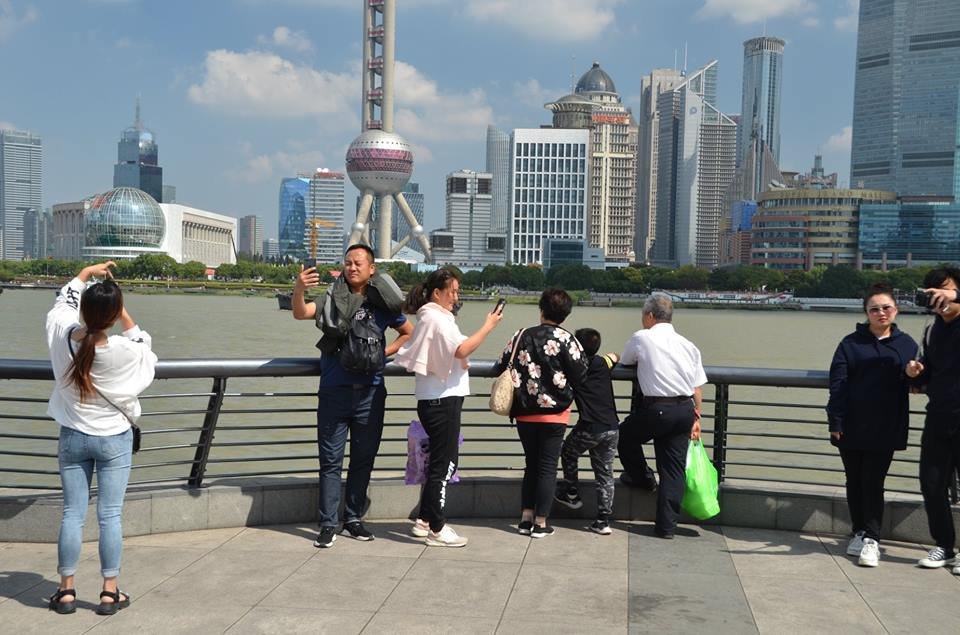
Photo from Shanghai by Jan Oberg 2018


By Cecily Liu in London from China Daily

October 22, 2018

Esteemed author says nation’s development model can be a blueprint for emerging economies

China’s rapid growth since the reform and opening-up process began in 1978 has not only been an economic miracle for the nation, but it has also offered a new development model for other emerging economies, said Martin Jacques, author of the global bestseller When China Rules the World.

In doing so, China has proved the inaccuracy of the previous consensus that the Western model of development was the only path to success.

Effectively, Jacques said, China has inspired other emerging countries to explore development paths that are suitable for their own situations.

Originally published by chinadaily.com

“The achievements of China’s reform and opening-up are very simple: one, the transformation of China; two, the transformation of the world,” said the 73-year-old from his apartment in London’s Hampstead, where piles of books and notes on China lay scattered across his desk, bookshelves and the floor.

Jacques is one of Britain’s best-known Sinologists. Born in 1945 in Coventry, he had a decadeslong distinguished career in journalism before becoming an author.

He first rose to prominence as editor of Marxism Today, a position he held for 14 years from the late 1970s. He turned the publication from an obscure left-wing political magazine to one containing views from across the political spectrum.

Jacques then went on to be deputy editor of The Independent in the mid-1990s and now combines being a high-profile columnist with lecturing around the world.

But what really made him world famous was his 2009 book When China Rules the World, which has been translated into 15 languages and has sold 350,000 copies. His 2010 TED Salon speech in London on understanding the rise of China has received more than 2.7 million views on YouTube.
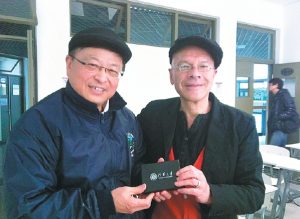
Jacques poses with professor Yan Xuetong, dean of the Institute of International Relations, Tsinghua University, in 2011. Photo credit China Daily

His book correctly predicted China’s ascent to global leadership, at a time when the trend was not so obvious. More precisely, it predicted that by 2027, China’s economy would be bigger than that of the United States. His book also argued that China’s governance system was an effective alternative to Western liberal democracy and represented a new form of modernity.

Jacques argued against the prevailing consensus that China’s development model would become more like that of the West as it grew economically. Time has proved him right – China has cemented its economic strength internationally without becoming a mirror image of the West.

In addition, China is now using its international influence to lead on multilateral issues, such as globalization, climate change and global governance, in its own unique way. In order to share its development experiences with other emerging economies and improve global trade links, China has championed the Belt and Road Initiative and the Asian Infrastructure Investment Bank.

“China is going to be a very different kind of great power,” he said. “The Belt and Road is a powerful example of China trying to find a new relationship (that can benefit both China and other countries). This notion is very different from Western colonial thinking.”

The AIIB, which focuses on financing infrastructure projects in Asia, represents the interests of more than 80 member countries through a pluralistic approach. The BRI, which aims to improve trade and connectivity between Asia, Africa and Europe through infrastructure investment, has also attracted keen participation from public-and private-sector players globally.

In Jacques’ view, these exciting initiatives, supported by China’s economic strength, challenge the post-Cold War mentality that divided the world into the West and the rest.

For many, the fall of the Berlin Wall in 1989 and the disintegration of the Soviet Union in 1991 proved that socialist countries could not make sufficient economic progress without adopting the development model of the West.

“That was the great and final victory of the West,” Jacques said. “It’s strange now to think that. And if you look back now, it’s obvious, in my view, that 1978 was a far more important year in world history than 1989 or 1991.”

But China’s economic success proved that such progress can be made while the government maintains an important role in guiding the country’s direction.

“We must always remember that only about 15 percent of the world’s population lives in the developed world, which is essentially the West plus Japan,” he said. “Eighty-five percent of the world’s population lives in the developing world. Until quite recently, the world was still a Western world. China’s rise gave the developing world an alternative place to look, for development, for inspiration.”

If you are always with someone of the same culture you are an insider and never looking from the outside.

Additionally, the fact China grew from being a poor, developing country to a strong economic power means it has accumulated significant lessons and experiences that could be applicable to other developing countries today.

“China is a developing country and can understand the problems of development in a totally different way,” he said. “The United States cannot relate to (the developing world) in the way that China can.”

Although Jacques is now a firm advocate of China’s incredible potential, he admits to having been somewhat ignorant of the East until 1993, when he visited China, Singapore, and Malaysia for a holiday.

In China, he saw construction cranes working round the clock, roads streaming with trucks and carts, and women balancing goods on the ends of bamboo poles.

“It absolutely seized my mind,” he said. “Guangdong province was a sort of huge building site with land being cleared as far as you could see. So many people were in motion along the road. It was so obvious this was a huge, important historical moment I was watching.”

From there, Jacques has watched China transform on his subsequent trips.

“When you go to any city in China now, you see a modern city,” he said. “Living standards have clearly been transformed.”

While on holiday in 1993, he met his wife, Malaysian-Indian lawyer Harinder Veriah, on the island of Tioman, off the east coast of Malaysia. Veriah, who died in 2000, inspired Jacques to understand more about Asia, and made him more determined to write a book that explained his discoveries to the world.

“She taught me to see the world from a non-Western perspective,” he said. “If you are always with someone of the same culture you are an insider and never looking from the outside. She helped me see my country from an outsider’s perspective.”

In the years that followed, Jacques frequently traveled to China and other East Asian countries to research his book. When he started, the book’s working title was “The End of the Western World”. But gradually, as he worked on it, he realized that the book had to be primarily about China, which led to its new title, When China Rules the World.

Looking back, he stressed the crucial role of China’s reform and opening-up policies in shaping the country’s economic achievements and its global influence.

In particular, he marvels at pioneering leader Deng Xiaoping, who is credited with turning China’s planned economy into a market-driven one and for strengthening China’s exchange efforts with the world.

He praised Deng’s courage in the way he “fired the starting gun” for China’s transformation at a moment of significant change in Chinese society.

In particular, Deng transformed the world’s understanding of a socialist country. Instead of following the inward-looking model of the Soviet Union, Deng advocated an unprecedented outward approach.

“Deng Xiaoping said, ‘We want to be a part of the world, we have to learn from the rest of the world, we must be open to the rest of the world,'” Jacques said. “That is fantastic. Now, we can see how important Deng is as a socialist thinker, who is also a global thinker, a leader for everyone.”

For Jacques, Deng’s remarks exhibit tremendous confidence, something that is impressive, considering China was then a poor country.

“The idea that you can measure against the rest of the world, and be willing to learn straight away, it’s a confident attitude,” he said.

China’s recent history details a success story. In 1978, the size of China’s economy was just one-40th of that of the US, but during the past 40 years, China’s GDP has grown by an average of about 9.5 percent a year. By 2017, the size of China’s economy had grown to more than three-fifths that of the US, according to International Monetary Fund estimates.

During the past four decades, China has also succeeded in lifting more than 740 million people out of poverty.

Jacques said he feels confident that China will continue to develop. He said its GDP growth rate may drop to a more sustainable level over the long term, but its development will increasingly focus on innovation and quality growth.

He recalled that when he first published When China Rules the World, one question he was often asked at author talks was how China could break free from the need to imitate advanced economies’ technology, and what would happen if the country reached the point where it was inventing its own technology.

“I never hear that question anymore, because the answer is clear with the transformation of the technology companies in China,” Jacques said.

For instance, in the second quarter of this year, China’s Huawei overtook Apple to become the world’s second-largest smartphone seller.

In the pioneering sector of mobile payments, China has emerged as the biggest market, worth 40.36 trillion yuan ($5.90 trillion) in the first quarter of this year. Its two biggest payment companies, WeChat Pay and Alipay, now have 900 million and 500 million active users respectively. These numbers eclipse Apple Pay’s 127 million active users.

Accompanying these technology innovations is China’s rapidly strengthening intellectual property system and its soaring number of patent registrations. Chinese companies’ filings with the European Patent Office in 2017 were up 16.6 percent year-on-year, compared with the global average of 3.9 percent.

This year, for the first time, Huawei topped the EPO’s league table by number of patents filed by a single company, ahead of Siemens and LG.

While China’s development path shows a rosy picture full of excitement, Jacques also warns that one challenge China will encounter in the future is the antagonism it will attract from Western countries fearful of being challenged.

Equally, the novelty of China-proposed initiatives such as the BRI could lead to questions and doubts. US President Donald Trump’s moves to instigate a large-scale trade confrontation with China this year is evidence of the sort of external pressure China must learn to face, he said.

The trade dispute, which started this year, has seen the US slap tariffs on billions of dollars of Chinese imports, and China doing the same in retaliation. Many companies have already been negatively impacted, including US companies that rely on the supply chain in China.

Jacques said he feels that the attitude in the US under Trump is based on a recognition that China has been successful, and that the antagonism US administration has expressed toward China has, in a sense, spoken of the success of China.

“As China has risen, its relationship with the US has become more difficult,” Jacques said. “For the US, it’s one thing to look relatively benignly on China when it’s well behind, but when China is not well behind, but is a competitor who has an alternative view of the world, then that’s a different game.”

He said that as China experiences rapid transformation and gains global influence, it must find its own new position in the world and ensure that other countries are comfortable with it.

“China has got to find a way of dealing with it,” he said. “By and large, I think it’s succeeding in doing it, but it’s not a simple matter.”

Originally published at chinadaily.com


Martin Jacques Biography
Author of When China Rules the World 
BORN:
1945 in Coventry, England
Education
1957-64:King Henry VIII School, Coventry
1968: Manchester University,BA in economics (first class honors)
1976: King’s College, Cambridge, PhDCAREER:
1965-90: Executive committee member,Communist Party of Great Britain
1969-71: Tutor in economic history,King’s College, Cambridge
1971-77: Editor of Marxism Today
1993: Editor and founder of London-basedthink tank Demos
1994-96: Deputy editor of The Independent
2003-08: Visiting fellow, London School ofEconomics Asian Research Center
2009: Author of When China Rules the World
2010-11: Bosch public policy fellow at theTransatlantic Academy, Washington
2013-present: Senior fellow at the Departmentof Politics and International Studies, CambridgeUniversity
2016-present: Visiting professor, Tsinghua University, Beijing.

No data was found

Share

Leave a Reply

Your email address will not be published. Required fields are marked *

Related Posts

Editorial for Transcend Media Service, TMS, and published in an edited Q & A version by the China Social Science Network-China Social Science News. See also this follow-up, “Condemn all UN member states: They spend 100 times more on militarism than on the entire UN system.” The UN has been extremely important over the last 80 years in terms of, for instance, global dialogue, multi-dimensional development, international law, peace-keeping, normativity, violence condemnation, and ethics. It has been the place to hold member states accountable. The UN Charter is the most Gandhian document ever signed by the world’s governments. If the great majority of member states lived up to their obligations in accordance with the UN Charter and including the resolutions they have signed up to, the world would be a much more peaceful, just, democratic, and lawful place. Regrettably, there are several reasons why the world is not in accordance with those fine Charter norms and provisions:a) The majority...
Professor Zhang Weiwei is a highly respected Chinese intellectual and professor at Fudan University in Shanghai. He is the director of its China Institute and also runs a series of conversations with many different people around the world. Here is what came out of their meetings there and in Skopje, Macedonia in October 2024: & ◪ As you can see, also at the end of the second one, we both enjoy win-win exchanges like these about world order issues. Zhang Weiwei is known for using videos and social media to reach a large audience in China and worldwide. We suggest you see many more of Zhang Weiwei’s conversations – like recently with Professor Jeffrey Sachs – on the Thinkers’ Forum on YouTube. PS TFF posts hundreds of videos, its own and those of others, in our Video Collections on TFF Substack – including those that appear on YouTube. However, TFF...
Launched on November 17, 2024Updated with new materials regularly TFF Board members Thore Vest. Everywhere, the delegation was met with a sincere wish to develop knowledge, dialogue, cooperative projects, and initiatives based on citizens’ diplomacy – in general, but with the West in particular. For more, see “Report from the Nordic delegation to China’s Xinjiang Province, September 7-15, 2024.” While the delegation was in Xinjiang, various ideas were already being discussed from the local to the top level, i.e., with the governor and party leaders of Xinjiang. The two TFF Associates suggested that TFF set up a special section – in addition to its “China and Silk” – where various quality materials about Xinjiang would regularly be published to promote public education about Xinjiang, particularly its contemporary development – worldwide but in the West in particular. This is now a reality – as can be seen below – but it...

Recent Articles

Gandhi, Arun. Lord Richard Attenborough. Kasturba: a lifeNew Delhi: Penguin Books Ltd., 2000.315 pp, 295 Indian Rs, US $22.51 January 29, 2002 Arun Gandhi, grandson to Mohandas and Kasturba, has written a thorough account of Kasturba’s life. Arun begins with a description of Kasturba’s childhood in Porbandar in the late1800s, before she met Mohandas. By having chosen to embark on difficult research into his grandmother’s life, including her first years which are not well-documented, Arun ensures that the reader receives an intimate and life-long portrait of this amazing woman. Kasturba is presented as a lively woman &endash; obedient, yet with a mind of her own. As the relationship between Kasturba and Mohandas developed, Arun maintains that Kasturba’s influence over Mohandas in her own quiet way also grew, to which some of Mohandas’ writings also attest.  Arun paints a vivid picture of the beginnings of Mohandas’ non-violence movement in South Africa, a...
In response to an urgent Appeal from all the living Nobel Peace Prize Laureates, the General Assembly of the United Nations, on November 1998, unanimously declared the first decade of the twenty-first century to be The Decade for a Culture of Peace and Nonviolence. While people are naturally concerned about the amount of violence in our world and how it threatens our future, the Nobel Laureates are right to remind us of the potential of nonviolence and our calling to build a culture of peace and nonviolence.  The twentieth century is instructive in the way that the philosophy and practice of nonviolence have begun to flourish and in the way that nonviolent movements have had an exponential growth across the world. Mohandas Gandhi and Martin Luther King, Jr. are the most famous nonviolent leaders but many have built upon the paths they charted as in country after country, tyrannies and...
We know that medical personnel have failed to report to higher authorities wounds that were clearly caused by torture and that they have neglected to take steps to interrupt this torture. In addition, they have turned over prisoners’ medical records to interrogators who could use them to exploit the prisoners’ weaknesses or vulnerabilities. We have not yet learned the extent of medical involvement in delaying and possibly falsifying the death certificates of prisoners who have been killed by torturers. A May 22 article on Abu Ghraib in the New York Times states that “much of the evidence of abuse at the prison came from medical documents” and that records and statements “showed doctors and medics reporting to the area of the prison where the abuse occurred several times to stitch wounds, tend to collapsed prisoners or see patients with bruised or reddened genitals.” http://www.truthout.org/docs_04/080604J.shtml#16 According to the article, two doctors who...

TFF on Substack

Discover more from TFF Transnational Foundation & Jan Oberg.

Most Popular

Gandhi, Arun. Lord Richard Attenborough. Kasturba: a lifeNew Delhi: Penguin Books Ltd., 2000.315 pp, 295 Indian Rs, US $22.51 January 29, 2002 Arun Gandhi, grandson to Mohandas and Kasturba, has written a thorough account of Kasturba’s life. Arun begins with a description of Kasturba’s childhood in Porbandar in the late1800s, before she met Mohandas. By having chosen to embark on difficult research into his grandmother’s life, including her first years which are not well-documented, Arun ensures that the reader receives an intimate and life-long portrait of this amazing woman. Kasturba is presented as a lively woman &endash; obedient, yet with a mind of her own. As the relationship between Kasturba and Mohandas developed, Arun maintains that Kasturba’s influence over Mohandas in her own quiet way also grew, to which some of Mohandas’ writings also attest.  Arun paints a vivid picture of the beginnings of Mohandas’ non-violence movement in South Africa, a...
In response to an urgent Appeal from all the living Nobel Peace Prize Laureates, the General Assembly of the United Nations, on November 1998, unanimously declared the first decade of the twenty-first century to be The Decade for a Culture of Peace and Nonviolence. While people are naturally concerned about the amount of violence in our world and how it threatens our future, the Nobel Laureates are right to remind us of the potential of nonviolence and our calling to build a culture of peace and nonviolence.  The twentieth century is instructive in the way that the philosophy and practice of nonviolence have begun to flourish and in the way that nonviolent movements have had an exponential growth across the world. Mohandas Gandhi and Martin Luther King, Jr. are the most famous nonviolent leaders but many have built upon the paths they charted as in country after country, tyrannies and...
We know that medical personnel have failed to report to higher authorities wounds that were clearly caused by torture and that they have neglected to take steps to interrupt this torture. In addition, they have turned over prisoners’ medical records to interrogators who could use them to exploit the prisoners’ weaknesses or vulnerabilities. We have not yet learned the extent of medical involvement in delaying and possibly falsifying the death certificates of prisoners who have been killed by torturers. A May 22 article on Abu Ghraib in the New York Times states that “much of the evidence of abuse at the prison came from medical documents” and that records and statements “showed doctors and medics reporting to the area of the prison where the abuse occurred several times to stitch wounds, tend to collapsed prisoners or see patients with bruised or reddened genitals.” http://www.truthout.org/docs_04/080604J.shtml#16 According to the article, two doctors who...
Read More
Imagen-thumbnail-The-Transnational-1
Gandhi, Arun. Lord Richard Attenborough. Kasturba: a lifeNew Delhi: Penguin Books Ltd., 2000.315 pp, 295 Indian Rs, US $22.51 January 29, 2002 Arun Gandhi, grandson to Mohandas and Kasturba, has written a thorough account of Kasturba’s life. Arun begins with a description of Kasturba’s childhood in Porbandar in the late1800s, before she met Mohandas. By having chosen to embark on difficult research into his grandmother’s life, including her first years which are not well-documented, Arun ensures that the reader receives an intimate and life-long portrait of this amazing woman. Kasturba is presented as a lively woman &endash; obedient, yet with a mind of her own. As the relationship between Kasturba and Mohandas developed, Arun maintains that Kasturba’s influence over Mohandas in her own quiet way also grew, to which some of Mohandas’ writings also attest.  Arun paints a vivid picture of the beginnings of Mohandas’ non-violence movement in South Africa, a...
Imagen-thumbnail-The-Transnational-1
In response to an urgent Appeal from all the living Nobel Peace Prize Laureates, the General Assembly of the United Nations, on November 1998, unanimously declared the first decade of the twenty-first century to be The Decade for a Culture of Peace and Nonviolence. While people are naturally concerned about the amount of violence in our world and how it threatens our future, the Nobel Laureates are right to remind us of the potential of nonviolence and our calling to build a culture of peace and nonviolence.  The twentieth century is instructive in the way that the philosophy and practice of nonviolence have begun to flourish and in the way that nonviolent movements have had an exponential growth across the world. Mohandas Gandhi and Martin Luther King, Jr. are the most famous nonviolent leaders but many have built upon the paths they charted as in country after country, tyrannies and...
Imagen-thumbnail-The-Transnational-1
We know that medical personnel have failed to report to higher authorities wounds that were clearly caused by torture and that they have neglected to take steps to interrupt this torture. In addition, they have turned over prisoners’ medical records to interrogators who could use them to exploit the prisoners’ weaknesses or vulnerabilities. We have not yet learned the extent of medical involvement in delaying and possibly falsifying the death certificates of prisoners who have been killed by torturers. A May 22 article on Abu Ghraib in the New York Times states that “much of the evidence of abuse at the prison came from medical documents” and that records and statements “showed doctors and medics reporting to the area of the prison where the abuse occurred several times to stitch wounds, tend to collapsed prisoners or see patients with bruised or reddened genitals.” http://www.truthout.org/docs_04/080604J.shtml#16 According to the article, two doctors who...
Imagen-thumbnail-The-Transnational-1
Jan Øberg behandler i artiklen en lang række faktorer, som ligger til grund for den måde vores samfund er organiseret på – og derfor også for konflikter. Artiklen introducerer således sammenhængen mellem familien, foreninger, regeringer, NGO’ er, nation, stat, nationalstat og alliancer for på denne måde bedre at kunne forstå konflikter og i sidste ende blive klogere mht. at løse disse. Øberg, der er fortaler for global bevidsthed, hvilket skal ses i lyset af den øgede globalisering, skelner mellem kulturkamp og kulturdialog. Endelig behandles begrebet magt og magtesløshed: giver magt ret til at udøve magt – fordi man mener at have ret? Litteraturliste og arbejdsspørgsmål efter artiklen. Ordene vi bruger om verden I satellitperspektiv kan man godt tale om den menneskelige familie eller menneskeheden. Udtrykket understreger, at der eksisterer – eller burde eksistere – et fællesskab fordi vi alle er mennesker og sammen bebor denne klode og ingen anden. Og...
Imagen-thumbnail-The-Transnational-1
Kapitel 2: Forskellige sider af Europa og USA…fortsat 2.5 Militære relationer I forbifarten har vi allerede sagt nogle ting om USA’s militære situation. Kig lige en gang til på afsnit 2.3. Nu skal vi uddybe det militære forhold mellem USA og EU. Der er en række ligheder mellem visse europæiske landes og USA’s militær. Næsten alle er med på en eller anden måde i NATO, direkte som medlem – selv Island, der ikke har et forsvar – eller indirekte i Partnerskab for Fred. USA og Canada er med i OSCE (på dansk OSSE), Organisationen for Sikkerhed og Samarbejde i Europa, der tæller over 50 lande. USA samt England og Frankrig er kernevåbenstater og de har styrker til intervention langt borte fra hjemlandet, om end USA’s er tifold større. Alle har også en omfattende våbeneksport og bruger den som et middel til at tjene penge og få loyale venner på, det...
Imagen-thumbnail-The-Transnational-1
Background Christian Harleman and Jan Oberg conducted a fact-finding mission to Burundi between November 26 and December 6, 2003. (See websites about the country here). The first TFF mission took place in March 1999. Unfortunately, since then it has not been practically possible to implement the co-operation with Burundi’s Ministry of Education and Burundian NGOs that was planned at the time. The 2003 mission had three purposes. First, to do fact-finding in general about the situation and, in particular, the progress under the Arusha Peace Process. Second, to explore the possibilities for co-operation between the government and relevant NGOs on the one hand and TFF on the other, in order to develop and deepen the existing competence in fields such as conflict-understanding, reconciliation and peace-building. Finally, third, to find out whether it would be possible, in co-operation with the Swedish Rescue Services Agency (Statens Räddningsverk), to establish a health care unit that...