
Russian and Western influence in Macedonia compared

By Biljana Vankovska

Text of report by Macedonian newspaper Nova Makedonija on 12 June

Commentary by Biljana Vankovska: “Russia ante portas!”

The UK The Guardian recently issued a bombastic report based on certain intelligence leaks, apparently resembling WikiLeaks, that revealed the big and terrifying secret of the Russian bad boys working on Macedonia’s distancing from the West for nearly 10 years through the use of old-fashioned methods (strange and mysterious spies and conspirators) and sophisticated means of influence via public diplomacy and “soft power”.

This crown “evidence” has fitted in perfectly with the subtle campaign that a number of national media has been leading for a while now, promoting the “intimidating notion” of the Macedonians regarding Russia as a friendly country. An opinion poll on our foreign political orientations has indicated that as many as 17 per cent of the respondents have a positive view on Russia.

Imagine, these impertinent persons have dared reduce the incredible 95 per cent of people who support the West, which was typical only of [Albanian communist leader] Enver Hoxha’s Albania and Bulgaria during [Bulgarian communist leader] Zhivkov’s era!

This thesis is being reiterated ad nauseam and serves a double purpose: first, it should prove the harmful effects of the perfidious policies of the VMRO-DPMNE’s [Internal Macedonian Revolutionary Organization-Democratic Party for Macedonian National Unity] fake patriots and, second, such an approach of the journalists’ genuine shock and concern is a preventive disciplinary measure for those who – Heaven forbid – would dare criticise the West.

It is interesting that The Guardian report deals with the “self-leakage” of the Macedonian Counterintelligence Agency and that the text was prepared by famous Macedonian journalists.

The story of Russia’s clout, spread through the media propaganda of our journalists who think that it is virtuous to play into the West’s hands, has (once again) imposed our country as an instrument to settle a score between the great powers.

“The factory” – referring to past affair with orchestrated news reports – has created a piece of news and has issued it in the United Kingdom so that The Guardian can subsequently be quoted in our country! The circle is closed!

Scaremongering is a self-fulfilling prophecy! If Russia indeed wishes to impose its sway on Macedonia, such “news” is more of a free advertisement than vilification.

The accusations against Russia and its typical (as well as covert) diplomacy, but primarily its public diplomacy, are ridiculous – to say the least – for a number of reasons.

First, if anyone believes that embassies/diplomats exist for altruistic purposes and that they are working in the interest of the host country, then that person is incomprehensibly and totally ignorant and naive or hypocritical. It is our problem – rather than the problem of those who work on this in a systematic and premeditated manner – that we have voluntarily renounced our sovereignty and even our statehood and have become not only the West’s protectorate, but also its colony.

To blame Russia for some kind of conspiration-like interference in our (ostensibly) safe road towards NATO and the EU and even blocking it is also pathetic because we are nether on this road, let alone on the threshold of NATO and EU membership.

The internal rifts are solely our own doing, while our distancing from NATO/EU is progressing well enough even without Russia’s assistance, even though Athens’, Washington’s, and Brussels’ contribution should not be underestimated, either.

We – and not they – are to blame that foreign diplomats and intelligence officers act unrestrainedly in our country, which shows that they deserve every cent they earn.

The fact that our ambassadors and consuls think that they are on a few-year-long vacation in a foreign country is also our own problem.

Second, the presence of the great powers in the Balkans is as old as the Balkans itself. Its troublesome past is not accidental, but it is a consequence of their clash of interest.

The activities of the neighbouring countries’ intelligence services are also a historical fact, while their effects have been visible even since the Balkan wars.

Third, Russia is an amateur when it comes to diplomacy, especially public and cultural diplomacy.

The US ambassadors have made themselves at home here and are known to have a finger in every pie, but, if the Russian Foreign Ministry issues two announcements about certain dramatic events, this is regarded as a scandal and meddling in our internal affairs (while under internal affairs they mean the replacement of a regime with the West’s assistance).

No one criticises John Kerry for putting us on the line of fire with his Cold War rhetoric, but Russia is guilty for doing what great powers do: protecting their selfish interests.

As for public diplomacy, if orders of merit are awarded to people like Milenko and Mirka – pro-VMRO-DPMNE journalists – then it is as clear as crystal that they are shooting themselves in the (Russian) foot.

Someone may mention the orders of merit for Macedonian President Ivanov and the UKIM, Ss. Cyril and Methodius University rector, too, but what makes them different from, for example, the orders of bravery for the troops who have taken part in the imperialist operations in Iraq and Afghanistan?

Or what about the rewards for the Europhile journalists who wrote “investigative” reports whereby thereby they promoted the EU as Heaven on Earth?

When I read about the Russians’ horrifying plots, I have started to reexamine my views. You see, a few years ago I committed a capital sin against the West: I wrote a few columns for Russian Word –
the former Nova Makedonija weekly supplement. I am done with! My subversive activities in Russia’s favour have been unearthed.

I am especially famous for my anti-NATO stands (my columns are still available, but the stupid Russians have suspended this project after a few months, rather than pay me heaps of money to popularise them).

However, if UK opposition Labour Party leader, Jeremy Corbyn, is a Russian collaborator, then who am I to be spared?!

They have been reiterating the mantra of no other alternative but NATO and EU accession for decades now because “we have always been a part of the Western civilization.”

This is a refrain typical of so many countries that have distanced themselves from their “Eastern” past and culture and who have confirmed their historical closeness to the West. This is nothing new but self-acceptance of the Western stereotypes of the Orient (about which Edward Said wrote) and ourselves.

We put on makeup and deny our cultural identity ourselves hoping that the West will forgive us for being part of Byzantium, the Ottoman Empire, and the Socialist world.

In a world in which turbo-capitalism is gaining momentum it is absurd to talk about global divisions. Anti-capitalist tendencies are on the rise in the West from the inside and from its enclaves of poverty.

In the countries of the global South, corporatism is growing. Russia is no longer the East, let alone China and Japan. Theoreticians talk about the emergence of a multipolar order that contains some features of a new Cold War.

The leftist ideas are smirched to the point of impossible moral and political recovery, but Sanders and Corbyn are giving them some signs of (a new) life.

Our fans of the West have buried their heads in the sand and refuse to admit that the victory of the Capital [capitalization as published] is Pyrrhic because it leads to militarization, environmental destruction, and social injustice.

The most subversive idea today is to deconstruct the artificial division of East-West and North-South. This Manichean version of a world of the Good and the Bad is aimed at preventing us from seeing the global picture of humanity that is held hostage by the minority of the rich and the powerful.
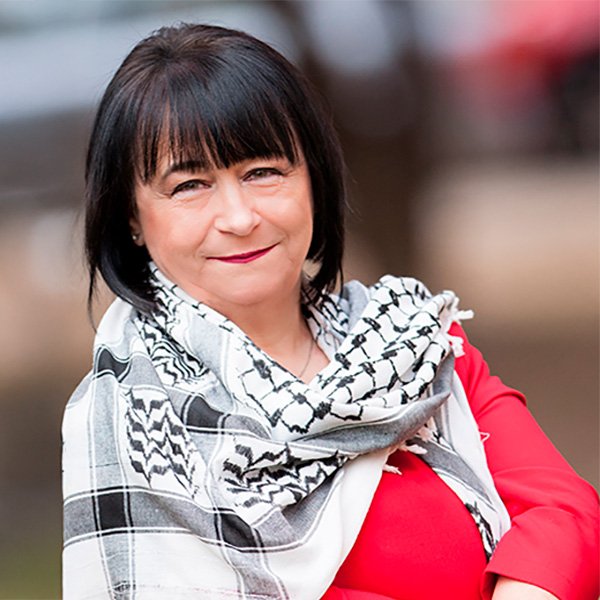

Ph.D. Political Science, Department of Political Studies, Faculty of Law, University of Skopje, 1992 MA Political Science, Department for Political Studies, Faculty of Law, University of Skopje, 1988 BA Law, Department of Political and Administrative Studies, Faculty of Law, University of Skopje, 1982

Share

Leave a Reply

Your email address will not be published. Required fields are marked *

Related Posts

Peace is promoted by constructive proposals and dialogue Four preceding PressInfos have expressed concern over — and criticised — the ongoing, militarisation of the EU. Some will say: but there are no alternatives. We believe that there are always alternatives, that democracies are characterised by alternatives and choice, and that openly discussed alternatives will improve the quality and legitimacy of society’s decision–making. In addition, it is an intellectual and moral challenge to not only criticise but also be constructive. If we only tell people that we think they are wrong, they are not likely to listen. However, if we say: what are your views on this set of ideas and steps? — we may sometimes engage them in dialogue and sow a seed. Most people in power circles live their daily lives in in a time frame and a social space where certain ideas, viewpoints and concepts are just not...
Photos © TFF 2000 Read PressInfo 90 “Lift the Sanctions and Bring More Aid to Yugoslavia” See Pictures from Belgrade © TFF 2000 Please reprint, copy, archive, quote or re-post this item, but please retain the source.
Av FRANK SØHOLM GREVIL 16 augusti 2004  Vi er nu nået til tredje akt i det absurde teaterstykke, der i analogi med de store skueprocesser i Moskva 1936-38 er blevet døbt ‘Grevil-sagen’. Første akt bestod i min anonyme fremlæggelse af egenhændigt nedklassificerede rapporter i Berlingske Tidende i februar og marts. Andet akt udgjordes af min fremtræden med navn og billede i Information i april samt den efterfølgende mediestorm, som uden min direkte medvirken kostede en forsvarsminister taburetten samt en sigtelse for brud på tavshedspligten. Tredje akt bliver en retssag, hvor jeg står tiltalt for at have overtrådt straffelovens bestemmelser om uberettiget videregivelse eller udnyttelse af fortrolige oplysninger. Statsanklageren har ovenikøbet valgt at påberåbe sig særligt skærpende omstændigheder. Da jeg aldrig har modtaget betaling for at stille rapporterne til rådighed eller lade mig interviewe, må det skærpende bestå i, at “videregivelsen eller udnyttelsen er sket under sådanne omstændigheder, at det påfører...

Recent Articles

PressInfo # 141, December 21, 2001It’s time to prepare reconciliation between Albanians and Serbs PressInfo # 140, December 14, 2001Ibrahim Rugova’s decade-long leadership in Kosovo/a PressInfo # 139, 11. december, 2001En god nyhet: Jugoslaviens Sannings- och försoningskommission PressInfo # 139, 11. december, 2001Gode nyheder: Jugoslaviens Sandheds- og Forsoningskommission PressInfo # 139, December 11, 2001Good news: Yugoslavia’s Truth and Reconciliation Commission PressInfo # 138, November 8, 2001TFF co-founder PhD with thesis about young people with roots in other cultures PressInfo # 138, November 8, 2001TFF:s medstiftare doktor på avhandling om unga med ursprung i andra kulturer PressInfo # 137, October 17, 2001A new Marshall Plan: Advancing human security and controlling terrorism PressInfo # 136, October 15, 2001The UN and Annan really deserve it PressInfo # 135, October 10, 2001Preventing a terrorist mushroom cloud PressInfo # 134, 17 oktober, 2001Sverige og 11. september PressInfo # 134, October 9, 2001Sweden and September 11...
Peace is promoted by constructive proposals and dialogue Four preceding PressInfos have expressed concern over — and criticised — the ongoing, militarisation of the EU. Some will say: but there are no alternatives. We believe that there are always alternatives, that democracies are characterised by alternatives and choice, and that openly discussed alternatives will improve the quality and legitimacy of society’s decision–making. In addition, it is an intellectual and moral challenge to not only criticise but also be constructive. If we only tell people that we think they are wrong, they are not likely to listen. However, if we say: what are your views on this set of ideas and steps? — we may sometimes engage them in dialogue and sow a seed. Most people in power circles live their daily lives in in a time frame and a social space where certain ideas, viewpoints and concepts are just not...
Photos © TFF 2000 Read PressInfo 90 “Lift the Sanctions and Bring More Aid to Yugoslavia” See Pictures from Belgrade © TFF 2000 Please reprint, copy, archive, quote or re-post this item, but please retain the source.

TFF on Substack

Discover more from TFF Transnational Foundation & Jan Oberg.

Most Popular

PressInfo # 141, December 21, 2001It’s time to prepare reconciliation between Albanians and Serbs PressInfo # 140, December 14, 2001Ibrahim Rugova’s decade-long leadership in Kosovo/a PressInfo # 139, 11. december, 2001En god nyhet: Jugoslaviens Sannings- och försoningskommission PressInfo # 139, 11. december, 2001Gode nyheder: Jugoslaviens Sandheds- og Forsoningskommission PressInfo # 139, December 11, 2001Good news: Yugoslavia’s Truth and Reconciliation Commission PressInfo # 138, November 8, 2001TFF co-founder PhD with thesis about young people with roots in other cultures PressInfo # 138, November 8, 2001TFF:s medstiftare doktor på avhandling om unga med ursprung i andra kulturer PressInfo # 137, October 17, 2001A new Marshall Plan: Advancing human security and controlling terrorism PressInfo # 136, October 15, 2001The UN and Annan really deserve it PressInfo # 135, October 10, 2001Preventing a terrorist mushroom cloud PressInfo # 134, 17 oktober, 2001Sverige og 11. september PressInfo # 134, October 9, 2001Sweden and September 11...
Peace is promoted by constructive proposals and dialogue Four preceding PressInfos have expressed concern over — and criticised — the ongoing, militarisation of the EU. Some will say: but there are no alternatives. We believe that there are always alternatives, that democracies are characterised by alternatives and choice, and that openly discussed alternatives will improve the quality and legitimacy of society’s decision–making. In addition, it is an intellectual and moral challenge to not only criticise but also be constructive. If we only tell people that we think they are wrong, they are not likely to listen. However, if we say: what are your views on this set of ideas and steps? — we may sometimes engage them in dialogue and sow a seed. Most people in power circles live their daily lives in in a time frame and a social space where certain ideas, viewpoints and concepts are just not...
Photos © TFF 2000 Read PressInfo 90 “Lift the Sanctions and Bring More Aid to Yugoslavia” See Pictures from Belgrade © TFF 2000 Please reprint, copy, archive, quote or re-post this item, but please retain the source.
Read More
Imagen-thumbnail-The-Transnational-1
PressInfo # 141, December 21, 2001It’s time to prepare reconciliation between Albanians and Serbs PressInfo # 140, December 14, 2001Ibrahim Rugova’s decade-long leadership in Kosovo/a PressInfo # 139, 11. december, 2001En god nyhet: Jugoslaviens Sannings- och försoningskommission PressInfo # 139, 11. december, 2001Gode nyheder: Jugoslaviens Sandheds- og Forsoningskommission PressInfo # 139, December 11, 2001Good news: Yugoslavia’s Truth and Reconciliation Commission PressInfo # 138, November 8, 2001TFF co-founder PhD with thesis about young people with roots in other cultures PressInfo # 138, November 8, 2001TFF:s medstiftare doktor på avhandling om unga med ursprung i andra kulturer PressInfo # 137, October 17, 2001A new Marshall Plan: Advancing human security and controlling terrorism PressInfo # 136, October 15, 2001The UN and Annan really deserve it PressInfo # 135, October 10, 2001Preventing a terrorist mushroom cloud PressInfo # 134, 17 oktober, 2001Sverige og 11. september PressInfo # 134, October 9, 2001Sweden and September 11...
Imagen-thumbnail-The-Transnational-1
Peace is promoted by constructive proposals and dialogue Four preceding PressInfos have expressed concern over — and criticised — the ongoing, militarisation of the EU. Some will say: but there are no alternatives. We believe that there are always alternatives, that democracies are characterised by alternatives and choice, and that openly discussed alternatives will improve the quality and legitimacy of society’s decision–making. In addition, it is an intellectual and moral challenge to not only criticise but also be constructive. If we only tell people that we think they are wrong, they are not likely to listen. However, if we say: what are your views on this set of ideas and steps? — we may sometimes engage them in dialogue and sow a seed. Most people in power circles live their daily lives in in a time frame and a social space where certain ideas, viewpoints and concepts are just not...
Imagen-thumbnail-The-Transnational-1
Photos © TFF 2000 Read PressInfo 90 “Lift the Sanctions and Bring More Aid to Yugoslavia” See Pictures from Belgrade © TFF 2000 Please reprint, copy, archive, quote or re-post this item, but please retain the source.
Imagen-thumbnail-The-Transnational-1
Av FRANK SØHOLM GREVIL 16 augusti 2004  Vi er nu nået til tredje akt i det absurde teaterstykke, der i analogi med de store skueprocesser i Moskva 1936-38 er blevet døbt ‘Grevil-sagen’. Første akt bestod i min anonyme fremlæggelse af egenhændigt nedklassificerede rapporter i Berlingske Tidende i februar og marts. Andet akt udgjordes af min fremtræden med navn og billede i Information i april samt den efterfølgende mediestorm, som uden min direkte medvirken kostede en forsvarsminister taburetten samt en sigtelse for brud på tavshedspligten. Tredje akt bliver en retssag, hvor jeg står tiltalt for at have overtrådt straffelovens bestemmelser om uberettiget videregivelse eller udnyttelse af fortrolige oplysninger. Statsanklageren har ovenikøbet valgt at påberåbe sig særligt skærpende omstændigheder. Da jeg aldrig har modtaget betaling for at stille rapporterne til rådighed eller lade mig interviewe, må det skærpende bestå i, at “videregivelsen eller udnyttelsen er sket under sådanne omstændigheder, at det påfører...
Imagen-thumbnail-The-Transnational-1
Af Svenska Irakkommittén mot de Ekonomiska Sanktionerna (SIES) 13 september 2002 FN:s ekonomiska sanktioner mot Irak har nu pågått i tolv år och drabbat det irakiska folket med svåra lidanden. Enligt FN:s egna siffror har mer än 1,5 miljoner människor, varav ca 600 000 barn, dött som en direkt följd av sanktionerna. Dessutom har ett lågintensivt bombkrig mot landet pågått under dessa år. Av all denna förödelse- orsakad huvudsakligen av amerikansk och brittisk politik- har Saddam Husseins brutala och diktatoriska regim snarast stärkts än försvagats. Nu förbereder USA under president Bushs ledning ett storskaligt bombkrig mot Irak som kommer att innebära ett ännu större lidande för civilbefolkningen. Ett sådant krig kommer dessutom att ytterligare undergräva freden och säkerheten i världen. Att upprätta en demokratisk regim i Irak är det irakiska folkets angelägenhet och får enligt folkrätten inte ske med krigshandlingar utifrån. Folkrätten och FN:s stadgar måste respekteras. Vi vädjar till...