
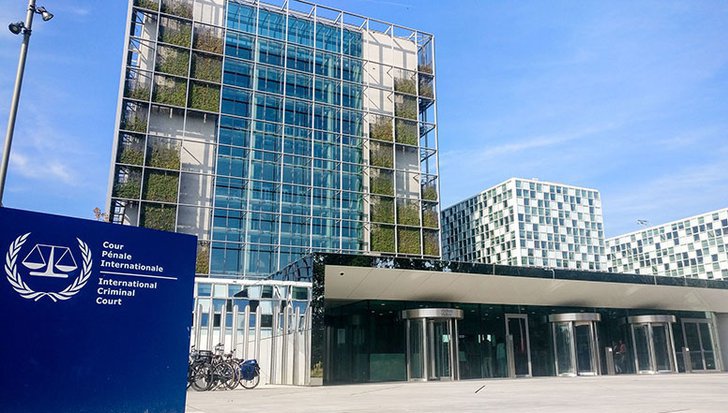
Rogue states sanction the International Criminal Court

This post is a slightly modified version of an editorial contribution to TMS – Transcend Media Service – June 22-28, 2020

Sanctioning the International Criminal Court, ICC

Even Orwell would be at a loss to make sense of some of the recent antics of leading governments. We would expect Orwell to be out-satirized by the American actions to impose penalties and sanctions on officials of the International Criminal Court, not because they are accused of acting improperly or seem guilty of some kind of corruption or malfeasance, but because they were doing their appointed jobs carefully, yet fearlessly.

Originally posted on Richard Falk’s personal blog on June 26, 2020 here

Their supposed wrongdoing was to accept the request for an investigation into allegations of war crimes committed in Afghanistan by military personnel and intelligence experts of the U.S. armed forces, the Taliban, and the Afghan military. It seemed beyond reasonable doubt that frequent war crimes and crimes against humanity have occurred in Afghanistan ever since the U.S.-led regime-changing attack in 2002, followed by many years of occupation and continuous combat amid a hostile population.

It should be noted that Israel is equally infuriated with that the ICC should have affirmed the authority of its Prosecutor, Fatou Bensouda, to investigate allegations by Palestine of war crimes and crimes against humanity committed in the Occupied Palestinian Territories (OPT) of the West Bank, East Jerusalem, and Gaza. These allegations include the unlawful transfer of Israeli civilians to establish settlements in the OPT as well as administrative structures and practices that constitute violations of the criminal prohibition on apartheid.

Netanyahu, like his Washington sibling, has called for the ICC to be subject to sanctions for staging this ‘full frontal attack’ on Israeli democracy and somehow on ‘the Jewish people’s right to live in Israel.’ The Israeli Prime Minister contends that Israel as a sovereign state has the right to defend itself as it wishes, and should not be impeded by any obligation to respect international criminal law. Such a claim, and the abusive practices and policies that have followed over many years, amounts to a crass affirmation of what I have elsewhere called ‘gangster geopolitics.’

Of course, Israel or the United States would be given broad latitude to make arguments in support of their innocence, but that is not what these U.S. and Israel object to the very idea of legal accountability, and refuse to accept even the authority of the ICC to determine whether or not it has jurisdiction to consider the criminal charges.

This kind of repudiation of an international institution that has been acting responsibly according to its mandate of represents an unprecedented and extreme expression of anti-internationalism.

The angry American pushback did not bother contesting the substantive allegations, but questioned the jurisdictional authority of the ICC, and attacked the audacity of this international entity for supposing that it could investigate, much less prosecute and punish the representatives of such a mighty state that should in no way be held internationally accountable.

When the ICC was investigating, and indicting, only African leaders few Western eyebrows were raised, but recently when the Court dared ever so gingerly to treat equals equally in accord with its own legal framework—the Rome Statute of 2000—it had in Washington’s and Tel Aviv’s eyes so overstepped its unspoken limits as to itself become a wrongdoer, and by this outlandish logic, making the institution and its officials legitimate targets for sanctions. What this kind of unprecedented punitive pushback amounts to is a notable rejection of the global rule of law when it comes to international crime and a crude effort to remind international institutions that ‘impunity’ and ‘double standards’ remain an operational principal norm of world order.

Speaking for the U.S. Government the response of the American Secretary of State, Mike Pompeo, stunningly exhibited the hubris that became the American global brand well before Donald Trump disgraced the country and harmed the peoples of the world during his tenure as president. Pompeo’s reaction to the unanimous approval of the Prosecutor’s request to investigate war crimes in Afghanistan was little other than seizing the occasion to insult the ICC by describing it as “little more than a political tool employed by unaccountable international elites.”

Such a statement crosses the borders of absurdity given the abundant documentation of numerous U.S. crimes in Afghanistan (the subject-matter of Chelsea Manning’s WikiLeaks 2010 disclosures that landed her in jail) and in view of the several ‘black sites’ in European countries where foreign suspects are routinely tortured, and subject to rape.

Contra Pompeo, it is not the ‘international elites’ that are unaccountable but the national elites running the U.S. and Israeli governments.

The Pompeo dismissal was a prelude to the issuance by Trump on June 11th of an Executive Order that extended the prior denial of a U.S. visa to Bensouda, and threatened a variety of sanctioning moves directed at anyone connected with the ICC and its undertakings, including freezing assets and withholding visas, not only of individuals, but also of their families, on the laughable pretext that the prospective ICC investigation was creating a ‘national emergency’ in the form of an “unusual and extraordinary threat to the national security and foreign policy of the United States.”

Even before the present crisis, Trump had told the UN in a 2018 speech at the General Assembly that “…the ICC has no jurisdiction, no legitimacy, and no authority…We will never surrender America’s sovereignty to an unelected, unaccountable, global bureaucracy.”

As crude as are the words and deeds of the Trump crowd, there were almost equally defiant precursors, especially during the presidency of George W. Bush, an anti-ICC campaign led by none other than John Bolton who was to become Trump’s notorious National Security Advisor, and has suddenly become his antagonist-in-chief due to his book depicting Trump’s array of impeachable offenses.

Remember that it was Bush who ‘un-signed’ the Rome Statute that Bill Clinton had signed on behalf of the U.S. on the last day of his presidency, but even he did so with the proviso that the treaty should not be submitted to the Senate for ratification and hence not be applicable until the ICC had proved itself a responsible actor in Washington’s judgmental eyes.

Congress and the State Department stepped in to make sure that American military personnel would not be charged with international crimes both by threatening preventive action and entering into over 100 agreements with other countries to ensure immunity of American soldiers and officials from ICC jurisdiction, coupled with a threat to withhold aid if a government refused to agree to such a law-defying arrangement.

Hillary Clinton also put her oar in the bloody water some years ago, insisting that since the U.S. was more of a global presence than other countries, it was important to be sure that its military personnel would never be brought before the ICC, no matter what their alleged offenses.

The global military reach of the U.S. by way of hundreds of overseas bases, special forces covert operations, and naval patrols around the globe should enjoy immunity on an individual level, as impunity on a collective level of state responsibility.

In other words, non-accountability and double standards have deeper political roots in the bipartisan soil of American security politics than the extreme anti-internationalism of Trump. These tactics of self-exemption from legal accountability can be usefully traced back at least as far as the ‘victors’ justice’ approach to war crimes during the Second World War where only the crimes of the defeated were subjected to accountability at Nuremberg and Tokyo, a step hailed in the West as a great advance despite its flaws.

It was deeply flawed considering that arguably the most horrifying act during the four years of hostilities were the atomic bombs dropped on Japanese cities.

Is there any serious doubt that if Germany or Japan had struck cities of the Allies with the bomb, and yet lost the war, those responsible for the decisions would have been held accountable, and punished in a harsh manner?

In some ways as bad from a law angle was the U.S. orchestrated trial of Saddam Hussein and his closest advisors for their state crimes, although the 2003 Iraq War arose from acts of aggression by the United States and UK, and subsequent crimes during the prolonged occupation of Iraq.

In other words, the idea of unconditional impunity for the crimes of the United States is complemented by self-righteous accountability for those leaders of countries defeated in war by the United States. Such ‘exceptionalism’ affront the conscience of anyone who shares the view that ideas of fairness and equality should be affirmed as core values in the application of international criminal law.   

As might be expected, mainstream NGOs and liberal Democrats are not happy with such an insulting and gratuitous slap in the face of international institutions that have proved mainly useful in going after the wrongdoing of non-Western leaders, especially in Africa. It should be remembered that African countries and their leaders were the almost exclusive targets of ICC initiatives during its first ten years, and it was from Africa that one formerly heard complaints and threats of withdrawal from the treaty, but I doubt that ideas of sanctioning the ICC ever entered the imaginary of understandable African displeasure at an implicit ethos of ‘white crimes don’t matter’!

David Sheffer, the American diplomat who headed the U.S. delegation that negotiated the Rome Statute on behalf of the Clinton presidency, but who was careful to preserve American geopolitical interests in the process, expressed the liberal opposition to Trump’s arrogant style of pushback with these words: “The [Trump] Executive Order will go down in history as a shameful act of fear and retreat from the rule of law.”

There is an element of hypocrisy present in such a denunciation due to withholding the pre-Trump record of one-sided imposition of international criminal law.  

True enough, it was the prior Republican president that had locked horns with the ICC some years ago, but the ambivalence of Congress and the Clintons is part of a consistent American insistence of what I would label as ‘negative exceptionalism,’ that is, the right to act internationally without accountability while taking a hard line on holding others accountable; impunity for the powerful, accountability for the weak.

It used to be that American exceptionalism was associated with a commitment to decency, human rights, the rule of law, and a visionary approach to world order that was missing elsewhere, and could serve as a catalyst for peace and justice in the world.

Such self-glorification has long since been forfeited at the altar of global geopolitics, whose players make up the rules as they go along while showing contempt for the legal constraints that are deemed suitable for the regulation of adversaries.

Finally, it should be appreciated that while geopolitical actors can get away with murder, their rogue behavior is a precedent for all states, and weakens what procedures exist to uphold the most basic norms of international law.
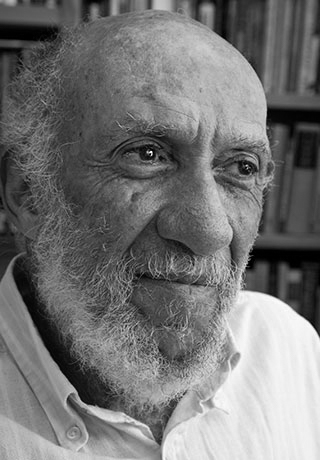

Professor Falk became an adviser to TFF when it was established in 1985.

Share

Leave a Reply

Your email address will not be published. Required fields are marked *

Related Posts

PRESS RELEASE – 6 OCTOBER 2025 LAY DOWN YOUR ARMSPEACE PRIZE FOR 2025 is awarded Francesca Albanese The United Nations Special Rapporteur on the occupied Palestinian territories – as the person who, in accordance with Alfred Nobel’s will, has “done the most or the best work for fraternity between nations and for the abolition or reduction of standing armies as well as for the holding and promotion of peace congresses.” Francesca Albanese has forcefully and unwaveringly worked against Israel’s full-scale war on the occupied Palestinian territories, in particular Israel´s ongoing genocide against the Palestinian people. She has confronted Israel’s systematic war crimes and crimes against humanity in a truly global outreach. Further, she has brought governments, international organisations and people’s groups together to underline the responsibility of the world at large to act and to stop arming, enabling, and profiting from Israel’s ongoing criminal actions. But first of all, Albanese...
Officially, the drones were not identified. By simply thinking critically – which journalists and selected experts no longer do – there may be a good reason for that. And this article will never be mentioned in Denmark… Drones over Denmark. No damage. No trace. No answers. Yet the headlines scream “Russian threat,” and Prime Minister Mette Frederiksen speaks with a certainty that defies logic: “We don’t know they were Russian—but we know Russia is the biggest threat to Europe.” It could be nobody else – unless you make an interest analysis which I did two days ago. This is not security policy. It’s theatre. And the audience is being played. Let’s rewind. These drones—unphotographed, untracked, unclaimed—appear and vanish like ghosts. Airports shut down. Panic spreads. Military budgets swell. And the narrative hardens: Russia is behind it. But what if that’s not just wrong but deliberately misleading? Here’s a hypothesis for...
And why the world, especially the EU, must now declare itself independent of the United States. UN’s 80th anniversary This year, the United Nations celebrates the 80th anniversary of its founding. The UN was formed after the scourge of the Second World War, in which 70 to 85 million people were killed and many countries were destroyed. That war came on the heels of the First World War, which also killed between 15 and 22 million people. After the Second World War, especially after the use of nuclear weapons by the United States, which marked a turning point in the history of warfare that could result in the end of civilisation as we know it, humanity decided to move away from the era of empires and big power politics and usher in a new era of peace, freedom and cooperation. These were the principles enshrined in the UN Charter. The United States...

Recent Articles

PressInfo # 141, December 21, 2001It’s time to prepare reconciliation between Albanians and Serbs PressInfo # 140, December 14, 2001Ibrahim Rugova’s decade-long leadership in Kosovo/a PressInfo # 139, 11. december, 2001En god nyhet: Jugoslaviens Sannings- och försoningskommission PressInfo # 139, 11. december, 2001Gode nyheder: Jugoslaviens Sandheds- og Forsoningskommission PressInfo # 139, December 11, 2001Good news: Yugoslavia’s Truth and Reconciliation Commission PressInfo # 138, November 8, 2001TFF co-founder PhD with thesis about young people with roots in other cultures PressInfo # 138, November 8, 2001TFF:s medstiftare doktor på avhandling om unga med ursprung i andra kulturer PressInfo # 137, October 17, 2001A new Marshall Plan: Advancing human security and controlling terrorism PressInfo # 136, October 15, 2001The UN and Annan really deserve it PressInfo # 135, October 10, 2001Preventing a terrorist mushroom cloud PressInfo # 134, 17 oktober, 2001Sverige og 11. september PressInfo # 134, October 9, 2001Sweden and September 11...
Peace is promoted by constructive proposals and dialogue Four preceding PressInfos have expressed concern over — and criticised — the ongoing, militarisation of the EU. Some will say: but there are no alternatives. We believe that there are always alternatives, that democracies are characterised by alternatives and choice, and that openly discussed alternatives will improve the quality and legitimacy of society’s decision–making. In addition, it is an intellectual and moral challenge to not only criticise but also be constructive. If we only tell people that we think they are wrong, they are not likely to listen. However, if we say: what are your views on this set of ideas and steps? — we may sometimes engage them in dialogue and sow a seed. Most people in power circles live their daily lives in in a time frame and a social space where certain ideas, viewpoints and concepts are just not...
Photos © TFF 2000 Read PressInfo 90 “Lift the Sanctions and Bring More Aid to Yugoslavia” See Pictures from Belgrade © TFF 2000 Please reprint, copy, archive, quote or re-post this item, but please retain the source.

TFF on Substack

Discover more from TFF Transnational Foundation & Jan Oberg.

Most Popular

PressInfo # 141, December 21, 2001It’s time to prepare reconciliation between Albanians and Serbs PressInfo # 140, December 14, 2001Ibrahim Rugova’s decade-long leadership in Kosovo/a PressInfo # 139, 11. december, 2001En god nyhet: Jugoslaviens Sannings- och försoningskommission PressInfo # 139, 11. december, 2001Gode nyheder: Jugoslaviens Sandheds- og Forsoningskommission PressInfo # 139, December 11, 2001Good news: Yugoslavia’s Truth and Reconciliation Commission PressInfo # 138, November 8, 2001TFF co-founder PhD with thesis about young people with roots in other cultures PressInfo # 138, November 8, 2001TFF:s medstiftare doktor på avhandling om unga med ursprung i andra kulturer PressInfo # 137, October 17, 2001A new Marshall Plan: Advancing human security and controlling terrorism PressInfo # 136, October 15, 2001The UN and Annan really deserve it PressInfo # 135, October 10, 2001Preventing a terrorist mushroom cloud PressInfo # 134, 17 oktober, 2001Sverige og 11. september PressInfo # 134, October 9, 2001Sweden and September 11...
Peace is promoted by constructive proposals and dialogue Four preceding PressInfos have expressed concern over — and criticised — the ongoing, militarisation of the EU. Some will say: but there are no alternatives. We believe that there are always alternatives, that democracies are characterised by alternatives and choice, and that openly discussed alternatives will improve the quality and legitimacy of society’s decision–making. In addition, it is an intellectual and moral challenge to not only criticise but also be constructive. If we only tell people that we think they are wrong, they are not likely to listen. However, if we say: what are your views on this set of ideas and steps? — we may sometimes engage them in dialogue and sow a seed. Most people in power circles live their daily lives in in a time frame and a social space where certain ideas, viewpoints and concepts are just not...
Photos © TFF 2000 Read PressInfo 90 “Lift the Sanctions and Bring More Aid to Yugoslavia” See Pictures from Belgrade © TFF 2000 Please reprint, copy, archive, quote or re-post this item, but please retain the source.
Read More
Imagen-thumbnail-The-Transnational-1
PressInfo # 141, December 21, 2001It’s time to prepare reconciliation between Albanians and Serbs PressInfo # 140, December 14, 2001Ibrahim Rugova’s decade-long leadership in Kosovo/a PressInfo # 139, 11. december, 2001En god nyhet: Jugoslaviens Sannings- och försoningskommission PressInfo # 139, 11. december, 2001Gode nyheder: Jugoslaviens Sandheds- og Forsoningskommission PressInfo # 139, December 11, 2001Good news: Yugoslavia’s Truth and Reconciliation Commission PressInfo # 138, November 8, 2001TFF co-founder PhD with thesis about young people with roots in other cultures PressInfo # 138, November 8, 2001TFF:s medstiftare doktor på avhandling om unga med ursprung i andra kulturer PressInfo # 137, October 17, 2001A new Marshall Plan: Advancing human security and controlling terrorism PressInfo # 136, October 15, 2001The UN and Annan really deserve it PressInfo # 135, October 10, 2001Preventing a terrorist mushroom cloud PressInfo # 134, 17 oktober, 2001Sverige og 11. september PressInfo # 134, October 9, 2001Sweden and September 11...
Imagen-thumbnail-The-Transnational-1
Peace is promoted by constructive proposals and dialogue Four preceding PressInfos have expressed concern over — and criticised — the ongoing, militarisation of the EU. Some will say: but there are no alternatives. We believe that there are always alternatives, that democracies are characterised by alternatives and choice, and that openly discussed alternatives will improve the quality and legitimacy of society’s decision–making. In addition, it is an intellectual and moral challenge to not only criticise but also be constructive. If we only tell people that we think they are wrong, they are not likely to listen. However, if we say: what are your views on this set of ideas and steps? — we may sometimes engage them in dialogue and sow a seed. Most people in power circles live their daily lives in in a time frame and a social space where certain ideas, viewpoints and concepts are just not...
Imagen-thumbnail-The-Transnational-1
Photos © TFF 2000 Read PressInfo 90 “Lift the Sanctions and Bring More Aid to Yugoslavia” See Pictures from Belgrade © TFF 2000 Please reprint, copy, archive, quote or re-post this item, but please retain the source.
Imagen-thumbnail-The-Transnational-1
Av FRANK SØHOLM GREVIL 16 augusti 2004  Vi er nu nået til tredje akt i det absurde teaterstykke, der i analogi med de store skueprocesser i Moskva 1936-38 er blevet døbt ‘Grevil-sagen’. Første akt bestod i min anonyme fremlæggelse af egenhændigt nedklassificerede rapporter i Berlingske Tidende i februar og marts. Andet akt udgjordes af min fremtræden med navn og billede i Information i april samt den efterfølgende mediestorm, som uden min direkte medvirken kostede en forsvarsminister taburetten samt en sigtelse for brud på tavshedspligten. Tredje akt bliver en retssag, hvor jeg står tiltalt for at have overtrådt straffelovens bestemmelser om uberettiget videregivelse eller udnyttelse af fortrolige oplysninger. Statsanklageren har ovenikøbet valgt at påberåbe sig særligt skærpende omstændigheder. Da jeg aldrig har modtaget betaling for at stille rapporterne til rådighed eller lade mig interviewe, må det skærpende bestå i, at “videregivelsen eller udnyttelsen er sket under sådanne omstændigheder, at det påfører...
Imagen-thumbnail-The-Transnational-1
Af Svenska Irakkommittén mot de Ekonomiska Sanktionerna (SIES) 13 september 2002 FN:s ekonomiska sanktioner mot Irak har nu pågått i tolv år och drabbat det irakiska folket med svåra lidanden. Enligt FN:s egna siffror har mer än 1,5 miljoner människor, varav ca 600 000 barn, dött som en direkt följd av sanktionerna. Dessutom har ett lågintensivt bombkrig mot landet pågått under dessa år. Av all denna förödelse- orsakad huvudsakligen av amerikansk och brittisk politik- har Saddam Husseins brutala och diktatoriska regim snarast stärkts än försvagats. Nu förbereder USA under president Bushs ledning ett storskaligt bombkrig mot Irak som kommer att innebära ett ännu större lidande för civilbefolkningen. Ett sådant krig kommer dessutom att ytterligare undergräva freden och säkerheten i världen. Att upprätta en demokratisk regim i Irak är det irakiska folkets angelägenhet och får enligt folkrätten inte ske med krigshandlingar utifrån. Folkrätten och FN:s stadgar måste respekteras. Vi vädjar till...