September 20, 2018
On 20 March 2018, the former French President Nicolas Sarkozy was taken into police custody in Paris to be questioned over allegations that he received millions of Euros in illegal funding from Qadhafi for his presidential campaign.
Investigators were examining claims that Qadhafi’s regime secretly gave Sarkozy €50 million overall for the 2007 campaign.
Such a sum would be more than double the legal campaign funding limit and also violates French rules against foreign financing of elections. (See: “Former French President Nicolas Sarkozy in police custody over investigation into Gaddafi funding”, The Independent, 20 March 2018.
Sarkozy entertained Qadhafi lavishly at the Elyse Palace, even allowing him to pitch his tent in the grounds of the palace. Yet, later on, Sarkozy was the cheerleader for the attack on Libya, which resulted in the brutal murder of Qadhafi and the destruction of the country.
Tony Blair visited Qadhafi in Libya and signed huge deals with him on behalf of Britain, yet later on, Britain was another country deeply involved in the attack on Libya and Qadhafi’s assassination.
1. The Belhaj story
In May 2018, the British government paid £500,000 to Fatima Boudchar, the wife of Abdel Hakim Belhaj, the leader of Libyan Islamic Fighting Group (LIFG), an Islamist militia that had been opposed to Qadhafi.
Belhaj and some other leaders of LIFG had fled to Afghanistan and joined the Taliban. After Qadhafi’s reconciliation with the West, Libyan authorities issued a warrant for the arrest of Belhaj.
Tracked by the CIA, after a tip-off from MI6, Belhaj who had asked for asylum in Britain was arrested together with his pregnant wife in 2004 at Kuala Lumpur International Airport. He was placed in the custody of the CIA and kept in a secret prison near the airport. Later on, he and his wife were sent to Libya on the rendition aircraft N313P (See Ian Cobain, “Special Report: Rendition ordeal that raises new questions about secret trials”, The Guardian, 8 April 2012).
He and his wife were both jailed and tortured in Abu Salim prison where he was kept for seven years, but his wife was released earlier, also after being subjected to torture.
As it happens, after the Libyan uprising, documents seized from the Libyan government showed the involvement of some British officials in Belhaj’s and his wife’s rendition.
One letter from Mark Allen, who had been the director of the counter-terrorism for MI6 at the time, to a Libyan intelligence officer, read: “I congratulate you on the safe arrival of [Belhaj]. This was the least we could do for you and for Libya to demonstrate the remarkable relationship we have built over recent years.” (See “British spy chief’s alleged role in abducting Libyan torture victim to be revealed”, Middle East Eye, 19 February 2017).
It was unfortunate for Britain and the United States that after the Libyan uprising, Belhaj became one of the leading political and military figures after the rebels took over Tripoli, serving as the commander of the Tripoli Military Council, and that he also gained access to those documents.
In 2011, Belhaj began legal proceedings against the British government over its role in his rendition to Libya.
In December 2013, a High Court judge struck out Belhaj’s case against the British government, on the grounds that if it were allowed to proceed it could potentially damage British national interests.
The judge said that the case could not proceed because both American and British officials had been involved in the operation, and that he had to decide that “the conduct of US officials acting outside the US was unlawful, in circumstances where there are no clear and incontrovertible standards for doing so and where there is incontestable evidence that such an inquiry would be damaging to the national interest.” (See Richard Norton-Taylor, “Libyan told he cannot pursue rendition claim in case it harms UK interests”, The Guardian, 20 December 2013).
However, the British government ordered an inquiry under Sir Peter Gibson, the UK Intelligence Services Commissioner, to look into the allegations of British collusion in Belhaj’s rendition to Libya.
Finally, on 10 May 2018, British Prime Minister Theresa May issued an official letter of apology for MI6’s role in the affair, which was read out by Attorney General Jeremy Wright in the House of Commons.
The letter admitted: “The U.K. government’s actions contributed to your detention, rendition and suffering. The U.K. government shared information about you with its international partners. We should have done more to reduce the risk that you would be mistreated. We accept this was a failing on our part.” (See “UK apologizes for role in Libyans’ kidnapping and torture”, ABC News, May 10, 2018).
Although this was a brave and praiseworthy move by the British government, something that US officials would refuse to do, it should be pointed out that this affair only came to light because Belhaj emerged as a leading political and military figure after the Libyan uprising and pursued the case of his rendition.
Otherwise, like dozens or maybe hundreds of other cases of rendition and torture, his case too would have been covered up and nobody would have heard about it.
However, even now, the British government is trying to block the release of files exposing the extent of the links with Qadhafi’s government. (See “UK government trying to block release of files exposing Gaddafi links”, The Guardian, 15 May 2018).
Tony Blair under whose government Belhaj was rendered to Libya has refused to apologise for the case, and only said in a BBC interview that he was happy with the apology issued by the current government, but would not like to add anything further.
2. Regime change, not protection of people
According to the Western version of events, the attack on Libya was only a humanitarian attempt just to protect civilians.
However, the preparation that went into creating and funding the opposition reveals that the aim was to bring about regime change. In her memoirs, Hard Choices, while trying to justify the military attacks on Libya, former Secretary of State Hillary Clinton reveals the preparation that went into the attempt to topple Qadhafi.
Clinton writes about a nascent uprising in Benghazi and Misrata, and her meeting – accompanied by the pop-philosopher Bernard-Henri Lévy – with Mahmoud Jibril, the exiled leader of the opposition National Transitional Council; to her marshalling of an international military response.
In late March 2011, Clinton quotes herself telling NATO members, “It’s crucial we’re all on the same page on NATO’s responsibility to enforce the no-fly zone and protect civilians in Libya.”
Although the aim of the operation was allegedly to help the civilians, the former Secretary of Defence Robert Gates told the New York Times “I can’t recall any specific decision that said, ‘Well, let’s just take him out.’” (See Hillary Clinton, Hard Choices, Simon and Schuster, 2014, chapter 17, Benghazi Under Attack).
Publicly he said “the fiction was maintained” that the goal was limited to disabling Colonel Qaddafi’s command and control. However, right from the start, the ultimate goal was clear as they bombed all the sites where they thought he might be.
In fact, the former defence secretary said: “I don’t think there was a day that passed that people didn’t hope he would be in one of those command and control centers.” (See The New York Times, “The Libya Gamble: Part I”, Feb. 27, 2011).
3. ”We came, we saw, he died”
On March 20, 2011, just hours into the intervention, Tomahawk cruise missiles were launched from a British submarine stationed in the Mediterranean Sea against the administrative building in Qadhafi’s Bab al-Azizia compound.
The Daily Telegraph reported: “An administrative building in Col Qadhafi’s compound was destroyed little more than 50 yards from the tent where the dictator lives.” (See “Libya: Col Muammar Gaddafi endures second night of air attacks from British, French and American forces”, The Telegraph, 20 March 2011.
UN Security Council Resolution 1970 was supposed to prohibit arms transfers to either side of the war in Libya, yet with Western blessing, Egypt and Qatar were shipping advanced weapons to rebel groups the whole time, while Western intelligence and military forces provided battlefield intelligence, logistics, and training support.
In fact, there is some evidence to show that Qatar and UAE’s support for the jihadist militants was specifically proposed by Britain.
According to an article in April 2011 by James Kirkup, The Telegraph’s political correspondent, “Britain will urge Arab states to train and lead Libya’s rebels, with former British military personnel in line to play a central role in the escalation of the international intervention.”
He went on to say: “The plan would see international ground troops enter Libya in a fresh bid to tip the military balance against Colonel Muammar Gaddafi’s forces… It is understood that Qatar and the United Arab Emirates will be asked to put military trainers into Libya to transform the disparate rebels into a coherent fighting force.” (See “Libya: Arab states urged to train and lead rebels.” The Telegraph, 06 April 2011).
Finally, on October 20, 2011, it was a US Predator drone and French fighter aircraft that attacked a convoy of Libyan officials including Qadhafi near his hometown of Sirte.
Qadhafi was injured in the attack, captured alive, and then brutally murdered by rebel forces in front of the cameras of Western journalists.
Secretary Clinton’s response in a video clip to that brutal killing was: “We came, we saw, he died”, followed by Clinton’s landmark, loud laughter.
As Micah Zenko wrote: “The conclusion is clear: While we should listen to what U.S. and Western officials claim are their military objectives, all that matters is what they authorize their militaries to actually do.” (Micah Zenko, “The Big Lie About the Libyan War”, Foreign Policy, March 22, 2016).
4. Was this also about saving the US petrodollar?
The main driver of opposition to Qadhafi was his looming success in establishing a Pan-African gold-backed currency that he was introducing to the rest of Africa as the only form of payment in exchange for extraction of their natural resources.
That would have been a disaster for the dominance of the US petrodollar as the main global currency.
So, some people believe that Qadhafi’s major sin, like that of the Shah and Saddam Hussein before him, was that he was challenging the global domination of US dollar.
Following Qadhafi’s assassination, Sarkozy and British Prime Minister David Cameron appeared in Tripoli, enthusiastically congratulating the Libyans on their liberation from a dictator. That was before Libya fell apart and turned into another failed state with various Jihadi warring factions.
It should be noted that as Henri Habib has pointed out:
When Libya was granted its independence by the United Nations on December 24,1951, it was described as one of the poorest and most backward nations of the world. The population at the time was not more than 1.5 million, was over 90% illiterate, and had no political experience or knowhow. There were no universities, and only a limited number of high schools which had been established seven years before independence. (See Henri Pierre Habib, Politics and Government of Revolutionary Libya, Quebec: Le Cercle de Livre de France Ltee, 1975, p.1).
Yet, with Qadhafi all that changed. Shortly before he was toppled, Libya was the richest African nation per capita. According to former US Congresswoman and Green Party candidate for President Cynthia McKinney’s excellent book on Libya:
When the Obama Administration and Secretary Hillary Clinton sent their ultimatums to Tripoli… Libya possessed more than $150 billion dollars (US) in overseas financial assets and had one of the largest sovereign investment funds in the world at the start of 2011.
Until the conflict in Libya ignited, there was a very large foreign work force in Jamahiriya. Thousands of foreign workers from every corner of the globe went to Libya for employment. For years, these jobs inside Libya were an important source of economic remittances for some African economies.
Moreover, many foreign workers from such places as the Philippines, Niger, Morocco, Lebanon and Italy would even choose to make their lives in Libya and open their own businesses there. (See Cynthia McKinney, The Illegal War on Libya, Clarity Press, 2012, p. 91).
However, since this illegal war, instead of providing jobs for hundreds of thousands of people from all over Africa, Libya has become a transit route for millions of desperate refugees from various African countries and Libya itself fleeing to the West, a large number of them drowning in the Mediterranean, and a lucky few finding asylum in some European countries.
Meanwhile, the NATO intervention in Libya in 2011 cost at least 50,000 Libyan lives. (See Body Count p. 13).
To be sure, Qadhafi had many faults and had ruled Libya as a dictator, but the real aim of the operation in Libya was not to help the Libyan people, and the outcome has made the plight of the Libyans much worse than it was under Qadhafi.
The reaction throughout Africa was very negative to NATO’s campaign to topple Qadhafi. Former South African President Thabo Mbeki, President Nelson Mandela’s successor, observed that Western powers were, “bent on regime-change in Libya, regardless of the cost to this African country, intent to produce a political outcome which would serve their interests.” (Quoted in Maximilian Forte, Slouching Towards Sirte: NATO’s War on Libya, Baraka Books, 2012, p. 279).
Some African politicians and scholars have seen it as nothing short of the re-colonisation of Africa, as Dr Chris Landsberg, the head of the Department of Politics at the University of Johannesburg, said: “The re-colonisation of Africa is becoming a real threat.” (Maximilian Forte, ibid.)
Sadly, with the establishment of the US Africa Command (Africom) in 2008, one can see the truth of that assertion.
Share and use these hastags
#NotIranToo
#BuildTrustWithIran
#CooperateWithIranNow
Photos
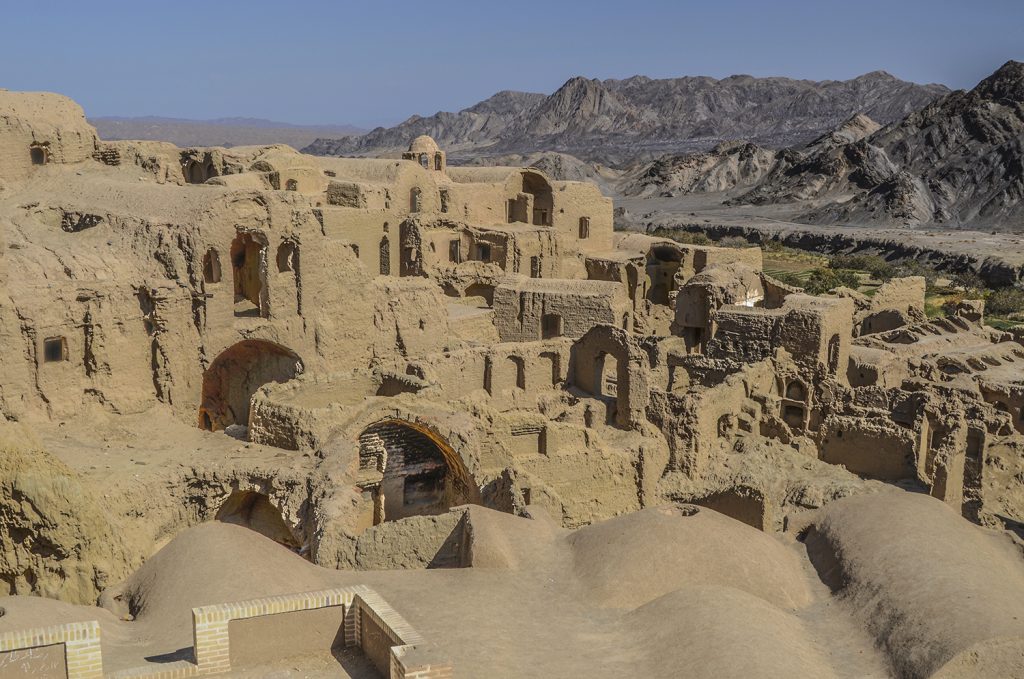
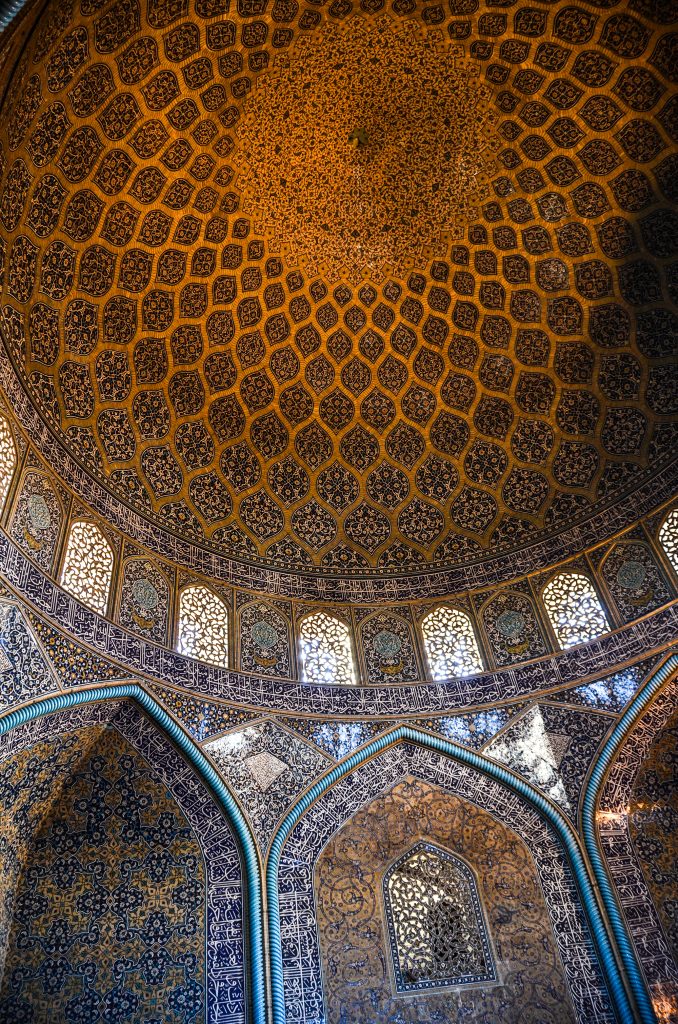
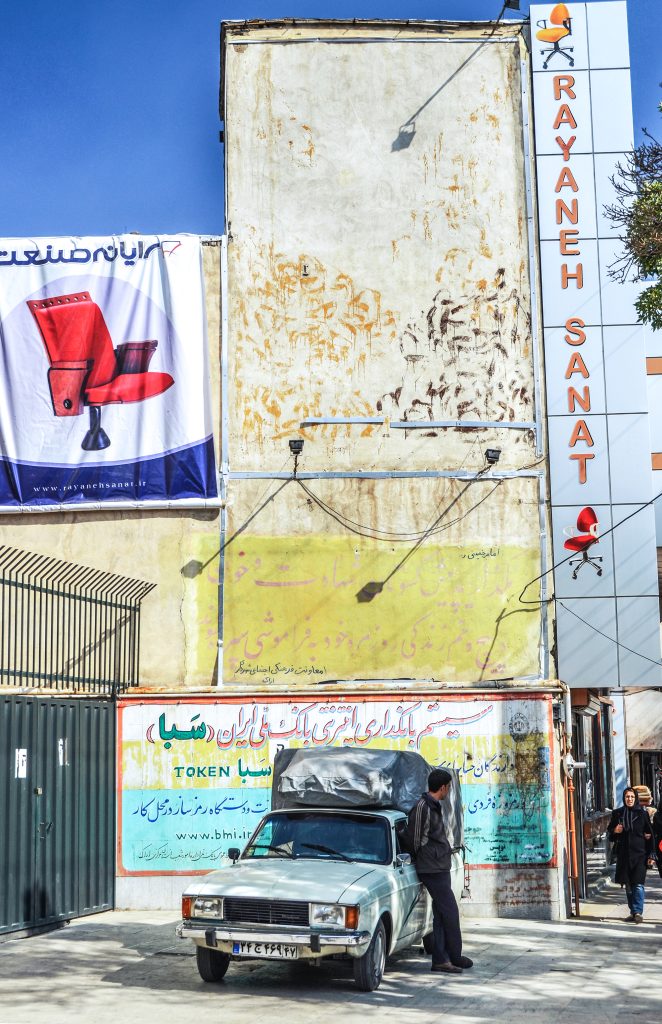
All from today’s Iran by Jan Oberg.
You can see many more here and purchase limited, signed editions here.
© Oberg PhotoGraphics