
Parodies of parity: Israel and Palestine

As long ago as 1998 Edward Said reminded the world that acting as if Palestinians were equally responsible with Israelis for the persisting struggle of the two peoples was not only misleading, but exhibited a fundamental in misunderstanding of the true reality facing the two peoples: “The major task of the American or Palestinian intellectual of the left is to reveal the disparity between the so-called two sides, which appears to be in perfect balance, but are not in fact. To reveal that this is an oppressed and an oppressor, a victim and a victimizer, and unless we recognize that, we’re nowhere.” – he said in an interview with Bruce Robbins published in Social Text (1998).

I would rephrase Said’s statement by substituting ‘any engaged citizen and morally sensitive intellectual’ for ‘the American or Palestinian intellectual of the left.’

We do not need to be on the left to expose the cruel hypocrisy of suppressing gross disparities of circumstances, or more to the point, blocking out the multiple diplomatic, military, material, and psychological advantages enjoyed by Israel as compared to the Palestine. “It is elementary, my dear Watson!” as Sherlock Holmes so often exclaimed, or at least it should be.

Unfortunately, a principal instrument of the mind numbing diplomacy of the United States is precisely aimed at avoiding any acknowledgement of the disparity that at the core of the encounter. As a result, the American public is confused as to what it is reasonable to expect from the two sides and how to interpret the failure of negotiations to get anywhere time and again.

This failure is far from neutral. It is rather the disparity that has done the most damage to peace prospects ever since 1967: This pattern of delay has kept the Palestinians in bondage while allowing the Israelis build and create armed communities on occupied Palestinian land that was supposedly put aside for the future Palestinian state.

Beyond this appeal to intellectuals, Said’s message should be understood by everyone everywhere, and not just by Americans and Palestinians, although these are the two populations most responsible for the prolonged failure to produce a peace based on justice.

Elsewhere, except possibly in parts of Western Europe, such a discourse as to shared responsibility for the ongoing struggle is not so relevant because the ugly forms of Israeli exploitation of the Palestinian ordeal have become increasingly transparent in recent years.

For decades Europeans gave Israel the benefit of the doubt, partly reflecting a sense of empathy for the Jewish people as victims of the Holocaust without giving much attention to the attendant displacement of the indigenous population of Palestine. Such an outlook, although still influential, loses its tenability as time passes.

Beyond this, there are increasing expressions of grassroots solidarity with the Palestinian struggle by most peoples in the world. It is a misfortune of the Palestinians that most political leaders in the world are rarely moved to act to overcome injustice, and are far more responsive to hegemonic structures that control world politics and their perception of narrowly conceived national interests. This pattern has become most vividly apparent in the Arab world where the people scream when Israel periodically launches its attacks on Gazan civilian society while their governments smile quietly or avert their eyes as the bombs drop and the hospitals fill up.

In Israel, the argument as to balance also has little resonance as Israelis, if they pause to wonder at all, tend to blame the Palestinians for failing to accept past Israeli conflict-resolving proposals initiatives made over the years.

Israelis mostly believe that the Barak proposals at Camp David in 2000 and the Sharon ‘disengagement’ from Gaza in 2005 demonstrated Tel Aviv’s good faith. Even Netanyahu, at least when he is not seeking reelection, and is speaking for the benefit of an American audience disingenuously claims Israel’s continuing dedication to a peace process based on seeking a two-state solution while he explains diplomatic gridlock by contending that lacks a Palestinian partner in the search for peace, and never deigns to mention the settlement archipelago as an obstacle.

Looked at objectively, by assessing behavior and apparent motivation, it is the Palestinians that have no partner for genuine peace negotiations, and should have stopped long ago acting as if Israel was such a partner.

That is, Israel inverts the Said disparity, contending that the public should point its finger of blame at Palestine, not Israel. Of course, this is hasbara in its impurest form.

Israel never made a peace proposal that offered Palestinians a solution based on national and sovereign equality and sensitive to Palestinian rights under international law. And as for Sharon’s purported disengagement from Gaza, it was justified at the time in Israel as a way to deflect international pressures building to pursue a diplomatic solution and it was managed as a withdrawal that didn’t loosen the grip of effective control, leaving Gaza as occupied and more vulnerable than it was when the IDF soldiers patrolled the streets.

Since 2005 the people of Gaza have suffered far more from Israel’s military domination than in all the years following 1967 when occupation commenced, and it should be clear, this outcome was not a reaction to Hamas and rockets. Hamas has repeated sought and upheld ceasefires that Israel has consistently violated, and offered long-term arrangements for peaceful coexistence that Israel and the United States have refused to even acknowledge.

Where the equivalence argument is so influential is with the Obama administration and among liberal Zionists, including such NGOs as J Street and Peace Now that are critical of Israel for blocking progress toward a two-state solution. It is a blindfold that obscures the structural reality of the relationship between the two sides, and believes that if Israel would make some small adjustments in their occupation policy, especially in relation to settlements, and if the Palestinians would do the same with respect to refugees and accepting Israel as a Jewish state, then a negotiated peace would follow as naturally as day follows night.

In effect, Israel is expected to curtail unlawful settlement activity in exchange for Palestine suspending its rights under international law affecting the situation of several million Palestinian refugees. As is widely known, Jews from anywhere in the world have an unconditional right to immigrate to Israel, whereas Palestinian living abroad with deep residence roots in the country are almost totally banished from Israel including if their purpose is to resume residence so as to live with close family members.

In Ramallah back in March 2013, and speaking to a Palestinian gathering, President Obama did forcefully say that “The Palestinians deserve an end to occupation and the daily indignities that come with it,” and this will require “a state of their own.” Obama even then acknowledged “that the status quo isn’t really a status quo, because the situation on the ground continues to evolve in a direction that makes it harder to reach a two-state solution.”

Such a display of circumlocution (“..continues to evolve in a direction”) so as to avoid clearing mentioning Israel’s continuous encroachment on the land set aside by the international consensus, is for a discerning reader all that one needs to know. The unwillingness to challenge frontally Israel’s unlawful and obstructive behavior is underscored by Obama’s reassurances given to a separate Israeli audience in Jerusalem on the same day that he spoke guardedly to the Palestinian, with such phrases as “America’s unwavering commitment,” ‘unbreakable bonds,” “our alliance is eternal, it is forever,” “unshakeable support,” and “your greatest friend.”

No such language of reassurance was offered the Palestinians. His two speeches left no doubt that Israel retained its upper hand, and could continue to rest easy with this status quo of simmering conflict that had worked so long in its favor.

The Secretary of State, John Kerry, ploughs the same field, calling on both sides to make “painful concessions.” Obama in his Jerusalem speech illustrated what this concretely might mean, assuming that the two sides were equally called upon to act if peace were to be achieved.

The Palestinians were called upon to recognize Israel as a Jewish state, while Israel was politely reminded in language so vague as to be irrelevant, “Israelis must recognize that settlement activity is counterproductive.” To ask Palestinians to recognize Israel is to affirm as legitimate the discriminatory regime under which the 20% Palestinian minority lives, while asking the Israelis to recognize that the counterproductive character of settlement expansion is to misunderstand Israeli intentions.

If their goal is to avoid the establishment of a Palestinian state then being ‘counterproductive’ is exactly the result being sought. Besides asking the Palestinians to abridge their rights while requesting Israel to admit that their settlement activity is not helping the diplomatic process is to appeal to their self-interest, and avoid a demand to cease and reverse an unlawful, likely criminal, activity.

The false equivalence is a metaphor for the deformed framework of diplomacy that has unfolded largely as a result of the United States being accepted as the presiding intermediary, a role for which it is totally unsuited to play. This lack of qualification is admitted by its own frequent declarations of a high profile strategic and ideological partnership with Israel, not to mention the interference of a domestic Israeli lobby that controls Congress and shapes the media allocation of blame and praise in relation to the conflict.

Kerry expresses the same kind of one-sidedness in the guise of fairness when he calls on the parties to make compromises: “..we seek reasonable compromises on tough complicated, emotional, and symbolic issues. I think reasonable compromises has to be a keystone of all of this effort.”

What kind of compromises are the Palestinians supposed to make, given that they are already confined to less and less of the 22% of the British Mandatory territory of Palestine, and since 1988 have sought no greater proportion of the land. Kerry’s approach overlooks, as well, the defiant refusal of Israel to act in good faith in relation to the 1967 Security Council Resolution 242 that called upon Israel to withdraw without claiming territory through its use of force or by taking advantage of being the occupying power.

In the interim, while being unwilling to do anything concrete to implement its view of decades that Israeli settlement activity is ‘counterproductive’ the United States proclaims and proves its readiness to oppose any Palestinian attempt to gain access to the UN to express its grievances, an effort which Obama denigrated as “unilateral attempts to bypass negotiations through the UN.”

The Palestinian Authority has repeatedly made clear that it favors a resumption of direct negotiations with Israel, despite being at a great disadvantage within such a framework, and insists persuasively that there is no inconsistency between its seeking greater participation in international institutions and its continued readiness to work toward a diplomatic solution of the conflict.

If Israel and the United States were sincerely dedicated to a sustainable peace, they would encourage this Palestinian turn away from violent resistance, and their increased effort to push their cause by persuasion rather than missiles, to advance their cause by gaining respectability through joining institutions and adhering to lawmaking treaties instead of being confined in a prolonged rightless lockdown euphemistically disguised as ‘occupation.’

In the end, we cannot see the situation for what it is without reverting to the Said insistence that the relation between oppressor and oppressed is a paramount precondition for sustainable peace.
Unless the structural distortion and illegitimacy is acknowledged, no viable political arrangement will be forthcoming.

From this perspective the Kerry emphasis on ‘reasonable compromise’ is as mind numbingly irrelevant as it would have been in seeking a peaceful end to racial struggle in apartheid South Africa by demanding that ANC and Nelson Mandela become amenable to compromise with their racist overlords.

Peace will come to Israel and Palestine, and be sustained, if and only if the oppressor becomes ready to dismantle its oppressive regime by withdrawing, not merely by disengaging Gaza style. At present, such a readiness is not to be found on the Israeli side, and so long as this is so, direct negotiations and these periodic calls issued by Washington to resume direct talks have one main effect – to free Israel to realize its ambition to establish ‘Greater Israel’ while keeping the Palestinians in chains.

This ambition has not yet been explicitly embraced by the Israeli leadership, although only those who refuse to notice what is happening on the ground can fail to notice this expansionist pattern. Israel’s new coalition government even more rightest and pro-settler than its predecessor makes Israel’s ambition to end the conflict by self-serving unilateral action less and less a well kept state secret.
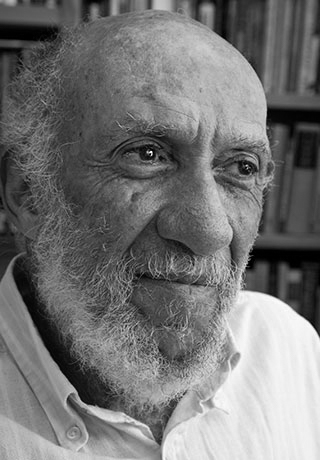

Professor Falk became an adviser to TFF when it was established in 1985.

Share

Leave a Reply

Your email address will not be published. Required fields are marked *

Related Posts

In response to an urgent Appeal from all the living Nobel Peace Prize Laureates, the General Assembly of the United Nations, on November 1998, unanimously declared the first decade of the twenty-first century to be The Decade for a Culture of Peace and Nonviolence. While people are naturally concerned about the amount of violence in our world and how it threatens our future, the Nobel Laureates are right to remind us of the potential of nonviolence and our calling to build a culture of peace and nonviolence.  The twentieth century is instructive in the way that the philosophy and practice of nonviolence have begun to flourish and in the way that nonviolent movements have had an exponential growth across the world. Mohandas Gandhi and Martin Luther King, Jr. are the most famous nonviolent leaders but many have built upon the paths they charted as in country after country, tyrannies and...
We know that medical personnel have failed to report to higher authorities wounds that were clearly caused by torture and that they have neglected to take steps to interrupt this torture. In addition, they have turned over prisoners’ medical records to interrogators who could use them to exploit the prisoners’ weaknesses or vulnerabilities. We have not yet learned the extent of medical involvement in delaying and possibly falsifying the death certificates of prisoners who have been killed by torturers. A May 22 article on Abu Ghraib in the New York Times states that “much of the evidence of abuse at the prison came from medical documents” and that records and statements “showed doctors and medics reporting to the area of the prison where the abuse occurred several times to stitch wounds, tend to collapsed prisoners or see patients with bruised or reddened genitals.” http://www.truthout.org/docs_04/080604J.shtml#16 According to the article, two doctors who...
Jan Øberg behandler i artiklen en lang række faktorer, som ligger til grund for den måde vores samfund er organiseret på – og derfor også for konflikter. Artiklen introducerer således sammenhængen mellem familien, foreninger, regeringer, NGO’ er, nation, stat, nationalstat og alliancer for på denne måde bedre at kunne forstå konflikter og i sidste ende blive klogere mht. at løse disse. Øberg, der er fortaler for global bevidsthed, hvilket skal ses i lyset af den øgede globalisering, skelner mellem kulturkamp og kulturdialog. Endelig behandles begrebet magt og magtesløshed: giver magt ret til at udøve magt – fordi man mener at have ret? Litteraturliste og arbejdsspørgsmål efter artiklen. Ordene vi bruger om verden I satellitperspektiv kan man godt tale om den menneskelige familie eller menneskeheden. Udtrykket understreger, at der eksisterer – eller burde eksistere – et fællesskab fordi vi alle er mennesker og sammen bebor denne klode og ingen anden. Og...

Recent Articles

In response to an urgent Appeal from all the living Nobel Peace Prize Laureates, the General Assembly of the United Nations, on November 1998, unanimously declared the first decade of the twenty-first century to be The Decade for a Culture of Peace and Nonviolence. While people are naturally concerned about the amount of violence in our world and how it threatens our future, the Nobel Laureates are right to remind us of the potential of nonviolence and our calling to build a culture of peace and nonviolence.  The twentieth century is instructive in the way that the philosophy and practice of nonviolence have begun to flourish and in the way that nonviolent movements have had an exponential growth across the world. Mohandas Gandhi and Martin Luther King, Jr. are the most famous nonviolent leaders but many have built upon the paths they charted as in country after country, tyrannies and...
We know that medical personnel have failed to report to higher authorities wounds that were clearly caused by torture and that they have neglected to take steps to interrupt this torture. In addition, they have turned over prisoners’ medical records to interrogators who could use them to exploit the prisoners’ weaknesses or vulnerabilities. We have not yet learned the extent of medical involvement in delaying and possibly falsifying the death certificates of prisoners who have been killed by torturers. A May 22 article on Abu Ghraib in the New York Times states that “much of the evidence of abuse at the prison came from medical documents” and that records and statements “showed doctors and medics reporting to the area of the prison where the abuse occurred several times to stitch wounds, tend to collapsed prisoners or see patients with bruised or reddened genitals.” http://www.truthout.org/docs_04/080604J.shtml#16 According to the article, two doctors who...
Jan Øberg behandler i artiklen en lang række faktorer, som ligger til grund for den måde vores samfund er organiseret på – og derfor også for konflikter. Artiklen introducerer således sammenhængen mellem familien, foreninger, regeringer, NGO’ er, nation, stat, nationalstat og alliancer for på denne måde bedre at kunne forstå konflikter og i sidste ende blive klogere mht. at løse disse. Øberg, der er fortaler for global bevidsthed, hvilket skal ses i lyset af den øgede globalisering, skelner mellem kulturkamp og kulturdialog. Endelig behandles begrebet magt og magtesløshed: giver magt ret til at udøve magt – fordi man mener at have ret? Litteraturliste og arbejdsspørgsmål efter artiklen. Ordene vi bruger om verden I satellitperspektiv kan man godt tale om den menneskelige familie eller menneskeheden. Udtrykket understreger, at der eksisterer – eller burde eksistere – et fællesskab fordi vi alle er mennesker og sammen bebor denne klode og ingen anden. Og...

TFF on Substack

Discover more from TFF Transnational Foundation & Jan Oberg.

Most Popular

In response to an urgent Appeal from all the living Nobel Peace Prize Laureates, the General Assembly of the United Nations, on November 1998, unanimously declared the first decade of the twenty-first century to be The Decade for a Culture of Peace and Nonviolence. While people are naturally concerned about the amount of violence in our world and how it threatens our future, the Nobel Laureates are right to remind us of the potential of nonviolence and our calling to build a culture of peace and nonviolence.  The twentieth century is instructive in the way that the philosophy and practice of nonviolence have begun to flourish and in the way that nonviolent movements have had an exponential growth across the world. Mohandas Gandhi and Martin Luther King, Jr. are the most famous nonviolent leaders but many have built upon the paths they charted as in country after country, tyrannies and...
We know that medical personnel have failed to report to higher authorities wounds that were clearly caused by torture and that they have neglected to take steps to interrupt this torture. In addition, they have turned over prisoners’ medical records to interrogators who could use them to exploit the prisoners’ weaknesses or vulnerabilities. We have not yet learned the extent of medical involvement in delaying and possibly falsifying the death certificates of prisoners who have been killed by torturers. A May 22 article on Abu Ghraib in the New York Times states that “much of the evidence of abuse at the prison came from medical documents” and that records and statements “showed doctors and medics reporting to the area of the prison where the abuse occurred several times to stitch wounds, tend to collapsed prisoners or see patients with bruised or reddened genitals.” http://www.truthout.org/docs_04/080604J.shtml#16 According to the article, two doctors who...
Jan Øberg behandler i artiklen en lang række faktorer, som ligger til grund for den måde vores samfund er organiseret på – og derfor også for konflikter. Artiklen introducerer således sammenhængen mellem familien, foreninger, regeringer, NGO’ er, nation, stat, nationalstat og alliancer for på denne måde bedre at kunne forstå konflikter og i sidste ende blive klogere mht. at løse disse. Øberg, der er fortaler for global bevidsthed, hvilket skal ses i lyset af den øgede globalisering, skelner mellem kulturkamp og kulturdialog. Endelig behandles begrebet magt og magtesløshed: giver magt ret til at udøve magt – fordi man mener at have ret? Litteraturliste og arbejdsspørgsmål efter artiklen. Ordene vi bruger om verden I satellitperspektiv kan man godt tale om den menneskelige familie eller menneskeheden. Udtrykket understreger, at der eksisterer – eller burde eksistere – et fællesskab fordi vi alle er mennesker og sammen bebor denne klode og ingen anden. Og...
Read More
Imagen-thumbnail-The-Transnational-1
In response to an urgent Appeal from all the living Nobel Peace Prize Laureates, the General Assembly of the United Nations, on November 1998, unanimously declared the first decade of the twenty-first century to be The Decade for a Culture of Peace and Nonviolence. While people are naturally concerned about the amount of violence in our world and how it threatens our future, the Nobel Laureates are right to remind us of the potential of nonviolence and our calling to build a culture of peace and nonviolence.  The twentieth century is instructive in the way that the philosophy and practice of nonviolence have begun to flourish and in the way that nonviolent movements have had an exponential growth across the world. Mohandas Gandhi and Martin Luther King, Jr. are the most famous nonviolent leaders but many have built upon the paths they charted as in country after country, tyrannies and...
Imagen-thumbnail-The-Transnational-1
We know that medical personnel have failed to report to higher authorities wounds that were clearly caused by torture and that they have neglected to take steps to interrupt this torture. In addition, they have turned over prisoners’ medical records to interrogators who could use them to exploit the prisoners’ weaknesses or vulnerabilities. We have not yet learned the extent of medical involvement in delaying and possibly falsifying the death certificates of prisoners who have been killed by torturers. A May 22 article on Abu Ghraib in the New York Times states that “much of the evidence of abuse at the prison came from medical documents” and that records and statements “showed doctors and medics reporting to the area of the prison where the abuse occurred several times to stitch wounds, tend to collapsed prisoners or see patients with bruised or reddened genitals.” http://www.truthout.org/docs_04/080604J.shtml#16 According to the article, two doctors who...
Imagen-thumbnail-The-Transnational-1
Jan Øberg behandler i artiklen en lang række faktorer, som ligger til grund for den måde vores samfund er organiseret på – og derfor også for konflikter. Artiklen introducerer således sammenhængen mellem familien, foreninger, regeringer, NGO’ er, nation, stat, nationalstat og alliancer for på denne måde bedre at kunne forstå konflikter og i sidste ende blive klogere mht. at løse disse. Øberg, der er fortaler for global bevidsthed, hvilket skal ses i lyset af den øgede globalisering, skelner mellem kulturkamp og kulturdialog. Endelig behandles begrebet magt og magtesløshed: giver magt ret til at udøve magt – fordi man mener at have ret? Litteraturliste og arbejdsspørgsmål efter artiklen. Ordene vi bruger om verden I satellitperspektiv kan man godt tale om den menneskelige familie eller menneskeheden. Udtrykket understreger, at der eksisterer – eller burde eksistere – et fællesskab fordi vi alle er mennesker og sammen bebor denne klode og ingen anden. Og...
Imagen-thumbnail-The-Transnational-1
Kapitel 2: Forskellige sider af Europa og USA…fortsat 2.5 Militære relationer I forbifarten har vi allerede sagt nogle ting om USA’s militære situation. Kig lige en gang til på afsnit 2.3. Nu skal vi uddybe det militære forhold mellem USA og EU. Der er en række ligheder mellem visse europæiske landes og USA’s militær. Næsten alle er med på en eller anden måde i NATO, direkte som medlem – selv Island, der ikke har et forsvar – eller indirekte i Partnerskab for Fred. USA og Canada er med i OSCE (på dansk OSSE), Organisationen for Sikkerhed og Samarbejde i Europa, der tæller over 50 lande. USA samt England og Frankrig er kernevåbenstater og de har styrker til intervention langt borte fra hjemlandet, om end USA’s er tifold større. Alle har også en omfattende våbeneksport og bruger den som et middel til at tjene penge og få loyale venner på, det...
Imagen-thumbnail-The-Transnational-1
Background Christian Harleman and Jan Oberg conducted a fact-finding mission to Burundi between November 26 and December 6, 2003. (See websites about the country here). The first TFF mission took place in March 1999. Unfortunately, since then it has not been practically possible to implement the co-operation with Burundi’s Ministry of Education and Burundian NGOs that was planned at the time. The 2003 mission had three purposes. First, to do fact-finding in general about the situation and, in particular, the progress under the Arusha Peace Process. Second, to explore the possibilities for co-operation between the government and relevant NGOs on the one hand and TFF on the other, in order to develop and deepen the existing competence in fields such as conflict-understanding, reconciliation and peace-building. Finally, third, to find out whether it would be possible, in co-operation with the Swedish Rescue Services Agency (Statens Räddningsverk), to establish a health care unit that...
Imagen-thumbnail-The-Transnational-1
Former UN Under-Secretary-General with special responsibility for peacekeeping operations TFF associate August 20, 2003 YRINGHAM, Mass.- Ralph Bunche was born in Detroit 100 years ago today (August 7, 2003). His passionate determination to get results did not extend to seeking credit for them, so his work is better remembered than he is. Of all his many accomplishments – civil rights pioneer, Nobel Peace Prize laureate, chief drafter of two chapters of the United Nations charter, negotiator of the armistices that ended the first Arab-Israeli war – Bunche said he was proudest of developing what came to be known as peacekeeping. Setting up the United Nations Truce Supervision Organization in Palestine in 1948, Bunche formulated the principles that have governed peacekeeping operations ever since. In the 1956 Suez crisis, working with Secretary General Dag Hammarskjold and Lester Pearson of Canada, he organized the first peacekeeping force, the United Nations Emergency Force...