
On Netanyahu's visit to the United States

It is far too simple to be merely outraged by the arrogant presumptuousness of today’s speech by the Israeli Prime Minister to a joint session of Congress two weeks prior to national elections in Israel. The Netanyahu visit has encouraged various forms of wishful thinking.

Perhaps, the most common one is to suppose that bump in the road of U.S./Israeli relations will lead to a foreign policy reset that is more in accord with American national interests (in the spirit of the Mearsheimer/Walt critique of the baneful influence of the Israeli lobby) or that it signifies the death knell of AIPAC or the permanent alienation of the Democratic Party from its knee jerk support for Israel.

In my view, none of these developments will happen in the wake of Netanyahu visit, no matter how obnoxious or divisive or inappropriate as his presence appears to be.

First of all, it is important to separate three main dimensions of the Netanyahu speech to Congress:

1) its impact on efforts to reach a diplomatic solution in relation to Iran;

2) its impact on U.S./Israel relations;

3) its effects on the Israeli elections scheduled for March 17th.

In my view, the biggest damage is likely to result from (1), with few lasting consequences arising from (2) and (3), although on 3) there is a serious possibility that the speech, contrary to Netanyahu’s apparent intentions, will weaken his reelection prospects because Israelis will worry (needlessly) that there will be permanent negative fallout with respect to the Israel-United States relationship if Netanyahu remains as the head of the Israeli government.

There is a fourth dimension, even more speculative than the others, yet probably of significance:

4) the impact of the speech on the rising tide of anti-Semitism.

Here, we need to be careful to distinguish a) allegations of anti-Semitism that are used to stifle criticism of Israel and what I would call b) genuine anti-Semitism that exhibits and stems from hatred of Jews.

It is a sad commentary on the current situation that these two contradictory realities are merged in toxic ways by current Zionist discourses on anti-Semitism, playing on Jewish post-Holocaust fears to shield Israel from justifiable criticism for its abusive behavior toward the Palestinian people and the related neglect of Palestinian fundamental rights.

My greatest worry is that the Netanyahu speech will stiffen still further the anti-Obama will of the Republican members of Congress, as abetted by the most diehard Israel supporters among the Democratic lawmakers, as to put a impassable roadblock in the path of mutually beneficial negotiations with Iran that are now at a critical make or break stage.

To some extent this roadblock is likely to be somewhat disguised by taking the form of retaining strong sanctions (never justified) until Iran demonstrates its good faith for several years by adhering to all the limitations on its nuclear program, including free access for international monitoring.

If diplomacy fails, it will have at least two detrimental effects: first, it will definitely tilt the domestic balance in Iran toward the hardliners, and likely make Iran more repressive internally and more belligerent externally; and secondly, it will increase regional tensions, and if Iran proceeds with its nuclear program, as it most probably would, this would greatly heighten the prospect of a military confrontation.

In such a setting, the Netanyahu speech is a dangerous wild card that would never have been played by responsible political actors, although threatening to deliver such a speech might have achieved a comparable harmful result without the backlash. But no one has ever claimed subtlety to be a Netanyahu virtue.

Yet let us suppose that Netanyahu had given in to pressure to cancel the speech with the side effect of psycho-political gratitude from most sectors of influential opinion in the United States. At that point Netanyahu could have exacted more than a pound or two of flesh from a foolishly grateful and supine Obama White House.

We should not forget that in the context of nuclear weapons policy in the Middle East there is a surrealistic element present: Israel mounts its objections to a remote possibility of Iran acquiring nuclear weapons while avoiding any objections to the retention of its own nuclear arsenal, secretly developed. Such a diplomatic asymmetry should not be allowed to pass unnoticed. Indeed, it should not be allowed!

When it comes to weakening support among Democrats or Jewish voters, the news of Israel’s demise, to invoke the authority of Mark Twain, is greatly exaggerated. Democrats will explain their absence from the speech as a reaction limited to the Speaker John Boehner irresponsible and partisan rupture of Congressional protocol and to Netanyahu’s untimely presence.

At the same time, they will do as other American political leaders, such as John Kerry are doing, seize the occasion to reaffirm their support for the unbreakable nature of the Israel/U.S. partnership. Already we hear strident reassurances to Israel of the underlying American commitment to the security and wellbeing of Israel as understood by the Israeli government.

As for Jewish voters and funders, they may possibly be conscience stricken, and even annoyed, for the moment, but it is highly probable that even if Netanyahu wins the election in two weeks their fundamental allegiances will be reaffirmed. I believe this is especially true in the wake of the Charlie Hebdo and Copenhagen synagogue incidents and the regional rise of ISIS.

Such a prediction should not be interpreted as a sign that the rise of solidarity with the Palestinian struggle will lose its impressive recent momentum within universities, churches, and labor unions.

In this sense, I expect the disconnect between Washington and the rest of the country will widen after the Netanyahu visit — mending fences in Washington while mounting new challenges to Israeli policies and practices throughout civil society. This will be expressed by further victories for divestment initiatives on American campuses and robust growth for the BDS campaign.

As far as the Israeli elections are concerned, it seems a black box. What is so notable, as authoritatively observed by Uri Avnery, is the deliberate unwillingness of the centrist anti-Likud coalition led by Isaac Herzog to dwell on the need for ‘peace’ or for a just solution to the conflict. The electoral debate seems to have evoked little interest in Israel, and what disagreement there is, concerns bread and butter issues relating to economic policy.

There is one misperception that it is important to counter, the idea that persists, despite all evidence to the contrary, that the outlook for a just peace would greatly improve if Netanyahu and Likud are defeated. There is not a shred of support for this kind of mindless optimism that remains so prevalent in the ranks of liberal Zionism, which hangs on to the vain belief that a two-state solution is still feasible and has any appeal for the Israeli electorate.

It should have been clear years ago that a tacit consensus exists in Israel, and is not opposed by Washington, that Oslo diplomacy has reached a dead end. The only requirement for the sake of public opinion is to keep aloft the banner of false consciousness that with tough concessions on both sides a sustainable peace can still be achieved, and only by such means.

The issue of anti-Semitism is not likely to disappear. As mentioned, it will continue to be used to blunt and divert criticism of Israel.

As well, the continued frustration of Palestinians and other Arab victims of Israeli policies and Islamophobia are likely to commit hate crimes (although to a far lesser extent than to be the target of such crimes). There is no doubt that the deft playing of the anti-Semitic card by Zionist forces has encroached upon academic freedom throughout the world, targeting critics and civil society peace and humanitarian activists.

Troublesome as this is, more disturbing is the extent to which such tactics are reinforced by academic administrators and politicians who are either complicit or craven, scared by the disproportionate influence of Zionist advocacy in the media, government, and among the wealthy. For elaboration see the fine March 1, 2015 analysis and commentary by Philip Weiss in Mondoweiss online news service.

What we can hope for in the wake of this latest Netanyahu experience is some greater appreciation of what is at stake in the Iranian diplomacy and the realization that the Palestinian ordeal is the defining human rights issue of our time.

But don’t look to Washington for this to happen anytime soon. I expect that even Obama will swallow hard, and then do his best to resume relations as if nothing had ever happened, perhaps harboring secret fantasies of a devastating defeat for Netanyahu and his Likud Party on March 17th.
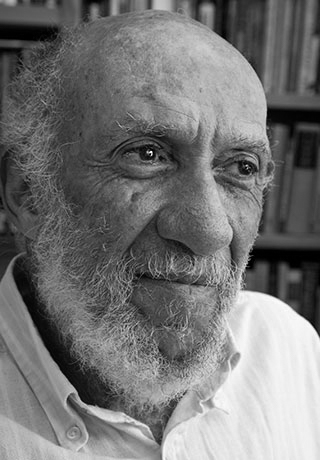

Professor Falk became an adviser to TFF when it was established in 1985.

Share

Leave a Reply

Your email address will not be published. Required fields are marked *

Related Posts

We know that medical personnel have failed to report to higher authorities wounds that were clearly caused by torture and that they have neglected to take steps to interrupt this torture. In addition, they have turned over prisoners’ medical records to interrogators who could use them to exploit the prisoners’ weaknesses or vulnerabilities. We have not yet learned the extent of medical involvement in delaying and possibly falsifying the death certificates of prisoners who have been killed by torturers. A May 22 article on Abu Ghraib in the New York Times states that “much of the evidence of abuse at the prison came from medical documents” and that records and statements “showed doctors and medics reporting to the area of the prison where the abuse occurred several times to stitch wounds, tend to collapsed prisoners or see patients with bruised or reddened genitals.” http://www.truthout.org/docs_04/080604J.shtml#16 According to the article, two doctors who...
Jan Øberg behandler i artiklen en lang række faktorer, som ligger til grund for den måde vores samfund er organiseret på – og derfor også for konflikter. Artiklen introducerer således sammenhængen mellem familien, foreninger, regeringer, NGO’ er, nation, stat, nationalstat og alliancer for på denne måde bedre at kunne forstå konflikter og i sidste ende blive klogere mht. at løse disse. Øberg, der er fortaler for global bevidsthed, hvilket skal ses i lyset af den øgede globalisering, skelner mellem kulturkamp og kulturdialog. Endelig behandles begrebet magt og magtesløshed: giver magt ret til at udøve magt – fordi man mener at have ret? Litteraturliste og arbejdsspørgsmål efter artiklen. Ordene vi bruger om verden I satellitperspektiv kan man godt tale om den menneskelige familie eller menneskeheden. Udtrykket understreger, at der eksisterer – eller burde eksistere – et fællesskab fordi vi alle er mennesker og sammen bebor denne klode og ingen anden. Og...
Kapitel 2: Forskellige sider af Europa og USA…fortsat 2.5 Militære relationer I forbifarten har vi allerede sagt nogle ting om USA’s militære situation. Kig lige en gang til på afsnit 2.3. Nu skal vi uddybe det militære forhold mellem USA og EU. Der er en række ligheder mellem visse europæiske landes og USA’s militær. Næsten alle er med på en eller anden måde i NATO, direkte som medlem – selv Island, der ikke har et forsvar – eller indirekte i Partnerskab for Fred. USA og Canada er med i OSCE (på dansk OSSE), Organisationen for Sikkerhed og Samarbejde i Europa, der tæller over 50 lande. USA samt England og Frankrig er kernevåbenstater og de har styrker til intervention langt borte fra hjemlandet, om end USA’s er tifold større. Alle har også en omfattende våbeneksport og bruger den som et middel til at tjene penge og få loyale venner på, det...

Recent Articles

We know that medical personnel have failed to report to higher authorities wounds that were clearly caused by torture and that they have neglected to take steps to interrupt this torture. In addition, they have turned over prisoners’ medical records to interrogators who could use them to exploit the prisoners’ weaknesses or vulnerabilities. We have not yet learned the extent of medical involvement in delaying and possibly falsifying the death certificates of prisoners who have been killed by torturers. A May 22 article on Abu Ghraib in the New York Times states that “much of the evidence of abuse at the prison came from medical documents” and that records and statements “showed doctors and medics reporting to the area of the prison where the abuse occurred several times to stitch wounds, tend to collapsed prisoners or see patients with bruised or reddened genitals.” http://www.truthout.org/docs_04/080604J.shtml#16 According to the article, two doctors who...
Jan Øberg behandler i artiklen en lang række faktorer, som ligger til grund for den måde vores samfund er organiseret på – og derfor også for konflikter. Artiklen introducerer således sammenhængen mellem familien, foreninger, regeringer, NGO’ er, nation, stat, nationalstat og alliancer for på denne måde bedre at kunne forstå konflikter og i sidste ende blive klogere mht. at løse disse. Øberg, der er fortaler for global bevidsthed, hvilket skal ses i lyset af den øgede globalisering, skelner mellem kulturkamp og kulturdialog. Endelig behandles begrebet magt og magtesløshed: giver magt ret til at udøve magt – fordi man mener at have ret? Litteraturliste og arbejdsspørgsmål efter artiklen. Ordene vi bruger om verden I satellitperspektiv kan man godt tale om den menneskelige familie eller menneskeheden. Udtrykket understreger, at der eksisterer – eller burde eksistere – et fællesskab fordi vi alle er mennesker og sammen bebor denne klode og ingen anden. Og...
Kapitel 2: Forskellige sider af Europa og USA…fortsat 2.5 Militære relationer I forbifarten har vi allerede sagt nogle ting om USA’s militære situation. Kig lige en gang til på afsnit 2.3. Nu skal vi uddybe det militære forhold mellem USA og EU. Der er en række ligheder mellem visse europæiske landes og USA’s militær. Næsten alle er med på en eller anden måde i NATO, direkte som medlem – selv Island, der ikke har et forsvar – eller indirekte i Partnerskab for Fred. USA og Canada er med i OSCE (på dansk OSSE), Organisationen for Sikkerhed og Samarbejde i Europa, der tæller over 50 lande. USA samt England og Frankrig er kernevåbenstater og de har styrker til intervention langt borte fra hjemlandet, om end USA’s er tifold større. Alle har også en omfattende våbeneksport og bruger den som et middel til at tjene penge og få loyale venner på, det...

TFF on Substack

Discover more from TFF Transnational Foundation & Jan Oberg.

Most Popular

We know that medical personnel have failed to report to higher authorities wounds that were clearly caused by torture and that they have neglected to take steps to interrupt this torture. In addition, they have turned over prisoners’ medical records to interrogators who could use them to exploit the prisoners’ weaknesses or vulnerabilities. We have not yet learned the extent of medical involvement in delaying and possibly falsifying the death certificates of prisoners who have been killed by torturers. A May 22 article on Abu Ghraib in the New York Times states that “much of the evidence of abuse at the prison came from medical documents” and that records and statements “showed doctors and medics reporting to the area of the prison where the abuse occurred several times to stitch wounds, tend to collapsed prisoners or see patients with bruised or reddened genitals.” http://www.truthout.org/docs_04/080604J.shtml#16 According to the article, two doctors who...
Jan Øberg behandler i artiklen en lang række faktorer, som ligger til grund for den måde vores samfund er organiseret på – og derfor også for konflikter. Artiklen introducerer således sammenhængen mellem familien, foreninger, regeringer, NGO’ er, nation, stat, nationalstat og alliancer for på denne måde bedre at kunne forstå konflikter og i sidste ende blive klogere mht. at løse disse. Øberg, der er fortaler for global bevidsthed, hvilket skal ses i lyset af den øgede globalisering, skelner mellem kulturkamp og kulturdialog. Endelig behandles begrebet magt og magtesløshed: giver magt ret til at udøve magt – fordi man mener at have ret? Litteraturliste og arbejdsspørgsmål efter artiklen. Ordene vi bruger om verden I satellitperspektiv kan man godt tale om den menneskelige familie eller menneskeheden. Udtrykket understreger, at der eksisterer – eller burde eksistere – et fællesskab fordi vi alle er mennesker og sammen bebor denne klode og ingen anden. Og...
Kapitel 2: Forskellige sider af Europa og USA…fortsat 2.5 Militære relationer I forbifarten har vi allerede sagt nogle ting om USA’s militære situation. Kig lige en gang til på afsnit 2.3. Nu skal vi uddybe det militære forhold mellem USA og EU. Der er en række ligheder mellem visse europæiske landes og USA’s militær. Næsten alle er med på en eller anden måde i NATO, direkte som medlem – selv Island, der ikke har et forsvar – eller indirekte i Partnerskab for Fred. USA og Canada er med i OSCE (på dansk OSSE), Organisationen for Sikkerhed og Samarbejde i Europa, der tæller over 50 lande. USA samt England og Frankrig er kernevåbenstater og de har styrker til intervention langt borte fra hjemlandet, om end USA’s er tifold større. Alle har også en omfattende våbeneksport og bruger den som et middel til at tjene penge og få loyale venner på, det...
Read More
Imagen-thumbnail-The-Transnational-1
We know that medical personnel have failed to report to higher authorities wounds that were clearly caused by torture and that they have neglected to take steps to interrupt this torture. In addition, they have turned over prisoners’ medical records to interrogators who could use them to exploit the prisoners’ weaknesses or vulnerabilities. We have not yet learned the extent of medical involvement in delaying and possibly falsifying the death certificates of prisoners who have been killed by torturers. A May 22 article on Abu Ghraib in the New York Times states that “much of the evidence of abuse at the prison came from medical documents” and that records and statements “showed doctors and medics reporting to the area of the prison where the abuse occurred several times to stitch wounds, tend to collapsed prisoners or see patients with bruised or reddened genitals.” http://www.truthout.org/docs_04/080604J.shtml#16 According to the article, two doctors who...
Imagen-thumbnail-The-Transnational-1
Jan Øberg behandler i artiklen en lang række faktorer, som ligger til grund for den måde vores samfund er organiseret på – og derfor også for konflikter. Artiklen introducerer således sammenhængen mellem familien, foreninger, regeringer, NGO’ er, nation, stat, nationalstat og alliancer for på denne måde bedre at kunne forstå konflikter og i sidste ende blive klogere mht. at løse disse. Øberg, der er fortaler for global bevidsthed, hvilket skal ses i lyset af den øgede globalisering, skelner mellem kulturkamp og kulturdialog. Endelig behandles begrebet magt og magtesløshed: giver magt ret til at udøve magt – fordi man mener at have ret? Litteraturliste og arbejdsspørgsmål efter artiklen. Ordene vi bruger om verden I satellitperspektiv kan man godt tale om den menneskelige familie eller menneskeheden. Udtrykket understreger, at der eksisterer – eller burde eksistere – et fællesskab fordi vi alle er mennesker og sammen bebor denne klode og ingen anden. Og...
Imagen-thumbnail-The-Transnational-1
Kapitel 2: Forskellige sider af Europa og USA…fortsat 2.5 Militære relationer I forbifarten har vi allerede sagt nogle ting om USA’s militære situation. Kig lige en gang til på afsnit 2.3. Nu skal vi uddybe det militære forhold mellem USA og EU. Der er en række ligheder mellem visse europæiske landes og USA’s militær. Næsten alle er med på en eller anden måde i NATO, direkte som medlem – selv Island, der ikke har et forsvar – eller indirekte i Partnerskab for Fred. USA og Canada er med i OSCE (på dansk OSSE), Organisationen for Sikkerhed og Samarbejde i Europa, der tæller over 50 lande. USA samt England og Frankrig er kernevåbenstater og de har styrker til intervention langt borte fra hjemlandet, om end USA’s er tifold større. Alle har også en omfattende våbeneksport og bruger den som et middel til at tjene penge og få loyale venner på, det...
Imagen-thumbnail-The-Transnational-1
Background Christian Harleman and Jan Oberg conducted a fact-finding mission to Burundi between November 26 and December 6, 2003. (See websites about the country here). The first TFF mission took place in March 1999. Unfortunately, since then it has not been practically possible to implement the co-operation with Burundi’s Ministry of Education and Burundian NGOs that was planned at the time. The 2003 mission had three purposes. First, to do fact-finding in general about the situation and, in particular, the progress under the Arusha Peace Process. Second, to explore the possibilities for co-operation between the government and relevant NGOs on the one hand and TFF on the other, in order to develop and deepen the existing competence in fields such as conflict-understanding, reconciliation and peace-building. Finally, third, to find out whether it would be possible, in co-operation with the Swedish Rescue Services Agency (Statens Räddningsverk), to establish a health care unit that...
Imagen-thumbnail-The-Transnational-1
Former UN Under-Secretary-General with special responsibility for peacekeeping operations TFF associate August 20, 2003 YRINGHAM, Mass.- Ralph Bunche was born in Detroit 100 years ago today (August 7, 2003). His passionate determination to get results did not extend to seeking credit for them, so his work is better remembered than he is. Of all his many accomplishments – civil rights pioneer, Nobel Peace Prize laureate, chief drafter of two chapters of the United Nations charter, negotiator of the armistices that ended the first Arab-Israeli war – Bunche said he was proudest of developing what came to be known as peacekeeping. Setting up the United Nations Truce Supervision Organization in Palestine in 1948, Bunche formulated the principles that have governed peacekeeping operations ever since. In the 1956 Suez crisis, working with Secretary General Dag Hammarskjold and Lester Pearson of Canada, he organized the first peacekeeping force, the United Nations Emergency Force...
– nästan 11 månader Till Sofia nästan 11 månader # 1  Till Sofias huvudsida Till alla Privata Foto-Serier