
Losing control: A blogger's nightmare

When I started this blog a couple of years ago, the thought never entered my mind that I would need to defend the terrain. Although I knew my views were controversial on some issues, I assumed that those who disagreed strongly would stay away, losing interest, or express their disagreements in a spirit of civility.

To a large extent this has been true, with the glaring exception of Israel/Palestine. Here my problems are two-fold: (1) very nasty personal attacks that challenge the integrity, balance, judgment, and overall demeanor of myself and those that agree with me; (2) very insistent and determined requests to engage my views from highly divergent standpoints, so divergent that I can find no useful meeting ground or value in such exchanges.

By and large, I have excluded defamatory comments from the first group to the extent I have taken the time to monitor the comments section of the blog. I neither feel any obligation to give space on the blog to those who wish me ill, nor do I wish to respond to such allegations unless it seems absolutely necessary to do so. My recent Open Letter to CRIF was an illustration of such a necessity. I have refrained from responding to the UN Watch campaign despite a strong temptation to explain their distortions and deny their falsehoods, which are clearly intended to bring me harm.

The second cluster of responses has been more troublesome for me: as someone who has enjoyed classroom teaching for almost 60 years I have always welcomed the challenge of divergent viewpoints that differ dramatically from my own, and the valuable sort of dialogic conversations that have so often enlivened my academic career. At the same time, I do not think that by posting interpretations of events and issues, I am committing myself to debate with those who disagree to an extent that ensures that the interaction of our viewpoints will result in an argument incapable of resolution, and essentially going nowhere. I have always found debate between those with sharply antagonistic views to be, at best, a species of performance art or a theater of ideas that may be useful in some instances to clarify disagreements or to entertain an audience.

In my experience debates almost never succeed in finding common ground or even in leading one side or the other to modify their position in significant ways. I raise this issue because some of those who defend Israel most passionately seem to feel that I have a responsibility to enter detailed and frequent discussion with them to consider our points of difference.

I am sympathetic with the view that because I have this position as UN Special Rapporteur on human rights violation in the Palestinian territories occupied since 1967 that I have a duty to engage with those who are concerned with these issues. In some ways I wish that my schedule was less crowded and my energies were more extensive, but I have to make choices. It should be remembered that my UN appointment is not a UN staff position. I am in effect an unpaid volunteer, and accept the burden of considerable added work because I believe that the Palestinian people deserve an independent and honest voice to express their grievances on the global stage, and I do this in a manner that tries to take account of Israeli claims relating to its occupation policies.

I would also insist that due to my independent position within the UN System, it is entirely appropriate to maintain a blog of this sort that expresses my views as a citizen of a democratic society, which I regard as falling within the sphere of conscience and reflection. I do make an effort to avoid public partisan stands in activist contexts that could create ambiguities as to my commitment to speak the truth as best I can.

I draw a distinction between those who share some core commitments, for instance, respect for rights under international law or commitments to seek peaceful resolution of disputes, and those that seem to be taunts rather than serious efforts to gain mutual understanding of difficult and complicated issues. Interpretations of the issues that are so completely tilted toward legitimizing the positions and claims of Israel, which occupies the dominant position in the conflict, fall outside the boundaries of useful discussion so far as I am concerned.

My sense of fairness is always conditioned by the structure of the underlying relationships, placing me on the side of those social and political forces that are struggling for emancipation from situations of oppression and rightlessness. Given this perspective, siding with the Palestinians is partly a matter of identifying with the party that has for decades been victimized by the cruel play of hard power reinforced by geopolitics. Let me be clear: my underlying commitment is to a sustainable and just peace for both peoples, but I believe this can only happen if ‘facts on the ground’ give way to a full-fledged diplomatic appreciation of ‘Palestinian rights under international law.’

Even if I was inclined to devote more time to responding to hostile and divergent comments on Israel/Palestine I would disappoint other readers of the blog, who are already offended by the degree to which this one conflict sucks up all the oxygen. I have received many emails, that is, a cyber path that avoids direct comments the blog, which have strongly recommended that I not respond to comments at all and that I take steps to avoid this disproportionate concentration of energy on this one conflict.

There is, I have discovered, an analogue in the blogosphere to the crude version of Gresham’s Law (‘bad money drives out good money’) so beloved by economists: It is ‘bad comments drive out good comments.’

Some of my correspondents have even gently suggested in response to the uncivil tone of many comments that I abandon the blog altogether and instead create a mailing list that serves as an alternative outlet for my views, which would have the advantage of limiting posts to a community of likeminded persons.

Supposedly, this would protect my bruised ego. But I remain foolish enough to sustain the blog a bit longer, and see what happens. I will continue to struggle with balance on a tightrope that keeps the blog open to strangers, including those who disagree and disapprove, while working on behalf of an identity and level of discourse that accords with my values, and is faithful to my initial motivation to engage in the hard work of writing posts on a variety of topics to address some public issues in a manner that seems at variance with mainstream media interpretations. I do this partly because self-expression has always been a satisfying form of self-discovery, somewhat similar in this manner to teaching and scholarly writing. And partly because there might be a few others on the planet that share my worries about the present and future, and seek a community brave enough to hope when there is no hope!

It is strange that I should also receive complaints as to why I do not discuss wrongdoing in the world other than that of Israel. One of the sharpest criticisms that I receive is that I must be an ‘Israel-hater,’ or worse, ‘a Jew hater,’ because I do not denounce instances of human suffering other than that of the Palestinians with the same vehemence that I accord to Israel’s wrongdoing. It is a strange line of attack for two reasons: firstly, to my knowledge, those who make such an allegation are themselves single-minded defenders of Israel, and exhibit no interest in other issues beyond the rhetorical point that there are other humanitarian ordeals that from their standpoint are far worse than what the Palestinians have endured; and secondly, I have devoted my research and teaching skills to many other international concerns other than those associated with the Israel/Palestine conflict.

Even a superficial glance at my CV would show a career emphasis on general international law and world order issues, and far more criticism devoted over the years to American foreign policy than to Israel’s behavior.

I am prepared to entertain other ideas about my claim to have a right to control the tone and substance of the comments section of my blog. In effect, I have been reflecting on the presumed basis that I have a proprietary right to exercise control according to my discretion. There are a huge variety of other sites enabling those who wish to denounce me or my views, so why must I make this space available for uncongenial ventures? And why should I have to depend on friends and allies coming to my rescue when the going gets too tough. Hilary Clinton in the 2008 presidential campaign taunted Obama by saying “if you can’t stand the heat, stay out of the kitchen.” But I ask myself, ‘what is the point of such discomfort if the heat sheds no light,’ mixing metaphors inexcusably.

Another response to this kind of squabble is to adopt the ethos of my younger son, who likes to say ‘chill!’ whenever emotions rise above his comfort level. His intention is to encourage ‘letting go,’ ‘backing off’’, ‘allowing a hundred flowers to bloom,’ and the like. But there are deep feelings at stake when these blog issues are being discussed, and little willingness to grant respect to those who defend positions that seem abhorrent.

I include myself in this indictment, often feeling too engaged with the abuse of Palestinian rights to treat controversy as mere differences of opinion, but this is a reflection of my understanding of the relevant facts and law, and not a matter of blind passion or blinkered vision.
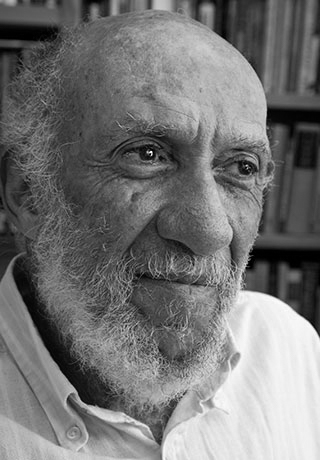

Professor Falk became an adviser to TFF when it was established in 1985.

Share

Leave a Reply

Your email address will not be published. Required fields are marked *

Related Posts

Gandhi, Arun. Lord Richard Attenborough. Kasturba: a lifeNew Delhi: Penguin Books Ltd., 2000.315 pp, 295 Indian Rs, US $22.51 January 29, 2002 Arun Gandhi, grandson to Mohandas and Kasturba, has written a thorough account of Kasturba’s life. Arun begins with a description of Kasturba’s childhood in Porbandar in the late1800s, before she met Mohandas. By having chosen to embark on difficult research into his grandmother’s life, including her first years which are not well-documented, Arun ensures that the reader receives an intimate and life-long portrait of this amazing woman. Kasturba is presented as a lively woman &endash; obedient, yet with a mind of her own. As the relationship between Kasturba and Mohandas developed, Arun maintains that Kasturba’s influence over Mohandas in her own quiet way also grew, to which some of Mohandas’ writings also attest.  Arun paints a vivid picture of the beginnings of Mohandas’ non-violence movement in South Africa, a...
In response to an urgent Appeal from all the living Nobel Peace Prize Laureates, the General Assembly of the United Nations, on November 1998, unanimously declared the first decade of the twenty-first century to be The Decade for a Culture of Peace and Nonviolence. While people are naturally concerned about the amount of violence in our world and how it threatens our future, the Nobel Laureates are right to remind us of the potential of nonviolence and our calling to build a culture of peace and nonviolence.  The twentieth century is instructive in the way that the philosophy and practice of nonviolence have begun to flourish and in the way that nonviolent movements have had an exponential growth across the world. Mohandas Gandhi and Martin Luther King, Jr. are the most famous nonviolent leaders but many have built upon the paths they charted as in country after country, tyrannies and...
We know that medical personnel have failed to report to higher authorities wounds that were clearly caused by torture and that they have neglected to take steps to interrupt this torture. In addition, they have turned over prisoners’ medical records to interrogators who could use them to exploit the prisoners’ weaknesses or vulnerabilities. We have not yet learned the extent of medical involvement in delaying and possibly falsifying the death certificates of prisoners who have been killed by torturers. A May 22 article on Abu Ghraib in the New York Times states that “much of the evidence of abuse at the prison came from medical documents” and that records and statements “showed doctors and medics reporting to the area of the prison where the abuse occurred several times to stitch wounds, tend to collapsed prisoners or see patients with bruised or reddened genitals.” http://www.truthout.org/docs_04/080604J.shtml#16 According to the article, two doctors who...

Recent Articles

Gandhi, Arun. Lord Richard Attenborough. Kasturba: a lifeNew Delhi: Penguin Books Ltd., 2000.315 pp, 295 Indian Rs, US $22.51 January 29, 2002 Arun Gandhi, grandson to Mohandas and Kasturba, has written a thorough account of Kasturba’s life. Arun begins with a description of Kasturba’s childhood in Porbandar in the late1800s, before she met Mohandas. By having chosen to embark on difficult research into his grandmother’s life, including her first years which are not well-documented, Arun ensures that the reader receives an intimate and life-long portrait of this amazing woman. Kasturba is presented as a lively woman &endash; obedient, yet with a mind of her own. As the relationship between Kasturba and Mohandas developed, Arun maintains that Kasturba’s influence over Mohandas in her own quiet way also grew, to which some of Mohandas’ writings also attest.  Arun paints a vivid picture of the beginnings of Mohandas’ non-violence movement in South Africa, a...
In response to an urgent Appeal from all the living Nobel Peace Prize Laureates, the General Assembly of the United Nations, on November 1998, unanimously declared the first decade of the twenty-first century to be The Decade for a Culture of Peace and Nonviolence. While people are naturally concerned about the amount of violence in our world and how it threatens our future, the Nobel Laureates are right to remind us of the potential of nonviolence and our calling to build a culture of peace and nonviolence.  The twentieth century is instructive in the way that the philosophy and practice of nonviolence have begun to flourish and in the way that nonviolent movements have had an exponential growth across the world. Mohandas Gandhi and Martin Luther King, Jr. are the most famous nonviolent leaders but many have built upon the paths they charted as in country after country, tyrannies and...
We know that medical personnel have failed to report to higher authorities wounds that were clearly caused by torture and that they have neglected to take steps to interrupt this torture. In addition, they have turned over prisoners’ medical records to interrogators who could use them to exploit the prisoners’ weaknesses or vulnerabilities. We have not yet learned the extent of medical involvement in delaying and possibly falsifying the death certificates of prisoners who have been killed by torturers. A May 22 article on Abu Ghraib in the New York Times states that “much of the evidence of abuse at the prison came from medical documents” and that records and statements “showed doctors and medics reporting to the area of the prison where the abuse occurred several times to stitch wounds, tend to collapsed prisoners or see patients with bruised or reddened genitals.” http://www.truthout.org/docs_04/080604J.shtml#16 According to the article, two doctors who...

TFF on Substack

Discover more from TFF Transnational Foundation & Jan Oberg.

Most Popular

Gandhi, Arun. Lord Richard Attenborough. Kasturba: a lifeNew Delhi: Penguin Books Ltd., 2000.315 pp, 295 Indian Rs, US $22.51 January 29, 2002 Arun Gandhi, grandson to Mohandas and Kasturba, has written a thorough account of Kasturba’s life. Arun begins with a description of Kasturba’s childhood in Porbandar in the late1800s, before she met Mohandas. By having chosen to embark on difficult research into his grandmother’s life, including her first years which are not well-documented, Arun ensures that the reader receives an intimate and life-long portrait of this amazing woman. Kasturba is presented as a lively woman &endash; obedient, yet with a mind of her own. As the relationship between Kasturba and Mohandas developed, Arun maintains that Kasturba’s influence over Mohandas in her own quiet way also grew, to which some of Mohandas’ writings also attest.  Arun paints a vivid picture of the beginnings of Mohandas’ non-violence movement in South Africa, a...
In response to an urgent Appeal from all the living Nobel Peace Prize Laureates, the General Assembly of the United Nations, on November 1998, unanimously declared the first decade of the twenty-first century to be The Decade for a Culture of Peace and Nonviolence. While people are naturally concerned about the amount of violence in our world and how it threatens our future, the Nobel Laureates are right to remind us of the potential of nonviolence and our calling to build a culture of peace and nonviolence.  The twentieth century is instructive in the way that the philosophy and practice of nonviolence have begun to flourish and in the way that nonviolent movements have had an exponential growth across the world. Mohandas Gandhi and Martin Luther King, Jr. are the most famous nonviolent leaders but many have built upon the paths they charted as in country after country, tyrannies and...
We know that medical personnel have failed to report to higher authorities wounds that were clearly caused by torture and that they have neglected to take steps to interrupt this torture. In addition, they have turned over prisoners’ medical records to interrogators who could use them to exploit the prisoners’ weaknesses or vulnerabilities. We have not yet learned the extent of medical involvement in delaying and possibly falsifying the death certificates of prisoners who have been killed by torturers. A May 22 article on Abu Ghraib in the New York Times states that “much of the evidence of abuse at the prison came from medical documents” and that records and statements “showed doctors and medics reporting to the area of the prison where the abuse occurred several times to stitch wounds, tend to collapsed prisoners or see patients with bruised or reddened genitals.” http://www.truthout.org/docs_04/080604J.shtml#16 According to the article, two doctors who...
Read More
Imagen-thumbnail-The-Transnational-1
Gandhi, Arun. Lord Richard Attenborough. Kasturba: a lifeNew Delhi: Penguin Books Ltd., 2000.315 pp, 295 Indian Rs, US $22.51 January 29, 2002 Arun Gandhi, grandson to Mohandas and Kasturba, has written a thorough account of Kasturba’s life. Arun begins with a description of Kasturba’s childhood in Porbandar in the late1800s, before she met Mohandas. By having chosen to embark on difficult research into his grandmother’s life, including her first years which are not well-documented, Arun ensures that the reader receives an intimate and life-long portrait of this amazing woman. Kasturba is presented as a lively woman &endash; obedient, yet with a mind of her own. As the relationship between Kasturba and Mohandas developed, Arun maintains that Kasturba’s influence over Mohandas in her own quiet way also grew, to which some of Mohandas’ writings also attest.  Arun paints a vivid picture of the beginnings of Mohandas’ non-violence movement in South Africa, a...
Imagen-thumbnail-The-Transnational-1
In response to an urgent Appeal from all the living Nobel Peace Prize Laureates, the General Assembly of the United Nations, on November 1998, unanimously declared the first decade of the twenty-first century to be The Decade for a Culture of Peace and Nonviolence. While people are naturally concerned about the amount of violence in our world and how it threatens our future, the Nobel Laureates are right to remind us of the potential of nonviolence and our calling to build a culture of peace and nonviolence.  The twentieth century is instructive in the way that the philosophy and practice of nonviolence have begun to flourish and in the way that nonviolent movements have had an exponential growth across the world. Mohandas Gandhi and Martin Luther King, Jr. are the most famous nonviolent leaders but many have built upon the paths they charted as in country after country, tyrannies and...
Imagen-thumbnail-The-Transnational-1
We know that medical personnel have failed to report to higher authorities wounds that were clearly caused by torture and that they have neglected to take steps to interrupt this torture. In addition, they have turned over prisoners’ medical records to interrogators who could use them to exploit the prisoners’ weaknesses or vulnerabilities. We have not yet learned the extent of medical involvement in delaying and possibly falsifying the death certificates of prisoners who have been killed by torturers. A May 22 article on Abu Ghraib in the New York Times states that “much of the evidence of abuse at the prison came from medical documents” and that records and statements “showed doctors and medics reporting to the area of the prison where the abuse occurred several times to stitch wounds, tend to collapsed prisoners or see patients with bruised or reddened genitals.” http://www.truthout.org/docs_04/080604J.shtml#16 According to the article, two doctors who...
Imagen-thumbnail-The-Transnational-1
Jan Øberg behandler i artiklen en lang række faktorer, som ligger til grund for den måde vores samfund er organiseret på – og derfor også for konflikter. Artiklen introducerer således sammenhængen mellem familien, foreninger, regeringer, NGO’ er, nation, stat, nationalstat og alliancer for på denne måde bedre at kunne forstå konflikter og i sidste ende blive klogere mht. at løse disse. Øberg, der er fortaler for global bevidsthed, hvilket skal ses i lyset af den øgede globalisering, skelner mellem kulturkamp og kulturdialog. Endelig behandles begrebet magt og magtesløshed: giver magt ret til at udøve magt – fordi man mener at have ret? Litteraturliste og arbejdsspørgsmål efter artiklen. Ordene vi bruger om verden I satellitperspektiv kan man godt tale om den menneskelige familie eller menneskeheden. Udtrykket understreger, at der eksisterer – eller burde eksistere – et fællesskab fordi vi alle er mennesker og sammen bebor denne klode og ingen anden. Og...
Imagen-thumbnail-The-Transnational-1
Kapitel 2: Forskellige sider af Europa og USA…fortsat 2.5 Militære relationer I forbifarten har vi allerede sagt nogle ting om USA’s militære situation. Kig lige en gang til på afsnit 2.3. Nu skal vi uddybe det militære forhold mellem USA og EU. Der er en række ligheder mellem visse europæiske landes og USA’s militær. Næsten alle er med på en eller anden måde i NATO, direkte som medlem – selv Island, der ikke har et forsvar – eller indirekte i Partnerskab for Fred. USA og Canada er med i OSCE (på dansk OSSE), Organisationen for Sikkerhed og Samarbejde i Europa, der tæller over 50 lande. USA samt England og Frankrig er kernevåbenstater og de har styrker til intervention langt borte fra hjemlandet, om end USA’s er tifold større. Alle har også en omfattende våbeneksport og bruger den som et middel til at tjene penge og få loyale venner på, det...
Imagen-thumbnail-The-Transnational-1
Background Christian Harleman and Jan Oberg conducted a fact-finding mission to Burundi between November 26 and December 6, 2003. (See websites about the country here). The first TFF mission took place in March 1999. Unfortunately, since then it has not been practically possible to implement the co-operation with Burundi’s Ministry of Education and Burundian NGOs that was planned at the time. The 2003 mission had three purposes. First, to do fact-finding in general about the situation and, in particular, the progress under the Arusha Peace Process. Second, to explore the possibilities for co-operation between the government and relevant NGOs on the one hand and TFF on the other, in order to develop and deepen the existing competence in fields such as conflict-understanding, reconciliation and peace-building. Finally, third, to find out whether it would be possible, in co-operation with the Swedish Rescue Services Agency (Statens Räddningsverk), to establish a health care unit that...