
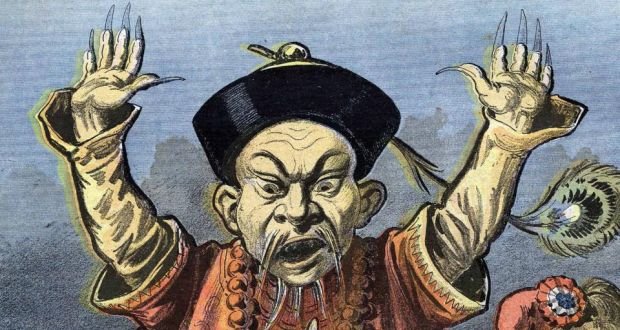
Leung Wing-Fai: Perceptions of the East – "Yellow Peril: An Archive of Anti-Asian Fear"

By Leung Wing-Fai

November 16, 2021

Review: Fascination mixed with fear is how many in the West culturally construct the East

Apocalyptic pollution, “Asian” flu, unfettered economic growth, boot camps for internet addiction, hacker attacks on western businesses and governments:– there is no shortage of fascination mixed with fear directed towards the culturally constructed East. Yellow Peril! An Archive of Anti-Asian Fear distils and presents a collection of accounts, images and essays related to this fear.

The phrase yellow peril (sometimes yellow terror or yellow spectre), coined by Kaiser Wilhelm II of Germany, in the 1880s, after a dream in which he saw the Buddha riding a dragon threatening to invade Europe, blends western anxieties about sex, racist fears of the alien other, and the Spenglerian belief that the West will become outnumbered and enslaved by the East.

These fears became increasingly reinscribed as ideology through popular cultural products. In the late 19th century in Europe, the threat to imperialism drove the yellow-peril narrative, while in the United States it emerged predominantly as a response to social factors such as cheap “coolie” labour and increased immigration.

“Yellow peril”, which refers to the skin colour of east Asians, developed into a vague form of xenophobia that taps into the racist notion that “they all look the same” and extends beyond individual countries to encompass a whole continent and “colour” of peoples.

But in a far-reaching and often enlightening analysis that reveals the very blurred lines of designation in this field, John Kuo Wei Tchen, one of the editors of this book, points out that the colour yellow was originally attributed to natives of India rather than to east Asians.

Tchen is associate professor at New York University, a historian by training, author of New York Before Chinatown: Orientalism and the Shaping of American Culture, 1776-1882 (2001) and cofounder of the New York-based Museum of Chinese in America.

Along with his coeditor, Dylan Yeats, he presents a cornucopia of snippets, illustrations and essays aptly collected as an archive demonstrating what they define as yellow perilism, a “practice rooted within a European Enlightenment and European colonialist worldview”.

Archival ordering

The book is divided into three main systematic and logical sections. “The Imagined West” traces a prehistory of yellow perilism through an outline of how the westerncentric worldview came to be, beginning with early maps that place Europe at the centre.

“Manifest Destinies” centres on the constructions of otherness that western nations perpetuated through social Darwinism, manifest destiny, white supremacy and projected fears. “Indispensable Enemies” focuses on the manifestations of yellow perilism in the American context up to the present day.

Some of the extracts are especially illuminating, such as Teddy Roosevelt’s endorsement of Jeremiah Curtain’s historical account The Mongols (1904), comparing “Mongols” to North American Comanches and Apaches, written while he was president of the United States.

By pointing to the relevance of The Mongols in terms of an ongoing struggle between East and West, the excerpt exposes an apparent American predisposition regarding the necessity of the West to defeat the imagined Asian enemy and to create a narrative history that rationalises state violence by accentuating the apparent brutality of the perceived other.

Yellow Peril! An Archive of Anti-Asian Fear is unique in presenting a carefully selected repository of anti-Asian images and writing, pop culture artefacts and political polemic, from a diverse and well-researched range of sources that includes excerpts spanning from Hegel and Marx to Jack London and WEB Du Bois.

Stressing that yellow peril is one of the longest-standing and most pervasive racist ideas in western culture, the book traces its history to medieval Europe.

Modern incarnations include Sax Rohmer’s enduring Edwardian literary yellow-peril villain, Dr Fu Manchu, an archetype now embedded in characterisations of villains from the emperor Ming the Merciless of the 1930s Flash Gordon comic strip through to the Mandarin in the 2013 film Iron Man 3.

Despite its reputation as a fading historical memory, a yellow-peril ideology persists, ranging from storylines in the 2004 reboot of the TV serial Battlestar Gallactica to campaign commercials from the 2012 US presidential election.

The collection nonetheless misses several related theoretical frameworks, such as Michel Foucault’s notion of biopolitics, which he discussed in his lectures Society Must Be Defended (1975-76), in that biopower is invoked to establish a continuum of regime, especially in the elimination of the biological threat to and the improvement of the racial species.

Yellow peril, with its focus on biological differences to explain developing civilisations, was part of the rise of eugenics, Darwinism and Nazism in Europe between the two World Wars.

Other theories, such as postcolonialism and linguistic profiling, are only tacitly referred to. These theoretical frames could have added more complexity to the understanding of the development and constitution of yellow perilism.

Michel Foucault

The book appears to be aimed at an interested general audience while attempting to be academically vigorous, although there seems to be uncertainty about the level at which the content is presented. Further explication and more detailed introduction to the excerpts would have been useful; for instance, are the definition and location of the Eurasian steppe common knowledge?

Specific elements are not fully or further developed, such as the physiological distinction of single eye flaps; neither does the book examine examples of yellow perilism that have occurred in countries such as Mexico, which may create problems for the phenomena mostly characterised as West-East relationships.

The collection offers considerable investment in visual references and analysis of political cartoons and advertising imagery, although at times the writing could be expanded, such as the discussion of processes of scapegoating and stereotyping. Some background to the definitions of terminology connected to such processes, and their alliance to psychology and sociology, would have been helpful to the readers.

An intellectually stimulating and ambitious book, Yellow Peril! An Archive of Anti-Asian Fear both benefits and suffers from its broad range. It excels as a fresh and light read with a wide variety of sources and topics, but its breadth prevents the analysis from delving deeper and from including more contrasting viewpoints.

With such a broad topic it is inevitably difficult to delimit the central writers and texts, but the editors have done an admirable job of compiling this wide range of materials into an attractive and accessible collection.

Originally published by Irish Times, August 14, 2014

Please help TFF remain truly independent and deliver more quality articles and themes like this. We are people-financed – and that means… by you! Thanks

[paypal-donation]

Share

Leave a Reply

Your email address will not be published. Required fields are marked *

Related Posts

America’s Strategic Assault on Art, Academia, and the Imagination That Sustains Peace The United States once stood as a beacon of cultural audacity—a place where dissent could be beautiful, and beauty and innovation could challenge the present order of things. Its museums, universities, and artists helped inspire a worldwide imagination rooted in creative freedom and innovation. But today, under the Trump regime’s second term, those dynamic qualities are being systematically dismantled. Just read this. As Trump goes after the arts, many museums remain silent | CNN As CNN reports, the administration has launched an aggressive campaign to “eradicate improper ideology” from federally funded museums. Exhibitions involving race, gender, and identity are being censored or cancelled. Amy Sherald’s reimagining of the Statue of Liberty as a Black, trans woman was pulled from the Smithsonian after curators objected to its symbolism. Sherald warned that “history shows us what happens when governments demand loyalty...
Contrary to what we stated when publishing this Call, the UN General Assembly (GA) opened on September 9, 2025, in New York, not in Geneva, as we initially wrote. However, due to the host role-violating US ban on visas to Palestinians, the Special GA Segment on Palestine will be held in the UN Geneva from September 22. And it builds up to something historic. Anyhow, here is what we believe you must advocate or do to help stop the Israeli genocide. It’s called people’s power or citizens’ diplomacy. SHARE! The first of three appeals from TFF. The second is here, and the third here. Across the world, people are witnessing the systematic destruction of Palestinian lives, homes, and communities. The scale and intensity of Israel’s military operations — especially in Gaza — have led leading legal bodies, including the International Court of Justice, to warn of a plausible genocide. The...
Professor Zhang Weiwei is a highly respected Chinese intellectual and professor at Fudan University in Shanghai. He is the director of its China Institute and also runs a series of conversations with many different people around the world. Here is what came out of their meetings there and in Skopje, Macedonia in October 2024: & ◪ As you can see, also at the end of the second one, we both enjoy win-win exchanges like these about world order issues. Zhang Weiwei is known for using videos and social media to reach a large audience in China and worldwide. We suggest you see many more of Zhang Weiwei’s conversations – like recently with Professor Jeffrey Sachs – on the Thinkers’ Forum on YouTube. PS TFF posts hundreds of videos, its own and those of others, in our Video Collections on TFF Substack – including those that appear on YouTube. However, TFF...

Recent Articles

PressInfo # 141, December 21, 2001It’s time to prepare reconciliation between Albanians and Serbs PressInfo # 140, December 14, 2001Ibrahim Rugova’s decade-long leadership in Kosovo/a PressInfo # 139, 11. december, 2001En god nyhet: Jugoslaviens Sannings- och försoningskommission PressInfo # 139, 11. december, 2001Gode nyheder: Jugoslaviens Sandheds- og Forsoningskommission PressInfo # 139, December 11, 2001Good news: Yugoslavia’s Truth and Reconciliation Commission PressInfo # 138, November 8, 2001TFF co-founder PhD with thesis about young people with roots in other cultures PressInfo # 138, November 8, 2001TFF:s medstiftare doktor på avhandling om unga med ursprung i andra kulturer PressInfo # 137, October 17, 2001A new Marshall Plan: Advancing human security and controlling terrorism PressInfo # 136, October 15, 2001The UN and Annan really deserve it PressInfo # 135, October 10, 2001Preventing a terrorist mushroom cloud PressInfo # 134, 17 oktober, 2001Sverige og 11. september PressInfo # 134, October 9, 2001Sweden and September 11...
Peace is promoted by constructive proposals and dialogue Four preceding PressInfos have expressed concern over — and criticised — the ongoing, militarisation of the EU. Some will say: but there are no alternatives. We believe that there are always alternatives, that democracies are characterised by alternatives and choice, and that openly discussed alternatives will improve the quality and legitimacy of society’s decision–making. In addition, it is an intellectual and moral challenge to not only criticise but also be constructive. If we only tell people that we think they are wrong, they are not likely to listen. However, if we say: what are your views on this set of ideas and steps? — we may sometimes engage them in dialogue and sow a seed. Most people in power circles live their daily lives in in a time frame and a social space where certain ideas, viewpoints and concepts are just not...
Photos © TFF 2000 Read PressInfo 90 “Lift the Sanctions and Bring More Aid to Yugoslavia” See Pictures from Belgrade © TFF 2000 Please reprint, copy, archive, quote or re-post this item, but please retain the source.

TFF on Substack

Discover more from TFF Transnational Foundation & Jan Oberg.

Most Popular

PressInfo # 141, December 21, 2001It’s time to prepare reconciliation between Albanians and Serbs PressInfo # 140, December 14, 2001Ibrahim Rugova’s decade-long leadership in Kosovo/a PressInfo # 139, 11. december, 2001En god nyhet: Jugoslaviens Sannings- och försoningskommission PressInfo # 139, 11. december, 2001Gode nyheder: Jugoslaviens Sandheds- og Forsoningskommission PressInfo # 139, December 11, 2001Good news: Yugoslavia’s Truth and Reconciliation Commission PressInfo # 138, November 8, 2001TFF co-founder PhD with thesis about young people with roots in other cultures PressInfo # 138, November 8, 2001TFF:s medstiftare doktor på avhandling om unga med ursprung i andra kulturer PressInfo # 137, October 17, 2001A new Marshall Plan: Advancing human security and controlling terrorism PressInfo # 136, October 15, 2001The UN and Annan really deserve it PressInfo # 135, October 10, 2001Preventing a terrorist mushroom cloud PressInfo # 134, 17 oktober, 2001Sverige og 11. september PressInfo # 134, October 9, 2001Sweden and September 11...
Peace is promoted by constructive proposals and dialogue Four preceding PressInfos have expressed concern over — and criticised — the ongoing, militarisation of the EU. Some will say: but there are no alternatives. We believe that there are always alternatives, that democracies are characterised by alternatives and choice, and that openly discussed alternatives will improve the quality and legitimacy of society’s decision–making. In addition, it is an intellectual and moral challenge to not only criticise but also be constructive. If we only tell people that we think they are wrong, they are not likely to listen. However, if we say: what are your views on this set of ideas and steps? — we may sometimes engage them in dialogue and sow a seed. Most people in power circles live their daily lives in in a time frame and a social space where certain ideas, viewpoints and concepts are just not...
Photos © TFF 2000 Read PressInfo 90 “Lift the Sanctions and Bring More Aid to Yugoslavia” See Pictures from Belgrade © TFF 2000 Please reprint, copy, archive, quote or re-post this item, but please retain the source.
Read More
Imagen-thumbnail-The-Transnational-1
PressInfo # 141, December 21, 2001It’s time to prepare reconciliation between Albanians and Serbs PressInfo # 140, December 14, 2001Ibrahim Rugova’s decade-long leadership in Kosovo/a PressInfo # 139, 11. december, 2001En god nyhet: Jugoslaviens Sannings- och försoningskommission PressInfo # 139, 11. december, 2001Gode nyheder: Jugoslaviens Sandheds- og Forsoningskommission PressInfo # 139, December 11, 2001Good news: Yugoslavia’s Truth and Reconciliation Commission PressInfo # 138, November 8, 2001TFF co-founder PhD with thesis about young people with roots in other cultures PressInfo # 138, November 8, 2001TFF:s medstiftare doktor på avhandling om unga med ursprung i andra kulturer PressInfo # 137, October 17, 2001A new Marshall Plan: Advancing human security and controlling terrorism PressInfo # 136, October 15, 2001The UN and Annan really deserve it PressInfo # 135, October 10, 2001Preventing a terrorist mushroom cloud PressInfo # 134, 17 oktober, 2001Sverige og 11. september PressInfo # 134, October 9, 2001Sweden and September 11...
Imagen-thumbnail-The-Transnational-1
Peace is promoted by constructive proposals and dialogue Four preceding PressInfos have expressed concern over — and criticised — the ongoing, militarisation of the EU. Some will say: but there are no alternatives. We believe that there are always alternatives, that democracies are characterised by alternatives and choice, and that openly discussed alternatives will improve the quality and legitimacy of society’s decision–making. In addition, it is an intellectual and moral challenge to not only criticise but also be constructive. If we only tell people that we think they are wrong, they are not likely to listen. However, if we say: what are your views on this set of ideas and steps? — we may sometimes engage them in dialogue and sow a seed. Most people in power circles live their daily lives in in a time frame and a social space where certain ideas, viewpoints and concepts are just not...
Imagen-thumbnail-The-Transnational-1
Photos © TFF 2000 Read PressInfo 90 “Lift the Sanctions and Bring More Aid to Yugoslavia” See Pictures from Belgrade © TFF 2000 Please reprint, copy, archive, quote or re-post this item, but please retain the source.
Imagen-thumbnail-The-Transnational-1
Av FRANK SØHOLM GREVIL 16 augusti 2004  Vi er nu nået til tredje akt i det absurde teaterstykke, der i analogi med de store skueprocesser i Moskva 1936-38 er blevet døbt ‘Grevil-sagen’. Første akt bestod i min anonyme fremlæggelse af egenhændigt nedklassificerede rapporter i Berlingske Tidende i februar og marts. Andet akt udgjordes af min fremtræden med navn og billede i Information i april samt den efterfølgende mediestorm, som uden min direkte medvirken kostede en forsvarsminister taburetten samt en sigtelse for brud på tavshedspligten. Tredje akt bliver en retssag, hvor jeg står tiltalt for at have overtrådt straffelovens bestemmelser om uberettiget videregivelse eller udnyttelse af fortrolige oplysninger. Statsanklageren har ovenikøbet valgt at påberåbe sig særligt skærpende omstændigheder. Da jeg aldrig har modtaget betaling for at stille rapporterne til rådighed eller lade mig interviewe, må det skærpende bestå i, at “videregivelsen eller udnyttelsen er sket under sådanne omstændigheder, at det påfører...
Imagen-thumbnail-The-Transnational-1
Af Svenska Irakkommittén mot de Ekonomiska Sanktionerna (SIES) 13 september 2002 FN:s ekonomiska sanktioner mot Irak har nu pågått i tolv år och drabbat det irakiska folket med svåra lidanden. Enligt FN:s egna siffror har mer än 1,5 miljoner människor, varav ca 600 000 barn, dött som en direkt följd av sanktionerna. Dessutom har ett lågintensivt bombkrig mot landet pågått under dessa år. Av all denna förödelse- orsakad huvudsakligen av amerikansk och brittisk politik- har Saddam Husseins brutala och diktatoriska regim snarast stärkts än försvagats. Nu förbereder USA under president Bushs ledning ett storskaligt bombkrig mot Irak som kommer att innebära ett ännu större lidande för civilbefolkningen. Ett sådant krig kommer dessutom att ytterligare undergräva freden och säkerheten i världen. Att upprätta en demokratisk regim i Irak är det irakiska folkets angelägenhet och får enligt folkrätten inte ske med krigshandlingar utifrån. Folkrätten och FN:s stadgar måste respekteras. Vi vädjar till...