
Let us celebrate the Second UN
Generic thumbnail

October 24 marks United Nations Day. But which UN? I would say there are two, or perhaps there are three.

The First UN is what happens in the UN building on Manhattan, New York: the diplomats of member governments around the table in the Security Council and in the General Assembly making statements they have prepared on behalf of their countries and going about a business that can be characterised by and large by concepts such as power – including the power to save or destroy human lives around the world – Realpolitik and rhetoric. They play power games with each other; they play with the future of the world.

Everything there is not power or powerful. Many – particularly first-timers – in that building are also motivated by idealism, visions of a better world including a globalised democracy that is a founding idea of the UN itself but still seems to belong to a distant future. And much of what is produced is intellectually and politically quite powerless: in the best of cases great goal formulations combined with woefully inadequate political will and ability back home in member states to move politics in the direction of their realization. Bad yes – but to be noted in passing: the goal formulations are important as norms in the sense that they express what everyone knows we ought to be doing.

Truth is that this UN which should be, and perhaps still can become, humanity’s most important force for the common good has been made quite powerless because of three “external” things – there are also internal things such as mismanagement, incompetence and bureaucracy –  namely lack of even a minimum of funding, lack of legitimacy of priority of the UN by members and, third, deliberate destruction of the UN by member states.

All of the UN’s activities cost less than 2 per cent of the world combined military expenditures. How can anyone expect it to create peace?

So, many people and much of the media debate tell us that the UN is inefficient, corrupt, unable to do what it is asked to do, etc – and those who say that seldom think of the simple fact pointed out by its first Secretary-General Tryggve Lie: that the UN will never become stronger or better than the members want to make it.

Around the world political nationalism and self-centered images of the world flourish – my state, our citizens, our rights and needs, right or wrong and no matter what the consequences for the rest of humanity!
The duty to integrate a global common interest in day-to-day affairs in the world’s parliaments is non-existing. While we have economic and military globalization, we have no democratic-political, social or cultural globalization – not to mention normative or ethical globalization.

So that’s the First UN, UN the power house, which for good or for bad, is not very powerful. That’s the one most people see in the media, some have visited on a guided tour and that forceful governments sometimes make reference to but mostly ignore. Cynics think we could just as well close it down. But we shouldn’t.

Then there’s The Second UN

That is the one you meet around the world and never in New York. I’ve seen and sometimes worked with this UN in operations at many places around the world, e.g. UN peacekeeping soldiers, UN Police and Civil Affairs people in places such as Pakrac, Daruvar, Topushko, Knin, Sarajevo, Banja Luka, Skopje, Belgrade, Baghdad, Gaza and Bujumbura.

In spite of inefficiency and what not, I am totally convinced that they are more of a force for good in our world than the opposite! (Right, I did not mention UNMIK in Kosovo because it was and remains a deliberate Mission Impossible that the S-G should have had the guts to refuse to do back in 1999).

And they are not only peacekeeping Blue Helmets of course, they are UNDP, WHO, WFP, UNESCO, etc. I remember how all over former Yugoslavia they rented rooms and apartments by the locals, spent time with them sharing a meal, etc. Those were the good times when they mixed with and learned from the people’s histories and got a deeper understanding of the conflicts they were supposed to help solve. But then came September 11 and even the UN went security obsessed and fenced in its staff, barbed wire, walkie-talkies, armoured cars, curfews and more. In short, the end of interaction and, thus, of public acceptance and mutual understanding.

The enigmatic relations between the First and the Second UN all came together in Iraq before the war. The First UN’s Security Council had decided to install history’s most cruel sanctions on the Iraqi people. Rightly, in many people’s eyes a genocide was committed in the name of the UN; remember, people tend to mix up the UN with its Security Council, the permanent five members of which are not exactly the best of the earth.

The Second UN on the ground did its utmost to limit the damage of that terrible Security Council’s decisions. I will never forget the extremely hard-working, dedicated, people-respecting – even people-loving – and deeply humane Head of Missions and their staff I met in Iraq 2002 and 2003, and I met all the missions for hours of interviewing as part of TFF’s fact finding. Many of them worked at least 80 hours a week to the benefit of the suffering Iraqis and many would tell you squarely how counterproductive and destructive their own governments’ policies were and how little interest they took in listening to what these people on the ground knew.

Presumably, the attack on the UN in Baghdad was the destruction of the Second UN because of the First UN’s cruel sanctions – not having the means to destroy the HQ in New York. The madmen who killed Sergio de Mello and colleagues did not want the good UN to survive. And the US did not want the excellent UN mission on the border between Iraq and Kuwait to exist since its troops destroyed it, chased out the UN staff and rolled into Iraq in March 2003. Perhaps there was a connection between the two? In any case, it is no wonder these events have been so deeply traumatising to the UN, the people as well as the organisation.
 
Only few seem to be aware of how much it meant for the local populations in various parts of former Yugoslavia to have internationals nearby who cared and did their best to provide them with some basic human security in times of chaos and killing. The UNPREDEP Mission in Macedonia, remarkably, was established before violence broke out, did a marvellous job against all odds and was destroyed party by members of the Security Council and their short-sighted, nationalistic policies and partly by the bombing of Serbia-Kosovo.

And, lastly, I’ve experienced the determination and wisdom with which the UN has supported the peace process in Burundi. It would take another article to describe why but – with due respect for the Burundi people’s own will to peace and the remarkable peace process at governmental level – I don’t think Burundi would have come as far as it has in the direction of sustainable peace had it not been for the UN as a modest, determined and caring peacebuilder. But did you ever see a news article or a documentary about that or any other successful UN mission? 

Of course not! This Second UN has no media attention and is never discussed in parliaments. To most people in the rich parts of the world, the UN is the power house in New York. I for one must say that the UN I celebrate is this Second UN. And should the ignorant and the cynics one day manage to have “the UN” destroyed completely or force it to close down, the world will become so much more cruel and hopeless, so much less human. For the real UN is the one you never see and hear about – and the one that matters to millions of underprivileged people who are victims of both structural and direct violence on an everyday basis.

Is there then a Third UN?

Well, there are lots of ideas and reform proposals around. The way I see it, it would have to be much more expressive of the “we, the peoples” and less of governments. To the extent that governments should be there, their representatives should be elected in their respective member states like any parliamentarian. It would be a UN with much more financial resources and there would be UN embassies in all member states – not only members feeding their nationalist views into the UN as today but UN ambassadors feeding global common good thinking into members. And it would not have one headquarter and none would be in the US.

And there would be a leadership that really cared about global civil society. It would not, as the present one of Ban Ki-moon, leave well-intentioned proposals and support like TFF’s Open Letter unanswered and thereby show that not only does it not honour courtesy and protocol, it also doesn’t really bother about “we, the peoples”.

But the main point is this: The Third or Any Other Future UN will have to be a UN that grows out of completely new policies and priorities in member states. We must recognise that the UN as such has not failed; its member states have failed in realising the dreams, visions and moral values embedded in its – their own – Charter and its – their own – Declarations. There will be no better UN in the future unless many more member states learn to discuss and outline a global policy and recognise their own role and responsibility in it when they conduct everyday policies. At the end of the day, the ideals of the UN can only be realised on the ground out there, by the member countries’ governments and citizens.

So before you say – or accept someone else saying it – that the UN is useless and could just as well be scrapped, please think twice, think of the Second UN and future possible UNs. A world without the Second UN and the norms of the UN Charter will make the jungle look like a peaceful, orderly place.

In spite of all its deficiencies, we simply can’t do without the United Nations – but, to make the point, the world would be a better place if some member governments could be scrapped!

So, let’s honour and celebrate the Second UN and work for the Third or Fourth – hopefully they can then, eventually, replace the First UN.
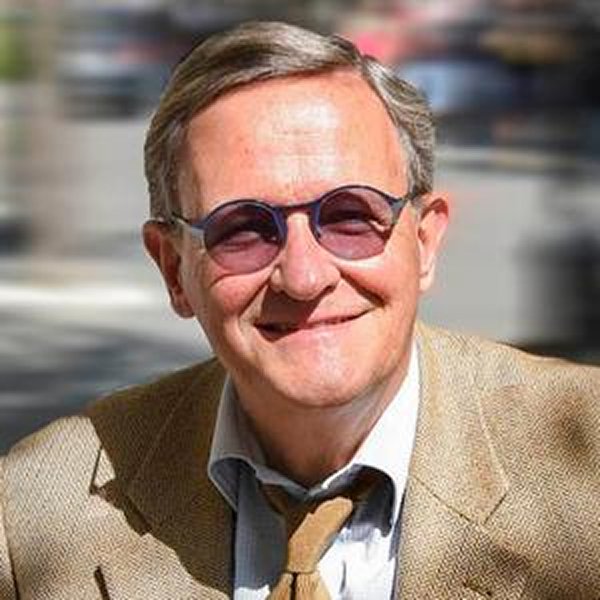

Peace & future researcher + ‌Art Photographer

Share

Leave a Reply

Your email address will not be published. Required fields are marked *

Related Posts

Peace is promoted by constructive proposals and dialogue Four preceding PressInfos have expressed concern over — and criticised — the ongoing, militarisation of the EU. Some will say: but there are no alternatives. We believe that there are always alternatives, that democracies are characterised by alternatives and choice, and that openly discussed alternatives will improve the quality and legitimacy of society’s decision–making. In addition, it is an intellectual and moral challenge to not only criticise but also be constructive. If we only tell people that we think they are wrong, they are not likely to listen. However, if we say: what are your views on this set of ideas and steps? — we may sometimes engage them in dialogue and sow a seed. Most people in power circles live their daily lives in in a time frame and a social space where certain ideas, viewpoints and concepts are just not...
Photos © TFF 2000 Read PressInfo 90 “Lift the Sanctions and Bring More Aid to Yugoslavia” See Pictures from Belgrade © TFF 2000 Please reprint, copy, archive, quote or re-post this item, but please retain the source.
Av FRANK SØHOLM GREVIL 16 augusti 2004  Vi er nu nået til tredje akt i det absurde teaterstykke, der i analogi med de store skueprocesser i Moskva 1936-38 er blevet døbt ‘Grevil-sagen’. Første akt bestod i min anonyme fremlæggelse af egenhændigt nedklassificerede rapporter i Berlingske Tidende i februar og marts. Andet akt udgjordes af min fremtræden med navn og billede i Information i april samt den efterfølgende mediestorm, som uden min direkte medvirken kostede en forsvarsminister taburetten samt en sigtelse for brud på tavshedspligten. Tredje akt bliver en retssag, hvor jeg står tiltalt for at have overtrådt straffelovens bestemmelser om uberettiget videregivelse eller udnyttelse af fortrolige oplysninger. Statsanklageren har ovenikøbet valgt at påberåbe sig særligt skærpende omstændigheder. Da jeg aldrig har modtaget betaling for at stille rapporterne til rådighed eller lade mig interviewe, må det skærpende bestå i, at “videregivelsen eller udnyttelsen er sket under sådanne omstændigheder, at det påfører...

Recent Articles

PressInfo # 141, December 21, 2001It’s time to prepare reconciliation between Albanians and Serbs PressInfo # 140, December 14, 2001Ibrahim Rugova’s decade-long leadership in Kosovo/a PressInfo # 139, 11. december, 2001En god nyhet: Jugoslaviens Sannings- och försoningskommission PressInfo # 139, 11. december, 2001Gode nyheder: Jugoslaviens Sandheds- og Forsoningskommission PressInfo # 139, December 11, 2001Good news: Yugoslavia’s Truth and Reconciliation Commission PressInfo # 138, November 8, 2001TFF co-founder PhD with thesis about young people with roots in other cultures PressInfo # 138, November 8, 2001TFF:s medstiftare doktor på avhandling om unga med ursprung i andra kulturer PressInfo # 137, October 17, 2001A new Marshall Plan: Advancing human security and controlling terrorism PressInfo # 136, October 15, 2001The UN and Annan really deserve it PressInfo # 135, October 10, 2001Preventing a terrorist mushroom cloud PressInfo # 134, 17 oktober, 2001Sverige og 11. september PressInfo # 134, October 9, 2001Sweden and September 11...
Peace is promoted by constructive proposals and dialogue Four preceding PressInfos have expressed concern over — and criticised — the ongoing, militarisation of the EU. Some will say: but there are no alternatives. We believe that there are always alternatives, that democracies are characterised by alternatives and choice, and that openly discussed alternatives will improve the quality and legitimacy of society’s decision–making. In addition, it is an intellectual and moral challenge to not only criticise but also be constructive. If we only tell people that we think they are wrong, they are not likely to listen. However, if we say: what are your views on this set of ideas and steps? — we may sometimes engage them in dialogue and sow a seed. Most people in power circles live their daily lives in in a time frame and a social space where certain ideas, viewpoints and concepts are just not...
Photos © TFF 2000 Read PressInfo 90 “Lift the Sanctions and Bring More Aid to Yugoslavia” See Pictures from Belgrade © TFF 2000 Please reprint, copy, archive, quote or re-post this item, but please retain the source.

TFF on Substack

Discover more from TFF Transnational Foundation & Jan Oberg.

Most Popular

PressInfo # 141, December 21, 2001It’s time to prepare reconciliation between Albanians and Serbs PressInfo # 140, December 14, 2001Ibrahim Rugova’s decade-long leadership in Kosovo/a PressInfo # 139, 11. december, 2001En god nyhet: Jugoslaviens Sannings- och försoningskommission PressInfo # 139, 11. december, 2001Gode nyheder: Jugoslaviens Sandheds- og Forsoningskommission PressInfo # 139, December 11, 2001Good news: Yugoslavia’s Truth and Reconciliation Commission PressInfo # 138, November 8, 2001TFF co-founder PhD with thesis about young people with roots in other cultures PressInfo # 138, November 8, 2001TFF:s medstiftare doktor på avhandling om unga med ursprung i andra kulturer PressInfo # 137, October 17, 2001A new Marshall Plan: Advancing human security and controlling terrorism PressInfo # 136, October 15, 2001The UN and Annan really deserve it PressInfo # 135, October 10, 2001Preventing a terrorist mushroom cloud PressInfo # 134, 17 oktober, 2001Sverige og 11. september PressInfo # 134, October 9, 2001Sweden and September 11...
Peace is promoted by constructive proposals and dialogue Four preceding PressInfos have expressed concern over — and criticised — the ongoing, militarisation of the EU. Some will say: but there are no alternatives. We believe that there are always alternatives, that democracies are characterised by alternatives and choice, and that openly discussed alternatives will improve the quality and legitimacy of society’s decision–making. In addition, it is an intellectual and moral challenge to not only criticise but also be constructive. If we only tell people that we think they are wrong, they are not likely to listen. However, if we say: what are your views on this set of ideas and steps? — we may sometimes engage them in dialogue and sow a seed. Most people in power circles live their daily lives in in a time frame and a social space where certain ideas, viewpoints and concepts are just not...
Photos © TFF 2000 Read PressInfo 90 “Lift the Sanctions and Bring More Aid to Yugoslavia” See Pictures from Belgrade © TFF 2000 Please reprint, copy, archive, quote or re-post this item, but please retain the source.
Read More
Imagen-thumbnail-The-Transnational-1
PressInfo # 141, December 21, 2001It’s time to prepare reconciliation between Albanians and Serbs PressInfo # 140, December 14, 2001Ibrahim Rugova’s decade-long leadership in Kosovo/a PressInfo # 139, 11. december, 2001En god nyhet: Jugoslaviens Sannings- och försoningskommission PressInfo # 139, 11. december, 2001Gode nyheder: Jugoslaviens Sandheds- og Forsoningskommission PressInfo # 139, December 11, 2001Good news: Yugoslavia’s Truth and Reconciliation Commission PressInfo # 138, November 8, 2001TFF co-founder PhD with thesis about young people with roots in other cultures PressInfo # 138, November 8, 2001TFF:s medstiftare doktor på avhandling om unga med ursprung i andra kulturer PressInfo # 137, October 17, 2001A new Marshall Plan: Advancing human security and controlling terrorism PressInfo # 136, October 15, 2001The UN and Annan really deserve it PressInfo # 135, October 10, 2001Preventing a terrorist mushroom cloud PressInfo # 134, 17 oktober, 2001Sverige og 11. september PressInfo # 134, October 9, 2001Sweden and September 11...
Imagen-thumbnail-The-Transnational-1
Peace is promoted by constructive proposals and dialogue Four preceding PressInfos have expressed concern over — and criticised — the ongoing, militarisation of the EU. Some will say: but there are no alternatives. We believe that there are always alternatives, that democracies are characterised by alternatives and choice, and that openly discussed alternatives will improve the quality and legitimacy of society’s decision–making. In addition, it is an intellectual and moral challenge to not only criticise but also be constructive. If we only tell people that we think they are wrong, they are not likely to listen. However, if we say: what are your views on this set of ideas and steps? — we may sometimes engage them in dialogue and sow a seed. Most people in power circles live their daily lives in in a time frame and a social space where certain ideas, viewpoints and concepts are just not...
Imagen-thumbnail-The-Transnational-1
Photos © TFF 2000 Read PressInfo 90 “Lift the Sanctions and Bring More Aid to Yugoslavia” See Pictures from Belgrade © TFF 2000 Please reprint, copy, archive, quote or re-post this item, but please retain the source.
Imagen-thumbnail-The-Transnational-1
Av FRANK SØHOLM GREVIL 16 augusti 2004  Vi er nu nået til tredje akt i det absurde teaterstykke, der i analogi med de store skueprocesser i Moskva 1936-38 er blevet døbt ‘Grevil-sagen’. Første akt bestod i min anonyme fremlæggelse af egenhændigt nedklassificerede rapporter i Berlingske Tidende i februar og marts. Andet akt udgjordes af min fremtræden med navn og billede i Information i april samt den efterfølgende mediestorm, som uden min direkte medvirken kostede en forsvarsminister taburetten samt en sigtelse for brud på tavshedspligten. Tredje akt bliver en retssag, hvor jeg står tiltalt for at have overtrådt straffelovens bestemmelser om uberettiget videregivelse eller udnyttelse af fortrolige oplysninger. Statsanklageren har ovenikøbet valgt at påberåbe sig særligt skærpende omstændigheder. Da jeg aldrig har modtaget betaling for at stille rapporterne til rådighed eller lade mig interviewe, må det skærpende bestå i, at “videregivelsen eller udnyttelsen er sket under sådanne omstændigheder, at det påfører...
Imagen-thumbnail-The-Transnational-1
Af Svenska Irakkommittén mot de Ekonomiska Sanktionerna (SIES) 13 september 2002 FN:s ekonomiska sanktioner mot Irak har nu pågått i tolv år och drabbat det irakiska folket med svåra lidanden. Enligt FN:s egna siffror har mer än 1,5 miljoner människor, varav ca 600 000 barn, dött som en direkt följd av sanktionerna. Dessutom har ett lågintensivt bombkrig mot landet pågått under dessa år. Av all denna förödelse- orsakad huvudsakligen av amerikansk och brittisk politik- har Saddam Husseins brutala och diktatoriska regim snarast stärkts än försvagats. Nu förbereder USA under president Bushs ledning ett storskaligt bombkrig mot Irak som kommer att innebära ett ännu större lidande för civilbefolkningen. Ett sådant krig kommer dessutom att ytterligare undergräva freden och säkerheten i världen. Att upprätta en demokratisk regim i Irak är det irakiska folkets angelägenhet och får enligt folkrätten inte ske med krigshandlingar utifrån. Folkrätten och FN:s stadgar måste respekteras. Vi vädjar till...