
John Mcevoy: Deathly Silence - Journalists Who Mocked Assange Have Nothing to Say About CIA Plans to Kill Him

John Mcevoy

November 25, 2021

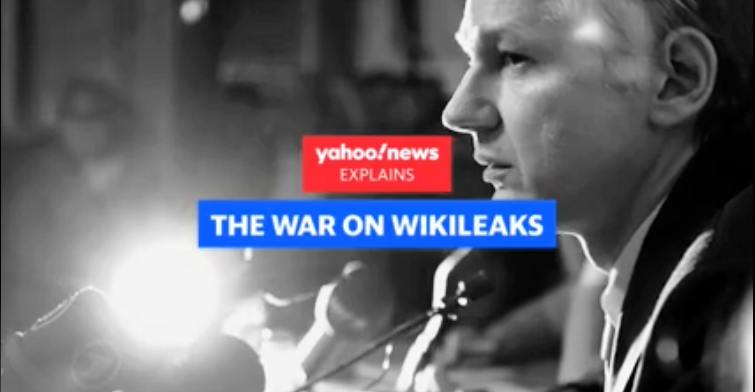
Yahoo! News (9/26/21) published a bombshell report detailing the US Central Intelligence Agency’s “secret war plans against WikiLeaks,” including clandestine plots to kill or kidnap publisher Julian Assange while he took refuge in the Ecuadorian embassy in London.

Following WikiLeaks‘ publication of the Vault 7 files in 2017—the largest leak in CIA history, which exposed how US and UK intelligence agencies could hack into household devices—the US government designated WikiLeaks as a “non-state hostile intelligence service” (The Hill4/13/17), providing legal cover to target the organization as if it were an adversarial spy agency.

Originally published at FAIR.org

Within this context, the Donald Trump administration reportedly requested “sketches” or “options” for how to kill Assange, according to the Yahoo! expose (written by Zach Dorfman, Sean D. Naylor and Michael Isikoff), while the CIA drew up plans to kidnap him. (Assange was expelled from the embassy in 2019 and has since then been in British prison, fighting a demand that he be extradited to the US to face charges of espionage—FAIR.org11/13/20.)

Shortly after publication, former CIA director Mike Pompeo (Yahoo! News9/29/21) seemed to confirm the report’s findings, declaring that the former US intelligence officials who spoke with Yahoo! “should all be prosecuted for speaking about classified activity inside the CIA.”

Ghoulish indifference

It would seem that covert plans for the state-sanctioned murder on British soil of an award-winning journalist should attract sustained, wall-to-wall media coverage.

The news, however, has been met by Western establishment media with ghoulish indifference—a damning indictment of an industry that feverishly condemns attacks on press freedom in Official Enemy states.

BBC News, one of the most-read news outlets in the world, appears to have covered the story just once—in the Somali-language section of the BBC website (Media Lens on Twitter9/30/21).

Neither the New York Times or Washington Post, two of the world’s leading corporate news organizations, have published any articles about Assange since July 2021.

To its credit, since the story first broke on September 26, the Guardian has reported twice on the CIA-led conspiracy to kill or kidnap Assange. But to offer perspective, during the week after Russian opposition figure Alexei Navalny was reported to have been poisoned by the Russian government, the Guardian published 16 separate pieces on the issue, including video reports and opinion pieces.

Similarly, a Nexis search of British newspapers for the word “Navalny” brings up 288 results from August 20–25, 2020. The same search for “Assange” between September 26–October 1, 2021, brings up a meager 29 results—one of which, a notable exception, was a Patrick Cockburn piece in the Independent (10/1/21).

Crucial relief

As is typical of stories that embarrass the Western intelligence services, independent media provided crucial relief to the backdrop of chilling indifference, with the Grayzone’s Aaron Maté (YouTube9/30/21) conducting a rigorous interview with one of the report’s authors, Michael Isikoff.

Indeed, the Grayzone (5/14/20) was the first outlet to provide evidence of a CIA-linked proposal to “kidnap or poison Assange” in May 2020. The story, however, was almost universally ignored, suggesting that, as Joe Lauria wrote in Consortium News (10/2/21), “until something appears in the mainstream media, it didn’t happen.”

One thing the corporate media cannot be accused of with regards to Assange, however, is inconsistency. After a key witness in the Department of Justice’s case against the publisher admitted to providing the US prosecution with false testimony, a detail that should ordinarily turn a case to dust, the corporate media responded by ignoring the story almost entirely. As Alan MacLeod wrote for FAIR.org (7/2/21):

The complete uniformity with which corporate media have treated this latest bombshell news raises even more concerns about how fundamentally intertwined and aligned they are with the interests of the US government.

Even after it was revealed that the UC Global security firm that targeted Assange had also spied on journalists at the Washington Post and New York Times, neither outlet mounted any protest (Grayzone9/18/20).

Perhaps most remarkably, UK judge Vanessa Baraitser relied on a falsified CNN report (7/15/19)  to justify the CIA’s spying operation against Assange (Grayzone5/1/21). Now, CNN’s website contains no reports on the agency’s plans to kill or kidnap Assange.

The prevailing silence has extended into the NGO industry. Amnesty International, which refused in 2019 to consider Assange a prisoner of conscience, has said nothing about the latest revelations. Likewise, Index on Censorship, which describes itself as “The Global Voice of Free Expression,” hasn’t responded to the story.

The establishment media’s dismissal of Assange supports Edward Herman and Noam Chomsky’s framework of “worthy” and “unworthy” political dissidents, with Assange situated firmly in the latter camp.

Only barrier is pride’

The present circumstances become even more deplorable upon consideration of the corporate journalists who arrogantly diminished, or even delighted in, Assange’s concerns for his own safety.

The Guardian’s James Ball (1/10/18) published a now infamous article headlined, “The Only Barrier to Julian Assange Leaving Ecuador’s Embassy Is Pride.” “The WikiLeaks founder is unlikely to face prosecution in the US,” the subhead confidently asserted. The column concluded:

Assange does not want to be trapped in Ecuador’s embassy, and his hosts do not want him there. Their problem is that what’s keeping him trapped there is not so much the iniquitous actions of world powers, but pride.

In a later article (3/29/18), Ball insisted that Assange “should hold his hands up and leave the embassy.”

Ball, at least, has written something on the latest revelations, but his article in the London Times (10/03/21) remains typically scornful of Assange’s persona.

The Guardian’s Marina Hyde (5/19/17) took a similar angle. Under the headline “The Moral of the Assange Story? Wait Long Enough, and Bad Stuff Goes Away,” Hyde wrote that “Captain WikiLeaks will get out of pretend-jail eventually.” More than four years later, Assange is in Belmarsh prison, “the closest comparison in the United Kingdom to Guantánamo,” according to the House of Commons Foreign Affairs Committee. Hyde has said nothing of the very real plans to murder or kidnap him.

In the same vein, journalist Suzanne Moore—who had previously publicly mocked Assange on a number of occasions—wrote in the New Statesman (4/12/19) after Assange’s arrest:

We are all bored out of our minds with Brexit when a demented-looking gnome is pulled out of the Ecuadorian embassy by the secret police of the deep state. Or “the met,” as normal people call them.

Moore, winner of the Orwell Prize for journalism in 2019, was not the first of her colleagues to ridicule WikiLeaks and its supporters as paranoid about an increasingly powerful state security apparatus. A column by the Guardian‘s Nick Cohen (6/23/12) offered “supporters of Julian Assange” as a “definition of paranoia”:

Assange’s supporters do not tell us how the Americans could prosecute the incontinent leaker. American democracy is guilty of many crimes and corruptions. But the First Amendment to the US constitution is the finest defense of freedom of speech yet written. The American Civil Liberties Union thinks it would be unconstitutional for a judge to punish Assange.

And, in any case, “Britain has a notoriously lax extradition treaty with the United States.”

Blinded by propaganda

It is of little surprise, then, that the Guardian, among other news outlets, refused to publish the words of UN special rapporteur on torture Nils Melzer, who wrote in June 2019:

In the end, it finally dawned on me that I had been blinded by propaganda, and that Assange had been systematically slandered to divert attention from the crimes he exposed. Once he had been dehumanized through isolation, ridicule and shame, just like the witches we used to burn at the stake, it was easy to deprive him of his most fundamental rights without provoking public outrage worldwide.

The Assange case once again demonstrates that when erroneous reporting falls on the right side of the US and UK foreign policy establishment, editorial standards are set aside, and journalistic failures are met with zero accountability.

As such, it’s important to remember those journalists who watched on, pointing, laughing, comfortable in the knowledge that their work would never produce the impact nor risk of WikiLeaks—and then said nothing as the right to a free press was removed in broad daylight.

Originally published at FAIR.org

John McEvoy

John McEvoy is an independent journalist whose work has featured in the International History ReviewDeclassified UK, the CanaryTribuneBrasil Wire and others.

Please help TFF remain truly independent by contributing if you benefited from this article

[paypal-donation]

Share

Leave a Reply

Your email address will not be published. Required fields are marked *

Related Posts

And why the world, especially the EU, must now declare itself independent of the United States. UN’s 80th anniversary This year, the United Nations celebrates the 80th anniversary of its founding. The UN was formed after the scourge of the Second World War, in which 70 to 85 million people were killed and many countries were destroyed. That war came on the heels of the First World War, which also killed between 15 and 22 million people. After the Second World War, especially after the use of nuclear weapons by the United States, which marked a turning point in the history of warfare that could result in the end of civilisation as we know it, humanity decided to move away from the era of empires and big power politics and usher in a new era of peace, freedom and cooperation. These were the principles enshrined in the UN Charter. The United States...
Drones over Nordic airports. No damage. No trace. No answers. Most assume Russia—but what if that’s not so? Why is there so much we are not told? This article explores the strategic ambiguity behind recent drone incursions and asks: Who else might benefit from sending drones into NATO airspace? From Ukraine’s surprising drone supremacy to Russia’s possible signalling, the silence itself may be the loudest message. These are the kinds of questions decent, intelligent investigative journalists and commentators could easily research. Why don’t they? Did you, dear reader, know or think of this? That the most powerful weapon in today’s conflicts might be the one that leaves no trace – and no answers. Just enough fear to justify the next move? Recently, drones have repeatedly appeared over Nordic airports and near some military facilities. They cause no damage – for which reason the designation “hybrid attack” is misleading but serves a purpose. These...
Below are TFF-related media mentions, comments, videos and social media posts published elsewhere but not on this homepage. We happen to catch and list only a fraction. Regarding video comments and debates, we recommend that you go to the TFF Video Channel on Substack where many of them are reproduced. Jan Oberg is a contributor to China Daily – 52 million daily clicks – and Global Times, CGTN and CCTV (the national television), China Investment, Xinhua News Agency and several others. Articles and videos on these media very often multiply into countless Chinese (and Western media) that re-post them from these main media. Thanks to The China Academy, his analyses, interviews and comments are frequently posted on YouTube channels such as Thinkers Forum and Wave Media. These videos are often re-posted on Bilibili (China’s YouTube), the China Content Center on TikTok, and on the Chinese edition of TikTok, Douyin.com. This means reaching hundreds of millions of viewers worldwide over a year. While there are too many to catch on all these...

Recent Articles

PressInfo # 141, December 21, 2001It’s time to prepare reconciliation between Albanians and Serbs PressInfo # 140, December 14, 2001Ibrahim Rugova’s decade-long leadership in Kosovo/a PressInfo # 139, 11. december, 2001En god nyhet: Jugoslaviens Sannings- och försoningskommission PressInfo # 139, 11. december, 2001Gode nyheder: Jugoslaviens Sandheds- og Forsoningskommission PressInfo # 139, December 11, 2001Good news: Yugoslavia’s Truth and Reconciliation Commission PressInfo # 138, November 8, 2001TFF co-founder PhD with thesis about young people with roots in other cultures PressInfo # 138, November 8, 2001TFF:s medstiftare doktor på avhandling om unga med ursprung i andra kulturer PressInfo # 137, October 17, 2001A new Marshall Plan: Advancing human security and controlling terrorism PressInfo # 136, October 15, 2001The UN and Annan really deserve it PressInfo # 135, October 10, 2001Preventing a terrorist mushroom cloud PressInfo # 134, 17 oktober, 2001Sverige og 11. september PressInfo # 134, October 9, 2001Sweden and September 11...
Peace is promoted by constructive proposals and dialogue Four preceding PressInfos have expressed concern over — and criticised — the ongoing, militarisation of the EU. Some will say: but there are no alternatives. We believe that there are always alternatives, that democracies are characterised by alternatives and choice, and that openly discussed alternatives will improve the quality and legitimacy of society’s decision–making. In addition, it is an intellectual and moral challenge to not only criticise but also be constructive. If we only tell people that we think they are wrong, they are not likely to listen. However, if we say: what are your views on this set of ideas and steps? — we may sometimes engage them in dialogue and sow a seed. Most people in power circles live their daily lives in in a time frame and a social space where certain ideas, viewpoints and concepts are just not...
Photos © TFF 2000 Read PressInfo 90 “Lift the Sanctions and Bring More Aid to Yugoslavia” See Pictures from Belgrade © TFF 2000 Please reprint, copy, archive, quote or re-post this item, but please retain the source.

TFF on Substack

Discover more from TFF Transnational Foundation & Jan Oberg.

Most Popular

PressInfo # 141, December 21, 2001It’s time to prepare reconciliation between Albanians and Serbs PressInfo # 140, December 14, 2001Ibrahim Rugova’s decade-long leadership in Kosovo/a PressInfo # 139, 11. december, 2001En god nyhet: Jugoslaviens Sannings- och försoningskommission PressInfo # 139, 11. december, 2001Gode nyheder: Jugoslaviens Sandheds- og Forsoningskommission PressInfo # 139, December 11, 2001Good news: Yugoslavia’s Truth and Reconciliation Commission PressInfo # 138, November 8, 2001TFF co-founder PhD with thesis about young people with roots in other cultures PressInfo # 138, November 8, 2001TFF:s medstiftare doktor på avhandling om unga med ursprung i andra kulturer PressInfo # 137, October 17, 2001A new Marshall Plan: Advancing human security and controlling terrorism PressInfo # 136, October 15, 2001The UN and Annan really deserve it PressInfo # 135, October 10, 2001Preventing a terrorist mushroom cloud PressInfo # 134, 17 oktober, 2001Sverige og 11. september PressInfo # 134, October 9, 2001Sweden and September 11...
Peace is promoted by constructive proposals and dialogue Four preceding PressInfos have expressed concern over — and criticised — the ongoing, militarisation of the EU. Some will say: but there are no alternatives. We believe that there are always alternatives, that democracies are characterised by alternatives and choice, and that openly discussed alternatives will improve the quality and legitimacy of society’s decision–making. In addition, it is an intellectual and moral challenge to not only criticise but also be constructive. If we only tell people that we think they are wrong, they are not likely to listen. However, if we say: what are your views on this set of ideas and steps? — we may sometimes engage them in dialogue and sow a seed. Most people in power circles live their daily lives in in a time frame and a social space where certain ideas, viewpoints and concepts are just not...
Photos © TFF 2000 Read PressInfo 90 “Lift the Sanctions and Bring More Aid to Yugoslavia” See Pictures from Belgrade © TFF 2000 Please reprint, copy, archive, quote or re-post this item, but please retain the source.
Read More
Imagen-thumbnail-The-Transnational-1
PressInfo # 141, December 21, 2001It’s time to prepare reconciliation between Albanians and Serbs PressInfo # 140, December 14, 2001Ibrahim Rugova’s decade-long leadership in Kosovo/a PressInfo # 139, 11. december, 2001En god nyhet: Jugoslaviens Sannings- och försoningskommission PressInfo # 139, 11. december, 2001Gode nyheder: Jugoslaviens Sandheds- og Forsoningskommission PressInfo # 139, December 11, 2001Good news: Yugoslavia’s Truth and Reconciliation Commission PressInfo # 138, November 8, 2001TFF co-founder PhD with thesis about young people with roots in other cultures PressInfo # 138, November 8, 2001TFF:s medstiftare doktor på avhandling om unga med ursprung i andra kulturer PressInfo # 137, October 17, 2001A new Marshall Plan: Advancing human security and controlling terrorism PressInfo # 136, October 15, 2001The UN and Annan really deserve it PressInfo # 135, October 10, 2001Preventing a terrorist mushroom cloud PressInfo # 134, 17 oktober, 2001Sverige og 11. september PressInfo # 134, October 9, 2001Sweden and September 11...
Imagen-thumbnail-The-Transnational-1
Peace is promoted by constructive proposals and dialogue Four preceding PressInfos have expressed concern over — and criticised — the ongoing, militarisation of the EU. Some will say: but there are no alternatives. We believe that there are always alternatives, that democracies are characterised by alternatives and choice, and that openly discussed alternatives will improve the quality and legitimacy of society’s decision–making. In addition, it is an intellectual and moral challenge to not only criticise but also be constructive. If we only tell people that we think they are wrong, they are not likely to listen. However, if we say: what are your views on this set of ideas and steps? — we may sometimes engage them in dialogue and sow a seed. Most people in power circles live their daily lives in in a time frame and a social space where certain ideas, viewpoints and concepts are just not...
Imagen-thumbnail-The-Transnational-1
Photos © TFF 2000 Read PressInfo 90 “Lift the Sanctions and Bring More Aid to Yugoslavia” See Pictures from Belgrade © TFF 2000 Please reprint, copy, archive, quote or re-post this item, but please retain the source.
Imagen-thumbnail-The-Transnational-1
Av FRANK SØHOLM GREVIL 16 augusti 2004  Vi er nu nået til tredje akt i det absurde teaterstykke, der i analogi med de store skueprocesser i Moskva 1936-38 er blevet døbt ‘Grevil-sagen’. Første akt bestod i min anonyme fremlæggelse af egenhændigt nedklassificerede rapporter i Berlingske Tidende i februar og marts. Andet akt udgjordes af min fremtræden med navn og billede i Information i april samt den efterfølgende mediestorm, som uden min direkte medvirken kostede en forsvarsminister taburetten samt en sigtelse for brud på tavshedspligten. Tredje akt bliver en retssag, hvor jeg står tiltalt for at have overtrådt straffelovens bestemmelser om uberettiget videregivelse eller udnyttelse af fortrolige oplysninger. Statsanklageren har ovenikøbet valgt at påberåbe sig særligt skærpende omstændigheder. Da jeg aldrig har modtaget betaling for at stille rapporterne til rådighed eller lade mig interviewe, må det skærpende bestå i, at “videregivelsen eller udnyttelsen er sket under sådanne omstændigheder, at det påfører...
Imagen-thumbnail-The-Transnational-1
Af Svenska Irakkommittén mot de Ekonomiska Sanktionerna (SIES) 13 september 2002 FN:s ekonomiska sanktioner mot Irak har nu pågått i tolv år och drabbat det irakiska folket med svåra lidanden. Enligt FN:s egna siffror har mer än 1,5 miljoner människor, varav ca 600 000 barn, dött som en direkt följd av sanktionerna. Dessutom har ett lågintensivt bombkrig mot landet pågått under dessa år. Av all denna förödelse- orsakad huvudsakligen av amerikansk och brittisk politik- har Saddam Husseins brutala och diktatoriska regim snarast stärkts än försvagats. Nu förbereder USA under president Bushs ledning ett storskaligt bombkrig mot Irak som kommer att innebära ett ännu större lidande för civilbefolkningen. Ett sådant krig kommer dessutom att ytterligare undergräva freden och säkerheten i världen. Att upprätta en demokratisk regim i Irak är det irakiska folkets angelägenhet och får enligt folkrätten inte ske med krigshandlingar utifrån. Folkrätten och FN:s stadgar måste respekteras. Vi vädjar till...