
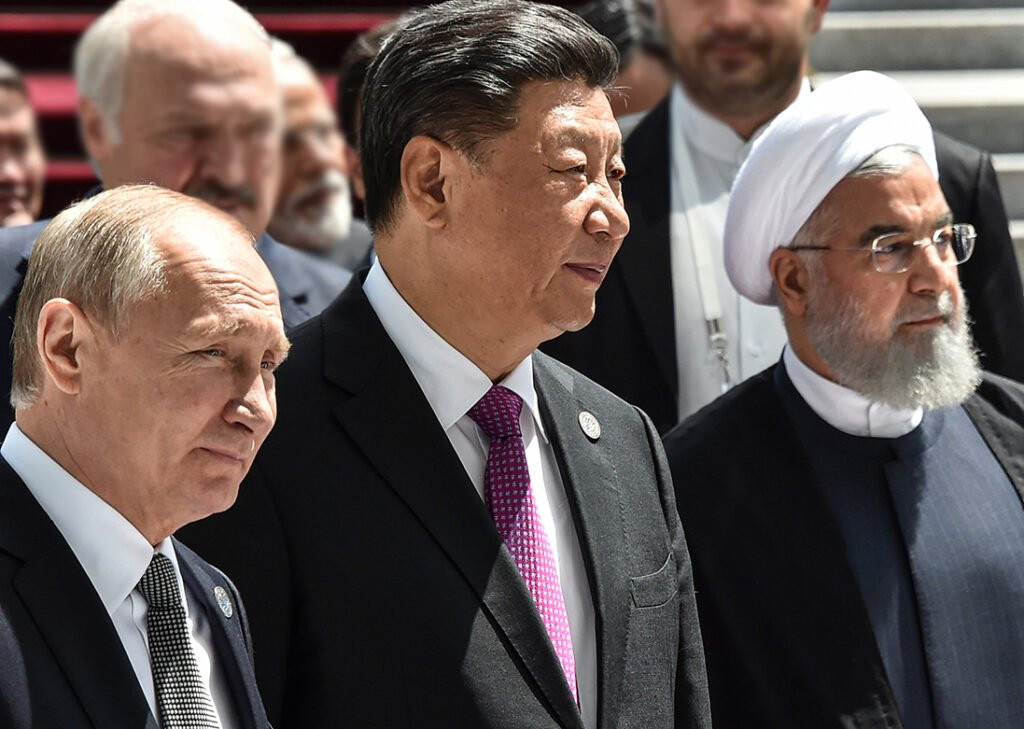
Iran’s New Doctrine: Pivot to the East

Photo credit: Flickr/ Nick Taylor

By Seyed Hossein Mousavian

December 12, 2020

Over the past few months, Iran  has been working with China on a sweeping long-term political, economic, and security agreement that would facilitate hundreds of billions of dollars of investments in the Iranian economy. It is also pursuing a long-term partnership with Russia. Politicians in Tehran see the agreements as a necessary means of combating U.S. hegemony and hostility.

Iran’s new policy of a “Pivot to the East” involves cultivating strong economic, political, military, and security ties with the giants of the Asian continent, namely, China and Russia. This policy has gained all the more credibility among Iranian officials after the United States’ ill-advised move to withdraw from the Joint Comprehensive Plan of Action (JCPOA, colloquially known as the Iran nuclear deal) and pursue a “maximum pressure” strategy.

Originally published at The Diplomat

The JCPOA was an international agreement between Iran and world powers endorsed by the U.N. Security Council in Resolution 2231. But while the Iranians fully implemented the deal, the United States withdrew from it under the Trump administration and the European Union subsequently failed to fulfill its responsibilities under the agreement.

The upshot of the U.S. withdrawal and European complacency was a revival of sanctions at a pace and intensity unprecedented over the past 40 years. This has emboldened Iran’s long-debated strategy of adopting a “Look East” foreign policy, as the JCPOA experience convinced the Iranians that no matter how much goodwill is demonstrated, the West is both unreliable and untrustworthy.

Meanwhile, Iran has found willing partners to its east. Tehran, Moscow, and Beijing are opposed to U.S. military and interventionist policies in the Middle East and seek to eliminate the supremacy of the U.S. dollar looming over the world economy.

Although it is not clear whether the three capitals have reached a consensus on a trilateral comprehensive alliance, they are examining serious steps in this direction. Three capitals participated in a four-day joint military exercise in the Indian Ocean and Gulf of Oman in 2019.

In July, Iran’s Foreign Minister Javad Zarif visited Moscow to extend a 20-year cooperation agreement with Russia. In 2016, China agreed to raise the level of China–Iran bilateral trade to $600 billion in 10 years, although that goal will be almost impossible to meet now. A comprehensive strategic deal is currently under negotiations.

Iran and China have similar interests in the domain of energy diplomacy. Securing sustainable sources of energy such as oil and gas is vital to China’s economic growth and Iran can be a steady supplier.

While major Arab oil-producing countries are aligned with the United States, Iran is not under U.S. influence. On the other hand, Washington’s “maximum pressure” approach has brought Iran’s oil exports close to zero barrels a day. Exporting oil to China will thus serve Iran’s interests.

For its part, Russia has long been the dominant supplier of liquefied natural gas (LNG) to Europe, but its position in terms of exports has been challenged by the United States. Therefore, the mutual reliance of the three capitals on energy – where they all face challenges from Washington – is a fact that cannot be denied.

Iran is a regional power in the Middle East and has founded its foreign policy on the basis of “resisting” U.S. hegemony. But in the process of resisting numerous forces of U.S. pressure, its economy has suffered from a lack of opportunities that would have otherwise been made available to it – opportunities worth hundreds of billions of dollars.

Iran has paid the price for its resistance strategy. Now Tehran presents itself as a unique opportunity for countries like China and Russia to build long-term alliances. Iran’s defeat will be counted as the victory of the United States and its regional allies, and in return, Iran’s success could be a determining factor in a U.S. withdrawal from the Middle East – once and for all.

Already, following the U.S. failure in wars on Afghanistan and Iraq and partnership with Saudi Arabia in attacking Yemen, it has become clear that the United States is no longer the dominant “superpower” in the Middle East.

The traditional allies of the U.S. are in profound crises and their positions are particularly weakened. There is a vacuum of power in the Middle East that needs to be redressed.

Moscow, Tehran, and Beijing too have common strategic and long-term interests to contain the U.S. unilateralism, and this is one of the important factors in determining the future of the Middle East. There is a ripe opportunity here, as the Trump administration’s unilateralist policy and its withdrawal from international treaties (including but not limited to the JCPOA) have all seriously called into question the legitimacy and the credibility of the United States as a world power.

Many countries around the world are now considering China as the future successor to the United States in world leadership. For example, even amid souring China-Europe ties, German Chancellor Angela Merkel said the European Union has a “great strategic interest” in maintaining cooperation with China.

“We Europeans will need to recognize the decisiveness with which China will claim a leading position in the existing structures of the international architecture,” Merkel said.

Amid all these considerations, steps continue toward Tehran-Beijing-Moscow alignment. Russia and China rejected the U.S. attempt to extend a U.N. arms embargo on Iran that is set to expire later in October 2020 according to the terms of the 2015 nuclear deal.

While it’s unclear to what extent Russia and China will work to boost the Iranian military, Tehran remains the only option for Moscow and Beijing to balance their arms sales in the region with the West’s.

The United States is the top arms supplier to 13 of the 19 countries of the Middle East, supplying nearly half of the region’s arms; Europe follows with over 20 percent while Russia and China’s share combined is about 20 percent.

In short, the United States’ coercive policies on Iran, Russia, and China will remain the main obstacle for the trilateral strategic alliance. However, the destiny of such a strategic agreement will be an important consideration in future international relations.

Iran possesses the world’s second largest natural gas reserves and the fourth largest oil reserves, which position it as a significant weight in the strategic calculations that the Eurasian powers make in their foreign policy toward the Middle East.

By strategic engagement with Iran, Beijing and Moscow would have a unique opportunity to reorient both Iran and its regional rivals toward the China-Russia Eurasian architecture.

Originally published by The Diplomat.

About the author
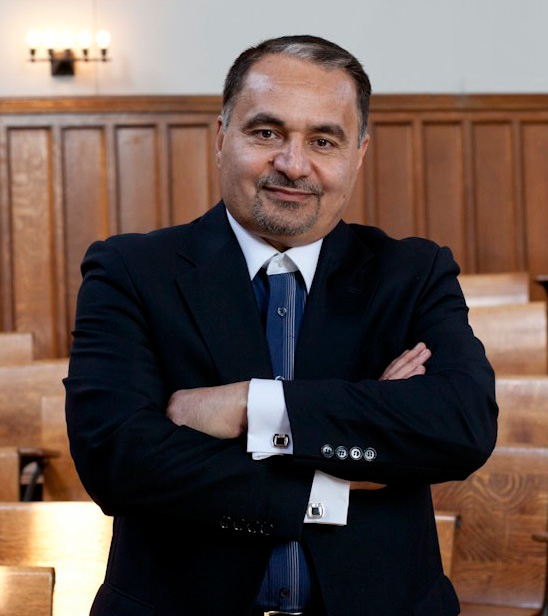
Ambassador Seyed Hossein Mousavian is Middle East Security and Nuclear Policy Specialist at Princeton University, Associate Professor at the University of Kashan, and a former spokesman for Iran’s nuclear negotiators. His book “Iran and the United States: An Insider’s View on the Failed Past and the Road to Peace” was released in May 2014. His latest book, “A Middle East Free of Weapons of Mass Destruction: A New Approach to Nonproliferation,” was published by Routledge in April 2020.

Please help TFF remain truly independent by contributing if you benefited from this article

[paypal-donation]

Share

Leave a Reply

Your email address will not be published. Required fields are marked *

Related Posts

America’s Strategic Assault on Art, Academia, and the Imagination That Sustains Peace The United States once stood as a beacon of cultural audacity—a place where dissent could be beautiful, and beauty and innovation could challenge the present order of things. Its museums, universities, and artists helped inspire a worldwide imagination rooted in creative freedom and innovation. But today, under the Trump regime’s second term, those dynamic qualities are being systematically dismantled. Just read this. As Trump goes after the arts, many museums remain silent | CNN As CNN reports, the administration has launched an aggressive campaign to “eradicate improper ideology” from federally funded museums. Exhibitions involving race, gender, and identity are being censored or cancelled. Amy Sherald’s reimagining of the Statue of Liberty as a Black, trans woman was pulled from the Smithsonian after curators objected to its symbolism. Sherald warned that “history shows us what happens when governments demand loyalty...
Contrary to what we stated when publishing this Call, the UN General Assembly (GA) opened on September 9, 2025, in New York, not in Geneva, as we initially wrote. However, due to the host role-violating US ban on visas to Palestinians, the Special GA Segment on Palestine will be held in the UN Geneva from September 22. And it builds up to something historic. Anyhow, here is what we believe you must advocate or do to help stop the Israeli genocide. It’s called people’s power or citizens’ diplomacy. SHARE! The first of three appeals from TFF. The second is here, and the third here. Across the world, people are witnessing the systematic destruction of Palestinian lives, homes, and communities. The scale and intensity of Israel’s military operations — especially in Gaza — have led leading legal bodies, including the International Court of Justice, to warn of a plausible genocide. The...
Professor Zhang Weiwei is a highly respected Chinese intellectual and professor at Fudan University in Shanghai. He is the director of its China Institute and also runs a series of conversations with many different people around the world. Here is what came out of their meetings there and in Skopje, Macedonia in October 2024: & As you can see, also at the end of the second one, we both enjoy win-win exchanges like these about world order issues. Zhang Weiwei is known for using videos and social media to reach a large audience in China and worldwide. We suggest you see many more of Zhang Weiwei’s conversations – like recently with Professor Jeffrey Sachs – on the Thinkers’ Forum on YouTube. PSTFF posts hundreds of videos, its own and those of others, in our Video Collections on TFF Substack – including those that appear on YouTube. However, TFF has been cancelled by Google-owned...

Recent Articles

PressInfo # 141, December 21, 2001It’s time to prepare reconciliation between Albanians and Serbs PressInfo # 140, December 14, 2001Ibrahim Rugova’s decade-long leadership in Kosovo/a PressInfo # 139, 11. december, 2001En god nyhet: Jugoslaviens Sannings- och försoningskommission PressInfo # 139, 11. december, 2001Gode nyheder: Jugoslaviens Sandheds- og Forsoningskommission PressInfo # 139, December 11, 2001Good news: Yugoslavia’s Truth and Reconciliation Commission PressInfo # 138, November 8, 2001TFF co-founder PhD with thesis about young people with roots in other cultures PressInfo # 138, November 8, 2001TFF:s medstiftare doktor på avhandling om unga med ursprung i andra kulturer PressInfo # 137, October 17, 2001A new Marshall Plan: Advancing human security and controlling terrorism PressInfo # 136, October 15, 2001The UN and Annan really deserve it PressInfo # 135, October 10, 2001Preventing a terrorist mushroom cloud PressInfo # 134, 17 oktober, 2001Sverige og 11. september PressInfo # 134, October 9, 2001Sweden and September 11...
Peace is promoted by constructive proposals and dialogue Four preceding PressInfos have expressed concern over — and criticised — the ongoing, militarisation of the EU. Some will say: but there are no alternatives. We believe that there are always alternatives, that democracies are characterised by alternatives and choice, and that openly discussed alternatives will improve the quality and legitimacy of society’s decision–making. In addition, it is an intellectual and moral challenge to not only criticise but also be constructive. If we only tell people that we think they are wrong, they are not likely to listen. However, if we say: what are your views on this set of ideas and steps? — we may sometimes engage them in dialogue and sow a seed. Most people in power circles live their daily lives in in a time frame and a social space where certain ideas, viewpoints and concepts are just not...
Photos © TFF 2000 Read PressInfo 90 “Lift the Sanctions and Bring More Aid to Yugoslavia” See Pictures from Belgrade © TFF 2000 Please reprint, copy, archive, quote or re-post this item, but please retain the source.

TFF on Substack

Discover more from TFF Transnational Foundation & Jan Oberg.

Most Popular

PressInfo # 141, December 21, 2001It’s time to prepare reconciliation between Albanians and Serbs PressInfo # 140, December 14, 2001Ibrahim Rugova’s decade-long leadership in Kosovo/a PressInfo # 139, 11. december, 2001En god nyhet: Jugoslaviens Sannings- och försoningskommission PressInfo # 139, 11. december, 2001Gode nyheder: Jugoslaviens Sandheds- og Forsoningskommission PressInfo # 139, December 11, 2001Good news: Yugoslavia’s Truth and Reconciliation Commission PressInfo # 138, November 8, 2001TFF co-founder PhD with thesis about young people with roots in other cultures PressInfo # 138, November 8, 2001TFF:s medstiftare doktor på avhandling om unga med ursprung i andra kulturer PressInfo # 137, October 17, 2001A new Marshall Plan: Advancing human security and controlling terrorism PressInfo # 136, October 15, 2001The UN and Annan really deserve it PressInfo # 135, October 10, 2001Preventing a terrorist mushroom cloud PressInfo # 134, 17 oktober, 2001Sverige og 11. september PressInfo # 134, October 9, 2001Sweden and September 11...
Peace is promoted by constructive proposals and dialogue Four preceding PressInfos have expressed concern over — and criticised — the ongoing, militarisation of the EU. Some will say: but there are no alternatives. We believe that there are always alternatives, that democracies are characterised by alternatives and choice, and that openly discussed alternatives will improve the quality and legitimacy of society’s decision–making. In addition, it is an intellectual and moral challenge to not only criticise but also be constructive. If we only tell people that we think they are wrong, they are not likely to listen. However, if we say: what are your views on this set of ideas and steps? — we may sometimes engage them in dialogue and sow a seed. Most people in power circles live their daily lives in in a time frame and a social space where certain ideas, viewpoints and concepts are just not...
Photos © TFF 2000 Read PressInfo 90 “Lift the Sanctions and Bring More Aid to Yugoslavia” See Pictures from Belgrade © TFF 2000 Please reprint, copy, archive, quote or re-post this item, but please retain the source.
Read More
Imagen-thumbnail-The-Transnational-1
PressInfo # 141, December 21, 2001It’s time to prepare reconciliation between Albanians and Serbs PressInfo # 140, December 14, 2001Ibrahim Rugova’s decade-long leadership in Kosovo/a PressInfo # 139, 11. december, 2001En god nyhet: Jugoslaviens Sannings- och försoningskommission PressInfo # 139, 11. december, 2001Gode nyheder: Jugoslaviens Sandheds- og Forsoningskommission PressInfo # 139, December 11, 2001Good news: Yugoslavia’s Truth and Reconciliation Commission PressInfo # 138, November 8, 2001TFF co-founder PhD with thesis about young people with roots in other cultures PressInfo # 138, November 8, 2001TFF:s medstiftare doktor på avhandling om unga med ursprung i andra kulturer PressInfo # 137, October 17, 2001A new Marshall Plan: Advancing human security and controlling terrorism PressInfo # 136, October 15, 2001The UN and Annan really deserve it PressInfo # 135, October 10, 2001Preventing a terrorist mushroom cloud PressInfo # 134, 17 oktober, 2001Sverige og 11. september PressInfo # 134, October 9, 2001Sweden and September 11...
Imagen-thumbnail-The-Transnational-1
Peace is promoted by constructive proposals and dialogue Four preceding PressInfos have expressed concern over — and criticised — the ongoing, militarisation of the EU. Some will say: but there are no alternatives. We believe that there are always alternatives, that democracies are characterised by alternatives and choice, and that openly discussed alternatives will improve the quality and legitimacy of society’s decision–making. In addition, it is an intellectual and moral challenge to not only criticise but also be constructive. If we only tell people that we think they are wrong, they are not likely to listen. However, if we say: what are your views on this set of ideas and steps? — we may sometimes engage them in dialogue and sow a seed. Most people in power circles live their daily lives in in a time frame and a social space where certain ideas, viewpoints and concepts are just not...
Imagen-thumbnail-The-Transnational-1
Photos © TFF 2000 Read PressInfo 90 “Lift the Sanctions and Bring More Aid to Yugoslavia” See Pictures from Belgrade © TFF 2000 Please reprint, copy, archive, quote or re-post this item, but please retain the source.
Imagen-thumbnail-The-Transnational-1
Av FRANK SØHOLM GREVIL 16 augusti 2004  Vi er nu nået til tredje akt i det absurde teaterstykke, der i analogi med de store skueprocesser i Moskva 1936-38 er blevet døbt ‘Grevil-sagen’. Første akt bestod i min anonyme fremlæggelse af egenhændigt nedklassificerede rapporter i Berlingske Tidende i februar og marts. Andet akt udgjordes af min fremtræden med navn og billede i Information i april samt den efterfølgende mediestorm, som uden min direkte medvirken kostede en forsvarsminister taburetten samt en sigtelse for brud på tavshedspligten. Tredje akt bliver en retssag, hvor jeg står tiltalt for at have overtrådt straffelovens bestemmelser om uberettiget videregivelse eller udnyttelse af fortrolige oplysninger. Statsanklageren har ovenikøbet valgt at påberåbe sig særligt skærpende omstændigheder. Da jeg aldrig har modtaget betaling for at stille rapporterne til rådighed eller lade mig interviewe, må det skærpende bestå i, at “videregivelsen eller udnyttelsen er sket under sådanne omstændigheder, at det påfører...
Imagen-thumbnail-The-Transnational-1
Af Svenska Irakkommittén mot de Ekonomiska Sanktionerna (SIES) 13 september 2002 FN:s ekonomiska sanktioner mot Irak har nu pågått i tolv år och drabbat det irakiska folket med svåra lidanden. Enligt FN:s egna siffror har mer än 1,5 miljoner människor, varav ca 600 000 barn, dött som en direkt följd av sanktionerna. Dessutom har ett lågintensivt bombkrig mot landet pågått under dessa år. Av all denna förödelse- orsakad huvudsakligen av amerikansk och brittisk politik- har Saddam Husseins brutala och diktatoriska regim snarast stärkts än försvagats. Nu förbereder USA under president Bushs ledning ett storskaligt bombkrig mot Irak som kommer att innebära ett ännu större lidande för civilbefolkningen. Ett sådant krig kommer dessutom att ytterligare undergräva freden och säkerheten i världen. Att upprätta en demokratisk regim i Irak är det irakiska folkets angelägenhet och får enligt folkrätten inte ske med krigshandlingar utifrån. Folkrätten och FN:s stadgar måste respekteras. Vi vädjar till...