
Iran at Crossroads on 40th Anniversary of Its Islamic Revolution

On February 11, 2019, the Islamic Republic of Iran marks the fortieth anniversary of the victory of the Islamic Revolution. In his latest speech at a conference of the Mojahedin-e Khalq (MEK), for which he received huge fees, National Security Advisor John Bolton said:

The outcome of the president’s policy review should be to determine that the Ayatollah Khomeini’s 1979 revolution will not last until its fortieth birthday. I have said for more than ten years since coming to these events that the declared policy of the United States of America should be the overthrow of the mullahs’ regime in Tehran…and that is why before 2019 we here will celebrate in Tehran.

Even more ominously, late last year Bolton instructed the Pentagon to produce options for attacking Iran.

Addressing the same conference on June 29, 2018, President Trump’s personal lawyer Rudy Giuliani also predicted: “Freedom is right around the corner … next year I want to have this convention in Tehran.” More than two dozen former and current U.S. officials, both Republicans and Democrats, have spoken before the MEK conferences, conveying more or less the same message.

The imminent demise of the Islamic Republic of Iran might have been slightly exaggerated. In fact, in response to these threats, the celebrations of the fortieth anniversary of the revolution may be even more elaborate than in previous years. But there is no doubt that the Iranian government is facing a number of daunting domestic and foreign challenges.

A Brief Spring

After the landmark nuclear deal that froze most of Iran’s nuclear activities and blocked all paths to the acquisition of nuclear weapons, the country witnessed a short-lived spring, with dozens of Western companies and corporations rushing to do business with it. The Iranian government announced that it was in the market for some 400 medium- and long-range planes, as well as 100 shorter-haul aircraft. Iran signed a deal for the purchase of 118 Airbus planes, at a total cost of $25 billion, as well as another $20 billion deal with Boeing.

With a population of 82 million well-educated and Western-leaning people, Iran is very attractive as a market for Western goods. Iran owns the world’s second largest gas and second largest (fourth if shale oil is included) oil reserves, thus making it the biggest source of combined hydrocarbon deposits in the world. Iran also ranks very high in coal, chromium, zinc, copper, iron ore, lead, manganese, and sulfur mines, among others.

Iran’s geostrategic position in the Middle East—between Afghanistan, Pakistan, the Indian subcontinent and Central Asia in the East and Turkey and Europe in the West, and between Russia in the north and the Persian Gulf and the Indian Ocean in the South—has made it very attractive to all foreign powers. It is also a very important link in China’s Belt and Road Initiative, BRI.

The Trump Turn

However, with the Trump administration’s unilateral withdrawal from the nuclear agreement in May 2018, the hopes for better economic prospects, as well as greater rapprochement with the West, came to a crushing halt. Most Western corporations pulled out of Iran, and many agreements signed for the purchase of aircraft were cancelled.

Fearful of U.S. sanctions, many banks also refused to deal with Iran, even in the case of food and medicine that are not technically included in the list of sanctioned items. Even China’s Bank of Kunlun, which had processed most Chinese payment for Iranian oil, announced on December 20 that it would stop processing payments when its current waver runs out in April.

As a result, Iran’s economy, which had experienced healthy growth during the previous two years, has been devastated and the Iranian currency crashed.

Speaking at the ceremonies marking the start of the so-called Ten Days of Dawn, the anniversary of Ayatollah Khomeini’s return to Iran on February 1, President Hassan Rouhani admitted that Iran is facing its most severe economic challenge in 40 years, for which he blamed U.S.-imposed sanctions.

Although Trump’s pressure and sanctions have failed to force the Iranian government to come back to the negotiating table, they have unfortunately had the effect of undermining the moderate and centrist policies of President Rouhani and his desire to get closer to the West. They have also pushed Iranians closer to the hardline faction, because they have seen that the United States violates its agreements and cannot be trusted as a friend.

On January 31, as a clear rebuff to the Trump administration, the European Union, led by the British, German, and French foreign ministers, announced the creation of INSTEX (Instrument in Support of Trade Exchanges) to enable European banks to do business with Iran. Although this mechanism will help Iran import some much-needed food and medicine, it will not likely put an end to Iran’s economic woes.

Meanwhile, after choosing Saudi Arabia and Israel as the first countries to visit after his inauguration, Trump signed agreements for the sale of $110 billion of weapons to Saudi Arabia. He has also spoken about the need to create a so-called Arab NATO, composed of Sunni states hostile to Iran, and Secretary of State Mike Pompeo is also convening a conference in Poland later this month to mobilize opposition to Iran.

To add to all these problems, Iran has also been suffering the worst drought of the past 40 years, with many lakes and rivers drying up, putting agriculture and even drinking water under a great deal of strain.

Domestic Challenges

The combination of these political, economic, and ecological difficulties has posed unprecedented challenges to the Iranian government. Economic hardships have given rise to massive nationwide demonstrations, which have continued for over a year. The protests erupted on December 28, 2017 in the conservative city of Mashhad, which is regarded as the holiest city in Iran, but soon they spread to more than 80 towns and cities across the country.

Although the protests have been contained, at least for now, and have not brought about the immediate collapse of the clerical regime as many of its detractors had been hoping and agitating for, the widespread nature of the protests nevertheless shows the depth of anger and dissatisfaction among the lower- and working-class people who had been regarded as the staunchest supporters of the clerics.

Although the massive demonstrations following the controversial 2009 election that gave rise to the so-called Green Movement were led mainly by educated middle-class groups and had an identifiable leadership with a clear agenda and political demands, the latest protests have been mainly spontaneous riots by the lower classes, with no clear network or leadership, and this makes them less predictable and more dangerous.

The combination of these foreign and domestic challenges to Iran means that the Iranian political and religious establishment must make some drastic changes in its ideology, system of government, and domestic and foreign policies if it hopes to escape major social upheaval leading to the possible collapse of the system.

Refusing to change is not an option if Iran wishes to avoid the fate of other countries—such as Afghanistan, Iraq, Libya, and Syria—that have fallen prey to foreign meddling and invasion.

As far as its foreign policy is concerned, Iran should abide by the nuclear agreement despite U.S. provocations. Resuming enrichment at levels beyond those permitted in the agreement would be exactly the excuse that the Trump administration is looking for.

Iran should welcome the hand of friendship and the relief provided by the EU, even if inadequate, and should try to strengthen its relations with the outside world. Europe appreciates the role that Iran played in fighting against the Islamic State in Syria and Iraq.

In fact, Iraqi and Kurdish officials have openly stated that, had it not been for Iran’s timely assistance against the Islamic State, the terrorist movement would have pushed to Baghdad and Erbil.

Although Saudi Arabia has repeatedly rebuffed Iran’s attempts at rapprochement, the Iranian government should continue with its policy of trying to get closer to its neighbors and establishing a system of collective security.

For better or worse, Iran has to live with those countries long after U.S. forces have withdrawn from the region.

Iran’s Choices

Domestically, Iran should respond to the legitimate demands of the majority of the population that in all recent elections have voted for reformist candidates and called for greater openness and more freedoms.

Iran should learn from the experience of the Soviet Union and other revolutions that collapsed because they failed to respond to the demands of their people. Today’s Iran is very different from the one that supported the Islamic revolution 40 years ago.

The most fundamental principle that needs to be changed is Ayatollah Khomeini’s concept of velayat-e faqih or the guardianship of the clerics. This was an innovation with no precedent in Islamic history, and many young Iranians have rejected it in favor of the sovereignty of the people.

Iran’s young generation does not need clerical guardians. Most of the problems created by the unrepresentative bodies in the Islamic Republic—such as the Guardian Council, the Expediency Council, the Assembly of Experts, and the unjust judicial system—stem from the position of velayat-e faqih represented at the moment by Ayatollah Ali Khamenei who serves as an obstacle on the path of the more progressive government.

Many societies in the world are religious without being ruled by the clergy. If the Islamic Republic does not understand the severity of the present time and does not change some of its outdated and undemocratic principles, it will lose the remaining support of the people and will create a tempting target for foreign meddling.

Farhang Jahanpour is a former professor and dean of the Faculty of Languages at the University of Isfahan, and a former Senior Research Scholar at Harvard. He is also a TFF Associate and former Board member of the foundation.
For the past 30 years he has been teaching courses on the Middle East at the Department of Continuing Education and is a member of Kellogg College at the University of Oxford.
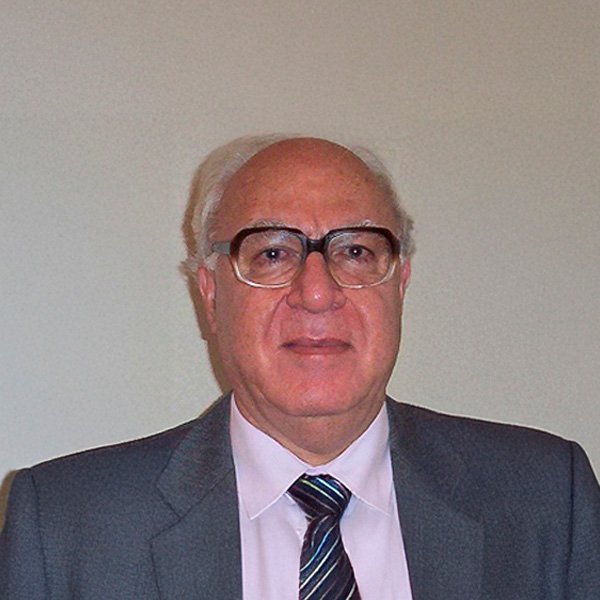

Former Professor and Dean of the Faculty of Languages, University of Isfahan; former lecturer at Cambridge, Harvard and Oxford universities; retired Editor for Middle East and North Africa, BBC Monitoring.

Share

Leave a Reply

Your email address will not be published. Required fields are marked *

Related Posts

Officially, the drones were not identified. By simply thinking critically – which journalists and selected experts no longer do – there may be a good reason for that. And this article will never be mentioned in Denmark… Drones over Denmark. No damage. No trace. No answers. Yet the headlines scream “Russian threat,” and Prime Minister Mette Frederiksen speaks with a certainty that defies logic: “We don’t know they were Russian—but we know Russia is the biggest threat to Europe.” It could be nobody else – unless you make an interest analysis which I did two days ago. This is not security policy. It’s theatre. And the audience is being played. Let’s rewind. These drones—unphotographed, untracked, unclaimed—appear and vanish like ghosts. Airports shut down. Panic spreads. Military budgets swell. And the narrative hardens: Russia is behind it. But what if that’s not just wrong but deliberately misleading? Here’s a hypothesis for...
And why the world, especially the EU, must now declare itself independent of the United States. UN’s 80th anniversary This year, the United Nations celebrates the 80th anniversary of its founding. The UN was formed after the scourge of the Second World War, in which 70 to 85 million people were killed and many countries were destroyed. That war came on the heels of the First World War, which also killed between 15 and 22 million people. After the Second World War, especially after the use of nuclear weapons by the United States, which marked a turning point in the history of warfare that could result in the end of civilisation as we know it, humanity decided to move away from the era of empires and big power politics and usher in a new era of peace, freedom and cooperation. These were the principles enshrined in the UN Charter. The United States...
Drones over Nordic airports. No damage. No trace. No answers. Most assume Russia—but what if that’s not so? Why is there so much we are not told? This article explores the strategic ambiguity behind recent drone incursions and asks: Who else might benefit from sending drones into NATO airspace? From Ukraine’s surprising drone supremacy to Russia’s possible signalling, the silence itself may be the loudest message. These are the kinds of questions decent, intelligent investigative journalists and commentators could easily research. Why don’t they? Did you, dear reader, know or think of this? That the most powerful weapon in today’s conflicts might be the one that leaves no trace – and no answers. Just enough fear to justify the next move? Recently, drones have repeatedly appeared over Nordic airports and near some military facilities. They cause no damage – for which reason the designation “hybrid attack” is misleading but serves a purpose. These...

Recent Articles

We know that medical personnel have failed to report to higher authorities wounds that were clearly caused by torture and that they have neglected to take steps to interrupt this torture. In addition, they have turned over prisoners’ medical records to interrogators who could use them to exploit the prisoners’ weaknesses or vulnerabilities. We have not yet learned the extent of medical involvement in delaying and possibly falsifying the death certificates of prisoners who have been killed by torturers. A May 22 article on Abu Ghraib in the New York Times states that “much of the evidence of abuse at the prison came from medical documents” and that records and statements “showed doctors and medics reporting to the area of the prison where the abuse occurred several times to stitch wounds, tend to collapsed prisoners or see patients with bruised or reddened genitals.” http://www.truthout.org/docs_04/080604J.shtml#16 According to the article, two doctors who...
Jan Øberg behandler i artiklen en lang række faktorer, som ligger til grund for den måde vores samfund er organiseret på – og derfor også for konflikter. Artiklen introducerer således sammenhængen mellem familien, foreninger, regeringer, NGO’ er, nation, stat, nationalstat og alliancer for på denne måde bedre at kunne forstå konflikter og i sidste ende blive klogere mht. at løse disse. Øberg, der er fortaler for global bevidsthed, hvilket skal ses i lyset af den øgede globalisering, skelner mellem kulturkamp og kulturdialog. Endelig behandles begrebet magt og magtesløshed: giver magt ret til at udøve magt – fordi man mener at have ret? Litteraturliste og arbejdsspørgsmål efter artiklen. Ordene vi bruger om verden I satellitperspektiv kan man godt tale om den menneskelige familie eller menneskeheden. Udtrykket understreger, at der eksisterer – eller burde eksistere – et fællesskab fordi vi alle er mennesker og sammen bebor denne klode og ingen anden. Og...
Kapitel 2: Forskellige sider af Europa og USA…fortsat 2.5 Militære relationer I forbifarten har vi allerede sagt nogle ting om USA’s militære situation. Kig lige en gang til på afsnit 2.3. Nu skal vi uddybe det militære forhold mellem USA og EU. Der er en række ligheder mellem visse europæiske landes og USA’s militær. Næsten alle er med på en eller anden måde i NATO, direkte som medlem – selv Island, der ikke har et forsvar – eller indirekte i Partnerskab for Fred. USA og Canada er med i OSCE (på dansk OSSE), Organisationen for Sikkerhed og Samarbejde i Europa, der tæller over 50 lande. USA samt England og Frankrig er kernevåbenstater og de har styrker til intervention langt borte fra hjemlandet, om end USA’s er tifold større. Alle har også en omfattende våbeneksport og bruger den som et middel til at tjene penge og få loyale venner på, det...

TFF on Substack

Discover more from TFF Transnational Foundation & Jan Oberg.

Most Popular

We know that medical personnel have failed to report to higher authorities wounds that were clearly caused by torture and that they have neglected to take steps to interrupt this torture. In addition, they have turned over prisoners’ medical records to interrogators who could use them to exploit the prisoners’ weaknesses or vulnerabilities. We have not yet learned the extent of medical involvement in delaying and possibly falsifying the death certificates of prisoners who have been killed by torturers. A May 22 article on Abu Ghraib in the New York Times states that “much of the evidence of abuse at the prison came from medical documents” and that records and statements “showed doctors and medics reporting to the area of the prison where the abuse occurred several times to stitch wounds, tend to collapsed prisoners or see patients with bruised or reddened genitals.” http://www.truthout.org/docs_04/080604J.shtml#16 According to the article, two doctors who...
Jan Øberg behandler i artiklen en lang række faktorer, som ligger til grund for den måde vores samfund er organiseret på – og derfor også for konflikter. Artiklen introducerer således sammenhængen mellem familien, foreninger, regeringer, NGO’ er, nation, stat, nationalstat og alliancer for på denne måde bedre at kunne forstå konflikter og i sidste ende blive klogere mht. at løse disse. Øberg, der er fortaler for global bevidsthed, hvilket skal ses i lyset af den øgede globalisering, skelner mellem kulturkamp og kulturdialog. Endelig behandles begrebet magt og magtesløshed: giver magt ret til at udøve magt – fordi man mener at have ret? Litteraturliste og arbejdsspørgsmål efter artiklen. Ordene vi bruger om verden I satellitperspektiv kan man godt tale om den menneskelige familie eller menneskeheden. Udtrykket understreger, at der eksisterer – eller burde eksistere – et fællesskab fordi vi alle er mennesker og sammen bebor denne klode og ingen anden. Og...
Kapitel 2: Forskellige sider af Europa og USA…fortsat 2.5 Militære relationer I forbifarten har vi allerede sagt nogle ting om USA’s militære situation. Kig lige en gang til på afsnit 2.3. Nu skal vi uddybe det militære forhold mellem USA og EU. Der er en række ligheder mellem visse europæiske landes og USA’s militær. Næsten alle er med på en eller anden måde i NATO, direkte som medlem – selv Island, der ikke har et forsvar – eller indirekte i Partnerskab for Fred. USA og Canada er med i OSCE (på dansk OSSE), Organisationen for Sikkerhed og Samarbejde i Europa, der tæller over 50 lande. USA samt England og Frankrig er kernevåbenstater og de har styrker til intervention langt borte fra hjemlandet, om end USA’s er tifold større. Alle har også en omfattende våbeneksport og bruger den som et middel til at tjene penge og få loyale venner på, det...
Read More
Imagen-thumbnail-The-Transnational-1
We know that medical personnel have failed to report to higher authorities wounds that were clearly caused by torture and that they have neglected to take steps to interrupt this torture. In addition, they have turned over prisoners’ medical records to interrogators who could use them to exploit the prisoners’ weaknesses or vulnerabilities. We have not yet learned the extent of medical involvement in delaying and possibly falsifying the death certificates of prisoners who have been killed by torturers. A May 22 article on Abu Ghraib in the New York Times states that “much of the evidence of abuse at the prison came from medical documents” and that records and statements “showed doctors and medics reporting to the area of the prison where the abuse occurred several times to stitch wounds, tend to collapsed prisoners or see patients with bruised or reddened genitals.” http://www.truthout.org/docs_04/080604J.shtml#16 According to the article, two doctors who...
Imagen-thumbnail-The-Transnational-1
Jan Øberg behandler i artiklen en lang række faktorer, som ligger til grund for den måde vores samfund er organiseret på – og derfor også for konflikter. Artiklen introducerer således sammenhængen mellem familien, foreninger, regeringer, NGO’ er, nation, stat, nationalstat og alliancer for på denne måde bedre at kunne forstå konflikter og i sidste ende blive klogere mht. at løse disse. Øberg, der er fortaler for global bevidsthed, hvilket skal ses i lyset af den øgede globalisering, skelner mellem kulturkamp og kulturdialog. Endelig behandles begrebet magt og magtesløshed: giver magt ret til at udøve magt – fordi man mener at have ret? Litteraturliste og arbejdsspørgsmål efter artiklen. Ordene vi bruger om verden I satellitperspektiv kan man godt tale om den menneskelige familie eller menneskeheden. Udtrykket understreger, at der eksisterer – eller burde eksistere – et fællesskab fordi vi alle er mennesker og sammen bebor denne klode og ingen anden. Og...
Imagen-thumbnail-The-Transnational-1
Kapitel 2: Forskellige sider af Europa og USA…fortsat 2.5 Militære relationer I forbifarten har vi allerede sagt nogle ting om USA’s militære situation. Kig lige en gang til på afsnit 2.3. Nu skal vi uddybe det militære forhold mellem USA og EU. Der er en række ligheder mellem visse europæiske landes og USA’s militær. Næsten alle er med på en eller anden måde i NATO, direkte som medlem – selv Island, der ikke har et forsvar – eller indirekte i Partnerskab for Fred. USA og Canada er med i OSCE (på dansk OSSE), Organisationen for Sikkerhed og Samarbejde i Europa, der tæller over 50 lande. USA samt England og Frankrig er kernevåbenstater og de har styrker til intervention langt borte fra hjemlandet, om end USA’s er tifold større. Alle har også en omfattende våbeneksport og bruger den som et middel til at tjene penge og få loyale venner på, det...
Imagen-thumbnail-The-Transnational-1
Background Christian Harleman and Jan Oberg conducted a fact-finding mission to Burundi between November 26 and December 6, 2003. (See websites about the country here). The first TFF mission took place in March 1999. Unfortunately, since then it has not been practically possible to implement the co-operation with Burundi’s Ministry of Education and Burundian NGOs that was planned at the time. The 2003 mission had three purposes. First, to do fact-finding in general about the situation and, in particular, the progress under the Arusha Peace Process. Second, to explore the possibilities for co-operation between the government and relevant NGOs on the one hand and TFF on the other, in order to develop and deepen the existing competence in fields such as conflict-understanding, reconciliation and peace-building. Finally, third, to find out whether it would be possible, in co-operation with the Swedish Rescue Services Agency (Statens Räddningsverk), to establish a health care unit that...
Imagen-thumbnail-The-Transnational-1
Former UN Under-Secretary-General with special responsibility for peacekeeping operations TFF associate August 20, 2003 YRINGHAM, Mass.- Ralph Bunche was born in Detroit 100 years ago today (August 7, 2003). His passionate determination to get results did not extend to seeking credit for them, so his work is better remembered than he is. Of all his many accomplishments – civil rights pioneer, Nobel Peace Prize laureate, chief drafter of two chapters of the United Nations charter, negotiator of the armistices that ended the first Arab-Israeli war – Bunche said he was proudest of developing what came to be known as peacekeeping. Setting up the United Nations Truce Supervision Organization in Palestine in 1948, Bunche formulated the principles that have governed peacekeeping operations ever since. In the 1956 Suez crisis, working with Secretary General Dag Hammarskjold and Lester Pearson of Canada, he organized the first peacekeeping force, the United Nations Emergency Force...
– nästan 11 månader Till Sofia nästan 11 månader # 1  Till Sofias huvudsida Till alla Privata Foto-Serier