Interview # 4 of 4
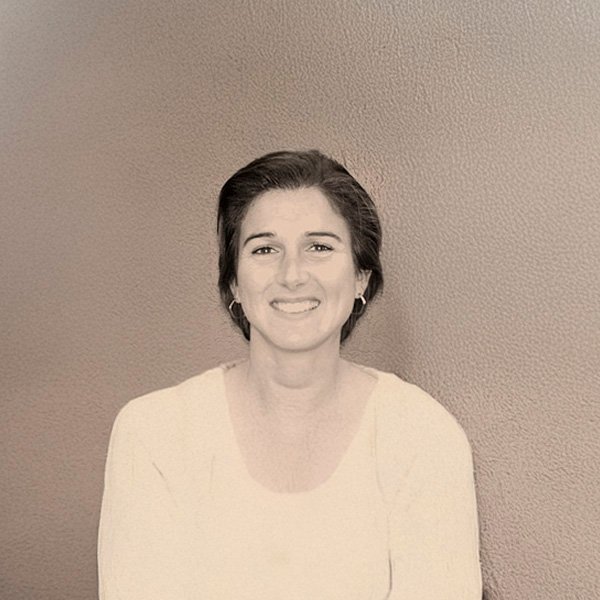
Sami Awad
Executive director, The Holy Land Trust
Bethlehem, Palestine
The Holy Land Trust (HLT) is a Palestinian not-for-profit organization established in 1998 in Bethlehem with the aim of strengthening, encouraging and improving the Palestinian community through working with children, families, youth, and the non-governmental organization (NGO) community. This goal is achieved on three levels: the creation of comprehensive community awareness programs, working on local and international advocacy initiatives, and building local and international networks and partnerships.Holy Land Trust promotes and supports the Palestinian community in its struggle on two fronts: achieving political independence through supporting the Palestinian community in developing nonviolent resistance approaches towards ending the occupation; and assisting it in building an independent Palestine that is founded on the principles of nonviolence, democracy, respect for human rights, and peaceful means of resolving conflicts. In addition, HLT works to build deeper and broader international understanding regarding the situation in the Holy Land in order to strengthen the capacity of all those working for achieving positive change in this region. HLT believes in the important role the international community plays in achieving a just and comprehensive peace in the Middle East.(1)
In 2003, the Palestine News Network (PNN) became a programme of the Holy Land Trust. PNN simultaneously broadcasts four news bulletins over 13 local Palestinian radio stations in the West Bank and Gaza via satellite and on PNN’s website. PNN has also begun broadcasting its tickertape on eight local television channels in the West Bank and expects to increase the number of participant channels to 12 in the near future. PNN has also begun sending SMS breaking news via mobile phones in Jordan. This service is expected to extend to a large number of Arab countries as soon as this is possible. PNN is also negotiating with the international Committee of Local radio so the network’s news bulletins could be broadcast over several European radio stations in the near future. (3)
In January 2006, Sami Awad ran in the elections for the Palestinian legislative council.
Vicky Rossi: Could you tell me a little more about your understanding of the term nonviolence. This morning in your speech you said that nonviolence for you was about empowerment and the recognition of equality.
Sami Awad: For me the concept of nonviolence was one that I can say that I grew up with. I grew up in a family that was very understanding of the political realities that we live in under occupation, but was always looking for ways to find solutions. The person who had the most influence on my life was my uncle, whose name is Mubarak Awad. When Mubarak returned to Palestine from living in the U.S. in 1984, he opened a centre called the Palestinian Centre for the Study of Nonviolence. As a young teenager, I was very involved and active with the activities he did. We would go out to lands that were going to be confiscated by settlers and we would plant olive trees. We would organise demonstrations and activities. I think everybody who has uncles has a favourite uncle and Mubarak was my favourite uncle for these activities we did, but as a 13 year old boy it was also for the motor cycle he had. It was always fun to ride on the back of a motorcycle!
In 1988 Mubarak was arrested and tried in an Israeli court and was deported because of his activities in nonviolence. For me that was a big transformation in my life, where it wasn’t just the thing to feel good about – to plant trees on a land, to organise demonstrations and so on – it was something that was really serious and it was something that the occupation was very afraid of. That was when I decided to commit my life to the study of this field and for me what I realised is that it truly is empowerment. It takes people away from the feeling of being negative, complaining, blaming others and it makes people say, “Well, what can we do to get out of this situation?” That’s the power of nonviolence.
Vicky Rossi: I have visited Israel, but I have never been to Palestine. Palestine is depicted in a certain way in the mainstream media, so my question is what is daily life really like for Palestinians in Gaza and the West Bank?
Sami Awad: As you can guess, we do live a difficult life under occupation. As I said today, it is not just the issue of the military violence that we face and have to deal with on a daily basis. It is also the structural violence. The occupation has created an entire structure where every aspect of our lives is controlled: our movements, our food supplies, our electricity comes from Israel, our water comes from Israel. Even though the water wells, the natural reserves, are under West Bank territory, as Palestinians, in areas we control, we cannot dig for water. The water is dug by Israelis and sold back to us at over 10 fold the price that we would have paid for it if we were able to find our own water resources. In addition, every small aspect is controlled – your movements, for example, in Europe you are very precise, on time, but if I wanted to have a meeting in Ramallah I would say that I will meet between 9 a.m. and 12. This is when we will have the meeting because of the check points that exist.
The difficulty is that the way the media perceives this and the way the Israeli government tries to show this is that all these measures are taken for security. What is the security when we have a checkpoint between two Palestinian villages or towns? It is more of an insulting act against the Palestinians and a demonising act for the Palestinians. That’s how we feel it. And Palestinians do feel that. There is, as I said this morning, a continuing feeling of hopelessness that exists because there are no answers, there are no alternatives that are being presented.
The Wall that is being built is not just built between Palestine and Israel. It is built in a way that is dividing Palestinian lands from each other. Bethlehem where I come from is a city that will be completely surrounded by the Wall and villages around Bethlehem will have walls around them. Now you can call it a wall, you can call it a fence. The Israeli government makes the claim that this is not a wall it is just a fence. And as Palestinians we call it a wall because in residential areas it is a concrete wall. It is in the outside areas where no people live that it is called a fence. But, how many people know that the Berlin Wall was mostly a fence? They called it a wall even though the majority of it was fence. But on the ground it is a wall and that is what it feels like. That is what we face.
The settlements are another aspect. They continue to grow and expand. Everybody has heard about the settlers who left the Gaza Strip last year. The number is 8,000 settlers. 8,000 settlers left the Gaza Strip. How many people heard that within 2 months 14,000 settlers moved into the West Bank. That’s another form of the violence that we face on a daily basis.
Vicky Rossi: In what way did daily life change for Palestinians when Hamas was elected to government in January of this year?
Sami Awad: The victory of Hamas in the elections was one that was a shock to everybody, including Hamas. The majority of the Palestinians did not vote for Hamas. The statistics show that less than 40% actually did vote for Hamas, but the majority of the Palestinians voted for divided political factions such as Fateh, which had many different candidates running in the election. The victory of Hamas happened in a fair and democratic election. It was an opportunity I believe that was missed by Israel and by the international community. As soon as Hamas became engaged in the political process, many of us in Palestine said, “Take advantage of this. Don’t throw them back in the corner”.
They tried to come out of that isolation, of being on the fringes but sad to say the world pushed them again in the corner and they pushed more Palestinians there too as now we have a boycott. The global community has imposed an economic boycott on Palestinians. For 5 months now, government employees have not received their salaries. The majority of those who are employed are from Fateh, the political party of Yasser Arafat and the political party that Israel and the world wanted to win. And these people are angry with Israel and with the U.S. and with Europe. And I can say very sadly that many of them are moving towards Hamas out of solitude, out of support for the government. So this has become a big issue.
The economic situation because of the boycott has become very, very difficult. We have seen the level of poverty increase tremendously in the Palestinian areas. I can also say that this boycott has affected non-governmental organisations (NGOs) like our organisation because now there is the fear from other international organisations of supporting anything in Palestine. Not because of what we might do with the money, but because of how their own governments might react to them. So organisations in the U.S. have said, “Until this thing with Hamas is resolved, we don’t want anything with Palestine.” In Europe as well.
So even the NGO community, which in many cases was the balance, has been affected. When there was an attack on the Palestinian Authority – even during the days of Yasser Arafat – and there was no economy moving, the NGO community took charge and it was able to make the balance. Now the scale has broken on both sides, so that creates an even more difficult situation. And that’s where we are today.
Vicky Rossi: To what extent is coalition-building on a national or international level important for the work of the Holy Land Trust?
Sami Awad: Networking and building coalitions is a very important aspect of our work. The way we have divided the networking is on two levels: the local networking and the global networking. Locally when you engage in nonviolence, the way nonviolence is now practiced in Palestine, it’s done as small, sporadic activities that are reactionary in nature: so, the Wall is being built in a village, people go and resist the Wall after it even starts being built; a road is being blocked, people go and react to it; a bombing happens, people go out and demonstrate against it. So nonviolence now is done, as I said, in small areas where there are the direct effects of the acts of occupation.
But for nonviolence to become successful, it has to transform itself into a larger, pro-active movement, where as Palestinians we start taking the initiative and the actions and then seeing how the Israeli military, the Israeli government, react to us. We lead and they follow in the actions that we do. In order to do this you have to build a strong and powerful network. The problem that we have now of course is that the divisions that are imposed on the Palestinian community prevent us from holding these very important meetings and discussions. Yes telephones are an option, yes emails and internet are an option, but there is nothing better than to have a face to face interaction when you are discussing such activities.
Part of what we have done to help in this is that we have completed a training of 30 trainers and the 30 trainers are located in 10 different areas in the West Bank. All of them are now engaged in trainings in their local areas with villages, with cities, with political factions, other organisations, the Palestinian Authority itself, where they are doing the trainings so that they will develop local strategies but at the same time because the training is so similar we would be able to bring them together when we can to develop national strategies. So this is at the local level what we are trying to do and as I said before we are working with other organisations. This is not only the work of the Holy Land Trust.
On the global level we realise that for nonviolence again to be successful it definitely needs the international community to play a very big role in this. The best comparison I can give is to the situation in South Africa. While there was a strong resistance movement happening in South Africa, mostly being nonviolent, that was able to create awareness of the injustice that was happening in South Africa, it took the international community when it clicked and they woke up to say enough is enough and then the different forms of pressure, the different forms of convincing, the different forms of negotiations started taking place between the South African government and the international community, which lead to the collapse of the apartheid regime.
Vicky Rossi: In your eyes, is the United Nations totally ineffectual as a mediating body in the Middle East as long as the U.S. has a veto power within the Security Council?
Sami Awad: I think this is one point Palestinians and Israelis actually agree on, the ineffectiveness of the UN! But for different reasons. I for one truly believe in the “potential” of the United Nations, that it can truly be a body that can encompass the global community, can present the issues that are proving challenging to us as a global body and can play a big role in resolving these conflicts and issues.
But as I said it’s a “potential” because what I see now is the United Nations being controlled and manipulated by certain powers, especially the U.S., in determining not just the policy of the United Nations towards Palestine and Israel, but to any conflict that happens. It seems it is up to the U.S. when they feel they need the UN to justify an act. When they do then they take the United Nations file off the shelf and present it. If they feel the global community is going to oppose them through the United Nations then they just put that file back on the shelf again and do the act on their own and there is nobody telling them do not, telling them to stop, telling them that they themselves are violating international laws and precedents.
So I hope that something will happen where the United Nations would be what it is supposed to be. But as a Palestinian I say it has been very disappointing from the very beginning. Israel actually – many people don’t know that – has refused to abide by more United Nations resolutions made against it, or asking it to conduct certain actions, more than any other country. Fifty seven rulings by the United Nations – and these are not ones that were vetoed by the United States, these are ones that passed by the United Nations – that Israel is until this day refusing to abide by.
Vicky Rossi: If then it is not through the United Nations, through which channels do you suggest that the international community work and what kind of initiatives should they be promoting?
Sami Awad: I’m a strong believer in grassroots activism and grassroots work. I believe again similar to South Africa that what made countries change, what made the US government change towards South Africa was the masses of the people, the organisations, the networks in the United States that said enough is enough. This is the change that we are looking for. I believe that we do have systems in power and these systems are corrupt. Government systems around the world are corrupt and we have to find a way to truly send our message not just as a criticism of the systems but as a means to try to change the systems that exist by working through them and within them.
When we talk about democracies, this is when the role of democracy plays a part. It is when the masses of the people in different areas of the world reach a point where they will say to their governments it is time to put a stop, it is time to put an end to the occupation. I believe this will happen not just in the Western world but it will happen in Israel itself. The Israeli society needs to rise up to the policies of the Israeli government. I always say that it will not be the Palestinians that will bring down the Wall. The only people who will bring down the Wall are the Israelis.
Then it comes back to us as Palestinians and that’s why I ask what are we doing to take responsibility? This morning I talked about the surplus of powerlessness that exists within the Palestinian community and for me it would be like a snowball effect: when Palestinians start engaging in nonviolence and this movement grows more and more within the Palestinian community, and the press starts reporting on it and organisations start talking about it, and communities start discussing it, it will create the change within the Israeli society where they will start challenging their own government’s policy and say, “Why are we building this Wall?” “The justification of security even if it was taken out of proportion before, there is absolutely no justification for the Wall now.” “Why are we continuing the occupation?” “Why are we building the settlements?” And then the more important question, they would ask, “What can we do?” “We the Israeli society, what can we do to put an end to this?” And this would create a new peaceful revolution within the Israeli societies and then this would spread to other parts of the world.
Now I don’t say this as a theory. I say this as something that happened, which was during the first Palestinian uprising in 1987. In 1987, or prior to 1987, the Israelis did not even know of the existence of Palestinians. They were just “Arabs on our land”. The Israelis would come into our supermarkets on Sabbath, Saturday, because their stores were closed and they would buy cheaper food. It was open to everyone. There was no Palestinian identity recognised by the local community.
When the Intifada happened and it was nonviolent in its nature, and the televisions started showing how the Israeli soldiers – young adults – were reacting to the nonviolent demonstrations, the first community that rose with us was the Israeli community and the peace movement really grew during that first uprising. It wasn’t before that. It was the first uprising that made the Israeli peace movement develop in a very strong way. That led to many things for us: the recognition of us as a people, the recognition of our leadership and most importantly to negotiations between Palestinians and Israelis. So I don’t put my trust in the current structures; I put my trust in the people, that when we are ready to wake the world up, it will wake up and stand in solidarity with us.
Vicky Rossi: How important do you think it is to engage young people in nonviolent, direct action?
Sami Awad: I strongly believe in the need to work with young people and to learn from young people. […] But being young for me has really nothing to do with age. It has to do with how much energy and how much spirit you have to put in this work. This really gives me my inspiration to continue this work seeing so many people involved and so many people active in this work and so many people seeking to learn. If you want to talk about young adults, there are so many who are here in this summer camp [in Tamera] and people who have dedicated their lives to this. This is truly empowering for all the work we do, so how can we continue to build this energy in this young generation? This becomes the important question for us.
Vicky Rossi: My final question relates back to the talk you gave this morning when you spoke about fear. You said that in order to overcome fear there was a need for dialogue between Palestinians and Israelis and that that dialogue should be initiated by Palestinians. My question is whether the Holy Land Trust has been facilitating, or intends to facilitate such a dialogue in the form of a National Dialogue in which all stakeholders can participate and in which mediation is carried out by a third party such as the Holy Land Trust?
Sami Awad: As an organisation and for me personally, it is more the issue of action than dialogue. As Palestinians we need to engage in activities and actions in addition to dialogue that can truly convince the Israeli side to start putting trust in us. Not to say full trust. Not to say absolute trust, but really to start building the trust process between us and them.
As I said this morning, both of us are victims of what happened to the Jewish community. We are not the victims of the victims. Our problem will not be resolved in my opinion until the Israeli society is truly able to reach a certain point of understanding and I can even say forgiveness for what happened to them in their history. As Palestinians we have to play a role in initiating this. We have to play a role in convincing the Israeli society that they did not come from the ghettos of Europe to the ghettos of the Middle East, that this is a mentality of fear as if they were kicked out of one bad neighbourhood and then were sent to another bad neighbourhood that was going to do the same thing to them.
A process, I think, should have taken place a long time ago, decades ago, where even at the time the Jewish community first started coming into Palestine, as Palestinians we should have had the understanding. Now of course how media played a part, how propaganda played a part in what was happening in Europe to the Jewish community, all of us know the stories and all of us know how the Americans and the Allies claimed that they had no ideas what was happening in the death camps, even though there are reports now that they did know about them and they had taken pictures of them and they knew very well details of them.
But it’s never too late and I think there is an opportunity now for us to have this and that’s why I went to Auschwitz-Birkenau, to have this experience so that then I would know what actions and activities I can do in Palestine, that when I do these actions they will not enforce the spirit of fear in the Israeli society or the Jewish society, but would break that barrier, break that wall that the Jewish community has built around itself. I had an Israeli friend who said “What we are now living in, in Israel, is a ghetto that has a nice beach view, but it is a ghetto and we are not able to get out of it.” Through our help to them, through your help to them, they can break the walls of this ghetto.
1. From the Holy Land Trust
http://www.holylandtrust.org
2. Palestine News Network
http://www.palestinenet.org & http://www.pnn.ps
*This transcript represents an accurate but non-verbatim representation of the original interview.
For further information, please contact:
Sami Awad
Director, Holy Land Trust
#529 Manger Street
Bethlehem
Palestine
Email: sami@holylandtrust.org
Tel: +972-2-276-5930
Websites
The Holy Land Trust
– with articles by Sami Awad and others
Palestine News Network
http://www.palestinenet.org & http://www.pnn.ps
The 4 interviews