
India: Democracy in name only?

Christophe Jaffrelot

April 16, 2024

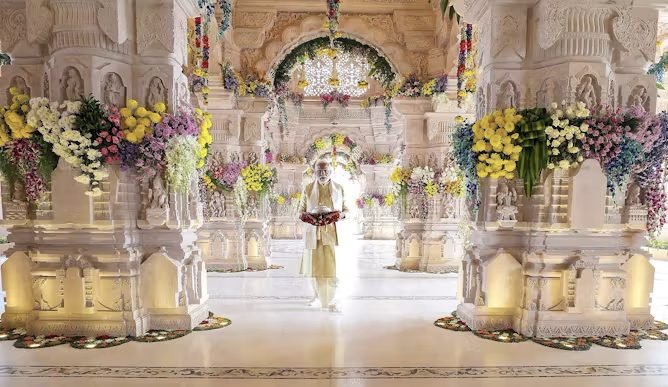
Modi’s first day in office

In 2001, I walked for 7 weeks in the footsteps of Gandhi, his most important places including parts of the Salt March. Already back then, the ruthless emergence of Hindutva and the growing animosity toward Gandhi was easy to sense. One man I struck up a conversation with on a longer bus drive told me that it was high time that Gandhi was murdered. Today, statutes of his murderer are put up, and Gandhi is being marginalised. That is no wonder in Modi’s India – although, of course, Modi has Gandhi in his office and likes to be seen as a Gandhian.
Regrettably, TFF seldom published anything about India. But what seems to be a clear decades-long trend towards authoritarianism, personality cult, an ever-growing marginalisation of Muslims and making Hindutva the nationalist (para-military) ideology in what has often been called ‘the world’s largest democracy’ bodes ill for the wider world and for democracy in whatever form it may have had in India. This is all explained brilliantly in this article which was first published by Le Monde Diplomatique in April 2024.
Jan Oberg

Narendra Modi’s electoral success in Gujarat between 2001 and 2014 and on the Indian scene since then stems from his novel blend of populism and Hindu nationalism (Hindutva). Hindutva grew out of the Rashtriya Swayamsevak Sangh (National Volunteer Organisation, RSS), a paramilitary-style nationalist group founded in 1925 to bulk up young Hindus both physically and morally so they could stand up to Muslims, who were depicted as a danger to the majority.

Modi joined the RSS as a child and devoted his life to it, pursuing no other careers and even living apart from his wife. He rose through the ranks, eventually becoming the chief minister of Gujarat (his home state) in 2001. The following year, he oversaw an anti-Muslim pogrom that left some 2,000 dead ‒ a strategy of religious polarisation that won him the December 2002 regional elections. Similar successes in 2007 and 2012 made Modi the obvious prime ministerial candidate for his Bharatiya Janata Party (Indian People’s Party, BJP) in 2014.

But he left behind the RSS tradition of collective decision-making, putting himself front and centre and striving to connect directly with ‘his’ people. Rather than relying on the activist network, Modi held rally after rally where he showcased his flair for speechmaking. He also founded his own television channel, worked on social media and employed a revolutionary strategy: using holograms to simultaneously lead one rally in hundreds of places. Modi even distributed masks printed with his likeness to deepen supporters’ identification with him. In short, he saturated the public arena so as to embody the masses ‒ a task made easier by his low-caste origins, on which he has built a complete narrative (he worked as a teaboy in his father’s shop).

However, the ‘masses’ meant only the Hindu majority, which he was busy stirring up against one target in particular: Muslims. As in the 2014 elections, in 2019 ‘Moditva’ – Modi’s idiosyncratic hybridisation of rightwing nationalist ideology, Hindutva and a personality cult – triumphed on the strength of BJP landslides in the north and west. This success allowed him to bend to his will both the RSS and the BJP – whose MPs had ridden to victory on his coattails – fashioning a government of faithfuls and a parliament of yes-men.

The other institutions soon succumbed too – even the Supreme Court, once a beacon of independence. In the summer of 2014 Modi advanced a constitutional reform that would have changed the appointment process for judges, until then picked by a collegium of peers. His co-optation, opposed by the entire political class, would have replaced the collegium with a five-member commission. The Supreme Court eventually declared the amendment unconstitutional, but Modi still got his way: of the nominees submitted by the collegium, his government finalised appointments only for those he liked. The court thus resigned itself to proposing candidates who were apt to please him.

Society, meanwhile, was undergoing a similar process of enforced conformity, especially in higher education, despite India’s reputation for creativity and intellectual vitality. Public universities were under the thumb of vice-chancellors invariably chosen from among members or supporters of the Hindu nationalist current. Funders (mostly from the business world) of private institutions were pressured, and they in turn pressured the faculty: industrialists cannot afford to antagonise those in power.

Dozens of subtle manoeuvres brought the opposition to its knees. Most often, members of the Indian National Congress or regional parties would be intimidated via tax adjustments or police investigations based on shaky pretexts. The objective? To draw rivals away from their political affiliations and toward the BJP. A valuable catch would sometimes be rewarded with a ministerial position or an easy job. Those who resisted the carrot felt the sting of the stick, typically in the form of charges that could mean prison (the chief minister of Delhi, Arvind Kejriwal, was imprisoned last month) or a freeze on their party’s funds (the case for several Congress party bank accounts since February).

Despite the prime minister’s autocratic tendencies, his government has continued to hold elections. Other similarly disposed countries – think Recep Tayyip Erdoğan’s Turkey or Viktor Orbán’s Hungary – have done likewise. Elections have two major upsides. First, a country can claim to be a democracy (India is the ‘world’s largest’ according to Western leaders). Second, elections offer a cover of legitimacy to Modi: the people’s mandate justifies weakening all other power centres, especially those that uphold the rule of law. How could the judiciary system defy a leader who embodies the people? Legitimacy wins out over legality.

Elections offer a cover of legitimacy to Modi: the people’s mandate justifies weakening all other power centres, especially those that uphold the rule of law. How could the judiciary system defy a leader who embodies the people?

For Modi, running for reelection is a calculated risk. Regulatory institutions are shadows of their former selves: the electoral commission, which caused many a headache for prime ministers past, has become compliant as its civil servant leaders face the same pressures as political opponents. For example, although it is illegal to campaign on religious arguments, it would now be unthinkable to punish a BJP leader for doing so.

What’s more, Modi knows he can outspend any rival. BJP expenditures reportedly reached around $3bn in 2019, equivalent to those of all other parties combined. This financial heft was made possible by a law his government passed in 2017 that keeps donors anonymous through ‘electoral bonds’, a system declared unconstitutional by the Supreme Court this year in its most significant challenge to the government since 2015. Even if this system were eliminated, the BJP would still benefit from other private funding channels ‒ not to mention the vast sums that the government collects from the public sector to finance its campaigns.

Private sector money comes primarily from a handful of oligarchs. In exchange for significant advantages, these tycoons they help fund the government and back it in the press they are slowly taking over. New Delhi Television (NDTV), the last mainstream TV channel still brave enough to criticise Modi, was acquired in 2022 by Gautam Adani, and some highly popular journalists resigned as it morphed into his mouthpiece. Overall, TV channels and media companies have self-censored so as to avoid the tax officials and police.

At grassroots level, the Hindu nationalist movement relies on a network of disciplined activists trained by the RSS. As ‘vigilantes’ they primarily act as a sort of local cultural police, and Muslims are their favourite targets. Muslim men are barred from fraternising with young Hindu women in public or on campus, in the name of combatting ‘love jihad’ (a supposed strategy to seduce them, persuade them to convert to Islam and then marry them). Muslims are sometimes pressured to (re)convert to Hinduism, banned from mixed neighbourhoods ‒ causing increased ghettoisation ‒ or pursued on highways in the north when they are suspected of transporting a cow (sacred in Hinduism) to the slaughterhouse. This form of vigilantism sometimes leads to violent lynchings that are filmed and posted on social media.

Guided by the Hindu nationalist movement, these activists work hand in hand with the party-state that the BJP is becoming, to create a deeper state that penetrates society. Vigilantism indeed offers the state unprecedented societal reach: (cultural) order is enforced not just by the administration, but by activists who serve as proxies for those in uniform. The only difference is their attire.

Given this transformation of the public sphere, how different would things really be for minorities if the political pendulum were to swing? If elected, the opposition could reverse BJP laws, but what power would it have to keep self-proclaimed defenders of Hinduism from policing the streets? Legitimacy may continue to sideline legality for as long as the Hindu majority remains swayed by the dogmas that the BJP has effectively made mandatory.

Christophe Jaffrelot

Christophe Jaffrelot is the research director at CERI-Sciences Po/CNRS. His publications include Modi’s India: Hindu Nationalism and the Rise of Ethnic Democracy, Princeton University Press, 2021, and Gujarat under Modi: Laboratory of today’s India, Hurst, 2024.

Translated by Jeremy Sorkin

We also warmly recommend this analysis, India elections: ‘Our rule of law is under attack from our own government, but the world does not see this’ published by The Conversation.

No data was found

Share

Leave a Reply

Your email address will not be published. Required fields are marked *

Related Posts

Drones over Nordic airports. No damage. No trace. No answers. Most assume Russia—but what if that’s not so? Why is there so much we are not told? This article explores the strategic ambiguity behind recent drone incursions and asks: Who else might benefit from sending drones into NATO airspace? From Ukraine’s surprising drone supremacy to Russia’s possible signalling, the silence itself may be the loudest message. These are the kinds of questions decent, intelligent investigative journalists and commentators could easily research. Why don’t they? Did you, dear reader, know or think of this? That the most powerful weapon in today’s conflicts might be the one that leaves no trace – and no answers. Just enough fear to justify the next move? Recently, drones have repeatedly appeared over Nordic airports and near some military facilities. They cause no damage – for which reason the designation “hybrid attack” is misleading but serves a purpose. These...
This is the third appeal from TFF. The first and the second here. On August 22, 2025, the UN officially declared famine in Gaza. The world’s top authority on food security called for help and said starvation will spread further within the Strip unless fighting stops and much more aid is allowed in. More than half a million people in the Gaza Strip are facing catastrophic hunger conditions, while more than a million more are in a food emergency phase, the report states. This man-made catastrophic famine could have been prevented by a steady flow of humanitarian aid into the enclave, relief chief Tom Fletcher pointed out. “Yet food stacks up at borders because of systematic obstruction by Israel,” Mr. Fletcher said. “It is a famine within a few 100 meters of food in a fertile land.” The UN’s top aid official underscored that the famine in Gaza is “caused by cruelty, justified...
Professor, Dr, TFF Board member The second of three TFF Appeals This is an example – for your inspiration – of how you can address your head of state, prime minister and other relevant ministers. To urge them to take action and not just use words.Instead of just sending it by email, which may not be read, it makes a stronger impression if you send it by snail mail – and millions do it too. It is urgently important that every citizen does something to stop the genocide on the Palestinian people now. Everybody can write a letter, short or long, and protest the lack of action. See also ideas to what you may constructively suggest in TFF’s first Appeal here. I address you deliberately in the way you prefer—in the feminine form. I write to you professor to professor, woman to woman, mother to mother, grandmother to grandmother. I...

Recent Articles

Till Sofias huvudsida
OK, Trump did not get it. But he got a full endorsement of a possible future US regime change in Venezuela. And that is what Ms Machado has advocated. On October 10, 2025, the Norwegian Nobel Committee awarded its Peace Prize to Venezuelan opposition figure María Corina Machado. The citation praised her “tireless work promoting democratic rights.” But Ms Machado has openly called for U.S. military intervention in Venezuela, stating on CBS: “The only way to stop the suppression is by force—U.S. force.” She or her party has received funding from the National Endowment for Democracy (NED), a U.S. government-backed body known as a CIA front organisation and for supporting regime-change operations worldwide. And in 2018, she sent a letter to Israeli Prime Minister Benjamin Netanyahu, asking him to use “force and influence” to help dismantle Venezuela’s government—citing alleged ties to terrorism, Iran and narcotrafficking. This year’s NATO Norwegian prize...
PRESS RELEASE – 6 OCTOBER 2025 LAY DOWN YOUR ARMSPEACE PRIZE FOR 2025 is awarded Francesca Albanese The United Nations Special Rapporteur on the occupied Palestinian territories – as the person who, in accordance with Alfred Nobel’s will, has “done the most or the best work for fraternity between nations and for the abolition or reduction of standing armies as well as for the holding and promotion of peace congresses.” Francesca Albanese has forcefully and unwaveringly worked against Israel’s full-scale war on the occupied Palestinian territories, in particular Israel´s ongoing genocide against the Palestinian people. She has confronted Israel’s systematic war crimes and crimes against humanity in a truly global outreach. Further, she has brought governments, international organisations and people’s groups together to underline the responsibility of the world at large to act and to stop arming, enabling, and profiting from Israel’s ongoing criminal actions. But first of all, Albanese...

TFF on Substack

Discover more from TFF Transnational Foundation & Jan Oberg.

Most Popular

Till Sofias huvudsida
OK, Trump did not get it. But he got a full endorsement of a possible future US regime change in Venezuela. And that is what Ms Machado has advocated. On October 10, 2025, the Norwegian Nobel Committee awarded its Peace Prize to Venezuelan opposition figure María Corina Machado. The citation praised her “tireless work promoting democratic rights.” But Ms Machado has openly called for U.S. military intervention in Venezuela, stating on CBS: “The only way to stop the suppression is by force—U.S. force.” She or her party has received funding from the National Endowment for Democracy (NED), a U.S. government-backed body known as a CIA front organisation and for supporting regime-change operations worldwide. And in 2018, she sent a letter to Israeli Prime Minister Benjamin Netanyahu, asking him to use “force and influence” to help dismantle Venezuela’s government—citing alleged ties to terrorism, Iran and narcotrafficking. This year’s NATO Norwegian prize...
PRESS RELEASE – 6 OCTOBER 2025 LAY DOWN YOUR ARMSPEACE PRIZE FOR 2025 is awarded Francesca Albanese The United Nations Special Rapporteur on the occupied Palestinian territories – as the person who, in accordance with Alfred Nobel’s will, has “done the most or the best work for fraternity between nations and for the abolition or reduction of standing armies as well as for the holding and promotion of peace congresses.” Francesca Albanese has forcefully and unwaveringly worked against Israel’s full-scale war on the occupied Palestinian territories, in particular Israel´s ongoing genocide against the Palestinian people. She has confronted Israel’s systematic war crimes and crimes against humanity in a truly global outreach. Further, she has brought governments, international organisations and people’s groups together to underline the responsibility of the world at large to act and to stop arming, enabling, and profiting from Israel’s ongoing criminal actions. But first of all, Albanese...
Read More
Till Sofias huvudsida
BlackNobel
OK, Trump did not get it. But he got a full endorsement of a possible future US regime change in Venezuela. And that is what Ms Machado has advocated. On October 10, 2025, the Norwegian Nobel Committee awarded its Peace Prize to Venezuelan opposition figure María Corina Machado. The citation praised her “tireless work promoting democratic rights.” But Ms Machado has openly called for U.S. military intervention in Venezuela, stating on CBS: “The only way to stop the suppression is by force—U.S. force.” She or her party has received funding from the National Endowment for Democracy (NED), a U.S. government-backed body known as a CIA front organisation and for supporting regime-change operations worldwide. And in 2018, she sent a letter to Israeli Prime Minister Benjamin Netanyahu, asking him to use “force and influence” to help dismantle Venezuela’s government—citing alleged ties to terrorism, Iran and narcotrafficking. This year’s NATO Norwegian prize...
Screenshot-2025-10-08-163458
PRESS RELEASE – 6 OCTOBER 2025 LAY DOWN YOUR ARMSPEACE PRIZE FOR 2025 is awarded Francesca Albanese The United Nations Special Rapporteur on the occupied Palestinian territories – as the person who, in accordance with Alfred Nobel’s will, has “done the most or the best work for fraternity between nations and for the abolition or reduction of standing armies as well as for the holding and promotion of peace congresses.” Francesca Albanese has forcefully and unwaveringly worked against Israel’s full-scale war on the occupied Palestinian territories, in particular Israel´s ongoing genocide against the Palestinian people. She has confronted Israel’s systematic war crimes and crimes against humanity in a truly global outreach. Further, she has brought governments, international organisations and people’s groups together to underline the responsibility of the world at large to act and to stop arming, enabling, and profiting from Israel’s ongoing criminal actions. But first of all, Albanese...
Copilot_20251003_003414
Officially, the drones were not identified. By simply thinking critically – which journalists and selected experts no longer do – there may be a good reason for that. And this article will never be mentioned in Denmark… Drones over Denmark. No damage. No trace. No answers. Yet the headlines scream “Russian threat,” and Prime Minister Mette Frederiksen speaks with a certainty that defies logic: “We don’t know they were Russian—but we know Russia is the biggest threat to Europe.” It could be nobody else – unless you make an interest analysis which I did two days ago. This is not security policy. It’s theatre. And the audience is being played. Let’s rewind. These drones—unphotographed, untracked, unclaimed—appear and vanish like ghosts. Airports shut down. Panic spreads. Military budgets swell. And the narrative hardens: Russia is behind it. But what if that’s not just wrong but deliberately misleading? Here’s a hypothesis for...
Screenshot-2025-09-30-231913-1
And why the world, especially the EU, must now declare itself independent of the United States. UN’s 80th anniversary This year, the United Nations celebrates the 80th anniversary of its founding. The UN was formed after the scourge of the Second World War, in which 70 to 85 million people were killed and many countries were destroyed. That war came on the heels of the First World War, which also killed between 15 and 22 million people. After the Second World War, especially after the use of nuclear weapons by the United States, which marked a turning point in the history of warfare that could result in the end of civilisation as we know it, humanity decided to move away from the era of empires and big power politics and usher in a new era of peace, freedom and cooperation. These were the principles enshrined in the UN Charter. The United States...
DRONE
Drones over Nordic airports. No damage. No trace. No answers. Most assume Russia—but what if that’s not so? Why is there so much we are not told? This article explores the strategic ambiguity behind recent drone incursions and asks: Who else might benefit from sending drones into NATO airspace? From Ukraine’s surprising drone supremacy to Russia’s possible signalling, the silence itself may be the loudest message. These are the kinds of questions decent, intelligent investigative journalists and commentators could easily research. Why don’t they? Did you, dear reader, know or think of this? That the most powerful weapon in today’s conflicts might be the one that leaves no trace – and no answers. Just enough fear to justify the next move? Recently, drones have repeatedly appeared over Nordic airports and near some military facilities. They cause no damage – for which reason the designation “hybrid attack” is misleading but serves a purpose. These...
