
Following Gandhi's Path - Part 8 - Mr. Bakhta relives the Salt March

From Surat towards the Sea

Surat is located to the south of Ahmedabad. I arrive there by train and hire a car with a driver called Max, who is as black as an African. I have brought along Tom Weber’s book on the Salt Marsch, my little computer and my camera. This trip must be registered thoroughly. I shall drive the final 50 kilometres of Gandhi’s Salt March along small roads from one village to the next, and visit the temples, overnight accommodations and other places the 78 marchers passed 71 years ago.

We soon leave “development” and “civilisation” behind us. India is its villages, not its cities! Here it is pastoral and peaceful; the air is fresh. I can both see and hear the birds. In the small village of Dharam, I find a simple house, now a library, which has a statue of Gandhi erected in front of it. The marchers had spent a night here.
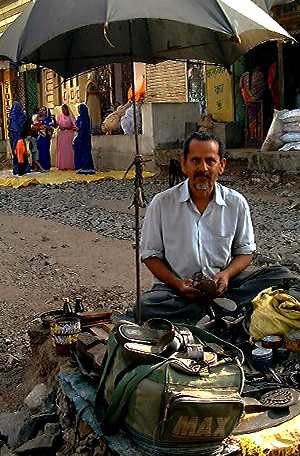
Shoemaker outside Surat – Photo Jan Öberg, © TFF 2001

I enter the library. Max talks to someone and comes back with some news, “they say there is an old friend of Gandhi living here at Dharam, a person who was with him during the march. Would you like to see him?” Oh, certainly, I think rather sceptically. Many have sold their services to the tourist industry as supposed friends of the great, little man.
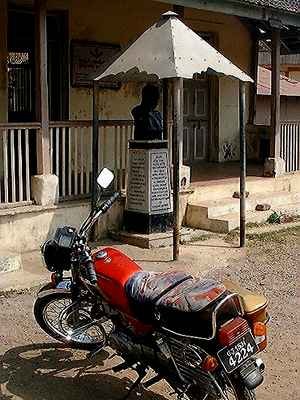
Gandhi’s bust in front of the library in Dharam – Photo Jan Öberg, © TFF 2001

Mr. Bakhta lives with one of his grandchildren. His wife is dead, and he himself is now 94 years old.

“I was 23 and a freedom-fighter when we did the March. I was studying history at Gujarat Vidyapith (University), which Gandhi founded. Then I came to his Sabarmati-ashram and was fascinated by it.

“I joined a group that travelled ahead of Gandhi and planned night accommodations, rallies, etc. We were ready to die for the independence of India. That’s how it must be if you really want to achieve something, but as you see I’m still alive!”

He laughs. I ask him about today’s India.

“Oh my, today’s India is a catastrophe, not at all what we were fighting for. Nehru was alright, but Indira Gandhi destroyed both the country and the vision we had of it. I’m not bitter. I did what I did because I thought it was right. Things just did not turn out the way I had hoped they would.”

He shows me pictures of the three letters he and Gandhi wrote to each other. The contents are not of special interest, he says, but Gandhi answered every letter he received. I thanked him and said it was a great pleasure to have met and worked for him.

“Thank you very much”, he says, “but where are you heading to now?” I tell him that we are going to the seaside, to the village of Dandi, where Gandhi had picked up some salt thereby altering the fate of India and of the world, and that thereafter we are going to see the salt works of Dharasana, which are very important goals on my journey through India.

Mr. Bakhta in his house at Dharam – Photo Jan Öberg, © TFF 2001

“I’d love to go with you, would that be possible?”

Completely surprised, I say, “Yes, of course!” and realise immediately that 94 years, 35 degrees Celsius and a humid climate might be a dangerous combination. To his family he says that he is going to show us a school just ten kilometres away.

He changes his shirt and his family help him to come out to the car. Off we go, driving on tiny paths, together with millions of other people and bicycles, toward the coast of the Arabian Sea. What a feeling! We breathe in the sea air, look at the monument, visit the little March Museum at Dandi. There is as little salt here now as there was in Gandhi’s day. As far as the eye can see, there are dark brown shores, playing children and holiday makers.

We have to travel 47 hopeless kilometres to the salt works. If you have seen the film about Gandhi, you will remember the rows of demonstrators and marchers who were knocked down by the police. Hundreds of them were taken to the hospital bleeding from their injuries. Mr. Bakhta was one of them.

We drink some tea and get something to eat. Mr. Bakhta is in a cheerful mood and tells us a little of everything: what the road was like before it was asphalted, how deadly tired they were, how much they were prepared to be arrested at any moment, Gandhi’s temperament.

The salt works in Dharasana – Photo Jan Öberg, © TFF 2001

Late in the afternoon as the sun is setting, we reach the salt works in Dharasana. The salt is contained in large squares bordered by salt-banks. Water and salt reflect the sun and the sky marvellously. Bare-foot salt-workers shovel the salt back and forth towards the banks. We explain to them that we are interested in Gandhi and the story of salt. Then we ask them to let us take some salt as a souvenir and we take some also for Mr. Bakhta who has stayed behind in the car.

When we return I see a tear rolling down his cheek. I look at him with a careful, inquiring look and then he says:

“I’m so happy I came along; I really am. You know, it’s only the second time I have been here”.

I look at him in surprise.

“I mean I was here in 1930 and now today. I haven’t been back since all that happened here”.

Now I realise why he had only mentioned the school he had founded and showed us on the way. If he had told his family he was going to travel 200 kilometres in this heat, they would hardly have let him go. But reliving the memory of the Salt March was really irresistible to him at the age of 94. And a day came with a car, a driver and a Gandhi enthusiast.

“Salt feet” – Photo Jan Öberg, © TFF 2001

When we return in the evening Mr Bakhta is very tired but very happy. We thank each other heartily. We had shared quite the experience today, on that march route.

But Mr. Bakhta had forgotten his salt in the car. So we return it to him, to his great pleasure. Who should have that salt if not Mr. Bakhta, who had been ready to sacrifice his life to change history and demolish British colonial power?

The salt reminds us that symbol-politics and non-violence can be stronger than realpolitik and violence. Or so it was then, at any rate. Afterwards, things in India turned out different than what Gandhi or Bakhta had hoped for. In India, as in today’s Sweden, there is a shortage of both salt and the kind of courage they had.

Translated by Alice Moncada
Translation edited by Sara E. Ellis
Peace & future researcher + ‌Art Photographer

Share

Leave a Reply

Your email address will not be published. Required fields are marked *

Related Posts

Peace is promoted by constructive proposals and dialogue Four preceding PressInfos have expressed concern over — and criticised — the ongoing, militarisation of the EU. Some will say: but there are no alternatives. We believe that there are always alternatives, that democracies are characterised by alternatives and choice, and that openly discussed alternatives will improve the quality and legitimacy of society’s decision–making. In addition, it is an intellectual and moral challenge to not only criticise but also be constructive. If we only tell people that we think they are wrong, they are not likely to listen. However, if we say: what are your views on this set of ideas and steps? — we may sometimes engage them in dialogue and sow a seed. Most people in power circles live their daily lives in in a time frame and a social space where certain ideas, viewpoints and concepts are just not...
Photos © TFF 2000 Read PressInfo 90 “Lift the Sanctions and Bring More Aid to Yugoslavia” See Pictures from Belgrade © TFF 2000 Please reprint, copy, archive, quote or re-post this item, but please retain the source.
Av FRANK SØHOLM GREVIL 16 augusti 2004  Vi er nu nået til tredje akt i det absurde teaterstykke, der i analogi med de store skueprocesser i Moskva 1936-38 er blevet døbt ‘Grevil-sagen’. Første akt bestod i min anonyme fremlæggelse af egenhændigt nedklassificerede rapporter i Berlingske Tidende i februar og marts. Andet akt udgjordes af min fremtræden med navn og billede i Information i april samt den efterfølgende mediestorm, som uden min direkte medvirken kostede en forsvarsminister taburetten samt en sigtelse for brud på tavshedspligten. Tredje akt bliver en retssag, hvor jeg står tiltalt for at have overtrådt straffelovens bestemmelser om uberettiget videregivelse eller udnyttelse af fortrolige oplysninger. Statsanklageren har ovenikøbet valgt at påberåbe sig særligt skærpende omstændigheder. Da jeg aldrig har modtaget betaling for at stille rapporterne til rådighed eller lade mig interviewe, må det skærpende bestå i, at “videregivelsen eller udnyttelsen er sket under sådanne omstændigheder, at det påfører...

Recent Articles

PressInfo # 141, December 21, 2001It’s time to prepare reconciliation between Albanians and Serbs PressInfo # 140, December 14, 2001Ibrahim Rugova’s decade-long leadership in Kosovo/a PressInfo # 139, 11. december, 2001En god nyhet: Jugoslaviens Sannings- och försoningskommission PressInfo # 139, 11. december, 2001Gode nyheder: Jugoslaviens Sandheds- og Forsoningskommission PressInfo # 139, December 11, 2001Good news: Yugoslavia’s Truth and Reconciliation Commission PressInfo # 138, November 8, 2001TFF co-founder PhD with thesis about young people with roots in other cultures PressInfo # 138, November 8, 2001TFF:s medstiftare doktor på avhandling om unga med ursprung i andra kulturer PressInfo # 137, October 17, 2001A new Marshall Plan: Advancing human security and controlling terrorism PressInfo # 136, October 15, 2001The UN and Annan really deserve it PressInfo # 135, October 10, 2001Preventing a terrorist mushroom cloud PressInfo # 134, 17 oktober, 2001Sverige og 11. september PressInfo # 134, October 9, 2001Sweden and September 11...
Peace is promoted by constructive proposals and dialogue Four preceding PressInfos have expressed concern over — and criticised — the ongoing, militarisation of the EU. Some will say: but there are no alternatives. We believe that there are always alternatives, that democracies are characterised by alternatives and choice, and that openly discussed alternatives will improve the quality and legitimacy of society’s decision–making. In addition, it is an intellectual and moral challenge to not only criticise but also be constructive. If we only tell people that we think they are wrong, they are not likely to listen. However, if we say: what are your views on this set of ideas and steps? — we may sometimes engage them in dialogue and sow a seed. Most people in power circles live their daily lives in in a time frame and a social space where certain ideas, viewpoints and concepts are just not...
Photos © TFF 2000 Read PressInfo 90 “Lift the Sanctions and Bring More Aid to Yugoslavia” See Pictures from Belgrade © TFF 2000 Please reprint, copy, archive, quote or re-post this item, but please retain the source.

TFF on Substack

Discover more from TFF Transnational Foundation & Jan Oberg.

Most Popular

PressInfo # 141, December 21, 2001It’s time to prepare reconciliation between Albanians and Serbs PressInfo # 140, December 14, 2001Ibrahim Rugova’s decade-long leadership in Kosovo/a PressInfo # 139, 11. december, 2001En god nyhet: Jugoslaviens Sannings- och försoningskommission PressInfo # 139, 11. december, 2001Gode nyheder: Jugoslaviens Sandheds- og Forsoningskommission PressInfo # 139, December 11, 2001Good news: Yugoslavia’s Truth and Reconciliation Commission PressInfo # 138, November 8, 2001TFF co-founder PhD with thesis about young people with roots in other cultures PressInfo # 138, November 8, 2001TFF:s medstiftare doktor på avhandling om unga med ursprung i andra kulturer PressInfo # 137, October 17, 2001A new Marshall Plan: Advancing human security and controlling terrorism PressInfo # 136, October 15, 2001The UN and Annan really deserve it PressInfo # 135, October 10, 2001Preventing a terrorist mushroom cloud PressInfo # 134, 17 oktober, 2001Sverige og 11. september PressInfo # 134, October 9, 2001Sweden and September 11...
Peace is promoted by constructive proposals and dialogue Four preceding PressInfos have expressed concern over — and criticised — the ongoing, militarisation of the EU. Some will say: but there are no alternatives. We believe that there are always alternatives, that democracies are characterised by alternatives and choice, and that openly discussed alternatives will improve the quality and legitimacy of society’s decision–making. In addition, it is an intellectual and moral challenge to not only criticise but also be constructive. If we only tell people that we think they are wrong, they are not likely to listen. However, if we say: what are your views on this set of ideas and steps? — we may sometimes engage them in dialogue and sow a seed. Most people in power circles live their daily lives in in a time frame and a social space where certain ideas, viewpoints and concepts are just not...
Photos © TFF 2000 Read PressInfo 90 “Lift the Sanctions and Bring More Aid to Yugoslavia” See Pictures from Belgrade © TFF 2000 Please reprint, copy, archive, quote or re-post this item, but please retain the source.
Read More
Imagen-thumbnail-The-Transnational-1
PressInfo # 141, December 21, 2001It’s time to prepare reconciliation between Albanians and Serbs PressInfo # 140, December 14, 2001Ibrahim Rugova’s decade-long leadership in Kosovo/a PressInfo # 139, 11. december, 2001En god nyhet: Jugoslaviens Sannings- och försoningskommission PressInfo # 139, 11. december, 2001Gode nyheder: Jugoslaviens Sandheds- og Forsoningskommission PressInfo # 139, December 11, 2001Good news: Yugoslavia’s Truth and Reconciliation Commission PressInfo # 138, November 8, 2001TFF co-founder PhD with thesis about young people with roots in other cultures PressInfo # 138, November 8, 2001TFF:s medstiftare doktor på avhandling om unga med ursprung i andra kulturer PressInfo # 137, October 17, 2001A new Marshall Plan: Advancing human security and controlling terrorism PressInfo # 136, October 15, 2001The UN and Annan really deserve it PressInfo # 135, October 10, 2001Preventing a terrorist mushroom cloud PressInfo # 134, 17 oktober, 2001Sverige og 11. september PressInfo # 134, October 9, 2001Sweden and September 11...
Imagen-thumbnail-The-Transnational-1
Peace is promoted by constructive proposals and dialogue Four preceding PressInfos have expressed concern over — and criticised — the ongoing, militarisation of the EU. Some will say: but there are no alternatives. We believe that there are always alternatives, that democracies are characterised by alternatives and choice, and that openly discussed alternatives will improve the quality and legitimacy of society’s decision–making. In addition, it is an intellectual and moral challenge to not only criticise but also be constructive. If we only tell people that we think they are wrong, they are not likely to listen. However, if we say: what are your views on this set of ideas and steps? — we may sometimes engage them in dialogue and sow a seed. Most people in power circles live their daily lives in in a time frame and a social space where certain ideas, viewpoints and concepts are just not...
Imagen-thumbnail-The-Transnational-1
Photos © TFF 2000 Read PressInfo 90 “Lift the Sanctions and Bring More Aid to Yugoslavia” See Pictures from Belgrade © TFF 2000 Please reprint, copy, archive, quote or re-post this item, but please retain the source.
Imagen-thumbnail-The-Transnational-1
Av FRANK SØHOLM GREVIL 16 augusti 2004  Vi er nu nået til tredje akt i det absurde teaterstykke, der i analogi med de store skueprocesser i Moskva 1936-38 er blevet døbt ‘Grevil-sagen’. Første akt bestod i min anonyme fremlæggelse af egenhændigt nedklassificerede rapporter i Berlingske Tidende i februar og marts. Andet akt udgjordes af min fremtræden med navn og billede i Information i april samt den efterfølgende mediestorm, som uden min direkte medvirken kostede en forsvarsminister taburetten samt en sigtelse for brud på tavshedspligten. Tredje akt bliver en retssag, hvor jeg står tiltalt for at have overtrådt straffelovens bestemmelser om uberettiget videregivelse eller udnyttelse af fortrolige oplysninger. Statsanklageren har ovenikøbet valgt at påberåbe sig særligt skærpende omstændigheder. Da jeg aldrig har modtaget betaling for at stille rapporterne til rådighed eller lade mig interviewe, må det skærpende bestå i, at “videregivelsen eller udnyttelsen er sket under sådanne omstændigheder, at det påfører...
Imagen-thumbnail-The-Transnational-1
Af Svenska Irakkommittén mot de Ekonomiska Sanktionerna (SIES) 13 september 2002 FN:s ekonomiska sanktioner mot Irak har nu pågått i tolv år och drabbat det irakiska folket med svåra lidanden. Enligt FN:s egna siffror har mer än 1,5 miljoner människor, varav ca 600 000 barn, dött som en direkt följd av sanktionerna. Dessutom har ett lågintensivt bombkrig mot landet pågått under dessa år. Av all denna förödelse- orsakad huvudsakligen av amerikansk och brittisk politik- har Saddam Husseins brutala och diktatoriska regim snarast stärkts än försvagats. Nu förbereder USA under president Bushs ledning ett storskaligt bombkrig mot Irak som kommer att innebära ett ännu större lidande för civilbefolkningen. Ett sådant krig kommer dessutom att ytterligare undergräva freden och säkerheten i världen. Att upprätta en demokratisk regim i Irak är det irakiska folkets angelägenhet och får enligt folkrätten inte ske med krigshandlingar utifrån. Folkrätten och FN:s stadgar måste respekteras. Vi vädjar till...
