PressInfo #230 - Ending the war on Iraq

Again as the Vietnam experience should have made clear, when confronting a nationalist adversary, battlefield victories are difficult, if not impossible to translate into favorable political outcomes. The bloody occupation of Iraq has confirmed this lesson, dramatizing the limits of military superiority in wars associated with foreign occupation, especially of a country previously colonized.


Alternatives: do what seems right – it is not enough to be critical

Understanding what has failed in the past and is unlikely to succeed in the present, is not enough. Without a positive alternative the blame game leads nowhere. In my view such an alternative does exist, although it contains big risks and like every proposed line of future policy in Iraq is enmeshed in uncertainty. We cannot know the risks of alternative lines of policy with any precision, but we can do what seems right under the circumstances, and appears to have the best prospect of stopping the bodies from piling up.

In a key respect, Rumsfeld was right when a couple of years ago he wrote in an internal Pentagon memo that we lack ‘a metric’ for determining whether we are winning or losing the war against terror inside Iraq or in the world as a whole. Such an acknowledgement should suggest humility on all sides, but especially on those who in the face of such doubts, go on with a war that has had such disastrous human and political results. In law, morality, and politics we should all endorse a strong presumption against war as an instrument of policy.


The steps that must be taken

I would propose several steps that together constitute a plan, or at least an approach, that moves toward hope for the future:

a clear statement by the US Government that it intends to withdraw completely from Iraq and renounces all plans to build permanent military bases;

a timetable for withdrawal of US forces that calls for the complete phasing out of the American (and coalition) presence within one year;

a defensive military posture adopted immediately; American forces in Iraq will only attack if attacked from now on;

private and public encouragement of Iraqi forces to pursue a diplomacy of compromise and reconciliation as an alternative to prolonged civil war;

diversify the effort at economic and social reconstruction to the extent possible, including seeking a new role for the United Nations acting with full independence of the American occupation;

encourage regional initiatives that include Turkey, Iran, as well as Arab countries, that explore peacekeeping and political contributions to the post-occupation transition;

affirm an American and British commitment to the unity of Iraq;

exert greater pressure to end the Israeli occupation of Palestinian territories, and move toward a solution of the conflict that recognizes the legal rights of the Palestinian people and the necessity of peace based on equality and mutual respect.


Would you be reading this now,
if it wasn’t useful to you?
Get more quality articles in the future

Help Iraqi reconciliation: Mobilise the anti-war opinion in the U.S.

In the end, this approach has no chance of becoming operative without a major mobilization of anti-war opinion in the United States, reinforced by the expression of similar sentiments throughout the world, and on the part of regional leaders in the Middle East. Without a great heightening of anti-war activism, the war will drag on until a hasty terminal process is adopted in a spirit of desperation.

What I am advocating is a comprehensive rethinking of American regional goals and behavior, with a fair chance that the results are likely to be more positive than can be realistically anticipated. My reason for guarded optimism is the sense that when the American protective shield is unmistakably removed, Kurds and Shi’ia will find themselves under great pressure to reconcile with Sunni elements in Iraq, or face a continuing insurgency, possibly a full-scale civil war, that they would almost certainly lose. On the Sunni side, as well, the incentive of avoiding such prolonged civil strife would create important pressure to reconcile as Sunnis too would be confronted by dissident nationalisms that can no longer be squashed in the post-Saddam era.

As long as the US occupation persists, the elements in Iraq that are benefited have no reason to compromise in a manner that is acceptable to the Sunnis. Of course, the ethnic composition of Iraq is more complex than this, and the faultlines of conflict are not only identified by reference to Kurds, Shi’ites, and Sunnis, but these divisions have a definite geographic foundation, and have been deepened by the faulty politics of the American occupation.

The situation in Iraq has deteriorated to a point that there is no assured exit strategy that is not beset by dangers, but at least these dangers raise hopes that a different path can be taken. By remaining on the Iraq War path, now so suddenly discredited, all we know is that the bodies will keep piling up!

Get free articles & updates

Få gratis artikler og info fra TFF

© TFF and the author 2005


mail
Tell a friend about this article

Send to:

From:

Message and your name


 You are welcome to reprint, copy, archive, quote or re-post this item, but please retain the source.


Would you – or a friend – like to receive TFF PressInfo by email?


S P E C I A L S & F O R U M S

Iraq Forum

Gandhi & India

Burundi Forum

Photo galleries

Nonviolence Forum

TFF News Navigator

Become a TFF Friend

TFF Online Bookstore

Reconciliation project

EU conflict-management

Make an online donation

Foundation update and more

TFF Peace Training Network

Make a donation via bank or postal giro

Basic menu below


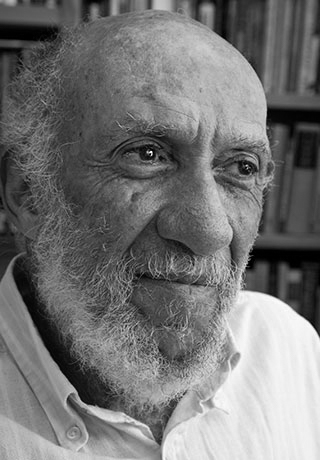
Professor Falk became an adviser to TFF when it was established in 1985.

Share

Leave a Reply

Your email address will not be published. Required fields are marked *

Related Posts

Former UN Under-Secretary-General with special responsibility for peacekeeping operations TFF associate August 20, 2003 YRINGHAM, Mass.- Ralph Bunche was born in Detroit 100 years ago today (August 7, 2003). His passionate determination to get results did not extend to seeking credit for them, so his work is better remembered than he is. Of all his many accomplishments – civil rights pioneer, Nobel Peace Prize laureate, chief drafter of two chapters of the United Nations charter, negotiator of the armistices that ended the first Arab-Israeli war – Bunche said he was proudest of developing what came to be known as peacekeeping. Setting up the United Nations Truce Supervision Organization in Palestine in 1948, Bunche formulated the principles that have governed peacekeeping operations ever since. In the 1956 Suez crisis, working with Secretary General Dag Hammarskjold and Lester Pearson of Canada, he organized the first peacekeeping force, the United Nations Emergency Force...
PRESS RELEASE – 6 OCTOBER 2025 LAY DOWN YOUR ARMSPEACE PRIZE FOR 2025 is awarded Francesca Albanese The United Nations Special Rapporteur on the occupied Palestinian territories – as the person who, in accordance with Alfred Nobel’s will, has “done the most or the best work for fraternity between nations and for the abolition or reduction of standing armies as well as for the holding and promotion of peace congresses.” Francesca Albanese has forcefully and unwaveringly worked against Israel’s full-scale war on the occupied Palestinian territories, in particular Israel´s ongoing genocide against the Palestinian people. She has confronted Israel’s systematic war crimes and crimes against humanity in a truly global outreach. Further, she has brought governments, international organisations and people’s groups together to underline the responsibility of the world at large to act and to stop arming, enabling, and profiting from Israel’s ongoing criminal actions. But first of all, Albanese...
Officially, the drones were not identified. By simply thinking critically – which journalists and selected experts no longer do – there may be a good reason for that. And this article will never be mentioned in Denmark… Drones over Denmark. No damage. No trace. No answers. Yet the headlines scream “Russian threat,” and Prime Minister Mette Frederiksen speaks with a certainty that defies logic: “We don’t know they were Russian—but we know Russia is the biggest threat to Europe.” It could be nobody else – unless you make an interest analysis which I did two days ago. This is not security policy. It’s theatre. And the audience is being played. Let’s rewind. These drones—unphotographed, untracked, unclaimed—appear and vanish like ghosts. Airports shut down. Panic spreads. Military budgets swell. And the narrative hardens: Russia is behind it. But what if that’s not just wrong but deliberately misleading? Here’s a hypothesis for...

Recent Articles

Former UN Under-Secretary-General with special responsibility for peacekeeping operations TFF associate August 20, 2003 YRINGHAM, Mass.- Ralph Bunche was born in Detroit 100 years ago today (August 7, 2003). His passionate determination to get results did not extend to seeking credit for them, so his work is better remembered than he is. Of all his many accomplishments – civil rights pioneer, Nobel Peace Prize laureate, chief drafter of two chapters of the United Nations charter, negotiator of the armistices that ended the first Arab-Israeli war – Bunche said he was proudest of developing what came to be known as peacekeeping. Setting up the United Nations Truce Supervision Organization in Palestine in 1948, Bunche formulated the principles that have governed peacekeeping operations ever since. In the 1956 Suez crisis, working with Secretary General Dag Hammarskjold and Lester Pearson of Canada, he organized the first peacekeeping force, the United Nations Emergency Force...
– nästan 11 månader Till Sofia nästan 11 månader # 1  Till Sofias huvudsida Till alla Privata Foto-Serier
Till Sofias huvudsida

TFF on Substack

Discover more from TFF Transnational Foundation & Jan Oberg.

Most Popular

Former UN Under-Secretary-General with special responsibility for peacekeeping operations TFF associate August 20, 2003 YRINGHAM, Mass.- Ralph Bunche was born in Detroit 100 years ago today (August 7, 2003). His passionate determination to get results did not extend to seeking credit for them, so his work is better remembered than he is. Of all his many accomplishments – civil rights pioneer, Nobel Peace Prize laureate, chief drafter of two chapters of the United Nations charter, negotiator of the armistices that ended the first Arab-Israeli war – Bunche said he was proudest of developing what came to be known as peacekeeping. Setting up the United Nations Truce Supervision Organization in Palestine in 1948, Bunche formulated the principles that have governed peacekeeping operations ever since. In the 1956 Suez crisis, working with Secretary General Dag Hammarskjold and Lester Pearson of Canada, he organized the first peacekeeping force, the United Nations Emergency Force...
– nästan 11 månader Till Sofia nästan 11 månader # 1  Till Sofias huvudsida Till alla Privata Foto-Serier
Till Sofias huvudsida
Read More
Imagen-thumbnail-The-Transnational-1
Former UN Under-Secretary-General with special responsibility for peacekeeping operations TFF associate August 20, 2003 YRINGHAM, Mass.- Ralph Bunche was born in Detroit 100 years ago today (August 7, 2003). His passionate determination to get results did not extend to seeking credit for them, so his work is better remembered than he is. Of all his many accomplishments – civil rights pioneer, Nobel Peace Prize laureate, chief drafter of two chapters of the United Nations charter, negotiator of the armistices that ended the first Arab-Israeli war – Bunche said he was proudest of developing what came to be known as peacekeeping. Setting up the United Nations Truce Supervision Organization in Palestine in 1948, Bunche formulated the principles that have governed peacekeeping operations ever since. In the 1956 Suez crisis, working with Secretary General Dag Hammarskjold and Lester Pearson of Canada, he organized the first peacekeeping force, the United Nations Emergency Force...
– nästan 11 månader Till Sofia nästan 11 månader # 1  Till Sofias huvudsida Till alla Privata Foto-Serier
Till Sofias huvudsida
BlackNobel
OK, Trump did not get it. But he got a full endorsement of a possible future US regime change in Venezuela. And that is what Ms Machado has advocated. On October 10, 2025, the Norwegian Nobel Committee awarded its Peace Prize to Venezuelan opposition figure María Corina Machado. The citation praised her “tireless work promoting democratic rights.” But Ms Machado has openly called for U.S. military intervention in Venezuela, stating on CBS: “The only way to stop the suppression is by force—U.S. force.” She or her party has received funding from the National Endowment for Democracy (NED), a U.S. government-backed body known as a CIA front organisation and for supporting regime-change operations worldwide. And in 2018, she sent a letter to Israeli Prime Minister Benjamin Netanyahu, asking him to use “force and influence” to help dismantle Venezuela’s government—citing alleged ties to terrorism, Iran and narcotrafficking. This year’s NATO Norwegian prize...
Screenshot-2025-10-08-163458
PRESS RELEASE – 6 OCTOBER 2025 LAY DOWN YOUR ARMSPEACE PRIZE FOR 2025 is awarded Francesca Albanese The United Nations Special Rapporteur on the occupied Palestinian territories – as the person who, in accordance with Alfred Nobel’s will, has “done the most or the best work for fraternity between nations and for the abolition or reduction of standing armies as well as for the holding and promotion of peace congresses.” Francesca Albanese has forcefully and unwaveringly worked against Israel’s full-scale war on the occupied Palestinian territories, in particular Israel´s ongoing genocide against the Palestinian people. She has confronted Israel’s systematic war crimes and crimes against humanity in a truly global outreach. Further, she has brought governments, international organisations and people’s groups together to underline the responsibility of the world at large to act and to stop arming, enabling, and profiting from Israel’s ongoing criminal actions. But first of all, Albanese...
Copilot_20251003_003414
Officially, the drones were not identified. By simply thinking critically – which journalists and selected experts no longer do – there may be a good reason for that. And this article will never be mentioned in Denmark… Drones over Denmark. No damage. No trace. No answers. Yet the headlines scream “Russian threat,” and Prime Minister Mette Frederiksen speaks with a certainty that defies logic: “We don’t know they were Russian—but we know Russia is the biggest threat to Europe.” It could be nobody else – unless you make an interest analysis which I did two days ago. This is not security policy. It’s theatre. And the audience is being played. Let’s rewind. These drones—unphotographed, untracked, unclaimed—appear and vanish like ghosts. Airports shut down. Panic spreads. Military budgets swell. And the narrative hardens: Russia is behind it. But what if that’s not just wrong but deliberately misleading? Here’s a hypothesis for...