

Eisenhower rejected military chiefs’ demand for nuclear war on China, a classified account of ’58 Taiwan Strait crisis reveals

A previously censored account of the 1958 Taiwan Strait crisis that was sponsored by the Pentagon has been published in full by the leaker of the Pentagon Papers, Daniel Ellsberg. The report provides a hair-raising portrait of a reckless US military leadership relentlessly pressing President Dwight Eisenhower for the authority to carry out nuclear attacks on communist China.

After holding the still-classified version of the account in his possession for fifty years, Ellsberg said he decided to release it because of the growing threat of US war with China over Taiwan, and the danger that such a conflict could escalate into a nuclear exchange.

May 22 New York Times report on the account offered only general details of the role the US Joint Chiefs of Staff played in the run-up to the 1958 Taiwan crisis. However, it is now clear from the original highly classified documents as well as other evidence now available that from the beginning, the Joint Chiefs aimed first and foremost to exploit the tensions to carry out nuclear strikes against Chinese nuclear military targets deep in highly-populated areas.

Chiang Kai-shek’s nationalist Kuomintang regime and the Joint Chiefs were allies in wanting to embroil the United States in a war with China.

Deputy Secretary of State Christian Herter feared that the Nationalist regime was determined to drag the US into conflict, according to the Pentagon-sponsored account. The reason, according to the author of the account, Morton Halperin, was that involving the United States in a war with the Chinese Communists “was clearly their only hope for a return to the mainland.”

Quemoy and Matsu, the two main offshore islands occupied by Nationalist troops, were less than five miles from the mainland and had been used by Chiang’s forces as bases to mount unsuccessful commando raids inside the mainland. And Chiang, who was still committed to reconquering the mainland China with the ostensible support of the United States, had stationed a third of his 350,000-man army on those two islands.

In May 1958, the Joint Chiefs adopted a new plan (OPS PLAN 25-58), ostensibly for the defense of the offshore islands. In fact, the plan provided a basis for attacking China with atomic weapons.

It was to begin with a brief preliminary “Phase I”, which it called “patrol and reconnaissance” and was said to be already underway. “Phase II”, which would have been triggered by a Chinese attack on the offshore islands, would involve US air forces wiping out the attacking forces.

But the new plan envisioned a possible third phase, in which the Strategic Air Command and forces under the command of the US Pacific Command would carry out strategic attacks with 10 to 15 kiloton tactical nuclear weapons “to destroy the war-making capability” of China.

According to the account authored by Halperin, the Chairman of the Joint Chiefs, Air Force Gen. Nathan Twining, told State Department officials in an August meeting that the third phase would require nuclear strikes on Chinese bases as far north as Shanghai.

The Joint Chiefs played down the threat to civilian casualties from such tactical atomic weapons, emphasizing that an airburst of tactical atomic explosions would generate little radioactive fallout. But the account indicates that they provided no concrete information on expected civilian casualties.

Given the fact that both the Chinese gun emplacements across the Taiwan Strait and a key airbase serving the Chinese military forces in any conflict over the offshore islands would have been located close to significant population centers, such atomic explosions would have certainly caused civilian casualties on a massive scale.

The Joint Chiefs did not acknowledge that the bombs they planned to detonate with airbursts would have had the same potential lethality as the bomb dropped on Hiroshima. Nor would they concede that the targets of such bombings were located in the immediate vicinity of Chinese cities that were roughly the same population as Hiroshima.

The city of Xiamen, for example, was close to military targets in the Amoy area, while Ningbo was close to the main Chinese airbase in Zhejiang province that would have been attacked by US forces. Like the Hiroshima bomb, the nuclear explosions would have been triggered in the air, where blast damage is greatest, destroying or damaging nearly everything within a radius of three miles from the blast, killing much of the population.

The Joint Chiefs also assumed that China would respond to the US use of atomic weapons by retaliating with atomic weapons, which the Joint Chiefs presumed would be made available to the Chinese government by the Soviet Union.

The Halperin report recounts that Twining told State Department officials that the bombing of the intended targets with tactical nuclear weapons “almost certainly would involve nuclear retaliation against Taiwan and possibly against Okinawa….” That assumption was based on a Special National Intelligence Estimate that had been issued on July 22, 1958. The estimate had concluded that, if the U.S. “launched nuclear strikes deep into Communist China,” the Chinese would “almost certainly” respond with nuclear weapons.

Despite the acceptance of the likelihood that it would lead to nuclear retaliation by China, JCS Chairman Twining expressed no hesitation about the plan, asserting that in order to defend the offshore islands, “the consequences had to be accepted”.

The Joint Chiefs seek to appropriate war powers

The Joint Chiefs’ plan betrayed the military chiefs’ hope of removing the power of decision over nuclear war from the hands of the president. It said the plan would be put into operation when “dictated by appropriate U.S. authority” – implying that it would not necessarily be decided by the president. 

In his own memoirs, Eisenhower recalled with some bitterness how, during the 1958 crisis, he was “continuously pressured — almost hounded — by Chiang [Chinese nationalist Generalissimo Chiang Kai-shek] on one side and by our own military on other requesting delegation of authority for immediate action on Formosa [Taiwan] or the offshore islands….” He did not refer, however, to the efforts by the Joint Chiefs efforts to gain advance authorization for the use nuclear weapons on the Chinese mainland.

The wording of the JCS plan was changed to read “when authorized by the President” at Eisenhower’s insistence to provide that only conventional means could be used at least initially for defense of the islands, while leaving open the possibility of using tactical nuclear weapons if that failed.

But the Joint Chiefs were not finished. In a paper presented to Eisenhower on September 6, the chiefs proposed that they be authorized to “oppose any major attack on Taiwan and attack mainland bases with all CINPAC force that can be brought to bear” in the event of “an emergency arising from an attack on Taiwan and the offshore islands moving so rapidly that it would not permit consultations with the President…”

Further, they asked for the authority to respond to a “major landing attack on offshore islands,” by “[u]se of atomic weapons and U.S. air attack in support of [Chinese Nationalist] Air Force…as necessary, only as approved by the President.” Eisenhower approved the paper with those qualifiers.

When Secretary of State John Foster Dulles warned that Japan would object strongly to using nuclear weapons against the Chinese mainland, and forbid the launching of nuclear weapons from their territory, Chief of Naval Operations Admiral Arleigh Burke suggested that the opposition to nuclear weapons in Japan was “inspired by the Communists,” and that foreign leaders would soon recognize that the use of nuclear weapons by the US “was in their interests”.

Burke closed his argument by claiming that if the US did not maintain the threat of tactical nuclear weapons in conflicts,  it would “lose the entire world within three years.” That obviously absurd argument suggests that the intense desire among the Joint Chiefs to use nuclear weapons against China was less motivated by any threat from Communist Chinese than by their own institutional interests.

In pre-Cold War Washington, the US Navy served as the primary bureaucratic ally of the Kuomintang regime. The relationship was forged when Chiang provided the Navy with the home base for its 7th Fleet at Tsingtao in Northern China.

Navy brass in the Pacific had urged unconditional support for Chiang’s regime during the civil war with the Communists and derided as “pinkies” those State Department officials – beginning with Secretary George C. Marshall – who entertained any doubts about the Kuomintang leader.

By 1958, the Air Force was so strongly committed to its role as an exclusively nuclear-weapons delivery organization that it insisted on being able to able to using nuclear weapons in any war it fought in the Pacific region.

The account of the crisis reveals that, when the Air Force Commander in the Pacific, Gen. Lawrence S. Kuter, learned of Eisenhower’s decision to defend the offshore islands with conventional weapons, he relayed the message to Gen. John Gerhart, the Air Force Deputy Chief of Staff. Shockingly, Gerhart responded that the Air Force “could not agree in principle” to the use of SAC forces for such non-nuclear operations.

Beyond the desire of the Navy and Air Force chiefs to ensure their long-term presence and reinforce the importance of their respective roles in the Pacific, the Joint Chiefs of Staff have always aspired to maximize their influence over US policy in any conflict where U.S might use military force.

It turned out that the Chinese never intended full-scale war over the offshore islands. Instead they sought to mount a blockade of resupply to the islands through artillery barrages, and when the US military provided armed escorts for the ships carrying out the resupply, they were careful to avoid hitting American ships.

As the Halperin report observed, once the Chinese recognized that a blockade could not prevent the resupply, they settled for symbolic artillery attacks on Quemoy, which were limited to every other day.

It was the eagerness of the Joint Chiefs for a nuclear war against China, rather than the policy of communist China, that presented the most serious threat to American security.

Although the circumstances surrounding the U.S.-China conflict over Taiwan have changed dramatically since that stage of the Cold War, the 1958 Taiwan crisis provides a sobering lesson as the US military gears up for a new military confrontation with China.

If you found this interesting – even shocking – and relevant for understanding China today, please let us see it here. Thanks!

Must-read and must-watch by Daniel Ellsberg

New York Times, May 23, 2021
Risk of Nuclear War Over Taiwan in 1958 Said to Be Greater Than Publicly Known

CBS Morning News with Ellsberg – video and text
U.S. considered nuclear strike on China in 1958 over Taiwan crisis, classified documents show

Daniel Ellsberg’s released documentation of the US military’s argument for bombing mainland China with nukes in 1958:

Daily Mail Online
US considered nuclear strike on China to protect Taiwan from Communist forces in 1958, leaked documents reveal – as tensions rise in the region

New York Times Magazine
Daniel Ellsberg Thinks We’re in Denial About Nuclear War
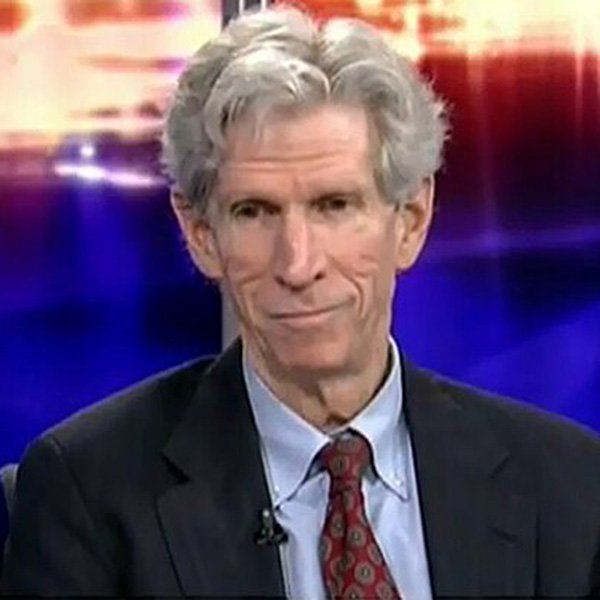
Daniel Ellsberg’s homepage

Share

Leave a Reply

Your email address will not be published. Required fields are marked *

Related Posts

Officially, the drones were not identified. By simply thinking critically – which journalists and selected experts no longer do – there may be a good reason for that. And this article will never be mentioned in Denmark… Drones over Denmark. No damage. No trace. No answers. Yet the headlines scream “Russian threat,” and Prime Minister Mette Frederiksen speaks with a certainty that defies logic: “We don’t know they were Russian—but we know Russia is the biggest threat to Europe.” It could be nobody else – unless you make an interest analysis which I did two days ago. This is not security policy. It’s theatre. And the audience is being played. Let’s rewind. These drones—unphotographed, untracked, unclaimed—appear and vanish like ghosts. Airports shut down. Panic spreads. Military budgets swell. And the narrative hardens: Russia is behind it. But what if that’s not just wrong but deliberately misleading? Here’s a hypothesis for...
And why the world, especially the EU, must now declare itself independent of the United States. UN’s 80th anniversary This year, the United Nations celebrates the 80th anniversary of its founding. The UN was formed after the scourge of the Second World War, in which 70 to 85 million people were killed and many countries were destroyed. That war came on the heels of the First World War, which also killed between 15 and 22 million people. After the Second World War, especially after the use of nuclear weapons by the United States, which marked a turning point in the history of warfare that could result in the end of civilisation as we know it, humanity decided to move away from the era of empires and big power politics and usher in a new era of peace, freedom and cooperation. These were the principles enshrined in the UN Charter. The United States...
Drones over Nordic airports. No damage. No trace. No answers. Most assume Russia—but what if that’s not so? Why is there so much we are not told? This article explores the strategic ambiguity behind recent drone incursions and asks: Who else might benefit from sending drones into NATO airspace? From Ukraine’s surprising drone supremacy to Russia’s possible signalling, the silence itself may be the loudest message. These are the kinds of questions decent, intelligent investigative journalists and commentators could easily research. Why don’t they? Did you, dear reader, know or think of this? That the most powerful weapon in today’s conflicts might be the one that leaves no trace – and no answers. Just enough fear to justify the next move? Recently, drones have repeatedly appeared over Nordic airports and near some military facilities. They cause no damage – for which reason the designation “hybrid attack” is misleading but serves a purpose. These...

Recent Articles

We know that medical personnel have failed to report to higher authorities wounds that were clearly caused by torture and that they have neglected to take steps to interrupt this torture. In addition, they have turned over prisoners’ medical records to interrogators who could use them to exploit the prisoners’ weaknesses or vulnerabilities. We have not yet learned the extent of medical involvement in delaying and possibly falsifying the death certificates of prisoners who have been killed by torturers. A May 22 article on Abu Ghraib in the New York Times states that “much of the evidence of abuse at the prison came from medical documents” and that records and statements “showed doctors and medics reporting to the area of the prison where the abuse occurred several times to stitch wounds, tend to collapsed prisoners or see patients with bruised or reddened genitals.” http://www.truthout.org/docs_04/080604J.shtml#16 According to the article, two doctors who...
Jan Øberg behandler i artiklen en lang række faktorer, som ligger til grund for den måde vores samfund er organiseret på – og derfor også for konflikter. Artiklen introducerer således sammenhængen mellem familien, foreninger, regeringer, NGO’ er, nation, stat, nationalstat og alliancer for på denne måde bedre at kunne forstå konflikter og i sidste ende blive klogere mht. at løse disse. Øberg, der er fortaler for global bevidsthed, hvilket skal ses i lyset af den øgede globalisering, skelner mellem kulturkamp og kulturdialog. Endelig behandles begrebet magt og magtesløshed: giver magt ret til at udøve magt – fordi man mener at have ret? Litteraturliste og arbejdsspørgsmål efter artiklen. Ordene vi bruger om verden I satellitperspektiv kan man godt tale om den menneskelige familie eller menneskeheden. Udtrykket understreger, at der eksisterer – eller burde eksistere – et fællesskab fordi vi alle er mennesker og sammen bebor denne klode og ingen anden. Og...
Kapitel 2: Forskellige sider af Europa og USA…fortsat 2.5 Militære relationer I forbifarten har vi allerede sagt nogle ting om USA’s militære situation. Kig lige en gang til på afsnit 2.3. Nu skal vi uddybe det militære forhold mellem USA og EU. Der er en række ligheder mellem visse europæiske landes og USA’s militær. Næsten alle er med på en eller anden måde i NATO, direkte som medlem – selv Island, der ikke har et forsvar – eller indirekte i Partnerskab for Fred. USA og Canada er med i OSCE (på dansk OSSE), Organisationen for Sikkerhed og Samarbejde i Europa, der tæller over 50 lande. USA samt England og Frankrig er kernevåbenstater og de har styrker til intervention langt borte fra hjemlandet, om end USA’s er tifold større. Alle har også en omfattende våbeneksport og bruger den som et middel til at tjene penge og få loyale venner på, det...

TFF on Substack

Discover more from TFF Transnational Foundation & Jan Oberg.

Most Popular

We know that medical personnel have failed to report to higher authorities wounds that were clearly caused by torture and that they have neglected to take steps to interrupt this torture. In addition, they have turned over prisoners’ medical records to interrogators who could use them to exploit the prisoners’ weaknesses or vulnerabilities. We have not yet learned the extent of medical involvement in delaying and possibly falsifying the death certificates of prisoners who have been killed by torturers. A May 22 article on Abu Ghraib in the New York Times states that “much of the evidence of abuse at the prison came from medical documents” and that records and statements “showed doctors and medics reporting to the area of the prison where the abuse occurred several times to stitch wounds, tend to collapsed prisoners or see patients with bruised or reddened genitals.” http://www.truthout.org/docs_04/080604J.shtml#16 According to the article, two doctors who...
Jan Øberg behandler i artiklen en lang række faktorer, som ligger til grund for den måde vores samfund er organiseret på – og derfor også for konflikter. Artiklen introducerer således sammenhængen mellem familien, foreninger, regeringer, NGO’ er, nation, stat, nationalstat og alliancer for på denne måde bedre at kunne forstå konflikter og i sidste ende blive klogere mht. at løse disse. Øberg, der er fortaler for global bevidsthed, hvilket skal ses i lyset af den øgede globalisering, skelner mellem kulturkamp og kulturdialog. Endelig behandles begrebet magt og magtesløshed: giver magt ret til at udøve magt – fordi man mener at have ret? Litteraturliste og arbejdsspørgsmål efter artiklen. Ordene vi bruger om verden I satellitperspektiv kan man godt tale om den menneskelige familie eller menneskeheden. Udtrykket understreger, at der eksisterer – eller burde eksistere – et fællesskab fordi vi alle er mennesker og sammen bebor denne klode og ingen anden. Og...
Kapitel 2: Forskellige sider af Europa og USA…fortsat 2.5 Militære relationer I forbifarten har vi allerede sagt nogle ting om USA’s militære situation. Kig lige en gang til på afsnit 2.3. Nu skal vi uddybe det militære forhold mellem USA og EU. Der er en række ligheder mellem visse europæiske landes og USA’s militær. Næsten alle er med på en eller anden måde i NATO, direkte som medlem – selv Island, der ikke har et forsvar – eller indirekte i Partnerskab for Fred. USA og Canada er med i OSCE (på dansk OSSE), Organisationen for Sikkerhed og Samarbejde i Europa, der tæller over 50 lande. USA samt England og Frankrig er kernevåbenstater og de har styrker til intervention langt borte fra hjemlandet, om end USA’s er tifold større. Alle har også en omfattende våbeneksport og bruger den som et middel til at tjene penge og få loyale venner på, det...
Read More
Imagen-thumbnail-The-Transnational-1
We know that medical personnel have failed to report to higher authorities wounds that were clearly caused by torture and that they have neglected to take steps to interrupt this torture. In addition, they have turned over prisoners’ medical records to interrogators who could use them to exploit the prisoners’ weaknesses or vulnerabilities. We have not yet learned the extent of medical involvement in delaying and possibly falsifying the death certificates of prisoners who have been killed by torturers. A May 22 article on Abu Ghraib in the New York Times states that “much of the evidence of abuse at the prison came from medical documents” and that records and statements “showed doctors and medics reporting to the area of the prison where the abuse occurred several times to stitch wounds, tend to collapsed prisoners or see patients with bruised or reddened genitals.” http://www.truthout.org/docs_04/080604J.shtml#16 According to the article, two doctors who...
Imagen-thumbnail-The-Transnational-1
Jan Øberg behandler i artiklen en lang række faktorer, som ligger til grund for den måde vores samfund er organiseret på – og derfor også for konflikter. Artiklen introducerer således sammenhængen mellem familien, foreninger, regeringer, NGO’ er, nation, stat, nationalstat og alliancer for på denne måde bedre at kunne forstå konflikter og i sidste ende blive klogere mht. at løse disse. Øberg, der er fortaler for global bevidsthed, hvilket skal ses i lyset af den øgede globalisering, skelner mellem kulturkamp og kulturdialog. Endelig behandles begrebet magt og magtesløshed: giver magt ret til at udøve magt – fordi man mener at have ret? Litteraturliste og arbejdsspørgsmål efter artiklen. Ordene vi bruger om verden I satellitperspektiv kan man godt tale om den menneskelige familie eller menneskeheden. Udtrykket understreger, at der eksisterer – eller burde eksistere – et fællesskab fordi vi alle er mennesker og sammen bebor denne klode og ingen anden. Og...
Imagen-thumbnail-The-Transnational-1
Kapitel 2: Forskellige sider af Europa og USA…fortsat 2.5 Militære relationer I forbifarten har vi allerede sagt nogle ting om USA’s militære situation. Kig lige en gang til på afsnit 2.3. Nu skal vi uddybe det militære forhold mellem USA og EU. Der er en række ligheder mellem visse europæiske landes og USA’s militær. Næsten alle er med på en eller anden måde i NATO, direkte som medlem – selv Island, der ikke har et forsvar – eller indirekte i Partnerskab for Fred. USA og Canada er med i OSCE (på dansk OSSE), Organisationen for Sikkerhed og Samarbejde i Europa, der tæller over 50 lande. USA samt England og Frankrig er kernevåbenstater og de har styrker til intervention langt borte fra hjemlandet, om end USA’s er tifold større. Alle har også en omfattende våbeneksport og bruger den som et middel til at tjene penge og få loyale venner på, det...
Imagen-thumbnail-The-Transnational-1
Background Christian Harleman and Jan Oberg conducted a fact-finding mission to Burundi between November 26 and December 6, 2003. (See websites about the country here). The first TFF mission took place in March 1999. Unfortunately, since then it has not been practically possible to implement the co-operation with Burundi’s Ministry of Education and Burundian NGOs that was planned at the time. The 2003 mission had three purposes. First, to do fact-finding in general about the situation and, in particular, the progress under the Arusha Peace Process. Second, to explore the possibilities for co-operation between the government and relevant NGOs on the one hand and TFF on the other, in order to develop and deepen the existing competence in fields such as conflict-understanding, reconciliation and peace-building. Finally, third, to find out whether it would be possible, in co-operation with the Swedish Rescue Services Agency (Statens Räddningsverk), to establish a health care unit that...
Imagen-thumbnail-The-Transnational-1
Former UN Under-Secretary-General with special responsibility for peacekeeping operations TFF associate August 20, 2003 YRINGHAM, Mass.- Ralph Bunche was born in Detroit 100 years ago today (August 7, 2003). His passionate determination to get results did not extend to seeking credit for them, so his work is better remembered than he is. Of all his many accomplishments – civil rights pioneer, Nobel Peace Prize laureate, chief drafter of two chapters of the United Nations charter, negotiator of the armistices that ended the first Arab-Israeli war – Bunche said he was proudest of developing what came to be known as peacekeeping. Setting up the United Nations Truce Supervision Organization in Palestine in 1948, Bunche formulated the principles that have governed peacekeeping operations ever since. In the 1956 Suez crisis, working with Secretary General Dag Hammarskjold and Lester Pearson of Canada, he organized the first peacekeeping force, the United Nations Emergency Force...
– nästan 11 månader Till Sofia nästan 11 månader # 1  Till Sofias huvudsida Till alla Privata Foto-Serier
