

Edward Curtin: It’s About Time

Photo by Jiyeon Park on Unsplash

Edward Curtin

May 19, 2022

Isn’t it always?

With the start of World War III by the United States “declaring” war against Russia by its actions in Ukraine, we have entered a time when the end of time has become very possible. I am speaking of nuclear annihilation.

I look down at my great-uncle’s gold Elgin pocket watch from the 19th century. His name was John Patrick Whalen, an Irish immigrant to the US who fled England’s colonialist created famine in Ireland.

It tells me it is 5:15 PM on April 21, 2022, a date, coincidentally, with a history. 

Originally published at Off-Guardian

No doubt John looked at his watch on this date in 1898 when the United States, after the USS Maine exploded from within in Havana harbour (a possible false flag attack), declared war on Spain in order to confiscate Spanish territories – Cuba, Puerto Rico, Guam, and the Philippines. One colonial power replaced another and then proceeded over the long decades to wage war and slaughter these island peoples.

Imperialism never dies. It is timeless. One hundred and twenty-four years go by in a flash and it’s still the same old story.

In 1898 the yellow press screamed Spanish devils and today it screams Russian devils. Then and now the press called for war. If the human race is still here in another 124 years, time and the corporate media will no doubt have told the same story – war and propaganda’s lies to an insouciant and ignorant population too hypnotized by propaganda to oppose them.

This despite the apocalyptic sense that permeates our lives because of demonic technology and its use to transform humans into machines who can’t think clearly enough to perceive reality and realize the threat posed by that quintessential technological invention – nuclear weapons.

This is not uplifting, but it’s true. The nuclear weapons are primed and ready to fly. The US insists on its first-strike right to launch them. It openly declares it is seeking the overthrow of the Russian government. 

Russia says it will use nuclear weapons only if its existence is threatened, which has become increasingly so because of US provocations over a long time period and its current expanding arming of Ukraine’s government and its neo-Nazi forces.

The Russian President Vladimir Putin and its Foreign Secretary Sergei Lavrov have just warned the US that such involvement has made nuclear war a “serious” and “real” risk, in Lavrov’s words “we must not underestimate it,” which is a mild form of diplomatic speech.

Putin said that Russia has made all the preparations to respond if it senses a strategic threat to Russia and that response will be “instant, it will be quick.”

The US response is to shrug these statements off, just as it has done so for many years with Putin’s complaints about NATO forces moving up to its border. Incredibly, Biden has said, “For God’s sake, this man (Putin) cannot remain in power.”

Despite endless media/intelligence anti-Russian propaganda – “a vast tapestry of lies,” to use Harold Pinter’s phrase – many fine writers have provided the historical details to confirm the truth that the US has purposely provoked the Russian war in Ukraine by its actions there and throughout Eastern Europe, which the mainstream media avoid completely.

This US aggressive history against Russia is part of a much larger history of imperial hubris extending back to the 19th century.

I will therefore here follow Thoreau’s advice – “If you are acquainted with the principle, what do you care for a myriad instances and applications?” – since how many times do people need to hear lies such as “Iraq has weapons of mass destruction” in order to justify wars of aggression around the world.

The historical facts are very clear, but facts and history don’t seem to matter to many people. Pinter again, in his Nobel Address, bluntly told the truth about the US’s history of systematic and remorseless war crimes: “Nothing ever happened. Even while it was happening it wasn’t happening. It didn’t matter. It was of no interest.” Which is still the case.

So time is my focus, for the last days have arrived unless there occurs a radical awakening to the obvious truth that the US government is pushing the world to the brink of disaster in full awareness of the consequences. Its actions are insane, yet insanity has become the norm.  Insane leaders and a catatonic, hypnotized public lead to disaster.

I write these words with an old fountain pen, a high school graduation gift, to somehow comfort and remind myself that when we were this close once before in October 1962, Kennedy and Khrushchev miraculously found a solution to the Cuban Missile Crisis; and to find hope now, and that when my time is up and I join John Patrick in the other world, things will have changed for my children and grandchildren.

It is admittedly the hope of a desperado.

The last few years of the Covid-19 propaganda have served to further distort people’s sense of time, a distortion years in the making through the introduction of digital technology with its accompanying numerical time clicks and its severing of our natural sense of time that is tied to the rising and falling of the tides and the turning of the days and seasons, a feeling that is being lost.

Such felt sense of time’s texture could be slow or faster, but it had limits. We now live in a world without limits, which, as the ancient Greeks knew, demands payback.

For years before Covid-19, the sense of speed time was dominant, supported by the politically-introduced state of a constant emergency after September 11, 2001, with the urgency to hurry and keep up or one would fall behind. Keep up with what was never explained. Hurry why? 

Fast and faster was the rule with constant busyness that served the very useful social function of leaving no time for thinking, which was the point, but it made many feel as though they were engaged. And constantly alert for “terrorists” to come knocking. Thus the long wars in Afghanistan, Iraq, Syria, Libya, Yemen, etc., all of which continue via various subterfuges.

Then, presto, all this frenzied time sense came to a stop with the 2020 lockdowns, when time got very slow, but not slow in the natural sense but an enforced slowness. People were locked up. Not only was it stupefying but stultifying and an existential drag.

This went on for two years with the prisoners allowed short respites only to be rounded back up and locked down again. Jabbed and jolted was the plan. When will it ever end? Was the common cry, as despair and depression spread and scrambled minds led to suicides and mindless screen entertainment.  This was planned education for a trans-human future in which the cell phone will be central to totalitarian control if people do not rebel.

Those behind the Covid-19 and war propaganda are fanatical technocrats who seek total control of the world’s population through digital technology. Now they have temporarily let the people out of one type of cell and dramatically sped up time with frantic war propaganda against Russia. The great English writer John Berger said it perfectly:

Every ruling minority needs to numb, and, if possible, to kill the time-sense of those whom it exploits. This is the authoritarian secret of all methods of imprisonment.

Everyone is now doing time while scrolling messages on the walls of their cell phones. A twisted, convoluted, distorted, mechanical time in which it seems that there is no history and the future is an endless road of more of the same.

Some say we have all the time in the world. I say no, that we have entered a new time, perhaps the end-time, when the world’s end is a very real possibility. Hypnotized people can agree to anything, even mass-suicide, unless they snap out of it. 

This can only happen with a return to slowness in the old sense, when people once felt time in their hearts’ rhythms attuned to the rising and falling of nature’s reality. Time to think and contemplate the fate of the earth when nuclear war is contemplated. Yes, “We must not underestimate it.”

It’s about time.

Isn’t it always?

Originally published at Off-Guardian

About the author
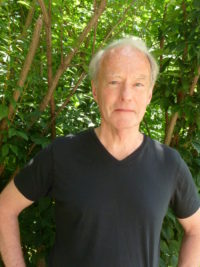
Edward Curtin is an independent writer whose work has appeared widely over many years. His website is edwardcurtin.com and his new book is Seeking Truth in a Country of Lies.
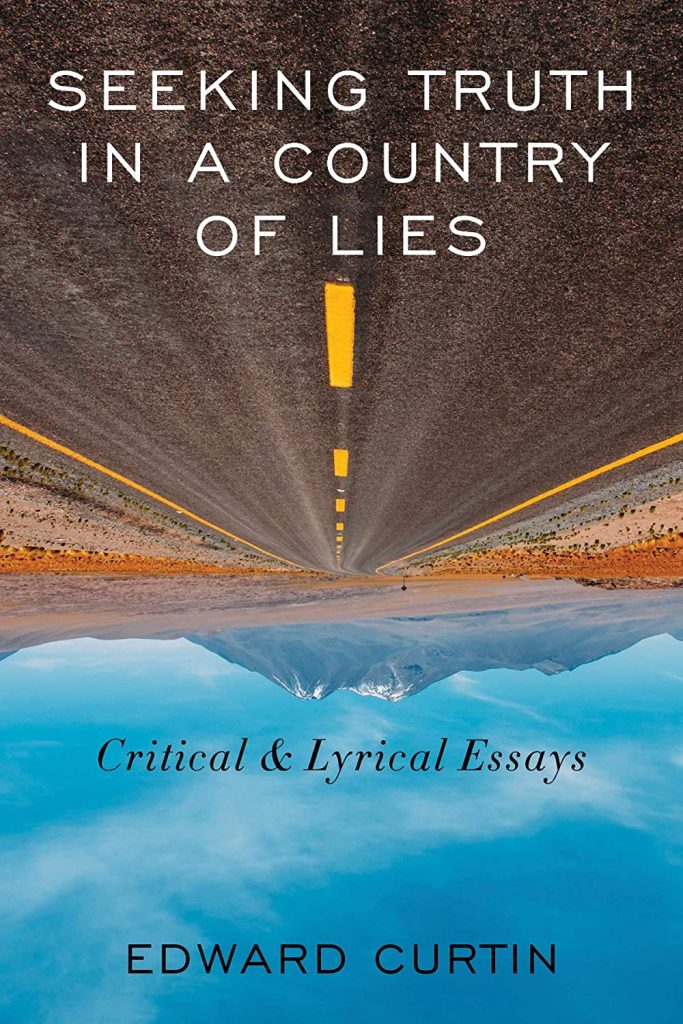
Seeking Truth in a Country of Lies

Please help TFF remain truly independent by contributing if you benefited from this article

[paypal-donation]

No data was found

Share

Leave a Reply

Your email address will not be published. Required fields are marked *

Related Posts

Drones over Nordic airports. No damage. No trace. No answers. Most assume Russia—but what if that’s not so? Why is there so much we are not told? This article explores the strategic ambiguity behind recent drone incursions and asks: Who else might benefit from sending drones into NATO airspace? From Ukraine’s surprising drone supremacy to Russia’s possible signalling, the silence itself may be the loudest message. These are the kinds of questions decent, intelligent investigative journalists and commentators could easily research. Why don’t they? Did you, dear reader, know or think of this? That the most powerful weapon in today’s conflicts might be the one that leaves no trace – and no answers. Just enough fear to justify the next move? Recently, drones have repeatedly appeared over Nordic airports and near some military facilities. They cause no damage – for which reason the designation “hybrid attack” is misleading but serves a purpose. These...
America’s Strategic Assault on Art, Academia, and the Imagination That Sustains Peace The United States once stood as a beacon of cultural audacity—a place where dissent could be beautiful, and beauty and innovation could challenge the present order of things. Its museums, universities, and artists helped inspire a worldwide imagination rooted in creative freedom and innovation. But today, under the Trump regime’s second term, those dynamic qualities are being systematically dismantled. Just read this. As Trump goes after the arts, many museums remain silent | CNN As CNN reports, the administration has launched an aggressive campaign to “eradicate improper ideology” from federally funded museums. Exhibitions involving race, gender, and identity are being censored or cancelled. Amy Sherald’s reimagining of the Statue of Liberty as a Black, trans woman was pulled from the Smithsonian after curators objected to its symbolism. Sherald warned that “history shows us what happens when governments demand loyalty...
Contrary to what we stated when publishing this Call, the UN General Assembly (GA) opened on September 9, 2025, in New York, not in Geneva, as we initially wrote. However, due to the host role-violating US ban on visas to Palestinians, the Special GA Segment on Palestine will be held in the UN Geneva from September 22. And it builds up to something historic. Anyhow, here is what we believe you must advocate or do to help stop the Israeli genocide. It’s called people’s power or citizens’ diplomacy. SHARE! The first of three appeals from TFF. The second is here, and the third here. Across the world, people are witnessing the systematic destruction of Palestinian lives, homes, and communities. The scale and intensity of Israel’s military operations — especially in Gaza — have led leading legal bodies, including the International Court of Justice, to warn of a plausible genocide. The...

Recent Articles

Jan Øberg behandler i artiklen en lang række faktorer, som ligger til grund for den måde vores samfund er organiseret på – og derfor også for konflikter. Artiklen introducerer således sammenhængen mellem familien, foreninger, regeringer, NGO’ er, nation, stat, nationalstat og alliancer for på denne måde bedre at kunne forstå konflikter og i sidste ende blive klogere mht. at løse disse. Øberg, der er fortaler for global bevidsthed, hvilket skal ses i lyset af den øgede globalisering, skelner mellem kulturkamp og kulturdialog. Endelig behandles begrebet magt og magtesløshed: giver magt ret til at udøve magt – fordi man mener at have ret? Litteraturliste og arbejdsspørgsmål efter artiklen. Ordene vi bruger om verden I satellitperspektiv kan man godt tale om den menneskelige familie eller menneskeheden. Udtrykket understreger, at der eksisterer – eller burde eksistere – et fællesskab fordi vi alle er mennesker og sammen bebor denne klode og ingen anden. Og...
Kapitel 2: Forskellige sider af Europa og USA…fortsat 2.5 Militære relationer I forbifarten har vi allerede sagt nogle ting om USA’s militære situation. Kig lige en gang til på afsnit 2.3. Nu skal vi uddybe det militære forhold mellem USA og EU. Der er en række ligheder mellem visse europæiske landes og USA’s militær. Næsten alle er med på en eller anden måde i NATO, direkte som medlem – selv Island, der ikke har et forsvar – eller indirekte i Partnerskab for Fred. USA og Canada er med i OSCE (på dansk OSSE), Organisationen for Sikkerhed og Samarbejde i Europa, der tæller over 50 lande. USA samt England og Frankrig er kernevåbenstater og de har styrker til intervention langt borte fra hjemlandet, om end USA’s er tifold større. Alle har også en omfattende våbeneksport og bruger den som et middel til at tjene penge og få loyale venner på, det...
Background Christian Harleman and Jan Oberg conducted a fact-finding mission to Burundi between November 26 and December 6, 2003. (See websites about the country here). The first TFF mission took place in March 1999. Unfortunately, since then it has not been practically possible to implement the co-operation with Burundi’s Ministry of Education and Burundian NGOs that was planned at the time. The 2003 mission had three purposes. First, to do fact-finding in general about the situation and, in particular, the progress under the Arusha Peace Process. Second, to explore the possibilities for co-operation between the government and relevant NGOs on the one hand and TFF on the other, in order to develop and deepen the existing competence in fields such as conflict-understanding, reconciliation and peace-building. Finally, third, to find out whether it would be possible, in co-operation with the Swedish Rescue Services Agency (Statens Räddningsverk), to establish a health care unit that...

TFF on Substack

Discover more from TFF Transnational Foundation & Jan Oberg.

Most Popular

Jan Øberg behandler i artiklen en lang række faktorer, som ligger til grund for den måde vores samfund er organiseret på – og derfor også for konflikter. Artiklen introducerer således sammenhængen mellem familien, foreninger, regeringer, NGO’ er, nation, stat, nationalstat og alliancer for på denne måde bedre at kunne forstå konflikter og i sidste ende blive klogere mht. at løse disse. Øberg, der er fortaler for global bevidsthed, hvilket skal ses i lyset af den øgede globalisering, skelner mellem kulturkamp og kulturdialog. Endelig behandles begrebet magt og magtesløshed: giver magt ret til at udøve magt – fordi man mener at have ret? Litteraturliste og arbejdsspørgsmål efter artiklen. Ordene vi bruger om verden I satellitperspektiv kan man godt tale om den menneskelige familie eller menneskeheden. Udtrykket understreger, at der eksisterer – eller burde eksistere – et fællesskab fordi vi alle er mennesker og sammen bebor denne klode og ingen anden. Og...
Kapitel 2: Forskellige sider af Europa og USA…fortsat 2.5 Militære relationer I forbifarten har vi allerede sagt nogle ting om USA’s militære situation. Kig lige en gang til på afsnit 2.3. Nu skal vi uddybe det militære forhold mellem USA og EU. Der er en række ligheder mellem visse europæiske landes og USA’s militær. Næsten alle er med på en eller anden måde i NATO, direkte som medlem – selv Island, der ikke har et forsvar – eller indirekte i Partnerskab for Fred. USA og Canada er med i OSCE (på dansk OSSE), Organisationen for Sikkerhed og Samarbejde i Europa, der tæller over 50 lande. USA samt England og Frankrig er kernevåbenstater og de har styrker til intervention langt borte fra hjemlandet, om end USA’s er tifold større. Alle har også en omfattende våbeneksport og bruger den som et middel til at tjene penge og få loyale venner på, det...
Background Christian Harleman and Jan Oberg conducted a fact-finding mission to Burundi between November 26 and December 6, 2003. (See websites about the country here). The first TFF mission took place in March 1999. Unfortunately, since then it has not been practically possible to implement the co-operation with Burundi’s Ministry of Education and Burundian NGOs that was planned at the time. The 2003 mission had three purposes. First, to do fact-finding in general about the situation and, in particular, the progress under the Arusha Peace Process. Second, to explore the possibilities for co-operation between the government and relevant NGOs on the one hand and TFF on the other, in order to develop and deepen the existing competence in fields such as conflict-understanding, reconciliation and peace-building. Finally, third, to find out whether it would be possible, in co-operation with the Swedish Rescue Services Agency (Statens Räddningsverk), to establish a health care unit that...
Read More
Imagen-thumbnail-The-Transnational-1
Jan Øberg behandler i artiklen en lang række faktorer, som ligger til grund for den måde vores samfund er organiseret på – og derfor også for konflikter. Artiklen introducerer således sammenhængen mellem familien, foreninger, regeringer, NGO’ er, nation, stat, nationalstat og alliancer for på denne måde bedre at kunne forstå konflikter og i sidste ende blive klogere mht. at løse disse. Øberg, der er fortaler for global bevidsthed, hvilket skal ses i lyset af den øgede globalisering, skelner mellem kulturkamp og kulturdialog. Endelig behandles begrebet magt og magtesløshed: giver magt ret til at udøve magt – fordi man mener at have ret? Litteraturliste og arbejdsspørgsmål efter artiklen. Ordene vi bruger om verden I satellitperspektiv kan man godt tale om den menneskelige familie eller menneskeheden. Udtrykket understreger, at der eksisterer – eller burde eksistere – et fællesskab fordi vi alle er mennesker og sammen bebor denne klode og ingen anden. Og...
Imagen-thumbnail-The-Transnational-1
Kapitel 2: Forskellige sider af Europa og USA…fortsat 2.5 Militære relationer I forbifarten har vi allerede sagt nogle ting om USA’s militære situation. Kig lige en gang til på afsnit 2.3. Nu skal vi uddybe det militære forhold mellem USA og EU. Der er en række ligheder mellem visse europæiske landes og USA’s militær. Næsten alle er med på en eller anden måde i NATO, direkte som medlem – selv Island, der ikke har et forsvar – eller indirekte i Partnerskab for Fred. USA og Canada er med i OSCE (på dansk OSSE), Organisationen for Sikkerhed og Samarbejde i Europa, der tæller over 50 lande. USA samt England og Frankrig er kernevåbenstater og de har styrker til intervention langt borte fra hjemlandet, om end USA’s er tifold større. Alle har også en omfattende våbeneksport og bruger den som et middel til at tjene penge og få loyale venner på, det...
Imagen-thumbnail-The-Transnational-1
Background Christian Harleman and Jan Oberg conducted a fact-finding mission to Burundi between November 26 and December 6, 2003. (See websites about the country here). The first TFF mission took place in March 1999. Unfortunately, since then it has not been practically possible to implement the co-operation with Burundi’s Ministry of Education and Burundian NGOs that was planned at the time. The 2003 mission had three purposes. First, to do fact-finding in general about the situation and, in particular, the progress under the Arusha Peace Process. Second, to explore the possibilities for co-operation between the government and relevant NGOs on the one hand and TFF on the other, in order to develop and deepen the existing competence in fields such as conflict-understanding, reconciliation and peace-building. Finally, third, to find out whether it would be possible, in co-operation with the Swedish Rescue Services Agency (Statens Räddningsverk), to establish a health care unit that...
Imagen-thumbnail-The-Transnational-1
Former UN Under-Secretary-General with special responsibility for peacekeeping operations TFF associate August 20, 2003 YRINGHAM, Mass.- Ralph Bunche was born in Detroit 100 years ago today (August 7, 2003). His passionate determination to get results did not extend to seeking credit for them, so his work is better remembered than he is. Of all his many accomplishments – civil rights pioneer, Nobel Peace Prize laureate, chief drafter of two chapters of the United Nations charter, negotiator of the armistices that ended the first Arab-Israeli war – Bunche said he was proudest of developing what came to be known as peacekeeping. Setting up the United Nations Truce Supervision Organization in Palestine in 1948, Bunche formulated the principles that have governed peacekeeping operations ever since. In the 1956 Suez crisis, working with Secretary General Dag Hammarskjold and Lester Pearson of Canada, he organized the first peacekeeping force, the United Nations Emergency Force...
– nästan 11 månader Till Sofia nästan 11 månader # 1  Till Sofias huvudsida Till alla Privata Foto-Serier
Till Sofias huvudsida