
Denmark prepares for even more interventions and wars instead of civil conflict handling


Danish media have just informed the gaping Danes that their country is entering no less than “two military alliances” this week. That’s how the Ritzau News Bureau describes it and since a decent basic journalist capacity to problematize security and defence issue – as well as the peace discourse – has vanished, or been abolished, years ago, this is how both the leading conservative daily Berlingske Tidende and the Danish Broadcasting Corporation, Danmarks Radio, describe it too.

Such headlines should raise a few eyebrows. They don’t.

The Danes have – also long ago – willingly accepted that their country is among the most interventionist and war-fighting in Europe. One reason is that the media have virtually no people left who could perform deeper research or ask critical questions, especially about US/NATO affairs, let alone provide a diversity of perspectives.

Abroad few bother to know about H.C. Andersen’s idyllic little country, still sold on being a very happy country, on producing good beer and having the Little Mermaid sitting bored on her stone forever.


Denmark as a ‘rogue bomber state’

Denmark used to be anti-interventionist, anti-war country and a “footnote” member of NATO. It was considered incompatible with Danish mentality to participate in global military missions.

The author served as an expert member of the Danish government’s Disarmament and Security Political Committee (SNU in Danish) during the 1980s. Not one MP, expert, military, journalist or minister for that matter would, back then, have even thought of suggesting that Denmark ought to use its defence forces for anything but under two kinds of circumstances: if another NATO member was attacked and Article 5 would apply and, secondly, in the – unlikely – case of an isolated attack on Denmark.

But 1999 represented a – tragic – turning point.

Under the Social Democratic PM Poul Nyrup Rasmussen and liberal foreign minister Niels Helveg Petersen, Denmark became a bomber nation engaged, virtually ever since, in military missions mostly without a UN Security Council mandate. Denmark’s debut as ‘rogue state’ in this sense was Yugoslavia, two days of bombings with NATO in Kosovo and Serbia.

Then followed a multi-year presence in Afghanistan, participation in the occupation and administration of the predictable fiasco called Iraq 2003-2007, then Libya 2011 where Denmark was particularly active in the criminal enterprise in which a UN mandate about a No-Fly Zone was misused to virtually destroy the country. Denmark bombed a palace and killed a grandchild of Moammar Khadafi. Then followed a second bombing task in Iraq and deployment of troops on the Syrian side of the border. So five ‘missions’ all in all and all at the command of Washington of course.

The argument most often brought forward by Danish ministers, MPs, spokespersons and researchers/experts (the latter mostly with some kind of military background) to the effect that these missions were conducted to yield a positive influence upon the world or on the security of the Danish people can be relegated to history’s heaps of pretexts, human folly, blind loyalty with Washington, propaganda – or worse.

All these wars have been fiascos on their own terms and made the countries, the region and the world, including Denmark, much less secure – not to say the unmentionable word, peaceful.


The two new military initiatives Denmark “proudly” joins

One is the Macron-initiated European Intervention Initiative (E2I) that was invented as part of the French President’s 2017 Strategic Review of Defence and National Security.

In his speech, held at Sorbonne University, he said that “At the beginning of the next decade, Europe needs to establish a common intervention force, a common defence budget and a common doctrine for action.” It’s far from a new idea but it was stated in a new framework – as meaning outside the EU and outside NATO, a kind of coalition of the willing and a way to maintain cooperation with the UK after Brexit.

As usual in these circles, the essential concepts are deliberately either non-defined or defined in ways that they can be transformed into any kind of action later. Intervention can be for peace and in some kind of cooperation with the UN – but then why a European decision-making a not a word about the UN?

Intervention is more likely to imply – whenever the situation should materialize – something like the interventions in Iraq, Libya, or Syria.

One must assume that Macron puts forward such a proposal both to:

a) manifest French leadership of Europe (while Germany is grappling, to a large extent, with its own domestic issues);

b) to revitalize, and also challenge, the EU by also setting up non-EU decision-making mechanisms for rapid intervention – i.e. increase the capacity and not having to wait for an all-EU consensus (which hardly ever take place in spite of the Lisbon Treaty’s provisions about speaking with one voice); and

c) prepare Europe/EU for a time when relations with the US have turned really sour and the very survival of NATO may be at stake.

Below, please find a few good (within the traditional security policy discourse) articles about the many possible interpretations of this initiative.

• •

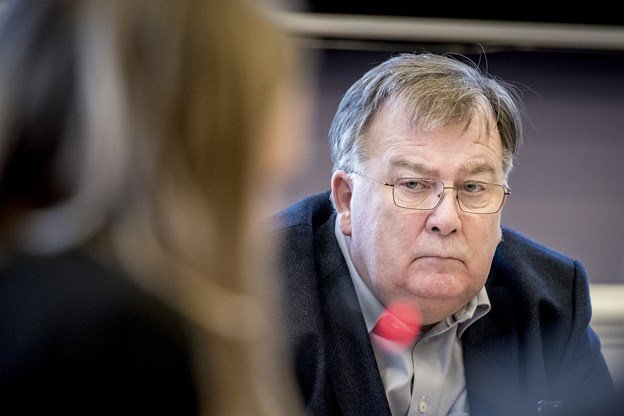
The Danish defence minister, Claus Hjort Frederiksen states that “We in Europe shall take upon us even more of the responsibility for our own security. The world looks less stable than it has for a long time, both in the Middle East and thanks to a steadily more self-asserting Russian behaviour.”

And he adds, “That (the situation) requires that there are countries that have both the will and the capability if it becomes necessary. We have that (i.e. in Denmark) and that’s why we join.”

None of this has any relevance to the two initiatives; they are standard phrases employed to work miracles at every decision having to do with the Danish military and defence – not the least the “threat” that is called Russia.

France has repeatedly intervened in the Middle East and Africa for about a century, it’s pretty much in her genes. Why on earth should Denmark place itself at the disposal for anything that does not explicitly state that that is not what’s intended in the E2I – if it isn’t?

Secondly, it would be reasonable to ask the minister – but no journalist is able or willing to: With all the earlier defence initiatives and increased budgets over the years, how come we have less peace, according to you, than we ought to have? Could there be some kind of end to repeated investments in military projects and interventions (such as in the Middle East) when, contrary to what you and NATO hoped and stated, the wars we have fought there have yielded only less, and not more, security for the region, for the world and for Denmark itself? What makes you think that this E2I shall become a success when other similar military-enhancing initiatives and policies have not?

Defence minister Frederiksen is a former minister of finance with no competence in military or foreign affairs. One would like to believe that the media abstain from asking him such questions to avoid creating an intellectually embarrassing situation for the minister. However, that is hardly the reason the media are merely and repeatedly conveying official information and press releases and then interview only carefully selected experts known to at the very least never challenge the official policies.

The other initiative Denmark proudly joins is Joint Expeditionary Forces (JEF) for which a letter of intent was signed in 2014. The British government defines is here:

“The letter of intent, signed with partners from Denmark, Estonia, Latvia, Lithuania, the Netherlands and Norway, aims to develop the Joint Expeditionary Force (JEF) so that it is fully operational before 2018. The JEF is a pool of high readiness, adaptable forces that is designed to enhance the UK’s ability to respond rapidly, anywhere in the world, with like-minded allies, or on behalf of international organisations such as the UN or NATO.”

One notices, again, that the geographical framework is “anywhere in the world” – neither defensively the NATO nor the EU member areas. Britain too has a century-long tradition of intervening early and late here or there when it sees fit.

Denmark membership in such frameworks is virtually problem-free. It should be highly controversial, in the perspective of both Danish and international law, to commit Denmark to military missions “anywhere in the world” and in particularistic networks of countries, neither in the framework of the UN, EU or NATO as such.

The answer to such concerns would, of course, be that “Denmark decides on a case-by-case basis” if and when the situation occurs; Denmark has the freedom to make its own decisions.” That is true. In theory.

However, such independent decisions require an independent thinking and research, intellectual capacity, a diverse expertise and a solid leadership of the country’s foreign, security and defence policy. The only problems are that all these are things of the past and that there is no longer the slightest discussion about non-military initiatives, mediation, peacekeeping, conflict-resolution, etc.

Denmark’s so-called security rests to the extent of 80 per cent on military thinking and policies. Twenty years of war-fighting adventures have had no intellectual impact on the ongoing militarism and on seeing the world’s problems mainly through military lenses. Like in the U.S.,

The media, left and right and with a few individual exceptions, as well as the research world have adapted to this orientation long ago.

At some point, this is bound to go wrong. Very wrong. Joining these two ill-defined interventionist “alliances” is only one more confirmation of the politics of confusion that has long ago replaced an intellectually defensible and sustainable concept and vision of security politics as such.

A rogue state needs neither.


Recommended literature

President Macron’s Initiative for Europe

Alice Panier
Macron’s “European Intervention Initiative”: more questions than answers

Nick Witney
Macron and the European Intervention Initiative: Erasmus for soldiers?

The British Government
International partners sign joint Expeditionary Forces Agreement

Fabrice Pothier
Macron’s European vision

Daniel Buffey
Nine EU states sign off on joint military intervention force

German Foreign Policy


Photo credit
Defence minister Claus Hjort Frederiksen
Photographer Mads Claus Rasmussen © Ritzau Scanpix

 

Peace & future researcher + ‌Art Photographer

Share

Leave a Reply

Your email address will not be published. Required fields are marked *

Related Posts

PRESS RELEASE – 6 OCTOBER 2025 LAY DOWN YOUR ARMSPEACE PRIZE FOR 2025 is awarded Francesca Albanese The United Nations Special Rapporteur on the occupied Palestinian territories – as the person who, in accordance with Alfred Nobel’s will, has “done the most or the best work for fraternity between nations and for the abolition or reduction of standing armies as well as for the holding and promotion of peace congresses.” Francesca Albanese has forcefully and unwaveringly worked against Israel’s full-scale war on the occupied Palestinian territories, in particular Israel´s ongoing genocide against the Palestinian people. She has confronted Israel’s systematic war crimes and crimes against humanity in a truly global outreach. Further, she has brought governments, international organisations and people’s groups together to underline the responsibility of the world at large to act and to stop arming, enabling, and profiting from Israel’s ongoing criminal actions. But first of all, Albanese...
Officially, the drones were not identified. By simply thinking critically – which journalists and selected experts no longer do – there may be a good reason for that. And this article will never be mentioned in Denmark… Drones over Denmark. No damage. No trace. No answers. Yet the headlines scream “Russian threat,” and Prime Minister Mette Frederiksen speaks with a certainty that defies logic: “We don’t know they were Russian—but we know Russia is the biggest threat to Europe.” It could be nobody else – unless you make an interest analysis which I did two days ago. This is not security policy. It’s theatre. And the audience is being played. Let’s rewind. These drones—unphotographed, untracked, unclaimed—appear and vanish like ghosts. Airports shut down. Panic spreads. Military budgets swell. And the narrative hardens: Russia is behind it. But what if that’s not just wrong but deliberately misleading? Here’s a hypothesis for...
And why the world, especially the EU, must now declare itself independent of the United States. UN’s 80th anniversary This year, the United Nations celebrates the 80th anniversary of its founding. The UN was formed after the scourge of the Second World War, in which 70 to 85 million people were killed and many countries were destroyed. That war came on the heels of the First World War, which also killed between 15 and 22 million people. After the Second World War, especially after the use of nuclear weapons by the United States, which marked a turning point in the history of warfare that could result in the end of civilisation as we know it, humanity decided to move away from the era of empires and big power politics and usher in a new era of peace, freedom and cooperation. These were the principles enshrined in the UN Charter. The United States...

Recent Articles

Gandhi, Arun. Lord Richard Attenborough. Kasturba: a lifeNew Delhi: Penguin Books Ltd., 2000.315 pp, 295 Indian Rs, US $22.51 January 29, 2002 Arun Gandhi, grandson to Mohandas and Kasturba, has written a thorough account of Kasturba’s life. Arun begins with a description of Kasturba’s childhood in Porbandar in the late1800s, before she met Mohandas. By having chosen to embark on difficult research into his grandmother’s life, including her first years which are not well-documented, Arun ensures that the reader receives an intimate and life-long portrait of this amazing woman. Kasturba is presented as a lively woman &endash; obedient, yet with a mind of her own. As the relationship between Kasturba and Mohandas developed, Arun maintains that Kasturba’s influence over Mohandas in her own quiet way also grew, to which some of Mohandas’ writings also attest.  Arun paints a vivid picture of the beginnings of Mohandas’ non-violence movement in South Africa, a...
In response to an urgent Appeal from all the living Nobel Peace Prize Laureates, the General Assembly of the United Nations, on November 1998, unanimously declared the first decade of the twenty-first century to be The Decade for a Culture of Peace and Nonviolence. While people are naturally concerned about the amount of violence in our world and how it threatens our future, the Nobel Laureates are right to remind us of the potential of nonviolence and our calling to build a culture of peace and nonviolence.  The twentieth century is instructive in the way that the philosophy and practice of nonviolence have begun to flourish and in the way that nonviolent movements have had an exponential growth across the world. Mohandas Gandhi and Martin Luther King, Jr. are the most famous nonviolent leaders but many have built upon the paths they charted as in country after country, tyrannies and...
We know that medical personnel have failed to report to higher authorities wounds that were clearly caused by torture and that they have neglected to take steps to interrupt this torture. In addition, they have turned over prisoners’ medical records to interrogators who could use them to exploit the prisoners’ weaknesses or vulnerabilities. We have not yet learned the extent of medical involvement in delaying and possibly falsifying the death certificates of prisoners who have been killed by torturers. A May 22 article on Abu Ghraib in the New York Times states that “much of the evidence of abuse at the prison came from medical documents” and that records and statements “showed doctors and medics reporting to the area of the prison where the abuse occurred several times to stitch wounds, tend to collapsed prisoners or see patients with bruised or reddened genitals.” http://www.truthout.org/docs_04/080604J.shtml#16 According to the article, two doctors who...

TFF on Substack

Discover more from TFF Transnational Foundation & Jan Oberg.

Most Popular

Gandhi, Arun. Lord Richard Attenborough. Kasturba: a lifeNew Delhi: Penguin Books Ltd., 2000.315 pp, 295 Indian Rs, US $22.51 January 29, 2002 Arun Gandhi, grandson to Mohandas and Kasturba, has written a thorough account of Kasturba’s life. Arun begins with a description of Kasturba’s childhood in Porbandar in the late1800s, before she met Mohandas. By having chosen to embark on difficult research into his grandmother’s life, including her first years which are not well-documented, Arun ensures that the reader receives an intimate and life-long portrait of this amazing woman. Kasturba is presented as a lively woman &endash; obedient, yet with a mind of her own. As the relationship between Kasturba and Mohandas developed, Arun maintains that Kasturba’s influence over Mohandas in her own quiet way also grew, to which some of Mohandas’ writings also attest.  Arun paints a vivid picture of the beginnings of Mohandas’ non-violence movement in South Africa, a...
In response to an urgent Appeal from all the living Nobel Peace Prize Laureates, the General Assembly of the United Nations, on November 1998, unanimously declared the first decade of the twenty-first century to be The Decade for a Culture of Peace and Nonviolence. While people are naturally concerned about the amount of violence in our world and how it threatens our future, the Nobel Laureates are right to remind us of the potential of nonviolence and our calling to build a culture of peace and nonviolence.  The twentieth century is instructive in the way that the philosophy and practice of nonviolence have begun to flourish and in the way that nonviolent movements have had an exponential growth across the world. Mohandas Gandhi and Martin Luther King, Jr. are the most famous nonviolent leaders but many have built upon the paths they charted as in country after country, tyrannies and...
We know that medical personnel have failed to report to higher authorities wounds that were clearly caused by torture and that they have neglected to take steps to interrupt this torture. In addition, they have turned over prisoners’ medical records to interrogators who could use them to exploit the prisoners’ weaknesses or vulnerabilities. We have not yet learned the extent of medical involvement in delaying and possibly falsifying the death certificates of prisoners who have been killed by torturers. A May 22 article on Abu Ghraib in the New York Times states that “much of the evidence of abuse at the prison came from medical documents” and that records and statements “showed doctors and medics reporting to the area of the prison where the abuse occurred several times to stitch wounds, tend to collapsed prisoners or see patients with bruised or reddened genitals.” http://www.truthout.org/docs_04/080604J.shtml#16 According to the article, two doctors who...
Read More
Imagen-thumbnail-The-Transnational-1
Gandhi, Arun. Lord Richard Attenborough. Kasturba: a lifeNew Delhi: Penguin Books Ltd., 2000.315 pp, 295 Indian Rs, US $22.51 January 29, 2002 Arun Gandhi, grandson to Mohandas and Kasturba, has written a thorough account of Kasturba’s life. Arun begins with a description of Kasturba’s childhood in Porbandar in the late1800s, before she met Mohandas. By having chosen to embark on difficult research into his grandmother’s life, including her first years which are not well-documented, Arun ensures that the reader receives an intimate and life-long portrait of this amazing woman. Kasturba is presented as a lively woman &endash; obedient, yet with a mind of her own. As the relationship between Kasturba and Mohandas developed, Arun maintains that Kasturba’s influence over Mohandas in her own quiet way also grew, to which some of Mohandas’ writings also attest.  Arun paints a vivid picture of the beginnings of Mohandas’ non-violence movement in South Africa, a...
Imagen-thumbnail-The-Transnational-1
In response to an urgent Appeal from all the living Nobel Peace Prize Laureates, the General Assembly of the United Nations, on November 1998, unanimously declared the first decade of the twenty-first century to be The Decade for a Culture of Peace and Nonviolence. While people are naturally concerned about the amount of violence in our world and how it threatens our future, the Nobel Laureates are right to remind us of the potential of nonviolence and our calling to build a culture of peace and nonviolence.  The twentieth century is instructive in the way that the philosophy and practice of nonviolence have begun to flourish and in the way that nonviolent movements have had an exponential growth across the world. Mohandas Gandhi and Martin Luther King, Jr. are the most famous nonviolent leaders but many have built upon the paths they charted as in country after country, tyrannies and...
Imagen-thumbnail-The-Transnational-1
We know that medical personnel have failed to report to higher authorities wounds that were clearly caused by torture and that they have neglected to take steps to interrupt this torture. In addition, they have turned over prisoners’ medical records to interrogators who could use them to exploit the prisoners’ weaknesses or vulnerabilities. We have not yet learned the extent of medical involvement in delaying and possibly falsifying the death certificates of prisoners who have been killed by torturers. A May 22 article on Abu Ghraib in the New York Times states that “much of the evidence of abuse at the prison came from medical documents” and that records and statements “showed doctors and medics reporting to the area of the prison where the abuse occurred several times to stitch wounds, tend to collapsed prisoners or see patients with bruised or reddened genitals.” http://www.truthout.org/docs_04/080604J.shtml#16 According to the article, two doctors who...
Imagen-thumbnail-The-Transnational-1
Jan Øberg behandler i artiklen en lang række faktorer, som ligger til grund for den måde vores samfund er organiseret på – og derfor også for konflikter. Artiklen introducerer således sammenhængen mellem familien, foreninger, regeringer, NGO’ er, nation, stat, nationalstat og alliancer for på denne måde bedre at kunne forstå konflikter og i sidste ende blive klogere mht. at løse disse. Øberg, der er fortaler for global bevidsthed, hvilket skal ses i lyset af den øgede globalisering, skelner mellem kulturkamp og kulturdialog. Endelig behandles begrebet magt og magtesløshed: giver magt ret til at udøve magt – fordi man mener at have ret? Litteraturliste og arbejdsspørgsmål efter artiklen. Ordene vi bruger om verden I satellitperspektiv kan man godt tale om den menneskelige familie eller menneskeheden. Udtrykket understreger, at der eksisterer – eller burde eksistere – et fællesskab fordi vi alle er mennesker og sammen bebor denne klode og ingen anden. Og...
Imagen-thumbnail-The-Transnational-1
Kapitel 2: Forskellige sider af Europa og USA…fortsat 2.5 Militære relationer I forbifarten har vi allerede sagt nogle ting om USA’s militære situation. Kig lige en gang til på afsnit 2.3. Nu skal vi uddybe det militære forhold mellem USA og EU. Der er en række ligheder mellem visse europæiske landes og USA’s militær. Næsten alle er med på en eller anden måde i NATO, direkte som medlem – selv Island, der ikke har et forsvar – eller indirekte i Partnerskab for Fred. USA og Canada er med i OSCE (på dansk OSSE), Organisationen for Sikkerhed og Samarbejde i Europa, der tæller over 50 lande. USA samt England og Frankrig er kernevåbenstater og de har styrker til intervention langt borte fra hjemlandet, om end USA’s er tifold større. Alle har også en omfattende våbeneksport og bruger den som et middel til at tjene penge og få loyale venner på, det...
Imagen-thumbnail-The-Transnational-1
Background Christian Harleman and Jan Oberg conducted a fact-finding mission to Burundi between November 26 and December 6, 2003. (See websites about the country here). The first TFF mission took place in March 1999. Unfortunately, since then it has not been practically possible to implement the co-operation with Burundi’s Ministry of Education and Burundian NGOs that was planned at the time. The 2003 mission had three purposes. First, to do fact-finding in general about the situation and, in particular, the progress under the Arusha Peace Process. Second, to explore the possibilities for co-operation between the government and relevant NGOs on the one hand and TFF on the other, in order to develop and deepen the existing competence in fields such as conflict-understanding, reconciliation and peace-building. Finally, third, to find out whether it would be possible, in co-operation with the Swedish Rescue Services Agency (Statens Räddningsverk), to establish a health care unit that...