It’s far from the longest U.S. war. There was no peace before or after it. There is no after it until they end it — and bombing has always been most of what it is. It has had nothing to do with opposing terrorism. It has been a one-sided slaughter, a mass killing over two decades by a single invading army and air force dragging along token mascots from dozens of vassal states.
After 20 years Afghanistan was one of the worst places to be on Earth, and the Earth as a whole was a worse place to be — the rule of law, the state of nature, the refugee crises, the spread of terrorism, the militarization of governments all worsened. Then the Taliban took over.
When the U.S. armed the Afghan military with weapons costing enough to cause panic attacks in U.S. Senators had the expense been for anything other than murder, and predicted a happy little civil war, and then the Afghans refused to fight each other, the President of the United States denounced such reprehensible restraint, blaming the victims, instead of acknowledging the massive gift of yet more weaponry to the Taliban, instead of recognizing — after 20 years — anything about what Afghanistan is like. (Of course he still calls the war a “civil war” as U.S. voices have done for years and years because unless the U.S. military is regretfully helping out in a civil war waged by primitive people, it will be understood to be, you know, waging wars, smack in the middle of what U.S. academics call The Great Peace.)
The puppet government was never a government outside of the capital. The people were never loyal to the Taliban or the invaders, but merely to whichever set of lunatics was nearby waving guns.
First the Taliban collapsed, then the Muppets in Kabul, and for 20 years in between every home and village switched sides as needed, with the U.S. developing permanent enemies, the Taliban making practical alliances, and people persistently noticing that they lived where they lived, while the strange-looking foreigners who killed, imprisoned, tortured, mutilated, urinated on, and threatened them for “human rights” lived somewhere else.
But millions of them were made homeless. Children froze to death in refugee camps. Approximately half the victims of the U.S. war were women. The puppet government passed a law to legalize spousal rape.
Yet the hypocritical screech of “Women’s Rights” was heard over the agonized moaning of the injured, even as the U.S. government blissfully armed and supported the brutal militaries of such bastions of women’s rights as Algeria, Angola, Azerbaijan, Bahrain, Brunei, Burundi, Cambodia, Cameroon, Central African Republic, Chad, China, Democratic Republic of Congo (Kinshasa), Republic of Congo (Brazzaville), Djibouti, Egypt, Equatorial Guinea, Eritrea, Eswatini (formerly Swaziland), Ethiopia, Gabon, Iraq, Kazakhstan, Libya, Mauritania, Nicaragua, Oman, Qatar, Rwanda, Saudi Arabia, Sudan, Syria, Tajikistan, Thailand, Turkey, Turkmenistan, Uganda, United Arab Emirates, Uzbekistan, Vietnam, and Yemen.
The death, injury, trauma, homelessness, environmental destruction, governmental corruption, renewed drug dealing, and general catastrophe were kept quiet by an obsessive focus on the tiny percentage of deaths that were U.S. troops — but excluding the majority even of those deaths because they were suicides.
“There is no military solution” the generals and weapons-funded presidents and Congress members chanted for decades while pushing more militarism. Yet nobody asked what “solution” even meant.
“We’re winning” they lied for decades until everyone announced that they’d “lost.” Yet nobody asked what “winning” would have been. What was the goal? What was the purpose?
The rhetoric, official and amateur, that launched the war was about bombing a nation full of people as revenge for the crimes of a small number of individuals who had spent some time in the place.
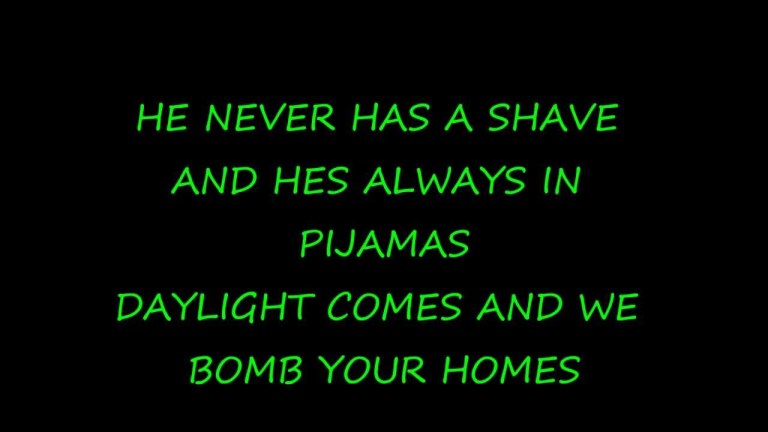
“Hey Mr. Taliban” song lyrics were racist, hateful, and genocidal celebrations of bombing the homes of people who dressed in pajamas. But this was pure murderous bullshit. Crimes can and should be prosecuted, not used as excuses to commit worse crimes.
The Taliban was willing to turn Bin Laden over to a third country to be put on trial, but the U.S. government wanted a war. It had long-since planned the war.
Its motivations included base construction, weapons placement, pipeline routing, and the launching of a war on Iraq as a continuation of an easier-to-start war on Afghanistan (a war that Tony Blair insisted on starting prior to a war on Iraq).
Soon the U.S. president said that bin Laden didn’t matter at all. Then another U.S. president said that bin Laden was dead. That didn’t matter either, as anyone paying the slightest attention had known it wouldn’t. In fact, that same president escalated the war on Afghanistan three-fold in terms of troop presence but more than that in bombing, principally because he was largely keeping his predecessor’s deal to scale back the war on Iraq.
One can’t just end a war without backing a different one. That’s part of why the world’s worried about a war on China right now.
But, then what was the excuse for the unending war on Afghanistan? Well, one excuse was a new bin Laden. He would return in another form like Voldemort if ever the U.S. left Afghanistan.
So, after 20 years of a global war on terrorism spreading anti-U.S. terrorism from a few Afghan caves to capitals across Africa and Asia, we’re now told that the Taliban takeover may mean the “return” of terrorism — we’re told this by the very same widely respected “experts” who just said the Taliban wouldn’t take over.
You know who never believed that crap? The young men and women sent into Afghanistan from the United States year after year after year to become suicide risks and to . . . well, and to . . . to do what?
What passes for “winning” in the propaganda given the troops and everyone else is just the horrific wars with disastrous short- and long-term results that somebody had the sense to end more quickly than other wars: the Gulf War, the War on Libya. But they’re not, of course, better than never having started them would have been.

While President Joe Biden swears the nonsense about “nation building” was always nonsense, others cling to it. On August 17th an email from Lauren Mick, Senior Manager for Media Relations, Office of the Special Inspector General for Afghanistan Reconstruction (SIGAR), claimed “There is no doubt, however, that the lives of millions of Afghans had been improved by U.S. government interventions, including gains in life expectancy, the mortality of children under five, GDP per capita, and literacy rates, among others.”
Even if you believe that, imagine what doctors and teachers could have done in that regard. Hell, imagine what giving every man, woman, and child in Afghanistan some $600,000 or even a tiny fraction of that might have done rather than blowing over $1 trillion on war per year for 20 years.
Afghanistan, under the benevolent occupation, was the third worst place to give birth in terms of newborn mortality, with the first being the neighboring and heavily impacted Pakistan.
The letter in the image above illustrates one of the points I elaborated on in War Is A Lie, namely that one can have contradictory war lies working simultaneously and certainly at different stages, especially before, during, and after a war. Let us count the lies in the notice above:
- “progress” — no explanation given, so irrefutable, but vacuous
- the war-making allowed people to vote, attend school, start a business, and live with basic necessities — by definition anyone not killed in the war lived with basic necessities, just as prior to the war only less so; the rest of this has been very weak for 20 years and in fact for 50 years going back to the initial U.S. provocation of the Soviets back when the bad guys were the good guys as they very well may soon be again
- evidence-free prevention of imaginary attacks on the Fatherland — those have been made more likely, not less likely, by the war
- saving fellow “service” members — not sending them would have saved more of them
- planting small seeds of “Freedom’s Cause” — what can I say except that people will reach for utter obnoxious nonsense to justify horrible things they’ve done?
Well, surely this harmless foolishness is better than veteran suicides? Not if it succeeds at its stated purpose of facilitating future warmaking it isn’t, no. Guess what one of the minor results of those future wars will be? More veteran suicides!
At one point during the past 20 years, I sent some unsolicited advice to a young man who was considering offering the world the “service” of participating in wars. This was part of what I sent him:
Are you aware that the U.S. government repeatedly turned down offers to hand Bin Laden over to a third nation to be put on trial, preferring instead a war?
Have you come into contact with the understanding that “if the CIA had not spent over a billion dollars arming Islamist militants in Afghanistan against the Soviet Union during the height of the Cold War, empowering jihadist godfathers like Ayman al-Zawahiri and Osama bin Laden in the process, the 9/11 attacks would have almost certainly not taken place”? Are you familiar with the U.S. plans for war on Afghanistan that pre-dated September 11, 2001?
Have you seen the predictable excuses that Bin Laden gave for his murderous crimes? They each involve revenge for other crimes committed by the U.S. military. Are you aware that war is a crime under, among other laws, the United Nations Charter?
Are you aware that al Qaeda planned September 11th in numerous nations and U.S. states that, unlike Afghanistan, the United States chose not to bomb?
I continued:
Are you familiar with the gross failures of the CIA and FBI leading up to 9/11, but also with the warnings they gave to the White House that went unheeded?
Are you aware of the evidence of the role played by Saudi Arabia, close U.S. ally, oil dealer, weapons customer, and partner in the war on Yemen? Did you know that British Prime Minister Tony Blair agreed to the future war on Iraq as long as Afghanistan was attacked first?
Are you aware that the Taliban had practically eradicated opium prior to the war, but that the war made opium one of the Taliban’s top two sources of funding, the other being, according to an investigation by the U.S. Congress, the U.S. military?
Are you aware that the war on Afghanistan has killed huge numbers of people, devastated the natural environment, and left the society very vulnerable to coronavirus? Are you aware that the International Criminal Court is investigating the overwhelming evidence of horrendous atrocities by all sides during the war on Afghanistan?
Have you noticed the habit of just-retired U.S. military officials admitting that much of what they’ve been doing is counter-productive? Here are just a few examples in case you’ve missed any of them:
—Former CIA Bin Laden Unit Chief Michael Scheuer, who says the more the United States fights terrorism the more it creates terrorism.
—The CIA, which finds its own drone program “counterproductive.”
—Admiral Dennis Blair, the former director of National Intelligence: While “drone attacks did help reduce the Qaeda leadership in Pakistan,” he wrote, “they also increased hatred of America.”
—Gen. James E. Cartwright, the former vice chairman of the Joint Chiefs of Staff: “We’re seeing that blowback. If you’re trying to kill your way to a solution, no matter how precise you are, you’re going to upset people even if they’re not targeted.”
—Sherard Cowper-Coles, Former U.K. Special Representative To Afghanistan: “For every dead Pashtun warrior, there will be 10 pledged to revenge.”
—Matthew Hoh, Former Marine Officer (Iraq), Former US Embassy Officer (Iraq and Afghanistan): “I believe it’s [the escalation of the war/military action] only going to fuel the insurgency. It’s only going to reinforce claims by our enemies that we are an occupying power, because we are an occupying power. And that will only fuel the insurgency. And that will only cause more people to fight us or those fighting us already to continue to fight us.”
—General Stanley McChrystal: “For every innocent person you kill, you create 10 new enemies.”
— Lt. Col. John W. Nicholson Jr.: This commander of the war on Afghanistan blurted out his opposition to what he’d been doing on his last day of doing it.
I tried to provide some context:
“Did you know that terrorism increased from 2001 through 2014, principally as a predictable result of the war on terrorism? Of course a basic question that a good education should bring one to ask about any field is this one: “Is it working?”
I assume you’ve asked that regarding “counter-terrorism.” I assume also that you’ve looked into what distinctions, if any, truly separate a terrorist attack from a counter-terrorist attack.
Are you aware that 95% of all suicide terrorist attacks are indefensible crimes conducted to encourage foreign occupiers to leave the terrorist’s home country?
I tried to provide some alternatives:
Did you know that on March 11, 2004, Al Qaeda bombs killed 191 people in Madrid, Spain, just before an election in which one party was campaigning against Spain’s participation in the U.S.-led war on Iraq. The people of Spain voted the Socialists into power, and they removed all Spanish troops from Iraq by May. There were no more bombs in Spain.
This history stands in strong contrast to that of Britain, the United States, and other nations that have responded to blowback with more war, generally producing more blowback.
Are you aware of the suffering and death that polio used to cause and still causes, and how hard many have worked for years to come very close to eradicating it, and what a dramatic setback these efforts were handed when the CIA pretended to be vaccinating people in Pakistan while actually trying to find Bin Laden?
Did you know that it isn’t legal in Pakistan or anywhere else to kidnap or to murder? Have you ever paused and listened to whistleblowers about their regrets? People like Jeffrey Sterling have some eye-opening stories to tell. So does Cian Westmoreland. So does Lisa Ling. So do many others. Were you aware that much of what we think about drones is fictional?
Are you familiar with the dominant role the U.S. plays in weapons dealing and war, that it’s responsible for some 80% of international arms dealing, 90% of foreign military bases, 50% of military spending, or that the U.S. military arms, trains, and funds the militaries of 96% of the most oppressive governments on earth?
Did you know that 3% of U.S. military spending could end starvation on earth? Do you really believe, when you stop to consider it, that the current priorities of the U.S. government serve to counter terrorism, rather than to fuel it?
We have real crises facing us that are far more severe than terrorism, no matter where you think terrorism comes from. The threat of nuclear apocalypse is higher than ever.
The threat of irreversible climate collapse is higher than ever and massively contributed to by militarism. The trillions of dollars being dumped into militarism are desperately needed for actual defense against these dangers including spin-off catastrophes like coronavirus.
Now, we’ve been through two decades of atrocity aberration stories in Afghanistan. Some troops were hunting children but that wasn’t the norm. Some troops were peeing on corpses, but politely and respectfully creating the corpses was the norm. Innocent people were imprisoned and tortured but only by mistake.
We’ve been treated to two decades of regrets that crimes should have been committed more properly. So and so shouldn’t have pretending to be “winning.” Such and such shouldn’t have pretended to be withdrawing.
This and that shouldn’t have lied about murders of civilians. Big shot shouldn’t have shown his brilliant plans for dragging out this madness to his girlfriend.
We’ve been treated to two decades of imagining that mass killing can be reformed. But it cannot be. Remember that this was the “good war” the war that one had to praise in order to oppose the war on Iraq without being some radical advocate of abolishing mass slaughter.
But if this was a “good war” — a war that even peace activists pretended had been UN-sanctioned (simply because the war on Iraq had not been) — one would hate to see the “bad war.”
The big lies are not the lies in the Afghan Papers but the lies evident on the day the war began. Here are some of them and links to their refutations:
If you’re really good at the war propaganda game, you can do the inverted myths:
Peace is impossible.
Peace is unjustifiable.
Peace serves no purpose.
Peace is dangerous and gets people killed.
These are themes in U.S. corporate media these days. People get hurt when you end good stable wars. They die at airports (when you shoot them or let them crowd onto runways and generally run the airport like it’s a branch of the SNAFU war machine you sent in for the non-nation building).
What can peaceniks say for themselves at such a moment?
Well, here’s what this one says:
On September 11, 2001, I said, “Well, that proves all the weapons and wars are useless or counterproductive. Prosecute crimes as crimes, and start disarming.”
When the U.S. government launched an illegal, immoral, sure to be catastrophic war on Afghanistan, I said, “That’s illegal and immoral and sure to be catastrophic! End it now!”
When they didn’t end it, I said, “According to the Revolutionary Association of Women of Afghanistan, there’s going to be hell when they end this, and it’s going to be a worse hell the longer it takes them to end it. So, end it now!”
When they didn’t end it, I went to Kabul and met with all kinds of people and saw that they clearly had a lousy, corrupt, foreign-backed puppet government, with the looming threat of the Taliban, and neither choice was any good. “Support nonviolent civil-society,” I said. “Provide actual aid. Try democracy at home to lead by example. And (redundantly, since democracy at home would have done this) get the U.S. military the @%!%# out!”
When they still didn’t end it, and when a Congressional investigation found the top two sources of income for the Taliban to be the revived drug trade and the U.S. military, I said “If you wait additional years or decades to get the !^%& out, there’s going to be no hope left. Get the hell out now!”
When Amnesty International put ads up on bus stops in Chicago thanking NATO for the lovely war for women’s rights, I pointed out that bombs blow up women the same as men, and marched to protest NATO.
I asked people in Afghanistan, and they said the same thing.
When Obama pretended to get out, I said, “Really get out, you lying scheming fraud!”
When Trump got elected promising to get out and then didn’t, I said, “Really get out, you lying scheming fraud!”
(When Hillary Clinton failed to get elected, and evidence suggested that she’d have won had she credibly promised to end the wars, I said, “Do us all a favor and retire for godsake!”)
Presidents I proposed be impeached for this war among other grounds were Bush, Obama, Trump, and Biden.
Now I’ve gone and offended both political Parties, of course, and must apologize for burning my Party membership cards and not children.
When they STILL didn’t end the war, I said, again, “According to the Revolutionary Association of Women of Afghanistan, there’s going to be hell when they end this, and it’s going to be a worse hell the longer it takes them to end it. So, end it now!”
When Biden pretended to get out while promising to keep troops there and to increase the bombings, I said, “Really get out, you lying scheming fraud!”
I encouraged all the insiderish groups that said the same thing super gently and politely. I encouraged all the fed-up groups blocking doors and streets and weapons trains. I supported efforts in ever country involved to get their token troops out and stop legitimizing a U.S. crime. Year after year after year.
When Biden claimed the war was some sort of success, I pointed out how it had spread anti-U.S. terrorism across half the globe, spawned more wars, murdered countless people, devastated the natural environment, eroded the rule of law and civil liberties and self-governance,