
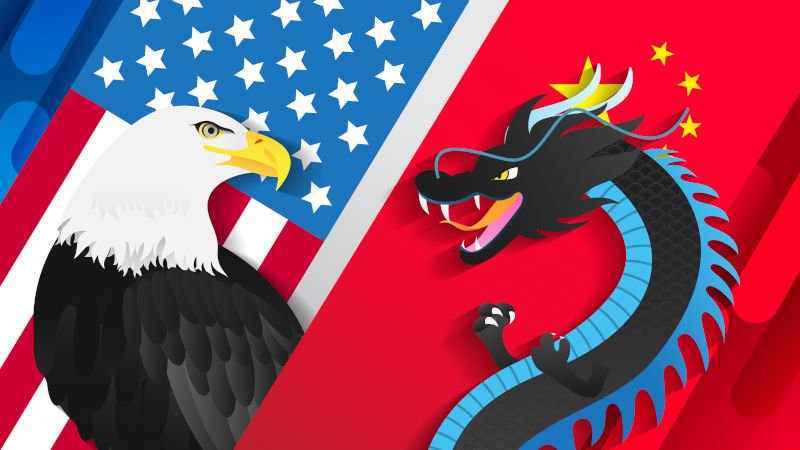
Colin Mackerras: The dangerous one is the U.S.

Colin Mackerras

April 20, 2023

The implication of AUKUS is that China constitutes a danger to Australian security. It borders on official Australian policy that China is an aggressive power bent on domination. But the history of the People’s Republic suggests its military is for defence, not aggression and that the cases where it has used external military force are very few. Under Xi Jinping it may be assertive and keen to extend influence, especially economic, but it shows no signs of political/military aggression. On the contrary, it is the U.S. that constantly uses external military force and is bent on maintaining domination at all costs.

It was less than a year after the birth of the People’s Republic of China (PRC) on 1 October 1949 that the Korean War broke out. Korean history of the first years after World War II is too complex to pursue here. But essentially, no sooner was Korea independent of a defeated Japan in 1945 than a divided country emerged, with the U.S. setting up the Republic of Korea (South Korea) on 15 August 1948 and the Democratic People’s Republic (North Korea) following on 9 September. Under U.S. dominance, it was the South that moved first formally to divide the country.

When the North attacked the South in June 1950, the U.S. got the United Nations to intervene under its own American leadership. China became involved only in October 1950, after the U.S. actively threatened to move north to invade the fledgling PRC. Yet, at U.S. behest, China was condemned for aggression.

Let’s be very clear: the U.S. was the first foreign power to be involved in this war, not China. After a truce was reached in 1953, Chinese troops withdrew fully from the north by 1958, while American troops remain in the south to this day. The dangerous one is the U.S., which assumes its God-given right to control the world, not China. There is no peace treaty covering Korea to this day.

Following the Korean War, China has only rarely been involved in wars outside its own borders. In 1962, it fought a brief border war with India, but it is important to note that the rights and wrongs of this are extremely controversial. Although the Western media reported almost entirely India’s version of events, scholars such as the late Neville Maxwell (1926-2019) and Gregory Clark have shown convincingly that China had a perfectly respectable case.

The most recent time China sent troops to attack another country was in Vietnam in February and March 1979 in response to Vietnam’s invasion of Cambodia. During this very brief war, China made no attempt to take the capital or to change the Vietnamese government. It withdrew unilaterally.

In short, the longest war since 1949 to see Chinese troops fight outside their borders is still the Korean war. It was unfairly condemned of aggression by the first foreign power to participate in the war, with the U.S. version of events sticking for decades because of its world power.

Since the Korean War, the U.S. continues to be involved in numerous wars, Vietnam, Iraq, and Afghanistan, among others, with Australia simply taking part to follow the boss. What’s striking is that the U.S. has lost these wars and ended up withdrawing humiliated. The U.S. has attempted to invent an ideological justification but has frequently been attacked by protests from within its own borders. It has also been involved in proxy wars, some such as the present Ukraine war large in scale.

In contrast to China, the U.S. has hundreds of military bases outside its own borders. It has installed numerous governments in foreign countries, replacing those that don’t conform to the ideology it calls “democracy”.

Many in the West assume that under Xi Jinping, China has become an aggressive nation, even if it was not before. It is true China is much more assertive in world affairs. But I see no sign that China has become aggressive. It shows no sign of wanting to use its armed forces outside its own territory.

As for Taiwan, let’s remember that the international community recognises Taiwan as part of China and Taiwan has no seat by itself in the United Nations. The U.S. may be goading China to retake Taiwan with violence, but has not succeeded up to now. China’s policy is now, and has always been, that it wants to reunify the country by retaking Taiwan, but it wants peaceful reunification, using force only as a last resort.

China extends its influence through trade and investment. We know that its Belt and Road Initiative has expanded China’s economic and to some extent political influence throughout Central Asia, Africa and Latin America, and even the South Pacific. We even hear increasing reports of China’s replacing the U.S. dollar as the reserve currency by trading in the Chinese yuan and other currencies.

Western countries, especially the U.S., express alarm at the increase of Chinese influence and have taken increasingly severe measures to thwart it. However, what the Chinese have not done is establish military bases, overthrow local regimes or even try to spread their ideology to those countries with which they trade.

In this sense, they are far less dangerous than the U.S.

Xi Jinping talks of a common shared future of humanity, not of dominance. Western commentators tend to assume that’s just words, and really he hides deception and conquest in his heart. I don’t see the evidence for that.

What China wants and what seems to me in China’s interests are two things. One is to protect China against external attack. The other is a multipolar world, in which China is one of the important poles. It does not want or aim for a Chinese-dominated unipolar world.

True, it is becoming involved in the Middle East and in peace processes to an unprecedented extent, at the same time as the U.S. is in decline relative to China (and other countries). Personally, I can’t see why it should not. As a great civilisation, it has a right to extensive influence. Influence is quite different from dominance.

The U.S. currently assumes it is number 1. Its main aim is to retain that position. Its policies are geared to that end, to keep China down. What alarms the U.S. is China’s success. How can a country so recently impoverished and backward actually be prosperous enough to enjoy a life expectancy at birth longer than the U.S.? (World Bank data for 2020 have China at 78, and the U.S. at 77).

The way Australia has submitted itself to this dangerous and untrustworthy country, the U.S., is shameful. Our track-record of blindly following allies into wars that don’t concern us is unworthy of the independent country we should be and aspire to be.

This article was originally published by John Mendadue’s Public Policy Journal
“Pearls And Irritations” on April 16, 2023

About the author

Colin Mackerras, professor emeritus at Griffith University, Australia, is one of the world’s finest scholars on China and has developed a special relationship and friendship with China over five decades. More about him on Veronica Mackerras’ homepage for him, “China In My Eyes”.

Share

Leave a Reply

Your email address will not be published. Required fields are marked *

Related Posts

Contrary to what we stated when publishing this Call, the UN General Assembly (GA) opened on September 9, 2025, in New York, not in Geneva, as we initially wrote. However, due to the host role-violating US ban on visas to Palestinians, the Special GA Segment on Palestine will be held in the UN Geneva from September 22. And it builds up to something historic. Anyhow, here is what we believe you must advocate or do to help stop the Israeli genocide. It’s called people’s power or citizens’ diplomacy. SHARE! The first of three appeals from TFF. The second is here, and the third here. Across the world, people are witnessing the systematic destruction of Palestinian lives, homes, and communities. The scale and intensity of Israel’s military operations — especially in Gaza — have led leading legal bodies, including the International Court of Justice, to warn of a plausible genocide. The...
Professor Zhang Weiwei is a highly respected Chinese intellectual and professor at Fudan University in Shanghai. He is the director of its China Institute and also runs a series of conversations with many different people around the world. Here is what came out of their meetings there and in Skopje, Macedonia in October 2024: & As you can see, also at the end of the second one, we both enjoy win-win exchanges like these about world order issues. Zhang Weiwei is known for using videos and social media to reach a large audience in China and worldwide. We suggest you see many more of Zhang Weiwei’s conversations – like recently with Professor Jeffrey Sachs – on the Thinkers’ Forum on YouTube. PSTFF posts hundreds of videos, its own and those of others, in our Video Collections on TFF Substack – including those that appear on YouTube. However, TFF has been cancelled by Google-owned...
Launched on November 17, 2024Updated with new materials regularly TFF Board members Thore Vest. Everywhere, the delegation was met with a sincere wish to develop knowledge, dialogue, cooperative projects, and initiatives based on citizens’ diplomacy – in general, but with the West in particular. For more, see “Report from the Nordic delegation to China’s Xinjiang Province, September 7-15, 2024.” While the delegation was in Xinjiang, various ideas were already being discussed from the local to the top level, i.e., with the governor and party leaders of Xinjiang. The two TFF Associates suggested that TFF set up a special section – in addition to its “China and Silk” – where various quality materials about Xinjiang would regularly be published to promote public education about Xinjiang, particularly its contemporary development – worldwide but in the West in particular. This is now a reality – as can be seen below – but it...

Recent Articles

PressInfo # 141, December 21, 2001It’s time to prepare reconciliation between Albanians and Serbs PressInfo # 140, December 14, 2001Ibrahim Rugova’s decade-long leadership in Kosovo/a PressInfo # 139, 11. december, 2001En god nyhet: Jugoslaviens Sannings- och försoningskommission PressInfo # 139, 11. december, 2001Gode nyheder: Jugoslaviens Sandheds- og Forsoningskommission PressInfo # 139, December 11, 2001Good news: Yugoslavia’s Truth and Reconciliation Commission PressInfo # 138, November 8, 2001TFF co-founder PhD with thesis about young people with roots in other cultures PressInfo # 138, November 8, 2001TFF:s medstiftare doktor på avhandling om unga med ursprung i andra kulturer PressInfo # 137, October 17, 2001A new Marshall Plan: Advancing human security and controlling terrorism PressInfo # 136, October 15, 2001The UN and Annan really deserve it PressInfo # 135, October 10, 2001Preventing a terrorist mushroom cloud PressInfo # 134, 17 oktober, 2001Sverige og 11. september PressInfo # 134, October 9, 2001Sweden and September 11...
Peace is promoted by constructive proposals and dialogue Four preceding PressInfos have expressed concern over — and criticised — the ongoing, militarisation of the EU. Some will say: but there are no alternatives. We believe that there are always alternatives, that democracies are characterised by alternatives and choice, and that openly discussed alternatives will improve the quality and legitimacy of society’s decision–making. In addition, it is an intellectual and moral challenge to not only criticise but also be constructive. If we only tell people that we think they are wrong, they are not likely to listen. However, if we say: what are your views on this set of ideas and steps? — we may sometimes engage them in dialogue and sow a seed. Most people in power circles live their daily lives in in a time frame and a social space where certain ideas, viewpoints and concepts are just not...
Photos © TFF 2000 Read PressInfo 90 “Lift the Sanctions and Bring More Aid to Yugoslavia” See Pictures from Belgrade © TFF 2000 Please reprint, copy, archive, quote or re-post this item, but please retain the source.

TFF on Substack

Discover more from TFF Transnational Foundation & Jan Oberg.

Most Popular

PressInfo # 141, December 21, 2001It’s time to prepare reconciliation between Albanians and Serbs PressInfo # 140, December 14, 2001Ibrahim Rugova’s decade-long leadership in Kosovo/a PressInfo # 139, 11. december, 2001En god nyhet: Jugoslaviens Sannings- och försoningskommission PressInfo # 139, 11. december, 2001Gode nyheder: Jugoslaviens Sandheds- og Forsoningskommission PressInfo # 139, December 11, 2001Good news: Yugoslavia’s Truth and Reconciliation Commission PressInfo # 138, November 8, 2001TFF co-founder PhD with thesis about young people with roots in other cultures PressInfo # 138, November 8, 2001TFF:s medstiftare doktor på avhandling om unga med ursprung i andra kulturer PressInfo # 137, October 17, 2001A new Marshall Plan: Advancing human security and controlling terrorism PressInfo # 136, October 15, 2001The UN and Annan really deserve it PressInfo # 135, October 10, 2001Preventing a terrorist mushroom cloud PressInfo # 134, 17 oktober, 2001Sverige og 11. september PressInfo # 134, October 9, 2001Sweden and September 11...
Peace is promoted by constructive proposals and dialogue Four preceding PressInfos have expressed concern over — and criticised — the ongoing, militarisation of the EU. Some will say: but there are no alternatives. We believe that there are always alternatives, that democracies are characterised by alternatives and choice, and that openly discussed alternatives will improve the quality and legitimacy of society’s decision–making. In addition, it is an intellectual and moral challenge to not only criticise but also be constructive. If we only tell people that we think they are wrong, they are not likely to listen. However, if we say: what are your views on this set of ideas and steps? — we may sometimes engage them in dialogue and sow a seed. Most people in power circles live their daily lives in in a time frame and a social space where certain ideas, viewpoints and concepts are just not...
Photos © TFF 2000 Read PressInfo 90 “Lift the Sanctions and Bring More Aid to Yugoslavia” See Pictures from Belgrade © TFF 2000 Please reprint, copy, archive, quote or re-post this item, but please retain the source.
Read More
Imagen-thumbnail-The-Transnational-1
PressInfo # 141, December 21, 2001It’s time to prepare reconciliation between Albanians and Serbs PressInfo # 140, December 14, 2001Ibrahim Rugova’s decade-long leadership in Kosovo/a PressInfo # 139, 11. december, 2001En god nyhet: Jugoslaviens Sannings- och försoningskommission PressInfo # 139, 11. december, 2001Gode nyheder: Jugoslaviens Sandheds- og Forsoningskommission PressInfo # 139, December 11, 2001Good news: Yugoslavia’s Truth and Reconciliation Commission PressInfo # 138, November 8, 2001TFF co-founder PhD with thesis about young people with roots in other cultures PressInfo # 138, November 8, 2001TFF:s medstiftare doktor på avhandling om unga med ursprung i andra kulturer PressInfo # 137, October 17, 2001A new Marshall Plan: Advancing human security and controlling terrorism PressInfo # 136, October 15, 2001The UN and Annan really deserve it PressInfo # 135, October 10, 2001Preventing a terrorist mushroom cloud PressInfo # 134, 17 oktober, 2001Sverige og 11. september PressInfo # 134, October 9, 2001Sweden and September 11...
Imagen-thumbnail-The-Transnational-1
Peace is promoted by constructive proposals and dialogue Four preceding PressInfos have expressed concern over — and criticised — the ongoing, militarisation of the EU. Some will say: but there are no alternatives. We believe that there are always alternatives, that democracies are characterised by alternatives and choice, and that openly discussed alternatives will improve the quality and legitimacy of society’s decision–making. In addition, it is an intellectual and moral challenge to not only criticise but also be constructive. If we only tell people that we think they are wrong, they are not likely to listen. However, if we say: what are your views on this set of ideas and steps? — we may sometimes engage them in dialogue and sow a seed. Most people in power circles live their daily lives in in a time frame and a social space where certain ideas, viewpoints and concepts are just not...
Imagen-thumbnail-The-Transnational-1
Photos © TFF 2000 Read PressInfo 90 “Lift the Sanctions and Bring More Aid to Yugoslavia” See Pictures from Belgrade © TFF 2000 Please reprint, copy, archive, quote or re-post this item, but please retain the source.
Imagen-thumbnail-The-Transnational-1
Av FRANK SØHOLM GREVIL 16 augusti 2004  Vi er nu nået til tredje akt i det absurde teaterstykke, der i analogi med de store skueprocesser i Moskva 1936-38 er blevet døbt ‘Grevil-sagen’. Første akt bestod i min anonyme fremlæggelse af egenhændigt nedklassificerede rapporter i Berlingske Tidende i februar og marts. Andet akt udgjordes af min fremtræden med navn og billede i Information i april samt den efterfølgende mediestorm, som uden min direkte medvirken kostede en forsvarsminister taburetten samt en sigtelse for brud på tavshedspligten. Tredje akt bliver en retssag, hvor jeg står tiltalt for at have overtrådt straffelovens bestemmelser om uberettiget videregivelse eller udnyttelse af fortrolige oplysninger. Statsanklageren har ovenikøbet valgt at påberåbe sig særligt skærpende omstændigheder. Da jeg aldrig har modtaget betaling for at stille rapporterne til rådighed eller lade mig interviewe, må det skærpende bestå i, at “videregivelsen eller udnyttelsen er sket under sådanne omstændigheder, at det påfører...
Imagen-thumbnail-The-Transnational-1
Af Svenska Irakkommittén mot de Ekonomiska Sanktionerna (SIES) 13 september 2002 FN:s ekonomiska sanktioner mot Irak har nu pågått i tolv år och drabbat det irakiska folket med svåra lidanden. Enligt FN:s egna siffror har mer än 1,5 miljoner människor, varav ca 600 000 barn, dött som en direkt följd av sanktionerna. Dessutom har ett lågintensivt bombkrig mot landet pågått under dessa år. Av all denna förödelse- orsakad huvudsakligen av amerikansk och brittisk politik- har Saddam Husseins brutala och diktatoriska regim snarast stärkts än försvagats. Nu förbereder USA under president Bushs ledning ett storskaligt bombkrig mot Irak som kommer att innebära ett ännu större lidande för civilbefolkningen. Ett sådant krig kommer dessutom att ytterligare undergräva freden och säkerheten i världen. Att upprätta en demokratisk regim i Irak är det irakiska folkets angelägenhet och får enligt folkrätten inte ske med krigshandlingar utifrån. Folkrätten och FN:s stadgar måste respekteras. Vi vädjar till...