
China, 40 years of Reform and Openness

By Pía Figueroa

February 26, 2018

I recently returned from my first trip to China and I am still thinking about everything I saw, which undoubtedly made me realize – once again – how much distortion comes from the press, manipulated by Western interests, on a daily basis.

We construct our picture of the world on the basis of information given to us by the news and we blindly believe their interpretation of the facts from their point of view.  

These are narratives are at the service of the economic and geopolitical positioning of the major European and North American powers, which take for granted that the world is the way it is and built from there.

Originally posted on December 22, 2018, by Pressenza
International News Agency here

But have we ever been told, for example, how 740 million people, according to official figures, have been able to get out of extreme poverty in less than 40 years? That’s a lot of people!  I think of Lula’s crusade in Brazil in 2003, with the goal of eradicating hunger and poverty, which was called “zero hunger” and was considered a success because it improved the living conditions of 23 million Brazilians.  Here we are talking about 32 times more human beings whose destinies have completely changed.

I was told that when Mao died in 1976, the state could barely deliver a daily food ration to every Chinese family and that the people had two fabrics to wear: grey and olive green.  It was an achievement of a revolution that took on a country decimated by poverty.

In the city of Chongqing, where I stayed, I didn’t meet anyone who didn’t have an application on their cell phone allowing them to understand each other by translating into the local language, and by the way, the iPhones were of the latest generation. Not to mention the many delicacies offered by food and clothing stores – the envy of any South American metropolis – where you pay with virtual money, scanning a QR code with a smartphone.

China’s Unparalleled Change

Why is China kept out of sight when in just four decades it has undergone an unparalleled change?  It is perhaps one of the most extraordinary phenomena that has occurred, placing the Asian country in the current position of the second largest economy in the world.

This began two years after Mao’s death, on the basis of a program called “Reform and Openness” promoted by the then leader of the Chinese Communist Party, Deng Xiaoping.  Between December 18 and 22, 1978, the third plenary of the party’s Central Committee was held, where it was approved that peasants, for the first time, could have ownership of their crops.  This was followed by the establishment of Shenzhen – then a fishing village and now a thriving technological and manufacturing hub of 12.5 million people – as a “special economic zone” to experiment with a more flexible market system. Shenzhen is now described as the “Chinese Silicon Valley”.
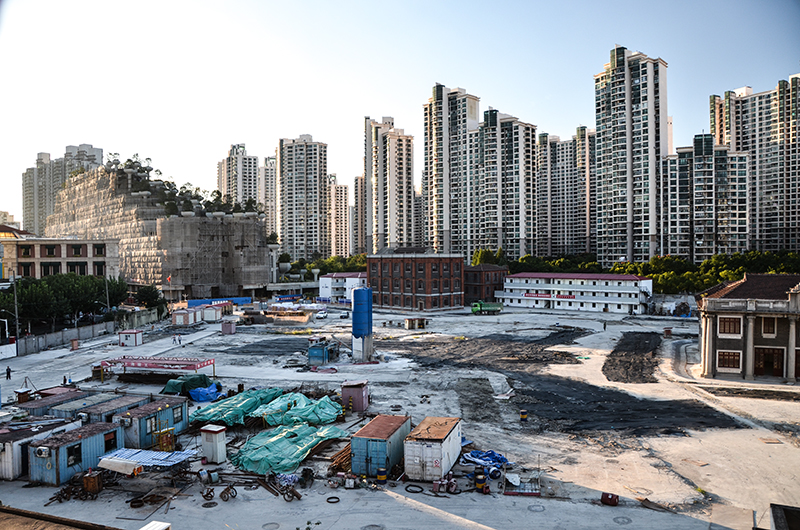
Supporting the idea of a “socialism with Chinese characteristics”, Deng broke with the establishment and promoted several economic reforms aiming at agriculture, the liberalization of the private sector, the modernization of industry and the opening of China to foreign trade.  

In the years that followed, changes were implemented that were then considered very ambitious and went ahead despite opposition to Deng from the most conservative wing of the party.

The agricultural sector abandoned Mao’s system of a planned rural economy, increasing productivity and technology to become today’s huge export industry.  It is remarkable that despite encouraging the migration of labour to the cities, today 46% of the Chinese population is still rural.

Private sector “chains” were also unleashed and, for the first time since the People’s Republic was created in 1949, the country opened up to foreign investment.

It was that opening to the outside world that contributed to increasing productive capacity, as well as new management methods.  The changes led China, after a long process, to join the World Trade Organization in 2001, which definitively opened the doors to globalization, something which has contributed so much to its economic boom.

Building the Future with China

It is curious, but in all these years a lot has been written and reported on the effects of globalization in Eastern Europe, boasting of having brought great capital to the former Soviet Union.  But much less has been reported in the Latin American press on what happened in the Asian giant.

It was not until 2008, when the global financial crisis broke out and the West embarked on the search for new markets, that China stood out from the rest, becoming the “factory of the world”.

Since then, here in my city (Santiago, Chile) we wear clothes made in China, we cook with Chinese utensils, our tools and furniture are produced by the Chinese, cars, computers and probably many other things are made in China.

Over there, women currently retire at 55 and men at 60.  However, I observed a great vocation towards work, in everyone, towards keeping busy and being able to contribute.  It’s as if they were building the future, with their eyes fixed on the horizon.  A common future, of “shared communities for the common destiny of the human species,” as Xi Jinping said in his speech at this year’s opening session of the United Nations.

One of my friends in Chongqing told me that as soon as the speech was delivered, it was immediately translated into all the dialects spoken in China, printed as a book, inserted into envelopes and distributed in less than a month by mail to every home in that huge country.  I was considerably surprised at the level of house-to-house clarification that the government does, and I asked him if he could send me a copy.

I have it now. It came to me in the mail. A copy of 197 pages printed in English, first quality.

This week Xi emphasized the importance of the “leadership” of the Communist Party in a speech celebrating the 40th anniversary of the country’s economic opening.  The President stressed that China will continue on the path of openness and development, but following its own tempo.  “We will decisively change what can be reformed and we will not decisively change what cannot be reformed.”  He gave special importance to the fight against pollution.

“In a country like China, with 5,000 years of history and a population of more than 1.4 billion people, no manual can be considered a golden rule and there is no teacher who can give orders to the people,” he said.

Xi Jing Ping, President of the People’s Republic of China

For my part, I remain alert to the process of this admirable people who captivate my interest despite the suspicious way in which the West treats any information relating to them.  A people that does not seem to suffer from the current crisis or doubt the options it has, but which is extremely busy and eager to build the future.

By Pía Figueroa,
Co-Director of Pressenza, life-long humanist, author of several monographs and books.

Image of author found here

Editorial note
To the original article has been added subheadings, italicization and photos by Severine Renard, all to enhance readability. No change of content.

Photo on top © Jan Oberg, Beijing, China 1983.

No data was found

Share

Leave a Reply

Your email address will not be published. Required fields are marked *

Related Posts

Drones over Nordic airports. No damage. No trace. No answers. Most assume Russia—but what if that’s not so? Why is there so much we are not told? This article explores the strategic ambiguity behind recent drone incursions and asks: Who else might benefit from sending drones into NATO airspace? From Ukraine’s surprising drone supremacy to Russia’s possible signalling, the silence itself may be the loudest message. These are the kinds of questions decent, intelligent investigative journalists and commentators could easily research. Why don’t they? Did you, dear reader, know or think of this? That the most powerful weapon in today’s conflicts might be the one that leaves no trace – and no answers. Just enough fear to justify the next move? Recently, drones have repeatedly appeared over Nordic airports and near some military facilities. They cause no damage – for which reason the designation “hybrid attack” is misleading but serves a purpose. These...
A slightly modified version of a text published on Sept. 1, 2025 in TMS. On August 25 Thomas Friedman, always a weathervane for political and economic establishment thinking in the West, wrote a notable column in the NY Times that was pragmatic in tone, misleading in substance, and regressive in intention. Yet it reflects a growing ambivalence toward Israel’s prolonged genocide even among longtime supporters of Israel that now highlights starvation, famine, and a gross distortion of the delivery of humanitarian aid under emergency conditions. But expressed dangerously without hiding the hope that Israel could even now restore its legitimacy without being held accountable for crimes in Gaza and despite all, still expecting to be rewarded by excluding Hamas from any further governance role in Gaza and continuing to move toward the annexation of the West Bank by formal action or through further settlement expansion. It is notable that the headline of...
Professor Zhang Weiwei is a highly respected Chinese intellectual and professor at Fudan University in Shanghai. He is the director of its China Institute and also runs a series of conversations with many different people around the world. Here is what came out of their meetings there and in Skopje, Macedonia in October 2024: & ◪ As you can see, also at the end of the second one, we both enjoy win-win exchanges like these about world order issues. Zhang Weiwei is known for using videos and social media to reach a large audience in China and worldwide. We suggest you see many more of Zhang Weiwei’s conversations – like recently with Professor Jeffrey Sachs – on the Thinkers’ Forum on YouTube. PS TFF posts hundreds of videos, its own and those of others, in our Video Collections on TFF Substack – including those that appear on YouTube. However, TFF...

Recent Articles

Former UN Under-Secretary-General with special responsibility for peacekeeping operations TFF associate August 20, 2003 YRINGHAM, Mass.- Ralph Bunche was born in Detroit 100 years ago today (August 7, 2003). His passionate determination to get results did not extend to seeking credit for them, so his work is better remembered than he is. Of all his many accomplishments – civil rights pioneer, Nobel Peace Prize laureate, chief drafter of two chapters of the United Nations charter, negotiator of the armistices that ended the first Arab-Israeli war – Bunche said he was proudest of developing what came to be known as peacekeeping. Setting up the United Nations Truce Supervision Organization in Palestine in 1948, Bunche formulated the principles that have governed peacekeeping operations ever since. In the 1956 Suez crisis, working with Secretary General Dag Hammarskjold and Lester Pearson of Canada, he organized the first peacekeeping force, the United Nations Emergency Force...
– nästan 11 månader Till Sofia nästan 11 månader # 1  Till Sofias huvudsida Till alla Privata Foto-Serier
Till Sofias huvudsida

TFF on Substack

Discover more from TFF Transnational Foundation & Jan Oberg.

Most Popular

Former UN Under-Secretary-General with special responsibility for peacekeeping operations TFF associate August 20, 2003 YRINGHAM, Mass.- Ralph Bunche was born in Detroit 100 years ago today (August 7, 2003). His passionate determination to get results did not extend to seeking credit for them, so his work is better remembered than he is. Of all his many accomplishments – civil rights pioneer, Nobel Peace Prize laureate, chief drafter of two chapters of the United Nations charter, negotiator of the armistices that ended the first Arab-Israeli war – Bunche said he was proudest of developing what came to be known as peacekeeping. Setting up the United Nations Truce Supervision Organization in Palestine in 1948, Bunche formulated the principles that have governed peacekeeping operations ever since. In the 1956 Suez crisis, working with Secretary General Dag Hammarskjold and Lester Pearson of Canada, he organized the first peacekeeping force, the United Nations Emergency Force...
– nästan 11 månader Till Sofia nästan 11 månader # 1  Till Sofias huvudsida Till alla Privata Foto-Serier
Till Sofias huvudsida
Read More
Imagen-thumbnail-The-Transnational-1
Former UN Under-Secretary-General with special responsibility for peacekeeping operations TFF associate August 20, 2003 YRINGHAM, Mass.- Ralph Bunche was born in Detroit 100 years ago today (August 7, 2003). His passionate determination to get results did not extend to seeking credit for them, so his work is better remembered than he is. Of all his many accomplishments – civil rights pioneer, Nobel Peace Prize laureate, chief drafter of two chapters of the United Nations charter, negotiator of the armistices that ended the first Arab-Israeli war – Bunche said he was proudest of developing what came to be known as peacekeeping. Setting up the United Nations Truce Supervision Organization in Palestine in 1948, Bunche formulated the principles that have governed peacekeeping operations ever since. In the 1956 Suez crisis, working with Secretary General Dag Hammarskjold and Lester Pearson of Canada, he organized the first peacekeeping force, the United Nations Emergency Force...
– nästan 11 månader Till Sofia nästan 11 månader # 1  Till Sofias huvudsida Till alla Privata Foto-Serier
Till Sofias huvudsida
BlackNobel
OK, Trump did not get it. But he got a full endorsement of a possible future US regime change in Venezuela. And that is what Ms Machado has advocated. On October 10, 2025, the Norwegian Nobel Committee awarded its Peace Prize to Venezuelan opposition figure María Corina Machado. The citation praised her “tireless work promoting democratic rights.” But Ms Machado has openly called for U.S. military intervention in Venezuela, stating on CBS: “The only way to stop the suppression is by force—U.S. force.” She or her party has received funding from the National Endowment for Democracy (NED), a U.S. government-backed body known as a CIA front organisation and for supporting regime-change operations worldwide. And in 2018, she sent a letter to Israeli Prime Minister Benjamin Netanyahu, asking him to use “force and influence” to help dismantle Venezuela’s government—citing alleged ties to terrorism, Iran and narcotrafficking. This year’s NATO Norwegian prize...
Screenshot-2025-10-08-163458
PRESS RELEASE – 6 OCTOBER 2025 LAY DOWN YOUR ARMSPEACE PRIZE FOR 2025 is awarded Francesca Albanese The United Nations Special Rapporteur on the occupied Palestinian territories – as the person who, in accordance with Alfred Nobel’s will, has “done the most or the best work for fraternity between nations and for the abolition or reduction of standing armies as well as for the holding and promotion of peace congresses.” Francesca Albanese has forcefully and unwaveringly worked against Israel’s full-scale war on the occupied Palestinian territories, in particular Israel´s ongoing genocide against the Palestinian people. She has confronted Israel’s systematic war crimes and crimes against humanity in a truly global outreach. Further, she has brought governments, international organisations and people’s groups together to underline the responsibility of the world at large to act and to stop arming, enabling, and profiting from Israel’s ongoing criminal actions. But first of all, Albanese...
Copilot_20251003_003414
Officially, the drones were not identified. By simply thinking critically – which journalists and selected experts no longer do – there may be a good reason for that. And this article will never be mentioned in Denmark… Drones over Denmark. No damage. No trace. No answers. Yet the headlines scream “Russian threat,” and Prime Minister Mette Frederiksen speaks with a certainty that defies logic: “We don’t know they were Russian—but we know Russia is the biggest threat to Europe.” It could be nobody else – unless you make an interest analysis which I did two days ago. This is not security policy. It’s theatre. And the audience is being played. Let’s rewind. These drones—unphotographed, untracked, unclaimed—appear and vanish like ghosts. Airports shut down. Panic spreads. Military budgets swell. And the narrative hardens: Russia is behind it. But what if that’s not just wrong but deliberately misleading? Here’s a hypothesis for...