Thinking

Showing 1-10 of 27 stories

Sort by
Categories

Year

Author / Contributor

Region

ab283fae-bc08-419e-bc71-6197099a085d_1024x457
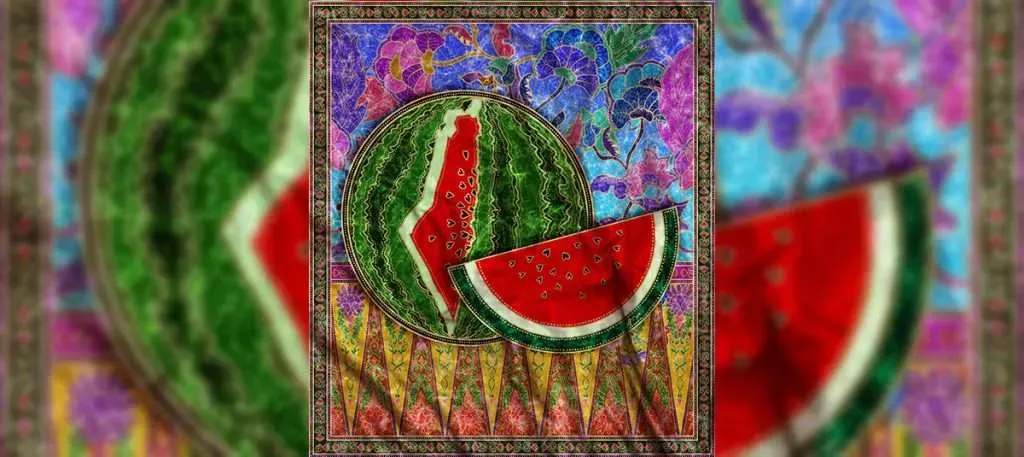
TFF board member If we’re being honest, with few exceptions, most of us have stopped counting the days since the genocide in Gaza began. We’ve also lost track of the death toll—especially the number of children. We can offer excuses: being overwhelmed with our personal and professional lives, the sheer intensity and frequency of global crises (Ukraine, trade wars, or the unbearable ease with which Trump is reshaping the world in his own image). But the truth is, sporadic mass protests in some Western cities, citizen petitions, intellectuals’ appeals, and podcast appearances do little to change the reality—or rather, the nightmare—of the people in Palestine. You’ll often read a post saying that eight billion people condemn the genocide that keeps going and going, seemingly with no end in sight. We blame ourselves for our helplessness, our despair, and our rage—at least those of us who refuse to forget the images...
ioana-cristiana-0V62GGFqsPc-unsplash
A new, innovative, and visionary anthology about the world that is unfolding behind the doom and gloom that the media and politicians try to foist on you. It’s edited by Bijana Vankovska, Richard Sakwa, Weiwei Zhang and Toni Mileski and obviously provocative in the eyes of some (lesser minds). Preface “This volume is the outcome of what might seem, at first glance, to be an ordinary academic conference. Cooperative Multipolar System: In Quest of a New World Order was held on October 3–4, 2024, organized by the Global Changes Center (GCC), the youngest research center at the Faculty of Philosophy. Тhe Chamber of Emigrants from Macedonia eventually joined as a supporting institution, following a formal agreement with the Faculty. Yet, this gathering was far from conventional. It was designed as an intellectual intervention to engage with the evolving global order and challenge the one-dimensional narratives that dominate academic and political...
5123952200_385b4abd65_h
1.  Definitions and Hypotheses: An Overview Definition: An empire is a transboundary Center-Periphery system, in macro-space and in macro-time, with a culture legitimizing a structure of unequal exchange between center and periphery: Empires have different profiles.  The US Empire has a complete configuration, articulated in a statement by a Pentagon planner: “The de facto role of the United States Armed Forces will be to keep the world safe for our economy and open to our cultural assault.  To those ends, we will do a fair amount of killing”.[1] In other words, direct violence to protect structural violence legitimized by cultural violence.[2]  The Center is continental USA and the Periphery much of the world.  Like any system it has a life-cycle reminiscent of an organism, with conception, gestation, birth, infancy, childhood, adolescence, adulthood, senescence and death.  Seeded by the British Empire, the maturing colonies honed their imperial skills on indigenous populations,...

02b2bf5c-112d-4f60-85c9-36586b0e4e9f_1218x811-1
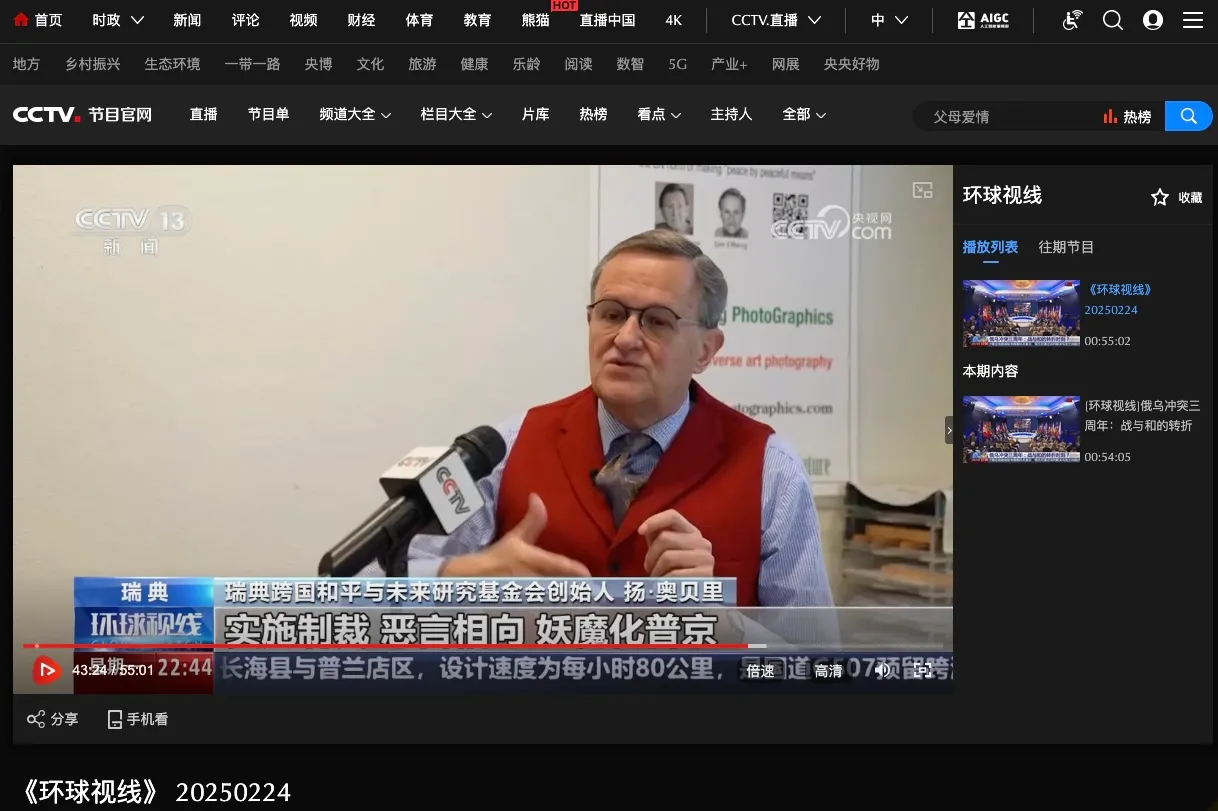
Every few days, I was on TV in Russia and China – Russia TV1 and CCTV – the latter as part of a much longer studio discussion and documentary about Ukraine, Russa and the EU. February 14, 2025 – about half an hour on Russia’s leading TV Channel – 1TV – a kind of portrait with lots of views on current affairs. And many more videos with other TFF Associates and a series of world issues. It’s a great way to learn new angles from some of the most experienced people of our time. And the best part – new videos are selected and uploaded almost every day. Do not miss!! Enjoy and, if you like, share!
JohanMemorial
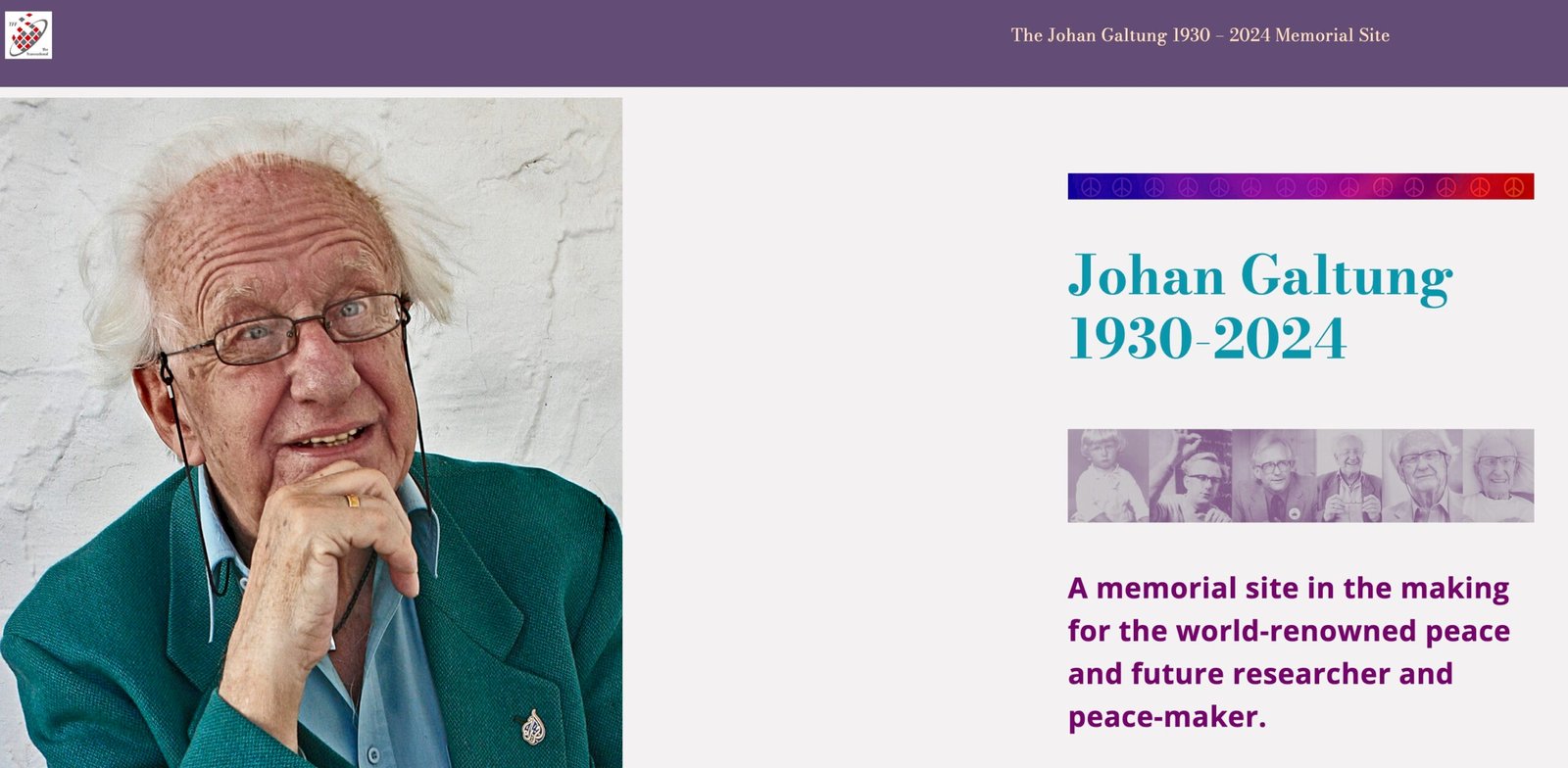
I have taken it upon myself to create a memorial site for one of the greatest social scientists of our time. It is launched today. I have two motives for doing so: One, Johan Galtung was one of my mentors, a colleague, and a dear friend for over precisely 50 years and a TFF Associate since we started in 1986. That is the 80%. The second is that Johan was forced to endure gross human rights violations by the Norwegian health and other authorities as well as by individuals in the last months of his life. So, too, his daughter Irene, who was the only one who cared for him to the end. This human rights story – that Galtung wanted to become public – has been repressed by means that do not belong to a legal, democratic state. That’s 10%. The third is that the Official Norway – and...
3783769_9_0_1278_714_1920x0_80_0_0_40daffaa0599165fa6e136ca46117cf1
It’s all self-destructive. The West should join the world and become a good partner, not a dominator On February 10, 2025, I had the pleasure of being interviewed by Anthony Fatseas, who runs the WTFinance Channel on YouTube. Interestingly, Anthony’s channel defines economy in a much broader, structural framework than most of the departments of ‘national economics.’ I would call it Real, social or cultural economics. I urge you to watch it on YouTube rather than here – then you will see both how this is going viral and the – for me – profoundly heart-warming hundreds of comments. Sadly, I cannot comment or thank all these good-hearted people because YouTube has cancelled me, and I cannot even log in. Once again, people prove how they want peace – while their governments don’t know what it is or how to achieve it because they are obsessed with confrontation, war-planning and...
karat
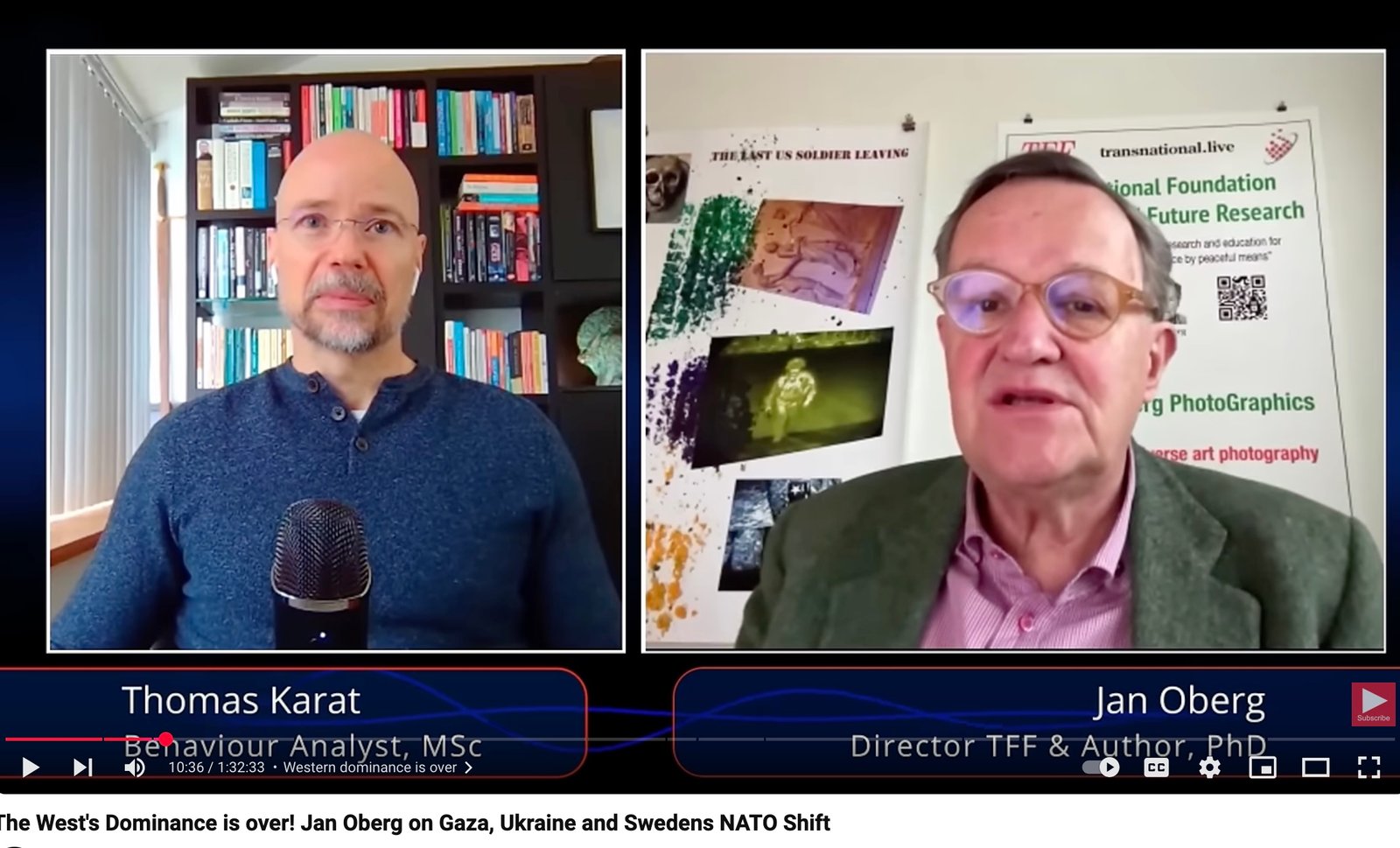
I am very pleased with Thomas Karat’s very well-conducted interview and the perspectives he chose to focus on with me. I recommend his fine YouTube Channel warmly. I hope you will like it and share it – and, of course, leave your comments below. You may also go to the interview on YouTube and see the wonderful comments. The interview happened before the Western-supported al-Nusra terrorist regime-change in Syria, but that is, of course, on par with the two conflict areas mentioned in the video title. You’ll find many more videos on TFF’s Video Library on Substack.
THForum
It has great potentials and needs global citizens’ – your – support. Amid global conflicts escalating, why has the United Nations, tasked with maintaining peace, seemingly failed to fulfill its role? Why is a ceasefire agreement in Gaza proving elusive, and why does a ceasefire between Russia and Ukraine remain distant? Professor Jan Oberg delves into the underlying reasons why achieving world peace is such a challenging endeavour. This video was produced by The China Academy in Shanghai, more about it here. You may also see it on YouTube and read the interesting comments on it.
NATOFivePrinc
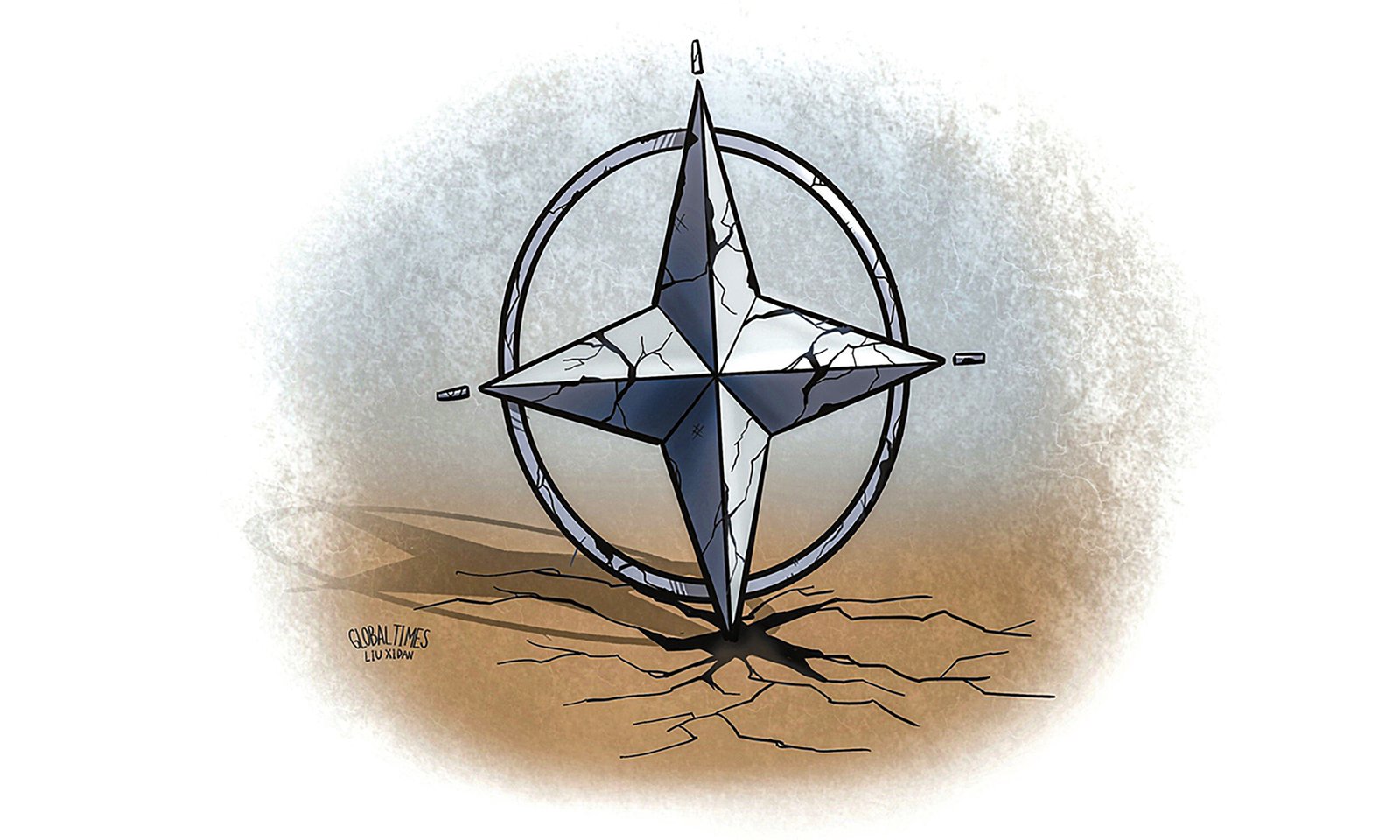
On July 11, 2024, after the NATO Washington Summit, Global Times in Beijing was so kind as to publish my comparative thoughts on the famous Five Principles on Peaceful Coexistence – just celebrated in Beijing – and five principles I have extracted from NATO’s concepts and policies. Quite a contrast! Here is how it begins: “The West showed virtually no interest in the recent celebration of the 70th anniversary of the Five Principles of Peaceful Coexistence in Beijing. These Five Principles, created by then China’s premier Zhou Enlai and Indian leader Jawaharlal Nehru, are enshrined in the Chinese Constitution and aim to promote peaceful, nonviolent relations among nations. However, this is not the case with NATO, which marks its 75th anniversary on July 9-11. If officially it too had five principles, they would be: 1. offensive deterrence; 2. forward “defence”; 3. nuclear weapons and the right to use them first;...
What-is-the-Multipolar-World-vs-Old-Unipolar_cover
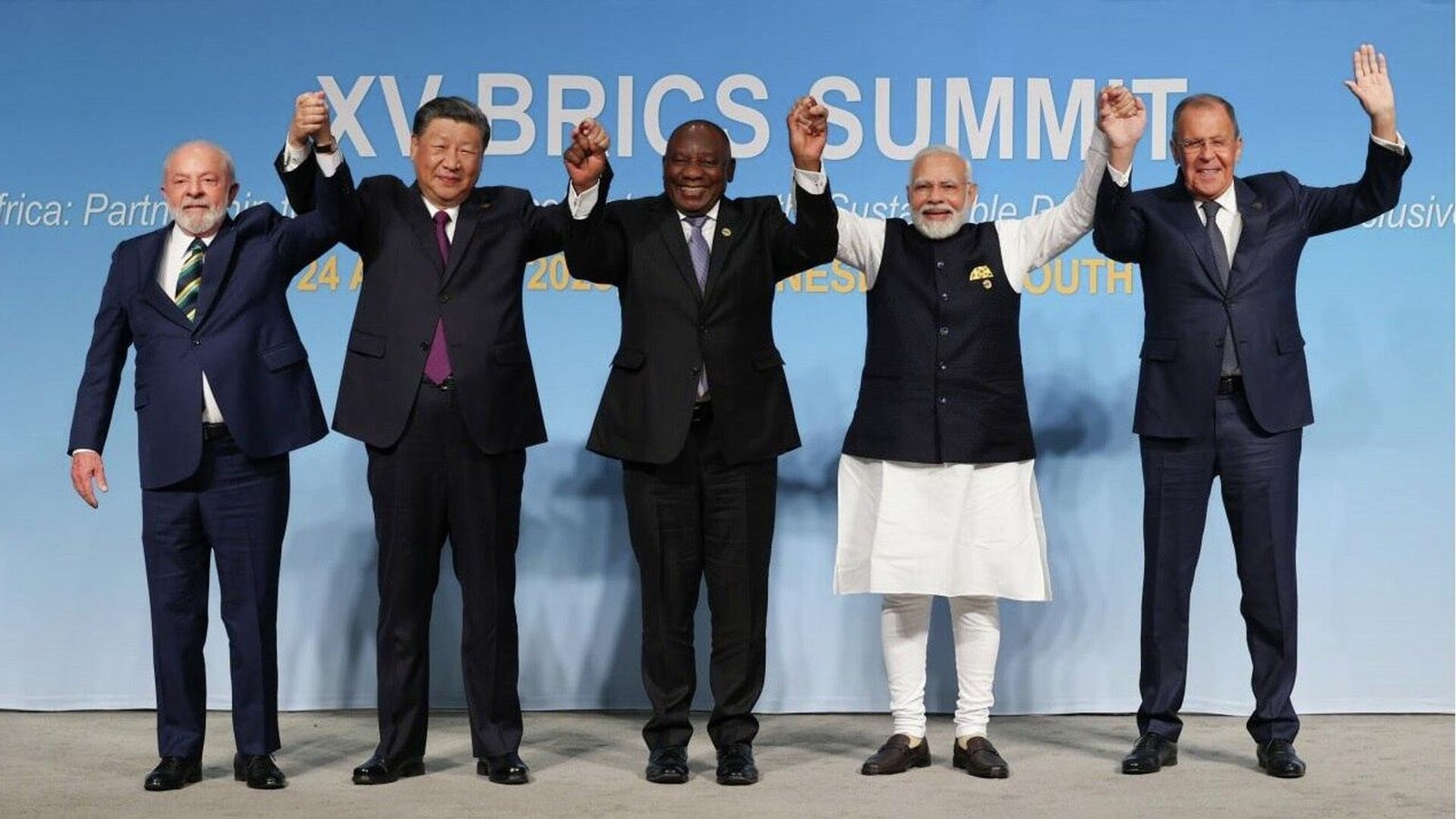
. He first tells why he was in Belgrade during the bombing and then explains how that bombing was a turning point towards the new multipolar – and better – world we are now approaching. First Beoforum’s version on YouTube. Then you can always find it on TFF’s Vimeo Channel – because we boycott Goggle-owned YouTube as much as we can.
hANS
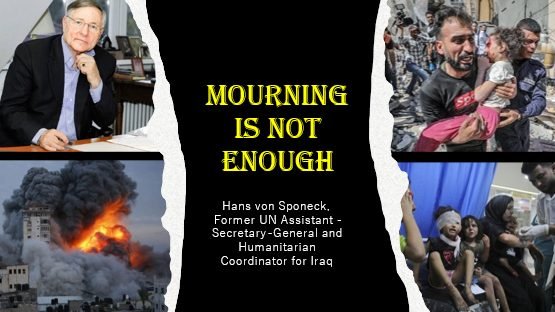
A very important German voice with a particular background expresses his outrage about the hypocrisy of heads of state and foreign ministers flocking to Tel Aviv with one-sided messages, adding the fig leaf not to forget humanitarian aid and completely ignoring the context, the ‘why’ it all happened. TFF Associate War – war was part of the first years of my life. I have felt war. My father was executed in 1944, my grandfather died as a prisoner of war, my half-brother lost his life on the eastern front, my mother escaped from an internment camp, and my grandmother and I saw the end of the war in a hide-out at what became the border between two Germanies. As I grew older, I was eager, very eager, to understand what could prevent war. Young as I was, it was not yet clear to me what this entailed. In 1957, I...
cole-keister-YGFyjZEDxf0-unsplash-1
Cole Keister on Unsplash IntroJohan Galtung published a comprehensive peace plan for the Middle East as early as 1971 – in the Journal of Peace Research (JPR). However, today SAGE Publications seems not ashamed to charge you £ 29 to download single articles. So here is a 2015 short summary of Johan’s insights and thoughts on the issue. While everybody is focused on disappointing Israeli election results and the liberals and progressives of this world are justifiably fearful of a future pregnant with “more of the same – or worse”, it may be useful to take a look at the solution-indicative policy proposal below, to muster an idea of what measures may eventually usher in a more desirable future. Whatever the current situation may yield; releasing the peoples of the region from the grips of structurally oppressive, culturally alienating and directly destructive violence for good remains the priority. First: Washington...
Categories

Year

Author / Contributor

Region