Conflict and war

Showing 1-10 of 239 stories

Sort by
Categories

Year

Author / Contributor

Region

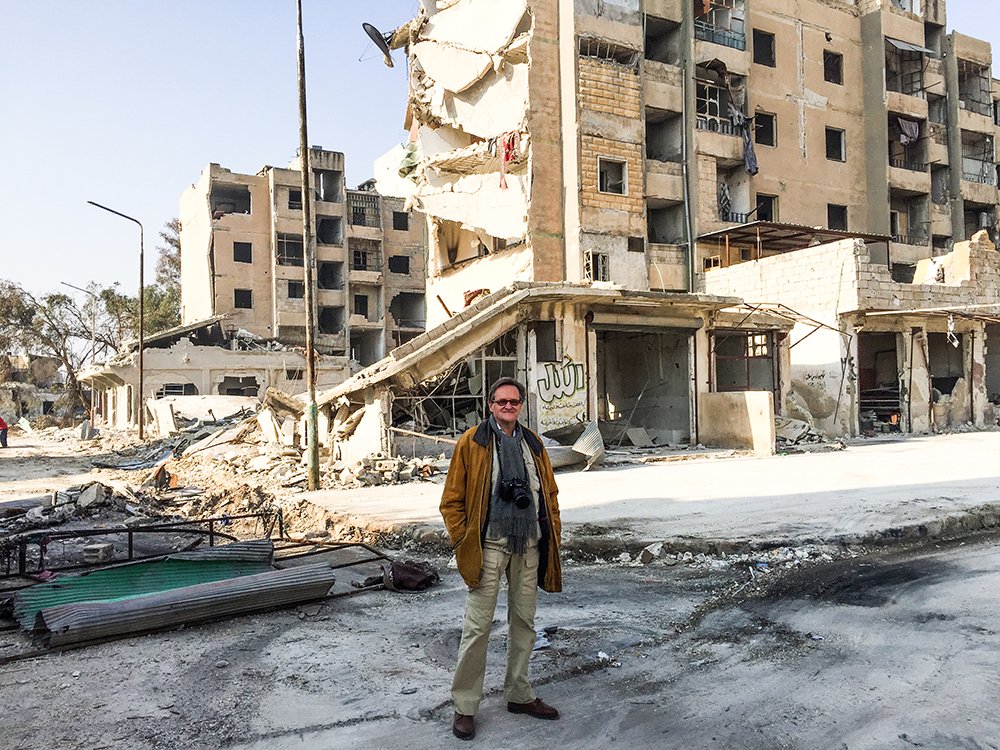
ObergIAleppo-1_PhSh
/11/pi-435-likely-nuclear-use-within-months-part-2-how-to-avoid-it/”>Part II here. That’s what I hold quite likely in case the present US administration under Donald Trump’s formal leadership continues down the path its in-fighting militarist fractions seem to have chosen. We’re in the worst, most dangerous situation since the Cuban Missile Crisis. Sitting down and hoping for the best is neither responsible nor viable or wise. I can only hope that I will be proved wrong. That the present extremely dangerous tension-building will die down by some kind of unforeseen events or attention being directed elsewhere. The world could quite well be drifting toward what Albert Einstein called ’unparalleled catastrophe’. It’s something we may – or may not – know more about when President Trump returns from his trip to Japan, South Korea, China, Vietnam (APEC where he also likely to meet Russian President Putin) and the Philippines. Except for 93-year old Jimmy Carter offering to go to...
JO_RTStudio
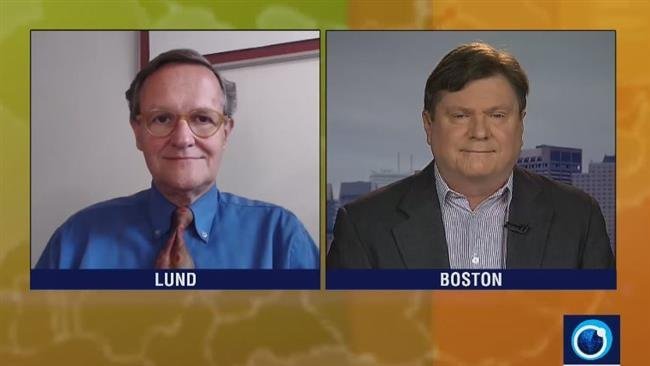
/10/22/the-u-s-will-invade-west-africa-in-2023-after-an-attack-in-new-york-according-to-pentagon-war-game/”>The Intercept is pretty revealing for the lack of even the slightest re-thinking of what the Global War On Terror (GWOT) is really all about. The US military’s game is about violence-for-violence, tit-for-tat. The main result from this – anti-intellectual – attitude and policy is that there are about 80 times – yes, times – more people killed today than in the year 2000. Just consult the Global Terror Index and you’ll find that the figure is about 32,000 people, predominantly in the Middle East and not at all in the West. Measure that against the roughly 400 killed and 700 wounded in the year 2000 (figures then available at the US State Department homepage, however, as it seems, later taken down). I say a few things about that here on Russia Today. The video is inside the article but can also be accessed here.
gunnarwestberg
What Americans Really Think about Using Nuclear Weapons and Killing Noncombatants By Gunnar Westberg TFF Board member “Revisiting Hiroshima in Iran: What Americans Really Think about Using Nuclear Weapons and Killing Noncombatants” Scott D. Sagan and Benjamin A. Valentino International Security, August 2017 This is a summary and a few reflections upon reading a very comprehensive academic study recently published in International Security. See it’s full text here. The nuclear taboo is no longer strong In this extensive and scholarly report of 67 pages the authors report on several opinion polls they have conducted in order to learn about the attitudes of Americans to the use of nuclear weapons compared to conventional weapons. They also review the field extensively comparing with other studies. Shortly after the bombing of Hiroshima and Nagasaki the Americans strongly supported the use of nuclear weapons in that situation. The approval rate decreased to a large...
jonathanpower2
Out of the blue the war in Vietnam is in the news. Yet it is not the fiftieth anniversary of America’s defeat in Vietnam when North Vietnam caused it to flee. It’s only the forty second. Part of this must be fearful parallels with the moral and strategic blindness of President Donald Trump who seems to believe in uttering his life and death rhetoric, akin to President Richard Nixon’s on Vietnam, he can frighten the enemy into submission – in his case North Korea. Many people are worried that Trump is ready to fight America’s biggest war since Vietnam. As did Henry Kissinger, Nixon’s National Security Advisor, he appears to be considering the use of nuclear weapons. The second reason for Vietnam-consciousness are the rave reviews that are being given to Ken Burns and Lynn Novick’s 10 part documentary on the Vietnam War. It is being mentioned all over the...
johangaltung
Liu Xiaobo passed away. What is the – not so hidden – truth about him? Answer: His speeches and writings show enthusiasm for the 100-year English colonization of Hong Kong, wishing 300 years colonization of China, celebrating the US war in Afghanistan, hoping for atomic weapons. He got the Nobel Peace Prize for democratization of China, had the freedom of speech, but the prize communicated as a provocation. The prize could easily have been given to their Charter, not to Liu Xiaobo. Norway’s security – what are the threats? Answer: Given the location, an invasion by USA or Russia to prevent the other from doing so. The situation is reminiscent of the threat from England, Germany and USSR to prevent one of the other from doing so in 1940; what happened was England and Germany violating Norwegian neutrality, fighting a battle on Norwegian territory. USSR nothing till they fought German...
johangaltung
A world map shows the West is big, from the Atlantic to the Pacific oceans, from the Arctic Ocean to the Mediterranean-Black Sea-Russian border; but not that big. However, that is only Europe. Add Anglo-America, USA-Canada, from the Pacific to the Atlantic oceans, from the Arctic Ocean to Mexico. The West is huge, enormous. It covers geographically the Northern Arctic and temperate zones. It houses religiously the three Christianities, much of Judaism, but not Islam. Muslims and all others count as minorities, here and there. It is the seat of another major faith, Enlightenment: humanism-liberalism-marxism-nationalism-statism-capitalism-regionalism. It is the seat of the major IGOs, NGOs and TNCs in the world. It identifies West as “developed”, and Rest as “developing”. West has attacked, invaded, conquered, colonized almost all the Rest of the world (China only partly, Japan only recently, from 1945). The overwhelming majority of wars are intra-West, or West-Rest.

gunnarwestberg
By Gunnar Westberg Board member of TFF August 20, 2017 The author has been twice to North Korea and maintains contacts with physicians in the North Korean branch of International Physicians for the Prevention of Nuclear War in that country. ”If your country continues to develop nuclear weapons, you will be attacked, maybe with nuclear weapons”. This what we have told our colleagues from North Korea, at visits to Pyongyang or at international meetings. “Oh no,” they said. “Look at Saddam Hussein and Mohamad Ghadafi. They gave up their plans for nuclear weapons, and they were attacked”. “Nuclear weapons development is not the only reason for the USA to attack. Oil is the other”, we said. It turns out we were right. North Korea – DPRK – continued on the path to nuclear weapons and the President of the USA threatens to attack. The crisis is, for the moment fading,...
johangaltung
Lecture notes at the Hardanger Academy for Peace Development and Environment 30 Jul 2017 These are the goals of the United Nations; the Hardanger Academy in little Jondal, Norway (population ca.1150) made them three foci. The problem arose: what do they have in common? Are they three aspects of the same thing? If so, what is that “thing”? Four ways of trying to answer have been identified and explored. Four because of four ways of approaching social reality, through: • actors, with intentions-capabilities-contexts, with their needs; • culture, defining the true-good-right-beautiful-sacred; • structure, the patterns of individual and collective interaction; • nature, evolving to higher complexity, with diversity and symbiosis. All four have surfaces and deeper aspects. The surface aspects are conscious, can be articulated and communicated. The deeper aspects are repressed into the subconscious as inconvenient, too obvious or simply unknown. They can be “conscientized” (Freire), or simply be...
RichardFalk20141
International law is mainly supportive of Palestinian grievances with respect to Israel, as well as offering both Israelis and Palestinians a reliable marker as to how these two peoples could live normally together in the future if the appropriate political will existed on both sides to reach a sustainable peace. International law is also helpful in clarifying the evolution of the Palestinian struggle for self-determination over the course of the last hundred years. It is clarifying to realize how the law itself has evolved during this past century in ways that bear on our sense of right and wrong in the current phase of the struggle. Yet at the same time, as the Palestinians have painfully learned, to have international law clearly on your side is not the end of the story. The politics of effective control often cruelly override moral and legal norms that stand in its way, and...
RichardFalk20141
We are living amid contradictions whether we like it or not, driving expectations about the future toward opposite extremes. Increasingly plausible are fears that the ‘sixth extinction’ will encompass the human species, or at least, throw human society back to a technology of sticks and stones, with a habitat limited to caves and forests. This dark vision is countered by gene-editing designer promises of virtual immortality and super-wise beings programming super-intelligent machines, enabling a life of leisure, luxury, and security for all. Whether the reality of such a scientistic future would be also dark is a matter of conjecture, but from a survival perspective, it offers an optimistic scenario. On political levels, a similar set of polar scenarios are gaining ground in the moral imagination, producing national leaders who seem comfortable embracing an apocalyptic telos without a second thought. The peoples of the world, entrapped in a predatory phase of...
jonathanpower2
It’s not that many years ago that Warren Christopher, the US Secretary of State, commenting on the outbreak of separatist ethnic strife in the 1990s in countries such as Somalia, Zaire, Rwanda, East Timor and ex-Yugoslavia, asked. “Where will it end? Will it end with 5,000 countries?” It was a serious misjudgement. Separatist wars have fallen sharply. Minorities are not fighting for their own patch of territory at the rate they were. Since 1993 the number of wars of self-determination has been halved. The list of countries where the problems of ethnic conflict looked potentially ominous but which are now vastly improved is a long one. Baltic nationalists have moderated their treatment of their Russian minorities. Hungarians in Slovakia and Romania are no longer under threat. After a long war Croatia is respecting minorities. Conflicts between the central government and India’s Mizo people, the Gaguaz minority in Moldova and the...
37f7fb1f-f3a9-4fc4-ad75-100cd67d3b77
/07/09/527890/UN-nuclear-weapons-ban-treaty”>the link to a partial transcript
Categories

Year

Author / Contributor

Region