Classics

Showing 1-10 of 16 stories

Sort by
Categories

Year

Author / Contributor

Region

Eclecticism_90cm_300dpi_1200_100dpi
Foreword The Board of The Transnational Foundation in Sweden has decided to publish an easy-to-read, scholarly anthology that addresses one of the most important – and potentially dangerous – issues of our time: Why are the political, economic, and medialised Western images of China so consistently negative – and what can you do to understand China better? These images may be expressions of a political will to present only various shades of grey and black with the aim of building a consciousness about China as an enemy and not a partner. They may also be seen as a sort of world-dominating ethos of ignorance based upon the assumption that “we’ve-got-nothing-to-learn-from-others,’ we are the teacher. Another possibility is that the West, deep down, feels that it is getting relatively weaker from a macro-historical perspective and comforts itself with denial and accusations against “the other” of being the reason for its manifest...
ioana-cristiana-0V62GGFqsPc-unsplash
A new, innovative, and visionary anthology about the world that is unfolding behind the doom and gloom that the media and politicians try to foist on you. It’s edited by Bijana Vankovska, Richard Sakwa, Weiwei Zhang and Toni Mileski and obviously provocative in the eyes of some (lesser minds). Preface “This volume is the outcome of what might seem, at first glance, to be an ordinary academic conference. Cooperative Multipolar System: In Quest of a New World Order was held on October 3–4, 2024, organized by the Global Changes Center (GCC), the youngest research center at the Faculty of Philosophy. Тhe Chamber of Emigrants from Macedonia eventually joined as a supporting institution, following a formal agreement with the Faculty. Yet, this gathering was far from conventional. It was designed as an intellectual intervention to engage with the evolving global order and challenge the one-dimensional narratives that dominate academic and political...

Nobel
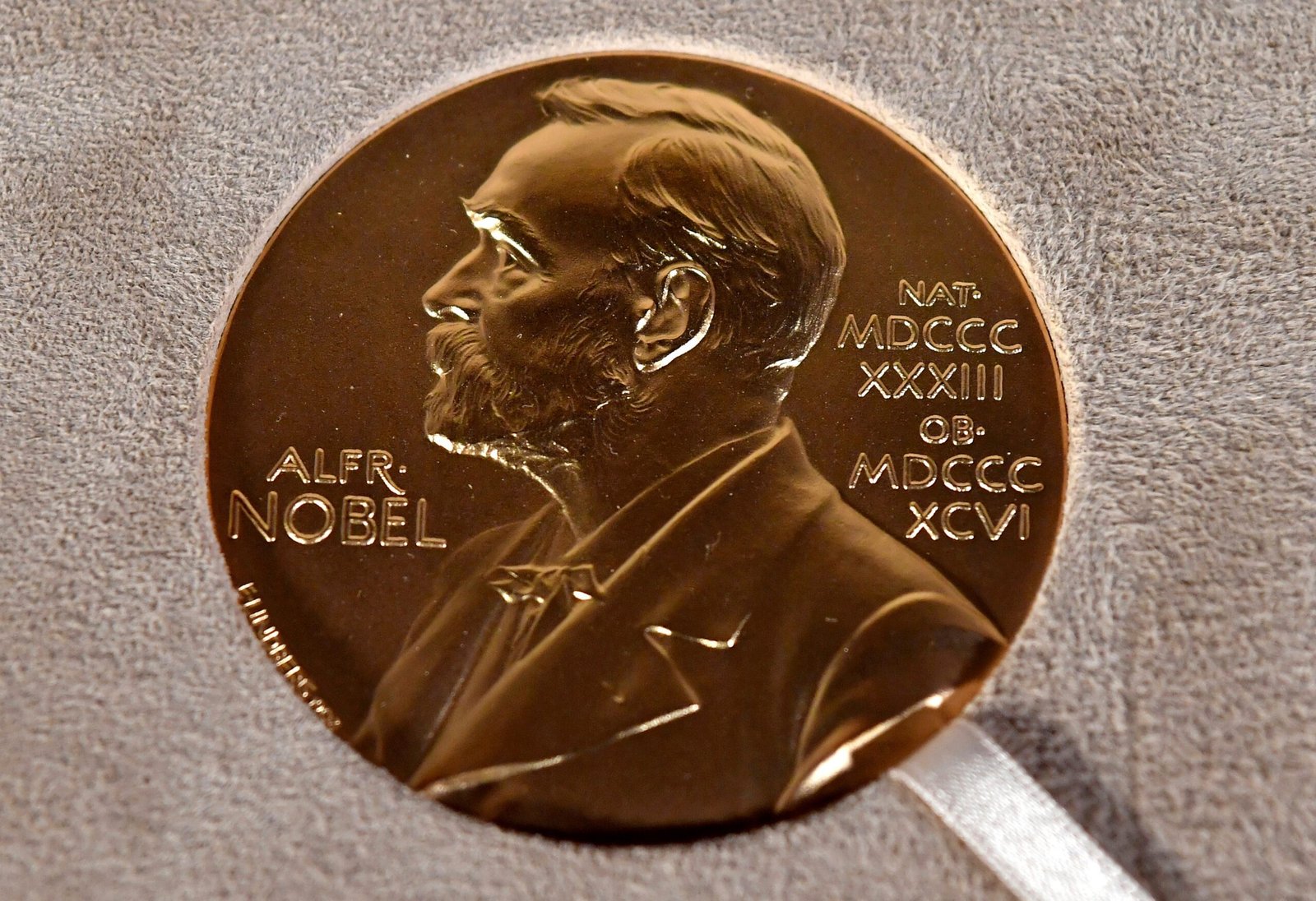
Not so prestigious or noble The media often describe the Nobel Peace Prize as the world’s most prestigious prize. That is, however, slightly bizarre for at least two reasons: first, there exists no system or set of criteria to rank prizes in various fields in terms of prestige. Secondly, over decades, this Prize has been awarded to people and organisations that reveal a careless interpretation of Alfred Nobel’s short and precise will, if not a direct violation of what he intended his Prize to support. 

A more benign interpretation could also be that it is prestigious because it has a focus on what is probably worldwide seen as the most noble or highest value, namely peace. Or, in a banal materialistic sense, that the huge amount of money accompanying the Prize makes it ’prestigious.’ A few introductory considerations This article discusses what has gone wrong with this prize and how...
DSC_2657-copy
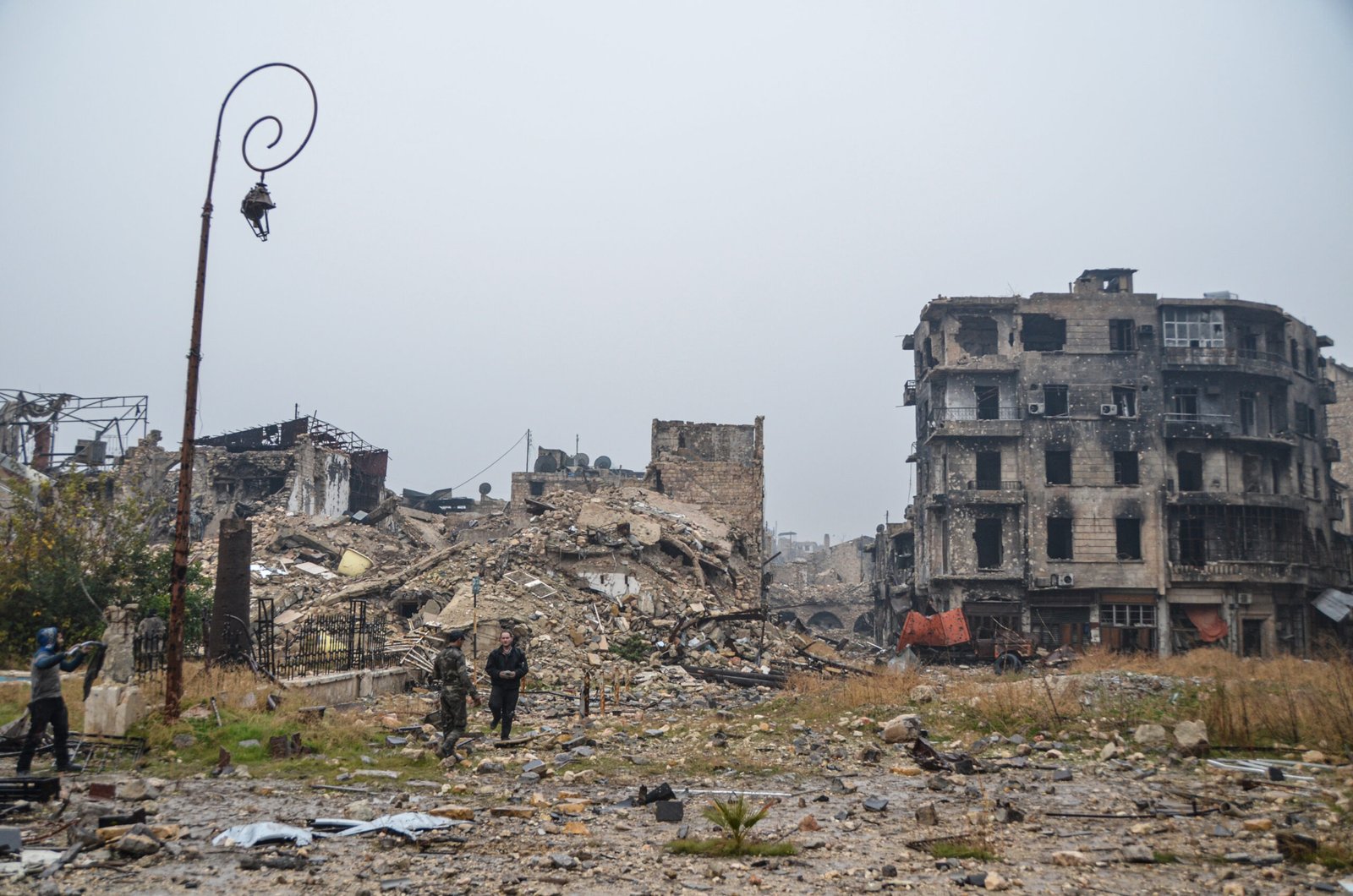
TFF is also your go-to source for understanding the Syria catastrophe in the making from now on. Introduction: The colonialist mentality Few things should surprise us anymore regarding the un-principled nature of the contemporary Western world. One day it sees a genocide and keeps supporting its ongoing barbarism. The next day – actually December 8 in the early morning – it fully supports terrorism, which, allegedly, it has been fighting since September 11, 2001. NATO countries such as the US and Turkey are the main supporters of the terrorist movements that have now occupied the cultured country, Syria, home to 25 million extremely mixed people. As far as I have looked into it, no Western leader has pointed out that taking over an entire country and sending its leadership fleeing is a violation of international law; Russia did not even plan to do so in Ukraine, but its invasion was...
Build-Trust
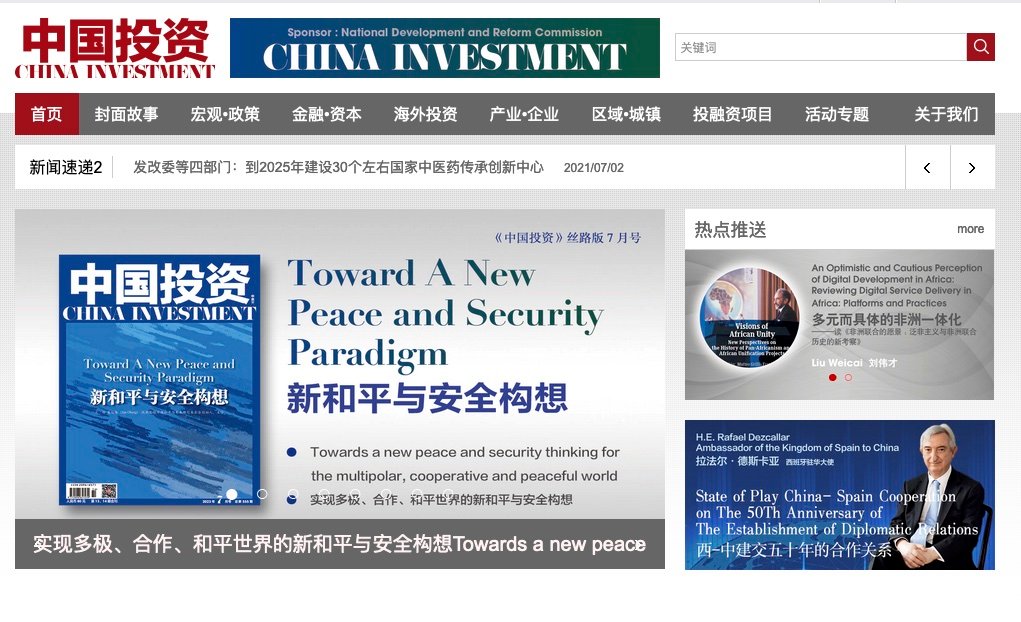
Image from searchwizards This rather long text was written on the invitation of the distinguished “China Investment” magazine, which is sponsored by China’s National Development and Reform Commission. In spite of its name, it has consistently asked me to write on subjects that are not often connected with economics in general and investment issues in particular. I find that – much broader – approach to economics very interesting, and I am very pleased to cooperate with such broad-minded people. Here is the original version – a cover story – in both English and Chinese Introduction – The enigma of good things Like many other positive things in this world, there is little research available on what trust is and how it works. Human beings study war and other violence much more than nonviolence and peace; evil more than goodness; aggression more than forgiveness and reconciliation. It is quite strange because...
AbolNATO_FinalCover
Abolish NATOOr Convert ItTo ServePeace 30 Arguments & 100s of Inspirations This report can be reproduced or quoted freely,but only when referring clearly to TFF, the author and the link Read and download as PDF at the end of the catalogue • Read as Flipbook Media & other inquiries to TFF@transnational.org or +46 738 52 52 00 EXECUTIVE SUMMARY This Catalogue contains 30 arguments for the abolition of NATO. Each argument is based on rational peace research analysis, in contrast to the fact-resistant propaganda that NATO and mainstream politics and media promote about the ’defensive’ peace alliance. The Catalogue is based on the democratic assumption that diverse perceptions and concepts can exist – for instance, about what peace is – and that this hugely influential Western organisation is not sacrosanct and shall, therefore, not be exempt from critical analysis. While set up in 1949, NATO passed its ”best before” date long ago. The alliance of...
ReportFront_1500-kopia
/12/TFF-Smokescreen-Report.pdf” target=”_blank” rel=”noreferrer noopener”>Download and share this report as PDF Table of Content IntroductionThe China Cold War Agenda as Dangerous Decline and Decay 3 Executive Summary 15 Chapter 1China and the West – Competition Not Cooperation 19 Chapter 2The Xinjiang Genocide Accusations As Agenda – and its sources 26 2.1 The compact Western mainstream media silence 27 2.2 The six main sources behind the Xinjiang genocide documentation 29 2.3 Problematic issues, materials and producers 30 2.3.1 The number issueHow many Uyghurs are in how many detention camps and facilities? 31 2.3.2 Funding and policy affiliationsWhere does the funding come from to produce the Xinjiang Genocide accusations? What political interests are behind? 36 2.3.3 Databases and witness statementsThe Victim Databases and the Credibility of witnesses 39 2.3.4 Politicisation, weaponisation and Adrian ZenzOn human rights, there is only one interpretation possible 42 2.3.5 ASPI The Australian Strategic Policy Institute (ASPI) 46 Chapter 3Some facts about the Xinjiang Uyghur Autonomous Region (XUAR): History and terrorism 52...
RU-Ukr-flags-war
Jan Oberg February 25, 2022 ”An eye for an eye will one day make the whole world blind.”M K Gandhi A day or two before the Russian assault on Ukraine, I wrote that Russia would NOT invade Ukraine. The news on the morning of February 24 admittedly shocked me and made me very sad: With this move and the NATO countries’ tit-for-tat response that will have devastating economic consequences for Europe’s citizens, there will not be peace in Europe in my lifetime. And I was not the only one who must have been surprised even in Russia. Here are the words by professor Sergey Karaganov, honorary chairman of Russia’s Council on Foreign and Defence Policy from February 8: ”Russian troops near the border of Ukraine are not going to move into the country. To do so would be simply senseless. Grabbing land already devastated by its anti-national and corrupt ruling...
FreeComposition_1_1200_100dpi
, the Newlines Institute for Strategy and Policy in Washington published a report, The Uyghur Genocide: An Examination of China’s Breaches of the 1948 Genocide Convention in cooperation with the Raoul Wallenberg Centre for Human Rights in Montreal. It states that ”This report is the first independent expert application of the 1948 Genocide Convention to the ongoing treatment of the Uyghurs in China. It was undertaken by the Newlines Institute for Strategy and Policy, in cooperation with the Raoul Wallenberg Centre for Human Rights, in response to emerging accounts of serious and systematic atrocities in Xinjiang province, particularly directed against the Uyghurs, an ethnic minority, to ascertain whether the People’s Republic of China is in breach of the Genocide Convention under international law.” The Report – hereafter The Report – has been produced with the contributions of, and upon consultation with, numerous independent experts, including 33 who have agreed to be identified publicly, as it is stated....
IMG_9125
“/> This is the digitalized version of a TFF Statement published by TFF’s Board almost 31 years ago. Could that be of any interest today?First, it reflects the situation and the issues discussed at the time as well as the hopes for a better future – now sadly lost.Secondly, it is one example of how peace researchers were thinking and made constructive political recommendations, available for anyone to take inspiration from – which virtually no one in power did.So, it’s a piece of international political as well as intellectual history.Third, it is an indicator of what the West could – and should – have done to have been in a much better situation than it is today. Admittedly, this is a contra-factual argument, but it can be defended on intellectual grounds although not empirically proven.Fourth, the authors pointed out a series of longterm priorities which match still today’s agenda and,...
the-cold-war-russia-america
Photo: US President George Bush and Soviet President Mikhail Gorbachev at the Moscow Summit 1991 By Peter Turnley/Corbis/VCG/Getty Images Over the last four month, ten articles about the new Cold War have been published on the TFF Associates blog. And on our social media you’ll find hundreds of brilliant, informative posts written by others. While this new Cold War is certainly different from the first Cold war that ended in 1989, we are not in doubt that there is a new such tragic war and that the risk of military confrontation between Russia and NATO countries in Europe has increased. We also happen to think it could have been avoided. This Cold War has to do with, among many other things, NATO’s counterproductive expansion since 1994, the way Yugoslavia broke down and was broken up, with Ukraine and now Syria as well as – perhaps surprisingly to some – the...
Categories

Year

Author / Contributor

Region